Last updated July 23, 2026
We’ve all experienced the subtle influence of persuasive advertising in one shape or another, often without even realizing it. In a competitive business market, mastering the art of persuasion is not just beneficial—it’s essential for brands aiming to connect with their target audience and stand out from the crowd.
This article will explore the effectiveness of persuasion in advertising, ethical considerations to keep in mind, and the best strategies for creating persuasive messages that capture attention and drive results.
What is persuasive advertising?
Persuasive advertising is a strategic approach that aims to influence consumer behavior by appealing to their emotions, desires, and motivations. Unlike informational advertising, which focuses on presenting facts and features, persuasive advertising goes a step further by tapping into the psychological triggers that inspire action.
In our daily lives, persuasive advertising is everywhere, with the average person seeing thousands of advertisements per day. Think about it—from social media and TV commercials to billboards and public transit ads, we’re constantly bombarded with ads that are prompting us to take action.
This constant exposure significantly impacts consumer behavior, often leading us to favor certain brands, try new products, and even form emotional bonds with companies.
Key persuasive strategies for effective campaigns
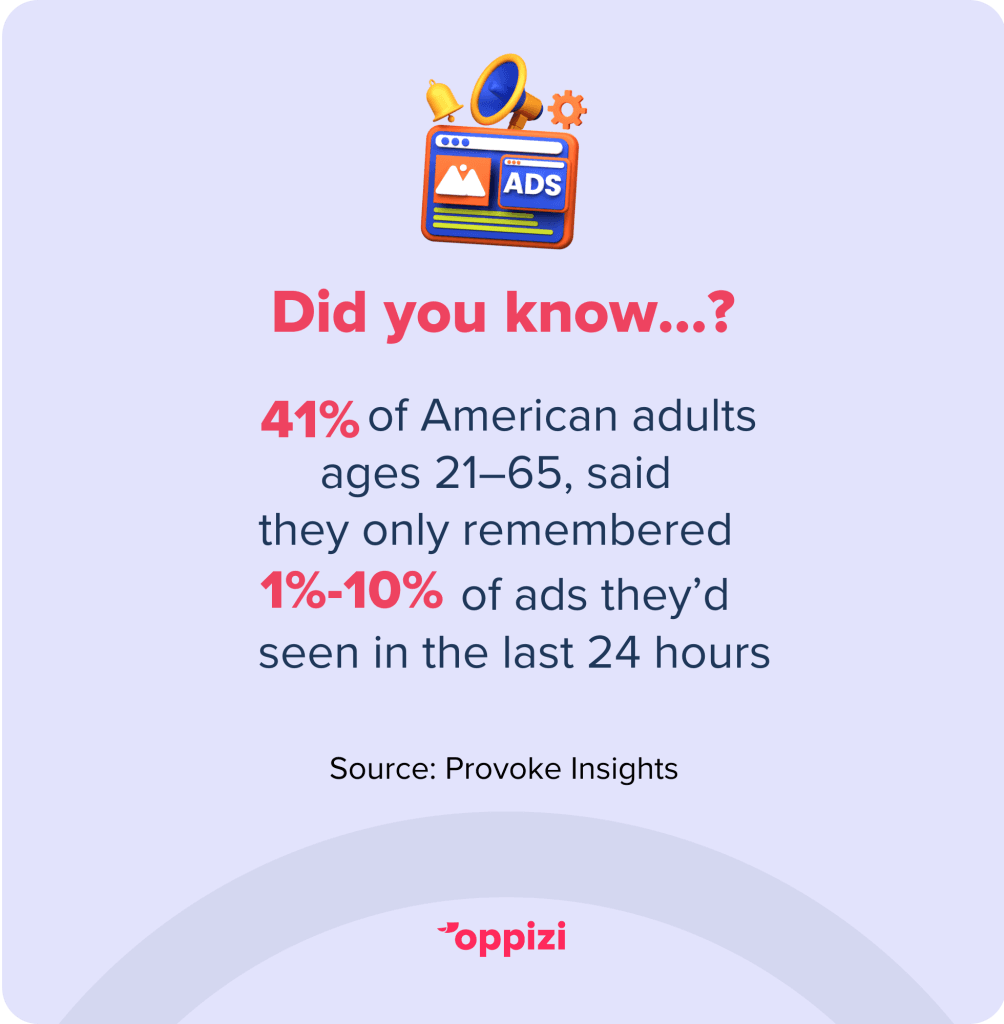
In an era where consumers only remember 1% to 10% of the ads they've seen in the past 24 hours, it’s no surprise that persuasion is crucial for creating memorable and impactful advertisements.
Here are some effective persuasive strategies that you can use to enhance your campaigns.
Emotional appeals
Persuasive advertising often leverages emotions like happiness, nostalgia, love, fear, or security to connect with consumers and influence their buying decisions. For instance, an ad that evokes nostalgic feelings can create a sense of attachment and longing, encouraging consumers to purchase a product that reminds them of their past.
Storytelling
Studies show that storytelling in persuasive advertising is extremely effective, and its importance simply cannot be overstated. Narratives help to build emotional connections with the target audience, making your product more relatable and memorable.
A well-told story is likely to capture your audience’s attention, evoke desired emotions, and make your brand’s message more impactful.
Psychological triggers
Persuasive advertising frequently employs psychological triggers like scarcity, social proof, and the bandwagon effect to influence consumer behavior. Here’s a closer look at these techniques:
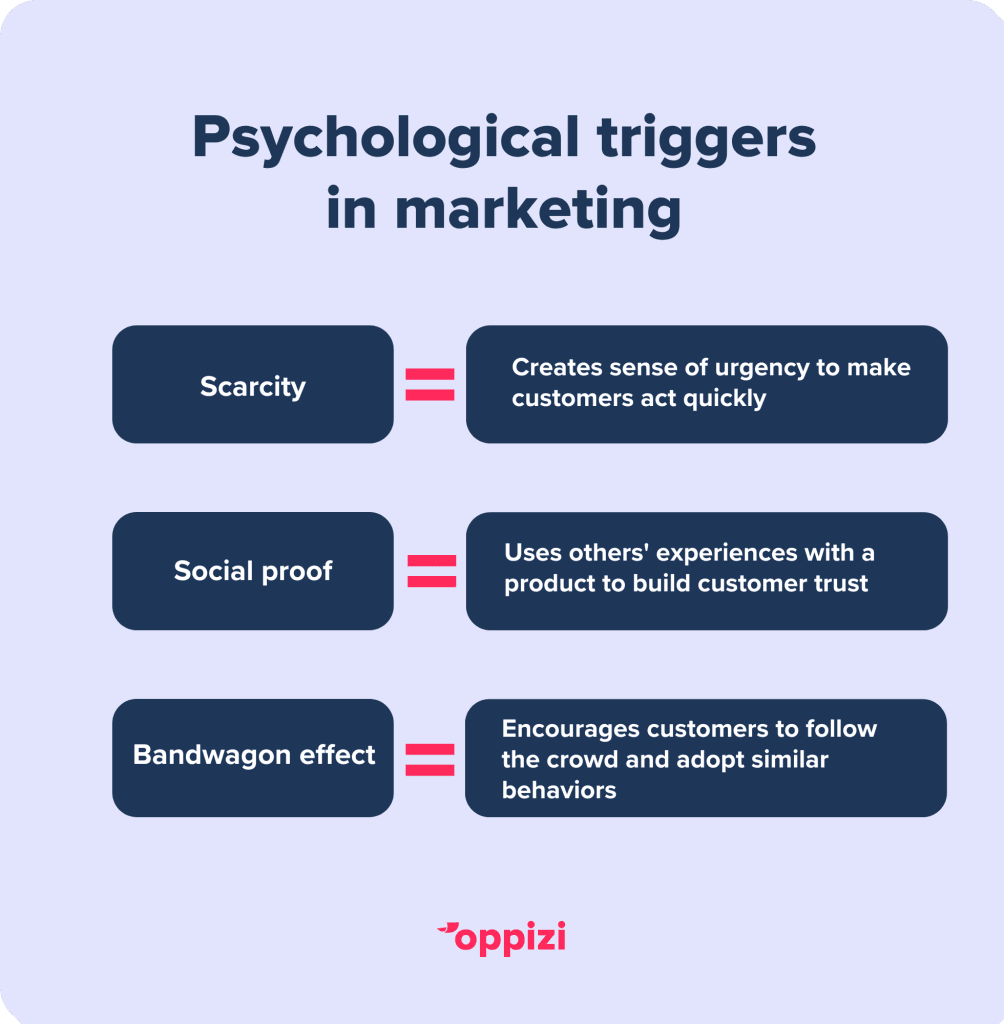
- Scarcity: Creates a sense of urgency, making consumers feel they need to act quickly to avoid missing out
- Social Proof: Leverages the influence of others, suggesting that if many people use and approve of the product/service, it must be good
- Bandwagon Effect: Encourages consumers to follow the crowd and adopt behaviors or purchase products that others are endorsing
Call to action (CTA)
A clear and compelling call-to-action (CTA) is essential in persuasive advertising, as it urges viewers to take the desired action, thereby increasing sales. An effective CTA is specific, concise, and conveys a sense of urgency or importance. For example, phrases like ‘Buy Now,’ ‘Limited Time Offer,’ or ‘Sign Up Today’ can prompt immediate responses from consumers.

Persuasion vs. information: understanding the differences
In advertising, distinguishing between persuasion and information is critical to tailor your advertising strategies effectively, ensuring you communicate the right messages to your target audience.
Persuasive advertising focuses on emotional appeals and influencing buyer behavior, often aiming to create strong emotional connections with the audience. On the other hand, informative advertising prioritizes educating consumers about product features and benefits by providing clear, factual information to help potential customers make informed decisions.
By integrating both approaches, you ensure that your audience is both well-informed and emotionally engaged, leading to more effective advertising campaigns overall.
Ethical considerations and avoiding biases
When using persuasive techniques, it’s critical to adhere to ethical considerations and avoid biases, especially if you want to build a credible and trustworthy brand reputation—here’s what you should know.
Transparency and authenticity
Transparency forms the foundation of ethical advertising, as it ensures integrity and builds trust between brands and consumers. It allows consumers to make informed decisions based on relationships based on credibility and authenticity.
Transparent and authentic advertising is achieved in several ways including:
- Providing accurate information about products or services
- Using real customer testimonials or reviews to support claims
- Being upfront about any sponsored content or partnerships
Targeting Specific Audiences
When targeting specific demographics or social groups, effectiveness in reaching the right audience must be weighed against ethical implications. Ensure your advertising messages are respectful and do not exploit or manipulate vulnerable audiences.
In addition, it's important to carefully evaluate the potential impact of your campaigns on different segments of society, so you can make sure that your brand is creating content that is inclusive and respectful.
Promoting diversity and inclusion
Promoting diversity and inclusion isn't just a moral perspective – it should also be an integral part of your business practices. Aim to represent diverse perspectives and avoid perpetuating stereotypes or biases in your messaging.
By embracing diversity and inclusivity in advertising, brands can resonate and connect with a wider audience and build positive relationships with consumers who value authenticity and representation.
Actionable tips for crafting your persuasive message
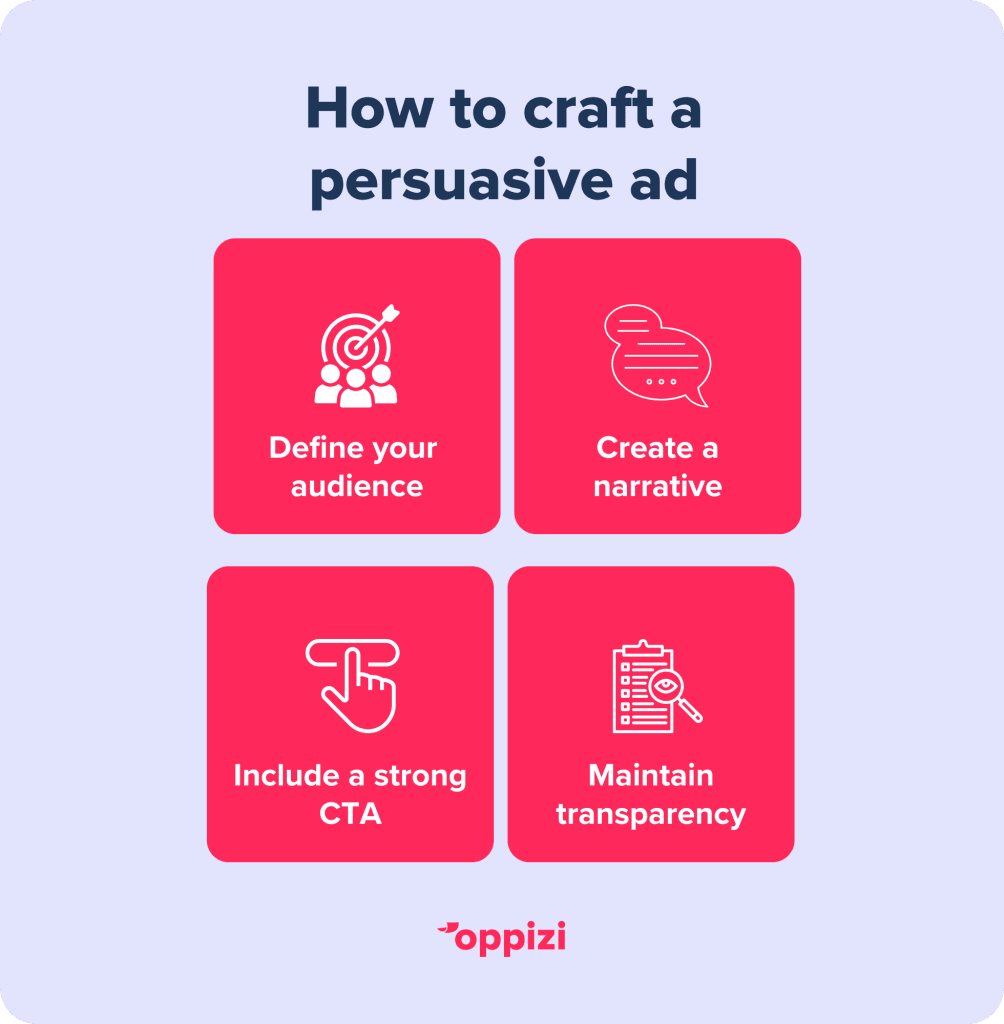
Crafting effective persuasive advertising messages requires careful consideration of your target audience and the most effective ways to resonate with them. Whether you’re new to persuasive ads or looking to refine your skills, here are some actionable tips to help you create compelling, ethical persuasive messages.
Define your audience
- Understand your audience: Conduct thorough market research to identify your target audience – including demographics, buying behaviors, and interests.
- Identify emotional triggers: Use surveys, interviews, or data analysis to uncover emotions that drive your audience’s behavior (e.g., fear, aspiration).
- Tailor your message: Customize your message to resonate with these emotions by using language, imagery, and storytelling techniques.
Develop a compelling narrative
- Craft a captivating hook: Start with a strong hook or attention-grabbing opening that drives your audience in, compelling them to keep reading/watching.
- Use storytelling techniques: Incorporate elements like characters, conflict, and resolution to create a narrative arc that engages emotions and maintains interest.
- Create relatable scenarios: Frame your message to align with your audience’s experiences, making it easier for them to connect with your product or service.
Integrate a CTA
- Include a CTA: Clearly instruct your audience on what action to take next, such as making a purchase or signing up for a newsletter.
- Make your CTA stand out: Use visual cues like buttons, banners, or contrasting colors to make your CTA noticeable and easy to find within your content.
- Prompt action: Use persuasive language and urgency-inducing phrases to encourage immediate action, such as ‘Act Now’ or ‘Limited Time Offer’.
Ensure your message is transparent
- Maintain transparency: Provide accurate information about your product or service to ensure your audience can make informed decisions.
- Avoid misleading claims: Refrain from exaggerating or misrepresenting your offerings, as this can damage trust and credibility with your audience.
- Preserve honesty: Be upfront about any sponsored content, affiliations, or potential conflicts of interest.
Conclusion
Persuasive advertising has proven to be a highly effective tool for marketers – with the power to shape consumer decisions and drive action. As marketing trends and strategies continue to evolve, brands must use these techniques responsibly, prioritizing ethical integrity and transparency to build meaningful relationships with consumers.
While digital platforms have dominated the conversation around persuasive advertising, offline marketing solutions provide a complementary, high-impact channel that cannot be overlooked. At Oppizi, we specialize in bridging the gap between online intent and offline action.
With our expert offline marketing solutions, including flyer distribution, direct mailers, and more, you can take your persuasive advertising strategy to the next level.
Ready to get started? Create an Oppizi campaign today and watch your brand come to life in the hands of your audience!