Last updated September 28, 2026
Most businesses lose track of great prospects the moment the conversation ends. That person who stopped by your booth, grabbed a flyer, or asked a question in-store? If you don’t collect their details and follow up, chances are they’ll forget you before they even get home.
Retargeting offline leads is how you close that gap. It takes real-world interest and turns it into measurable action online.
This guide shows you how to do it step by step. You’ll learn how to capture contact details, build custom audiences, run targeted ad campaigns, and use direct mail to keep the conversation going long after the first interaction.
1. Capture offline leads effectively
Collect contact information at every touchpoint
The first step is simple: get their information into your system. Whether it’s at an event, in-store, or a trade show, focus on gathering emails, phone numbers, or other identifiers. A few ways to do this:
- Sign-up forms: Have a tablet or paper forms ready for people to enter their details.
- Business cards: Collect them and log the information into your CRM right away.
- QR codes on flyers or brochures: Link them to a custom landing page so leads can register online instantly.
Track lead sources with unique identifiers
Give each lead something that helps you trace them back to the original campaign. That way, you’ll know what worked. Practical methods include:
- Custom QR codes or URLs for each event.
- Promo codes tied to a specific campaign.
- Call tracking numbers linked to locations or events.
Segment and clean your data
Before launching any campaigns, tidy up your database. Remove duplicates, verify emails, and group leads by source, location, or interest. A clean, well-organized list means your ads will be relevant and precise.
ClassPass & Oppizi – from flyers to app downloads
ClassPass teamed up with Oppizi to grow app memberships and brand awareness. A targeted flyering campaign brought in more than 350 new app downloads in just four weeks. By adding trackable QR codes to their flyers, the path from flyer to download was seamless. Real-time tracking and optimization showed how powerful offline-to-online retargeting can be.
2. Create custom audiences for retargeting
Upload leads to ad platforms
Once your offline leads are stored in your CRM, you can upload them to ad platforms like Google Ads, Meta (Facebook) Ads, or TikTok Ads. Use the emails, phone numbers, or assigned IDs to build a custom audience.
- Meta Ads: Go to “Audiences,” choose “Custom Audience,” then “Customer List.” Upload your CSV with emails or phone numbers.
- Google Ads: Use “Customer Match” under Audiences. Upload offline conversions with emails, phone numbers, or mailing addresses.
Sync with offline conversion data
For better tracking, connect offline activity to your ad campaigns:
- Log in-store purchases or offline calls.
- Upload those events to Google or Meta so you can measure which ads drive real-world actions.
Map unique IDs for accurate matching
If you assigned IDs to leads, connect those IDs with your tracking system or CRM. This boosts match rates and helps ensure your ads reach the right people.
3. Run targeted retargeting campaigns
Show ads that match their interest
Once your offline leads are uploaded, retarget them with ads that connect to their first interaction. Keep it personal and relevant:
- Highlight the products or services they asked about.
- Share follow-ups from the event they attended, like a webinar recording or key takeaways.
- Use dynamic creative to show different ads by location, intent, or lead source.
Give value, not just a sales pitch
Retargeting works best when you help before you sell. Some ideas:
- Offer free guides, tutorials, or webinars tied to their offline experience.
- Share case studies or testimonials that build trust.
- Provide exclusive offers or early access to products.
Make it personal
Mention the offline interaction to strengthen the connection:
- “It was great meeting you at the expo. Here's a special offer just for attendees.”
- Use names and event details whenever possible.
Grocery chain & Simpli.fi team up
A Midwest grocery chain with 126 stores used Simpli.fi’s geo-fencing to capture shoppers at 88 competitor locations. They retargeted these shoppers across mobile and connected TV. In just one year, the campaign drove more than 163,000 store visits at an average cost of $3.22 per visit, well below the $5 target. Offline behavior, tied to digital ads, turned competitor traffic into loyal customers.

4. Retarget offline leads with direct mail
Direct mail retargeting lets brands send physical mail (like postcards or catalogs) to people who visited their website but didn’t buy. It works by tracking online visitors with cookies or pixels, then matching them to postal addresses through data providers.
Once matched, the system automatically mails personalized offers or reminders within a few days. This keeps the brand top of mind and often drives higher response rates than digital ads alone.
Combine digital and physical channels
Direct mail stands out as a marketing tactic because it adds a personal touch that digital alone can’t match. And when it comes to retargeting leads, it works well when paired with online campaigns. Unlike digital messages, it feels personal and can’t be swiped away. What's more, by combining direct mail retargeting with digital remarketing lets you engage customers across channels, reinforce your message, and boost conversions.
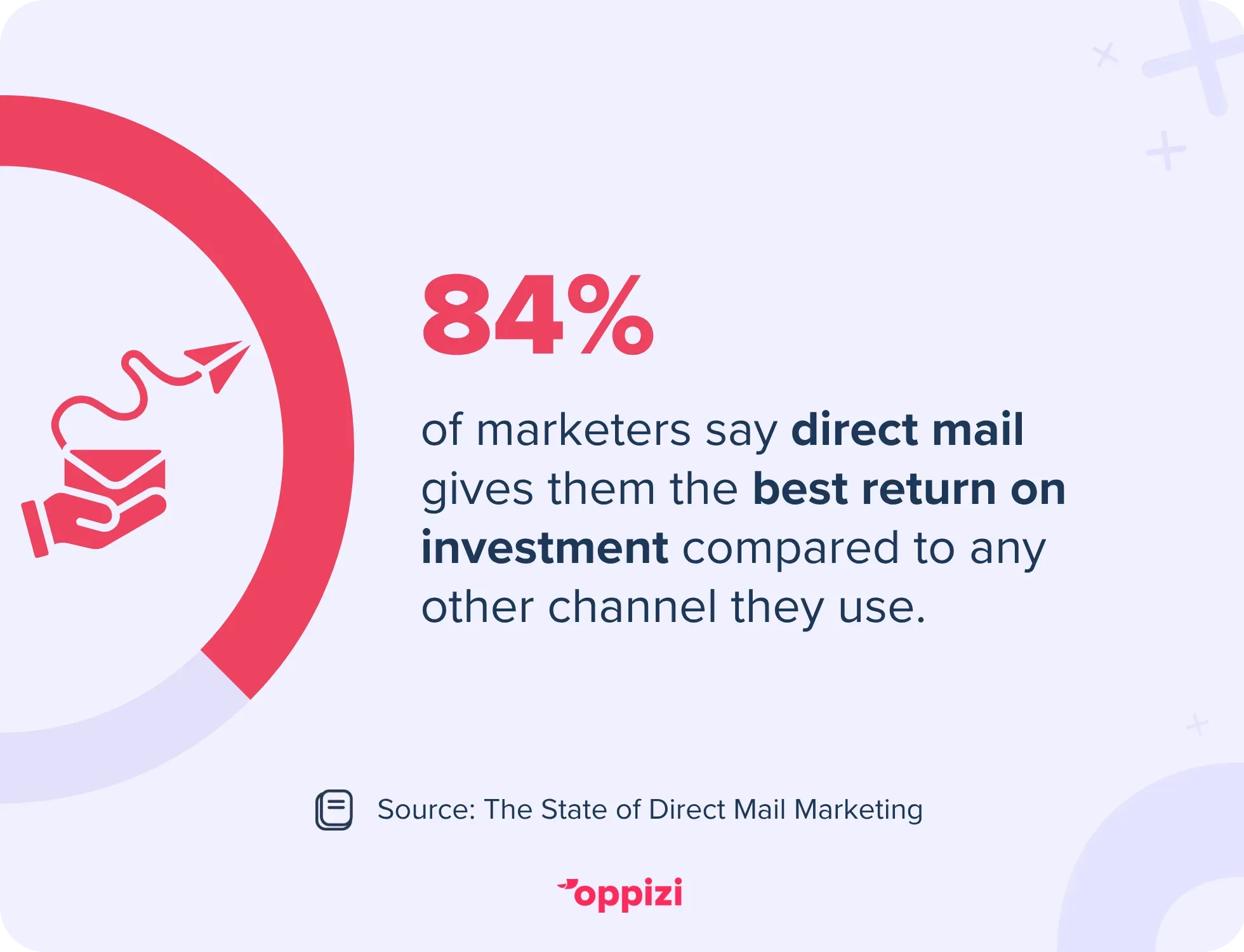
Direct mail delivers the highest ROI of all marketing channels, according to 84% of marketers. What’s more, 85% agree that it delivers the best conversion rate, and 84% say it also has the best response rates. This multi-channel impact also strengthens customer retention by keeping your brand memorable and building trust over repeated touchpoints.
How to set it up
For direct mail retargeting with Oppizi, you can manage it two ways:
- Manual campaigns: Upload offline leads by CSV, segment by interest or behavior, and send customized mailers.
- Automated campaigns: Connect your CRM via API so mailers go out automatically after triggers, like an abandoned cart or event sign-up.
Send at the right time
Mail is most effective when interest is fresh:
- Send thank-you postcards within 48 hours of a purchase or event.
- Use reminders for abandoned carts or special offers after events.
- Scale campaigns by setting thresholds, like sending only when you have 200+ leads in a segment.
5. Measure and analyze performance
Track key metrics
To see if retargeting works, measure both online and offline actions:
- Digital ads: Click-through rates, conversions, cost per lead, and engagement.
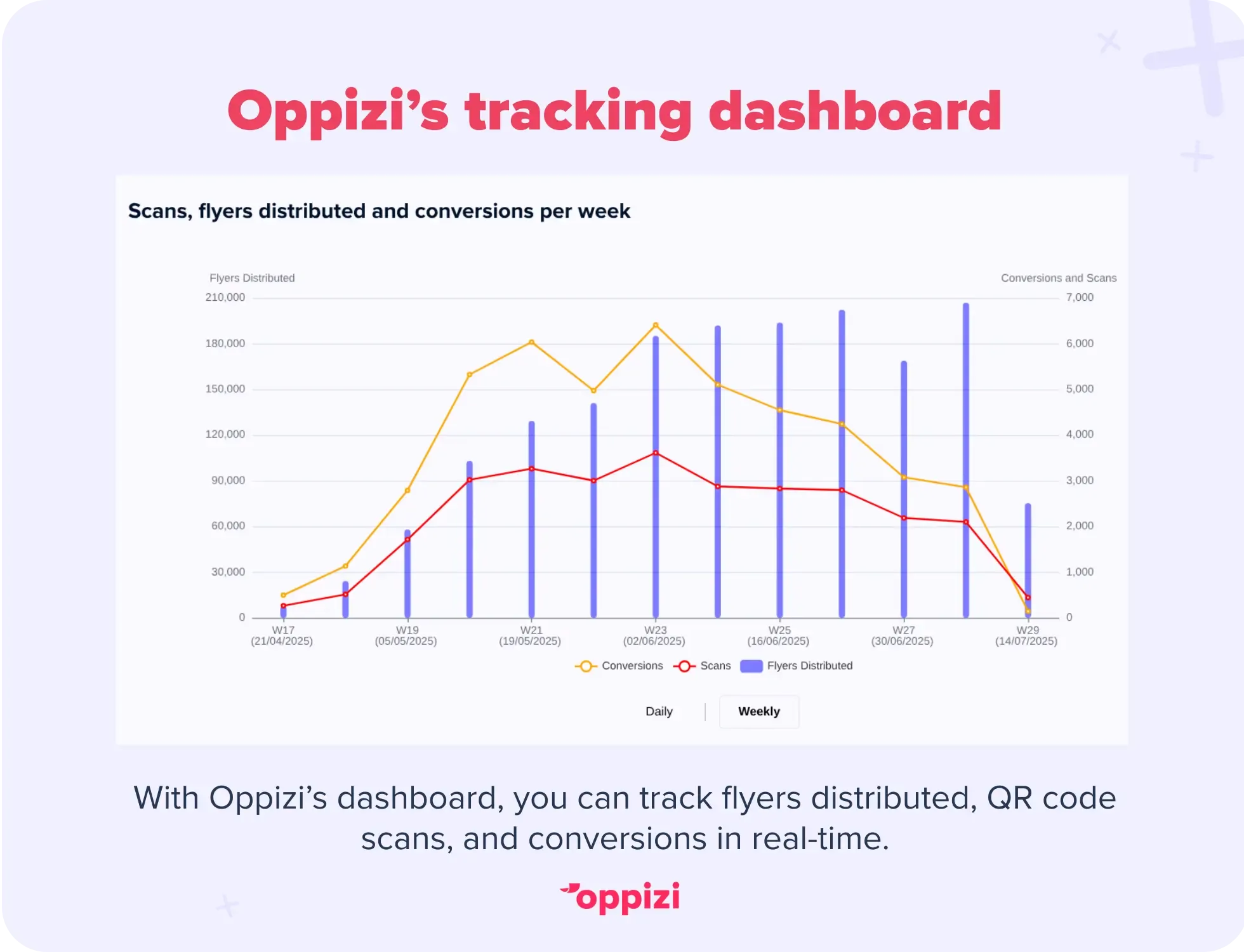
- Direct mail: Response rate, QR code scans, landing page visits, and purchases.
- Offline conversions: Store visits or phone calls tracked with promo codes or unique numbers.
Connect offline and online data
Use attribution to see what’s driving results:
- Match emails from trade shows to your Facebook audience.
- Track QR code scans from mailers to a landing page.
Focus on what works
Identify which offline sources drive the most engagement, then double down:
- Event type (trade show, in-store, networking).
- Location.
- Lead behavior or interests gathered offline.
How Lumension boosted homepage views
After a 30% budget cut, Lumension relied on retargeting to keep demand high. They matched offline event leads with online users and served them personalized display ads. They also retargeted website visitors and competitor content readers. The result: an 865% lift in homepage views and an 81% increase in leads. Offline leads fueled strong online engagement, proving the impact of a connected approach.
6. Test, refine, and scale your campaigns
Start small and test
Try things out before you go big. A few simple tests can show what works best:
- A/B test ads for different offline groups.
- Compare direct mail formats like postcards vs. flyers.
- Experiment with timing, such as sending mailers within 24–48 hours or a week later.
Use results to improve
Look at the data and adjust.
- Focus on offline segments that engage the most.
- Change your offers for groups that respond less.
- Keep your CRM updated so your targeting stays accurate.
Grow what works
Once you know what’s effective, scale it up.
- Put more budget into the best-performing groups.
- Use automated direct mail to handle larger volumes.
- Keep an eye on ROI and adjust as you go.
FAQs on retargeting offline leads
1. Which retargeting channel should I prioritize: digital ads or direct mail?
It depends on your audience and budget. Digital ads scale quickly and cost less. Direct mail makes a stronger impression. Many businesses see the best results by using both together.
2. How soon should I follow up with offline leads?
The sooner, the better. Aim for 24–72 hours after the interaction. This keeps your brand top of mind. Automated tools, like Oppizi for direct mail or CRM integrations with Google and Meta, make this fast and easy.
3. How can I tell if my offline retargeting campaigns are working?
Measure both online and offline actions. For ads, look at click-through rate, conversions, and engagement. For mailers, track QR code scans, promo code redemptions, and landing page visits. Connect everything in your CRM to see ROI clearly.
Conclusion
Offline interactions are too valuable to waste. Every event, flyer, or store visit is a chance to build a customer relationship if you follow up. With the right system, you can capture leads, track them, and retarget effectively.
By combining digital ads with timely, personalized direct mail, you stay in front of leads and turn brief offline moments into lasting conversions.
Don’t let the leads you worked hard to win slip away. With Oppizi, you can turn every offline interaction into real growth. Try the platform today and grow your audience with confidence.