Last updated July 28, 2026
Your customers’ inboxes are packed, ads are everywhere, and CPCs keep rising. For growing retail and e-commerce brands, it’s harder than ever to stand out.
Direct mail offers a solution. It’s a physical, memorable channel that works alongside digital marketing. A well-planned direct mail campaign can reach new customers, keep existing ones coming back, and increase average order value. It also provides clear data so you can track what works and optimize your efforts.
This guide will show you how to add direct mail to your retail or e-commerce strategy. You’ll learn best practices, common pitfalls, and how Oppizi’s platform helps you launch high-ROI campaigns quickly and efficiently.
Why your customers will notice direct mail
Marketing costs are rising, ad fatigue is real, and digital channels are crowded. Direct mail gives DTC brands a way to stand out from the competition, connect with customers, and make a real, measurable impact. Postcards, catalogs, and self-mailers land where they can be seen and remembered.
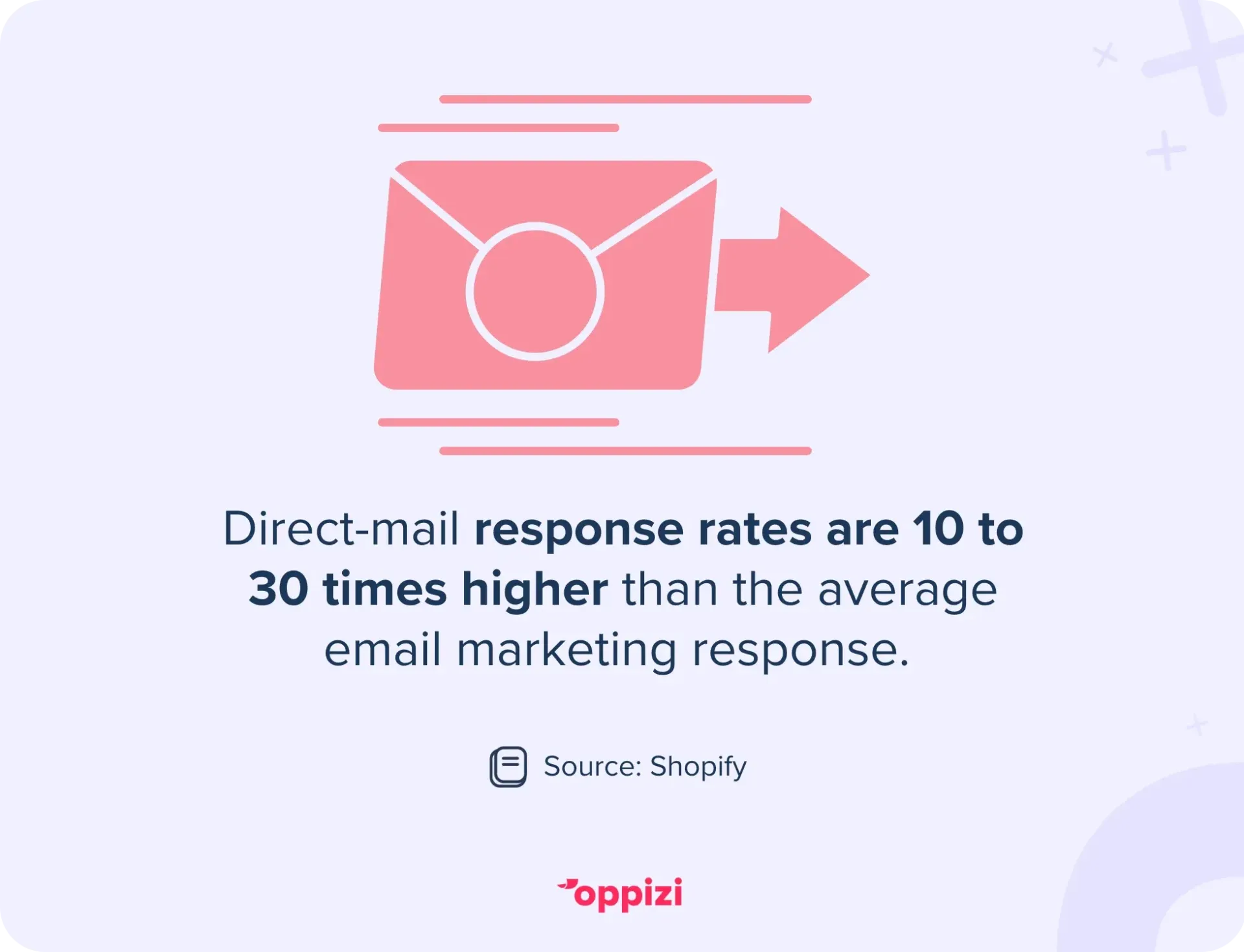
Personalized mail can achieve response rates 10 to 30 times higher than email, especially when sent to high-intent audiences. That's because physical mail feels personal and premium. It builds stronger brand recall and creates emotional connections.
You can also tie it to digital marketing. Trigger campaigns based on online behavior, add QR codes or personalized URLs, and feed results back into your CRM for smarter targeting.
What direct mail can do for your business
Direct mail can make an impact across the entire customer journey. It works for acquisition, retention, and brand-building:
- Lower acquisition costs: Reach high-value segments outside costly digital auctions.
- Boost retention and loyalty: Welcome kits, milestone rewards, and re-engagement mailers encourage repeat purchases. In fact, it is widely considered one of the most effective channels for customer retention.
- Cross-sell and upsell: Highlight products customers haven’t tried to increase lifetime value.
- Stand out from competitors: Personalized, multi-touch campaigns create a premium experience that digital alone cannot replicate.
Mail performs best as part of an integrated strategy. Use browsing and purchase data to target the right audience. Include QR codes to drive traffic online. Coordinate email or SMS follow-ups. Feed engagement back into your CRM to improve future campaigns.
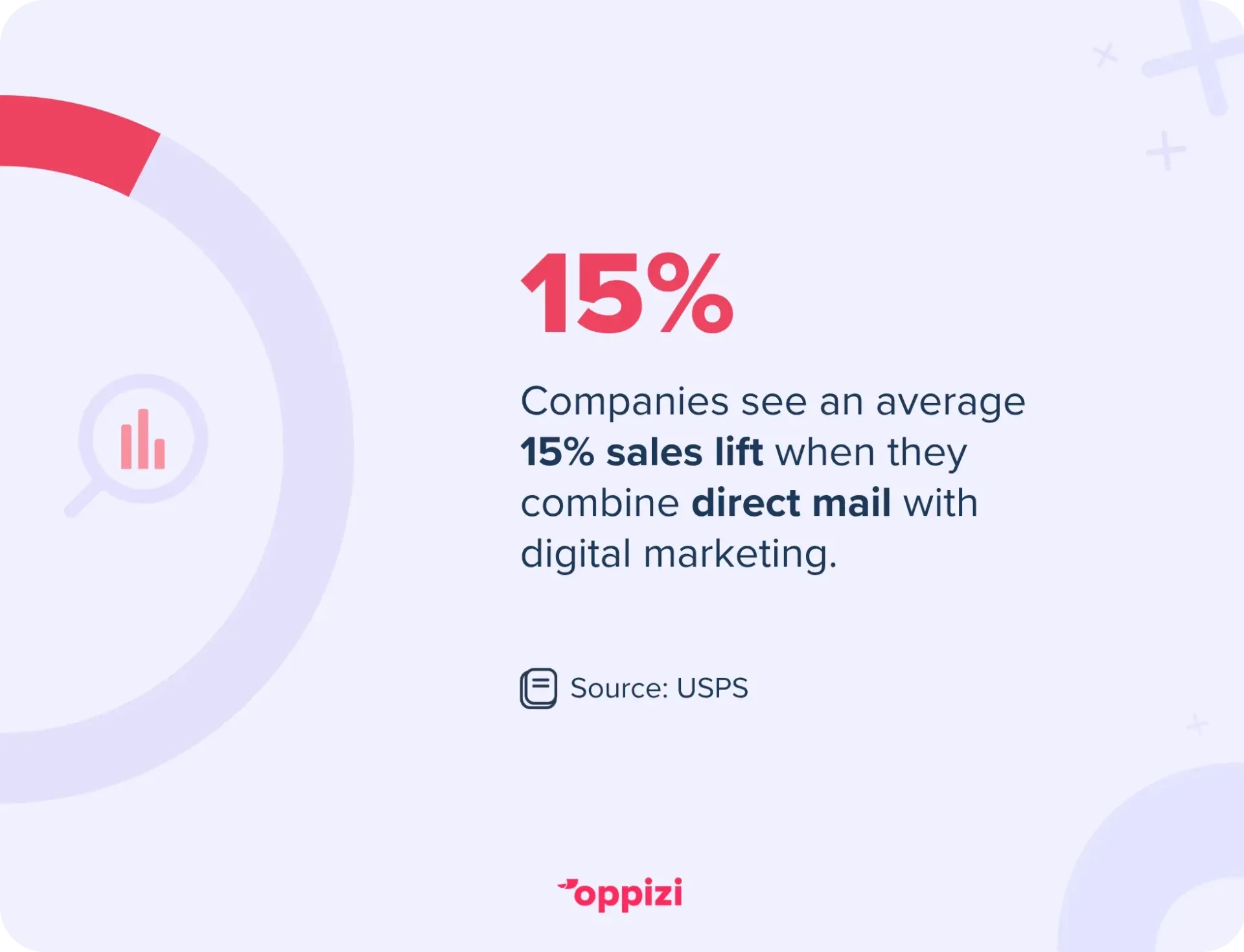
Direct mail is more than a nice addition. USPS research shows hybrid campaigns can deliver 15% or more lift over digital alone. When used strategically, mail is a measurable growth tool that complements digital channels, drives conversions, and builds long-term loyalty.
From idea to inbox: building your mail strategy
Direct mail works best when it’s planned, personalized, and integrated with digital marketing. When done right, it can drive measurable results, boost engagement, and improve ROI. Here’s a step-by-step approach for e-commerce and retail brands.
Step 1: Set objectives and pick your segments
Start by clarifying what success looks like. Clear goals guide targeting, creative, and measurement.
- Set objectives: reduce acquisition costs, re-engage lapsed buyers, or increase average order value.
- Segment your audience: high-intent prospects, first-time buyers, loyal repeat customers, or lapsed/dormant users.
- Map conversion value: calculate target CPA or ROI for each segment.
- Decide mail type and offer: postcards, catalogs, self-mailers, or VIP kits tailored to each audience.
Step 2: Get your mailing list ready to go
Direct mail only works if your data is clean and compliant. Investing in quality data prevents wasted spend and boosts ROI.
- Append verified addresses to your CRM or contact list.
- Clean your database: remove duplicates, inactive records, and suppression lists.
- Partner with reliable mail fulfillment providers experienced in e-commerce.
- Make sure your campaign follows all applicable privacy laws.
Step 3: Create designs and offers that get attention
Your mailer represents your brand. It should be visually appealing, personal, and actionable.
- Align design with your brand tone, imagery, and messaging.
- Personalize content: use names and reference products or categories the recipient engaged with.
- Include strong, measurable offers: “Use code MAIL15 for 15% off” or “Free shipping on your next order.”
- Add digital calls to action: QR codes, PURLs, or pre-filled landing pages.
- Consider tactile quality: thick cardstock, folded formats, or special finishes signal premium value.
- Track results: tie each code or URL to the recipient segment.

Step 4: Reach customers when it matters most
Direct mail doesn’t react in real time like email. Timing is key.
- First-time buyers: send a welcome package 1–2 weeks post-purchase.
- Loyal customers: schedule quarterly or seasonal mailers.
- Lapsed customers: mail every 3–6 months with a re-engagement offer.
- Coordinate follow-ups: reinforce messages with email or SMS timed to mail delivery.
Step 5: Partner with pros for hassle-free fulfillment
Execution determines success. Reliable partners and careful planning ensure mail reaches the right audience on time.
- Choose a fulfillment partner that handles printing, bundling, address prep, and postal drop.
- Select postal class and shipping method based on speed, cost, and audience location.
- Start with a pilot batch (5,000–10,000) to test performance.
- Monitor delivery timing to align with promotions or offer validity.

Step 6: Track every click, scan, and response
Direct mail needs measurement to justify spend. Track incremental lift and ROI carefully.
- Track engagement using PURLs, QR codes, or promo codes.
- Conduct match-back analysis: compare purchasers against your mail list.
- Tag digital touchpoints with UTMs to track web traffic.
- Use hold-out groups (e.g., 10% not mailed) to measure true impact.
- Calculate ROI: (Revenue from mail segment – cost of mailing) ÷ cost of mailing.
Step 7: Optimize and scale
Once you have results, refine and expand. Testing helps you find what works and reduces risk.
- Review metrics: conversion rate, AOV, repeat purchase rate, CPA, and ROAS.
- Test creative formats, offers, triggers, and segments.
- Integrate channels: combine mail with email, SMS, paid media, and CRM.
- Scale gradually: start with high-intent segments, then expand to mid-intent and broader audiences.
- Maintain fulfillment and ROI discipline: track performance and ensure reliable delivery before scaling.
Common pitfalls and how to avoid them
Direct mail works best when it’s done with care. Still, even strong brands can make mistakes that hurt results. Here’s what to keep in mind.
Many campaigns fail because they don’t track performance. Without PURLs, QR codes, or hold-out groups, you can’t see the real lift or ROI. Targeting is another big issue. Mailing to broad or outdated lists wastes money and lowers engagement.
Creative is just as important. Generic designs or weak offers often end up in the trash. Each piece should feel personal, polished, and true to your brand. Timing also matters. Send mailers during key customer moments or seasonal peaks, not at random.
Mail performs best when it’s part of a bigger plan. Pair it with email, SMS, or paid ads for better results. Start small, test, and refine before you scale.
Why Oppizi is your partner for high-ROI direct mail in retail and e-commerce
Direct mail can drive serious growth when done right. Oppizi makes that simple. Our platform lets retail and e-commerce brands manage every offline channel in one place: flyers, EDDM, door hangers, and inserts included. It’s fast, organized, and easy to run.
With Oppizi, you can reach the right audience using smart segmentation by behavior, location, or customer stage. Everything happens in one smooth workflow: creative, printing, fulfillment, and postal compliance.
Our Shopify integration makes direct mail easy to manage and measure. It syncs your customer and order data so you can target the right people and send personalized mail based on what they’ve bought or where they are in the customer journey.
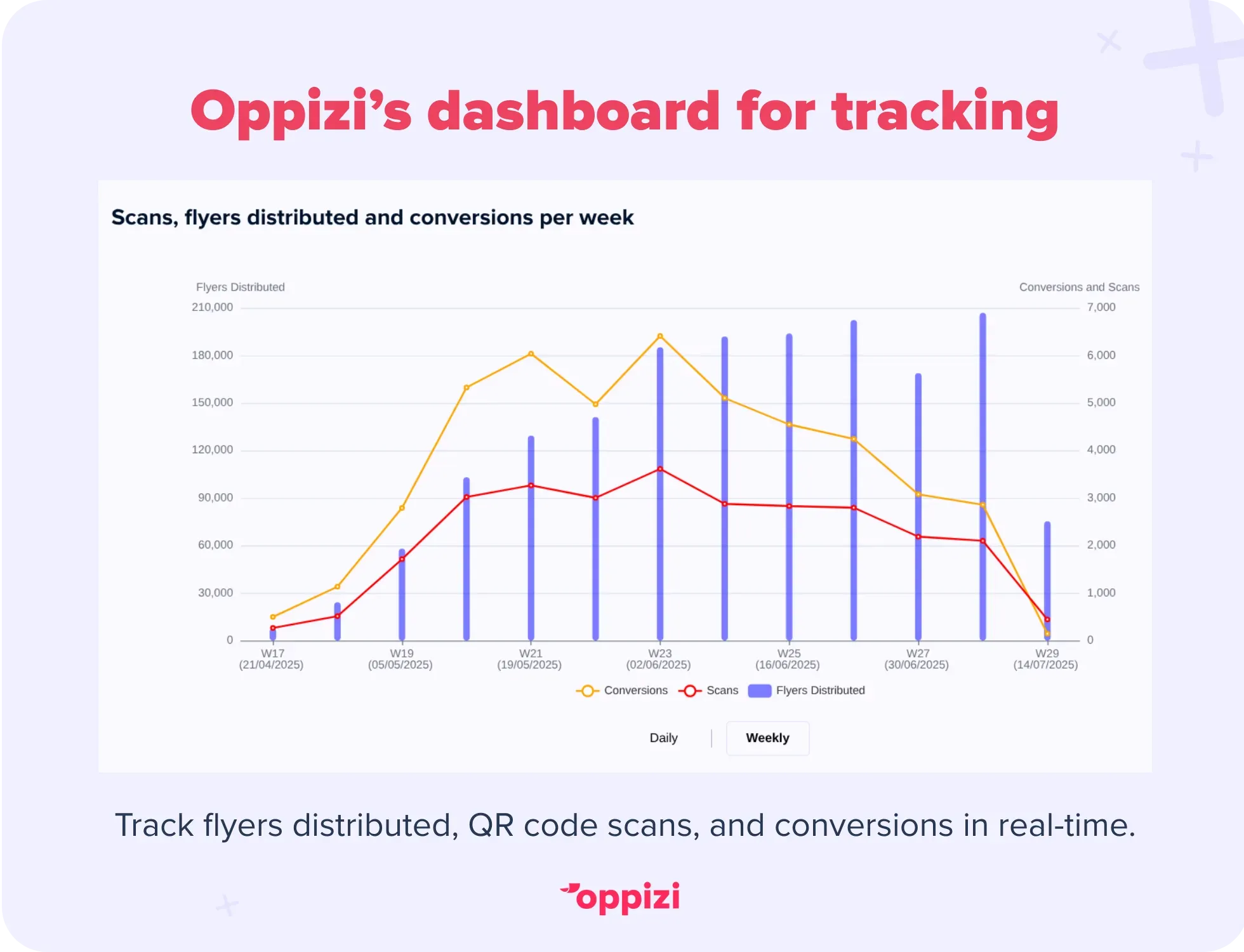
You’ll also see how your campaigns perform in real time. Oppizi tracks ROI, delivery rates, and more than 14 key metrics so you can make clear, data-backed decisions with confidence.
FAQ: Direct mail for retail and e-commerce
1. How much does a direct mail campaign usually cost?
Costs vary based on the type of mail, how many pieces you send, and the design. Postcards are usually more affordable than catalogs or VIP kits. Here’s a simple breakdown of what to expect in the U.S.:
- Postage: First-Class Mail typically costs $0.66–$1.00 per piece, while Standard Mail runs about $0.20–$0.60 per piece.
- Printing: Depending on the format and volume, expect $0.20–$5.00 per piece.
- Mailing lists: Standard lists cost around $0.10–$1.00 per record. Niche or highly targeted lists may cost more.
- Design: Hiring a freelance designer can range from $50–$150 per hour for custom creative work.
Starting with a pilot campaign helps manage costs and measure ROI before scaling.
2. How do I know if direct mail will work for my audience?
Direct mail works best for high-intent customers, like repeat buyers, engaged browsers, or look-alike prospects. Using CRM data and online behavior to personalize each piece can boost response rates. Testing a small batch first helps confirm what resonates.
3. How long before I see results?
You can track engagement as soon as mailers arrive. Many customers respond within days. Measuring true incremental lift and ROI may take a few weeks, depending on follow-ups and campaign structure.
4. Can I combine direct mail with digital marketing?
Absolutely. You can trigger campaigns based on online behavior, add QR codes or personalized URLs, and feed results back into your CRM. Coordinating email or SMS with mail delivery can increase conversions even more.
5. How do I measure ROI accurately?
Use QR codes, PURLs, or promo codes to track engagement. Match-back analysis and hold-out groups help measure incremental impact. Calculate ROI by dividing net revenue from mailed segments by campaign costs. This shows what works before you scale.
The easiest way to do this is to run your campaign with Oppizi. You can see ROI, delivery, and engagement metrics all in one user-friendly dashboard, making it simple to optimize and grow.

Conclusion
Digital channels alone are no longer enough for retail and e-commerce brands. Direct mail adds a tangible, personalized touch that lowers acquisition costs, strengthens retention, and increases lifetime value. Layer it with digital triggers, smart segmentation, and measurable tracking, and it becomes a high-ROI growth lever.
With Oppizi, you can plan, execute, and track campaigns from one platform. Reach the right audience, personalize offers, and measure incremental revenue in real time. Try Oppizi today and launch a direct mail campaign in just a few clicks.