Last updated August 28, 2026
Customer retention has become one of the most critical components of a sustainable business model. While customer acquisition often receives more attention, businesses increasingly recognize the importance of retaining existing customers to build long-term profitability, brand loyalty, and market share.
In this blog article, we’ll outline why customer retention is important and how you can create a retention-focused culture in your business.
Why customer retention matters
Customer retention refers to a company's ability to keep its customers over a period of time. It is typically measured by the percentage of customers who continue to buy from the business during a given timeframe.
Below are just some reasons why businesses should invest in customer retention:
- Lower costs: According to The Harvard Business Review, acquiring a new customer can cost five to twenty-five times more than retaining an existing one.
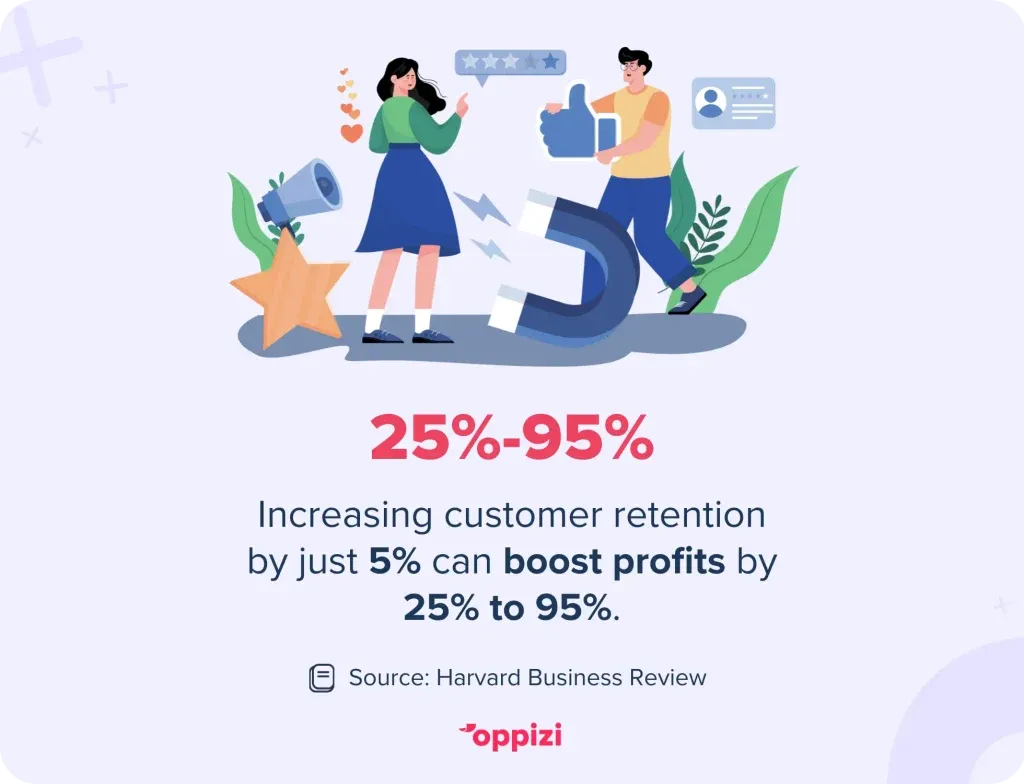
- Higher profitability: Research also shows that increasing customer retention by just 5% can boost profits by 25% to 95%.
- Greater customer value: Rivo reports that existing customers spend an average of 67% more than new customers.
These statistics highlight the significant financial and operational advantages of prioritizing customer retention. Businesses that overlook this aspect of their strategy risk wasting resources and limiting their growth potential.
The foundations of customer retention
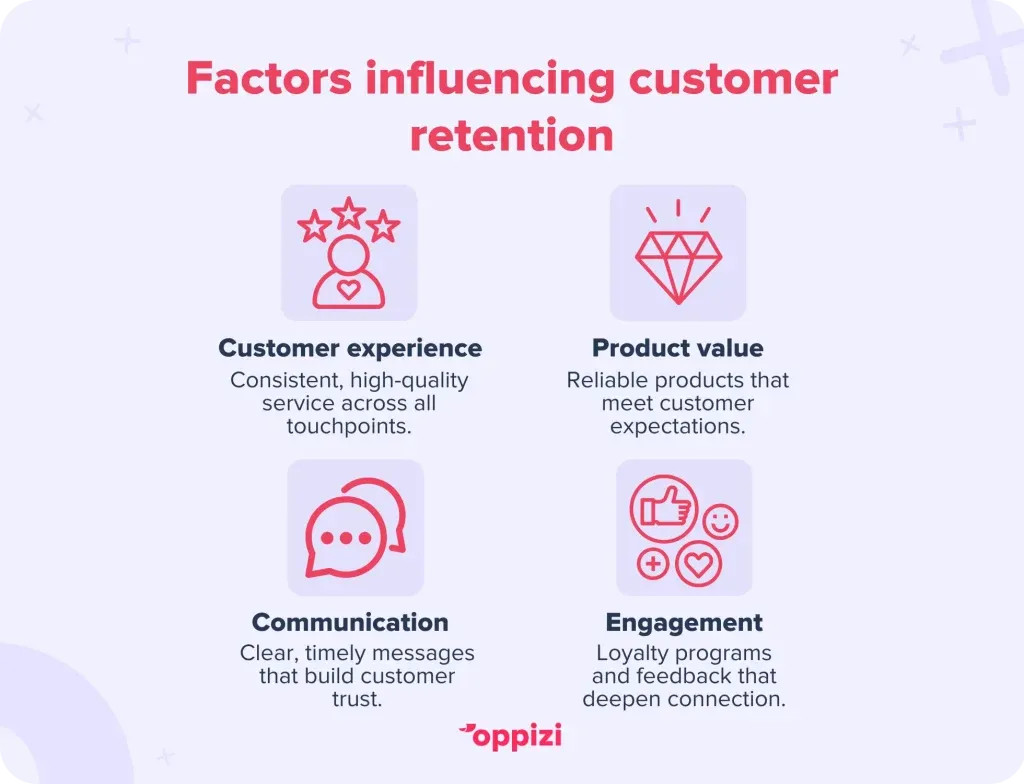
To effectively retain customers, businesses need to understand the factors that influence customer loyalty and satisfaction. These include:
- Customer experience: The consistency and quality of service provided across all touchpoints play a crucial role in determining whether a customer will return.
- Product or service value: Businesses should ensure that the perceived value and reliability of their products or services meet customer expectations.
- Communication: Clear, timely, and relevant communication builds trust and demonstrates that the business values the relationship with its customers.
- Engagement: Actively engaging customers through feedback, loyalty programs, and personalized interactions can strengthen their connection with the brand.
Building strong customer relationships starts from the initial contact and should be nurtured throughout every stage of the customer journey. To foster long-lasting connections with customers, businesses must prioritize relationship-building in their operational strategies, marketing efforts, and customer support initiatives.
Retention for sustainable growth
Customer retention should be considered a growth strategy that complements customer acquisition. Retained customers frequently become brand advocates, generating organic reach and new customers through referrals. Moreover, they usually provide a consistent source of recurring revenue, which improves forecasting accuracy and stabilizes cash flow.
Retention also has a compounding effect. As loyal customers continue to interact with a brand, their lifetime value increases, and marketing spend becomes more efficient, allowing businesses to allocate more resources toward innovation and differentiation.
The role of offline marketing in customer retention
Offline marketing remains a powerful and, at times, underutilized tool for boosting customer retention. While digital channels offer scaling and targeting capabilities, offline channels can deliver unique and memorable experiences that strengthen brand loyalty.
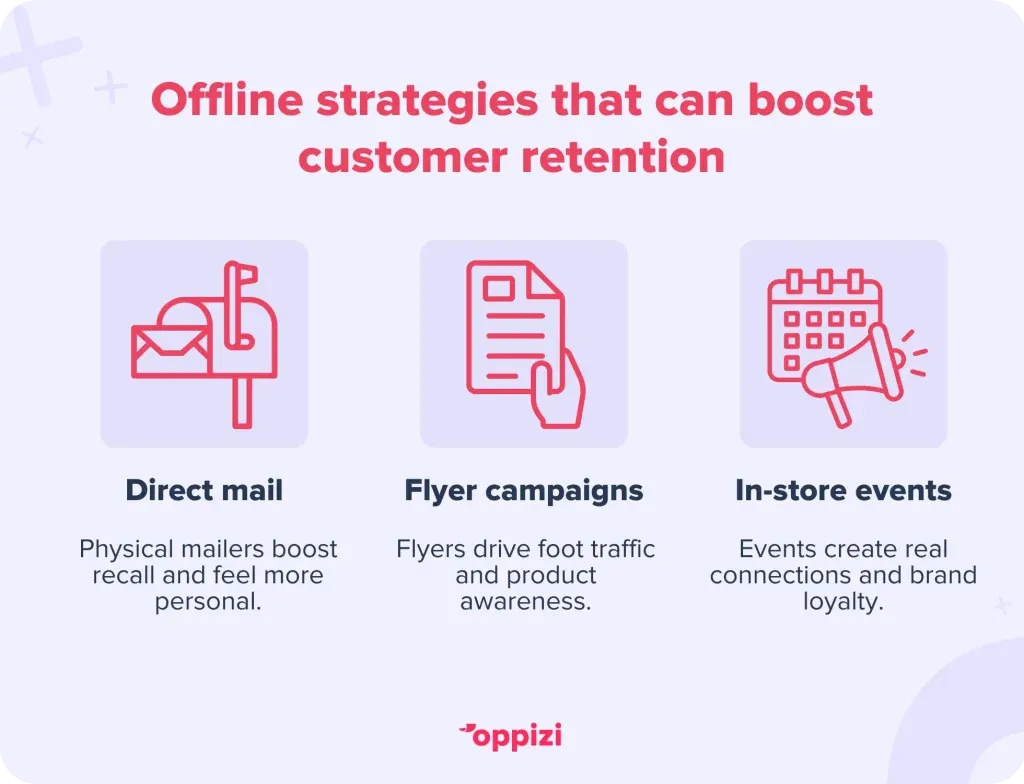
Offline marketing methods that can contribute to retention include:
- Direct mail:Tangible mailers create memorable experiences and reinforce brand recognition. They can also be personalized, which can elevate customer perception of your brand. According to the Association of National Advertisers (ANA), direct mail has an average ROI of 43%, making it one of the most effective offline marketing channels.
- Flyer campaigns: Strategically distributed flyers can increase visibility and remind existing customers of ongoing offers or new products.
- In-store events and activations: These events provide opportunities for face-to-face engagement and foster a sense of community around the brand.
When integrated with digital strategies, offline marketing can create even further impact. For example, a personalized direct mail campaign can be synchronized with an email follow-up, reinforcing the message and encouraging action across multiple platforms.
Creating a retention-focused culture
Building a customer retention strategy requires more than a set of tactics - it demands a cultural shift within the organization. Every department, from sales to customer service, should be aligned around the goal of delivering value and building trust with customers over time.
To foster a retention-first culture, businesses can:
- Set clear KPIs: Define metrics such as churn rate, customer lifetime value (CLV), and repeat purchase rate to monitor retention performance.
- Invest in employee training: Ensure that all team members understand the importance of customer retention and are equipped to support it in their roles.
- Solicit and act on feedback: Regularly collect customer feedback and use it to drive continuous improvement in products, services, and processes.
By embedding retention goals into organizational objectives and workflows, companies can create a customer-centric environment that supports sustainable growth.

Conclusion
Customer retention is an essential part of sustainable business growth. By focusing on delivering consistent value, building emotional connections, and creating a seamless customer experience, businesses can increase loyalty and profitability.
Offline marketing is a vital part of this equation. Through the likes of flyer campaigns and in-person engagement, businesses can strengthen customer relationships in ways digital channels alone cannot achieve.
Oppizi’s targeted distribution solutions help brands connect meaningfully with their audience - and keep them coming back.
Ready to enhance your customer retention strategy? Launch an offline marketing campaign with Oppizi todayand start building loyalty that lasts.
Frequently asked questions
- What is the difference between customer retention and customer loyalty?
Customer retention refers to the act of keeping customers over time, while loyalty reflects the emotional connection and preference a customer has for a brand, which often results in retention.
- How can I measure customer retention?
Common metrics for measuring customer retention include churn rate (percentage of customers lost), customer lifetime value (total revenue expected from a customer), and repeat purchase rate.
- Is customer retention more important than acquisition?
Both customer acquisition and customer retention are essential. However, retention is important as it is cost-effective and contributes to long-term profitability and customer advocacy.
- Can offline marketing really impact customer retention?
Yes. Offline marketing creates memorable and emotional experiences that can strengthen customer relationships and improve brand recall.
- What industries benefit most from strong customer retention?
All industries benefit from customer retention efforts, but retention is especially valuable in subscription-based, retail, hospitality, and service sectors where repeat business drives growth.