Last updated July 28, 2026
Retail marketing helps stores sell more, whether they’re small local shops or big online brands. It’s about getting products in front of the right people in a way that makes them want to buy.
With so many ways to market a store, it can feel overwhelming—especially if you’re just getting started. This guide keeps things simple. You’ll learn different marketing strategies and how to reach customers, whether online, offline, or both. The goal? More sales and loyal customers.
What is retail marketing?
Retail marketing is the process of attracting customers and encouraging them to make a purchase. Whether online or in-store, it focuses on creating a smooth, enjoyable shopping experience that drives sales.
It’s different from general marketing, which builds brand awareness. Retail marketing focuses on stores and selling products. It covers everything from store layouts to online ads.
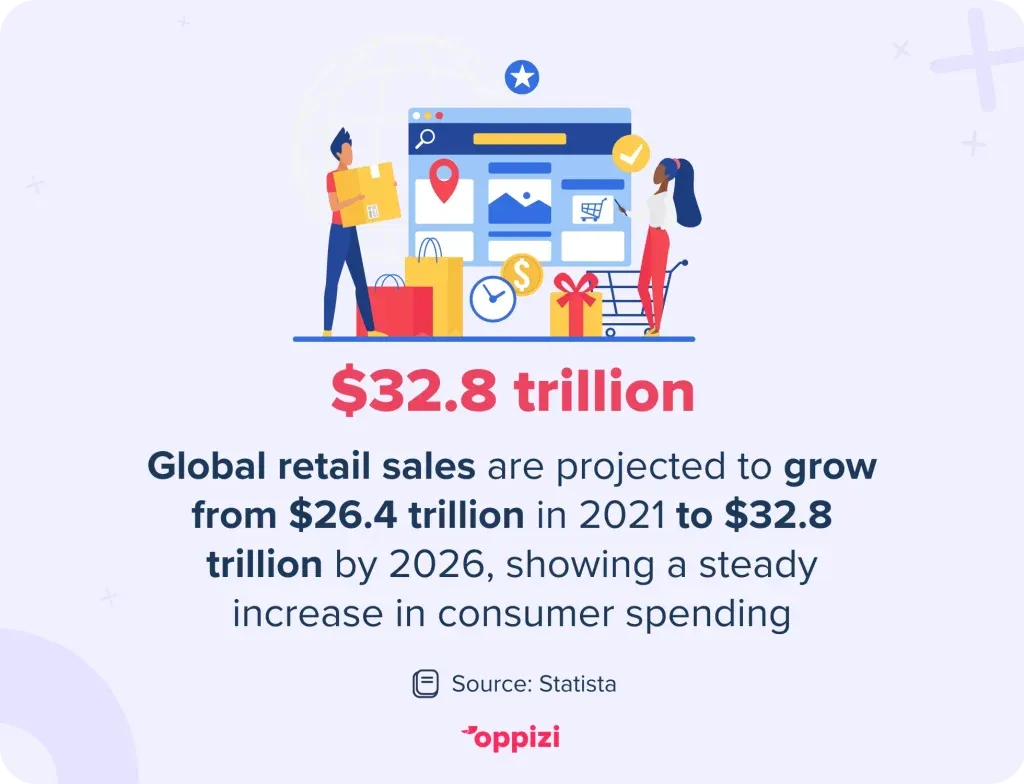
With global retail sales expected to grow from $26.4 trillion in 2021 to $32.8 trillion by 2026, competition will only get tougher. A strong retail marketing plan helps businesses stand out, attract customers, and drive sales.
Types of retail marketing
There are two main types of retail marketing: online and offline. The best approach usually combines both.
Online retail marketing
This uses digital channels to attract customers and sell products.
- SEO: Helps your website show up in search results so people can find your products.
- Social media: Uses platforms like Instagram, Facebook, and TikTok to connect with customers through posts, ads, and influencer partnerships.
- Email marketing: Sends promotions, cart reminders, and special offers to bring customers back.
- Paid ads: Runs ads on Google and social media to drive traffic and sales.
- Content marketing: Creates blogs, videos, and other content to attract and engage shoppers.
- Affiliate marketing: Works with influencers or websites to promote products for a commission.
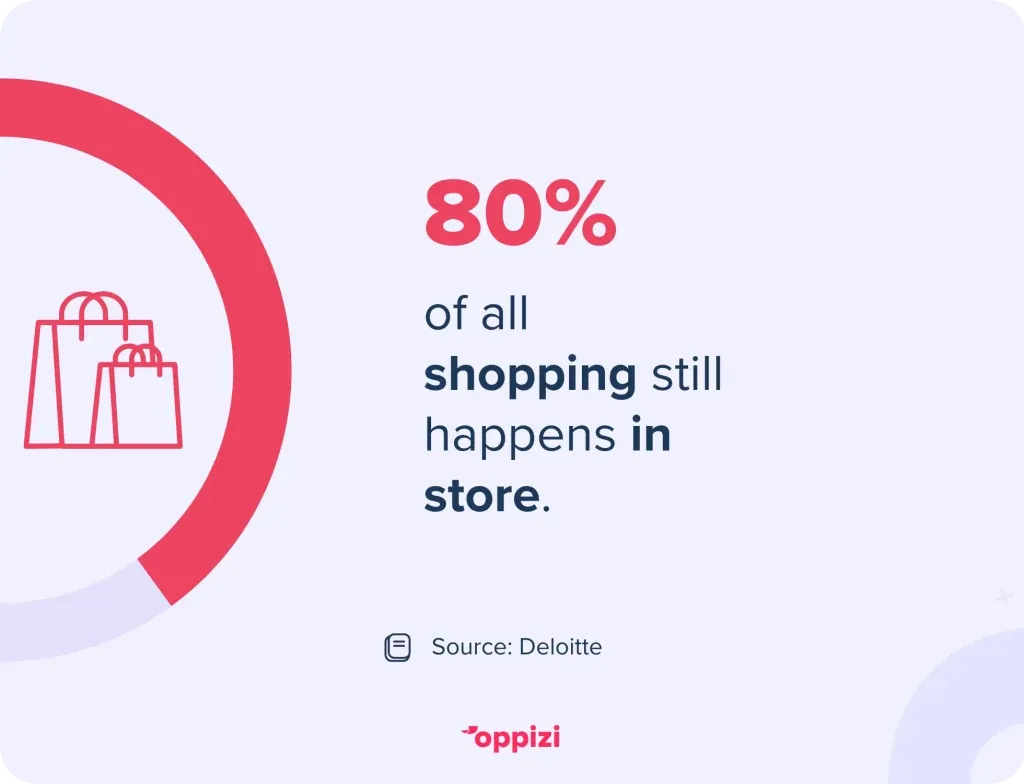
Even with reports of retail shifting online, 80% of all shopping still happens in stores. This proves that in-person interactions still matter. The offline world—where customers see, touch, and buy products—remains a crucial part of retail.
Offline retail marketing
This focuses on reaching customers in person.
- In-store promotions: Offers discounts, loyalty programs, demos, and events through shopper marketing.
- Direct mail: Sends flyers, postcards, or catalogs with special deals.
- Billboards and signs: Puts ads in busy areas to grab attention.
- Street marketing: Hands out flyers or samples to attract new customers.
- Guerrilla marketing: Uses creative tactics like pop-ups or flash mobs to create buzz.
- Word-of-mouth: Encourages happy customers to refer others with rewards.
Using both online and offline marketing, such as direct mail for retail and e-commerce, helps you reach customers everywhere—whether they’re browsing online, shopping in-store, or on the go.
How to create a retail marketing strategy
Building a strong retail marketing strategy takes a few key steps.
1. Know your customers
Figure out who shops with you and what they need. Look at their age, shopping habits, and what problems your products solve. Use surveys, sales data, or simple conversations to learn more.
2. Pick the right marketing mix
Use a mix of online and offline marketing. If you have a physical store, direct mail and in-store deals work well. If you sell online, digital ads and social media are key. The best approach combines both to reach customers everywhere.
3. Set up your store for success
If you have a physical shop, layout matters. Place products where customers will notice them. Use signs and displays to highlight deals and new arrivals. A well-organized store makes shopping easier and boosts sales.
4. Use digital tools
Even if you focus on offline marketing, tech can help.
- QR codes on flyers or posters can lead people to your website or special deals.
- Online booking makes in-store visits easier for customers.
- Text messages and apps keep customers engaged with offers and reminders.
5. Track what’s working
Pay attention to what brings in customers. Online, track website visits, social media likes, and email open rates. Offline, use:
- Promo codes to see which ads or mailers drive sales.
- QR code scans to measure interest in printed materials.
- Customer feedback to learn what’s working and what needs improvement.
A good marketing strategy isn’t set in stone. Keep testing and tweaking to see what works best for your business.
Why retail marketing matters
Good marketing does more than sell products—it makes shopping easier and keeps customers coming back. Here’s why it’s important:
- Attracts new customers and keeps regulars engaged – Sales, promotions, and great service bring people in and encourage repeat visits.
- Helps shoppers decide what to buy – Clear product details and special offers make choices easier.
- Builds brand awareness – The more people see your brand, the more likely they are to remember and choose you.
- Strengthens customer relationships – Trust and loyalty grow through personalized offers and great service.
- Keeps shoppers interested – Social media, promotions, and new tech (like AR/VR) create an exciting shopping experience.
Retail marketing isn’t just about making a sale—it’s about building a lasting connection with your customers.
Essential tips for better retail marketing
Want to attract more customers and boost sales? Focus on these essentials:
- Sell what people want – Stock popular products and display them in a way that grabs attention.
- Price competitively – Offer fair prices, discounts, and promotions when it makes sense.
- Get the word out – Use a mix of online and offline marketing. Seasonal events are great for driving sales.
- Make shopping easy – Whether online or in-store, keep it simple. Offer great service and reward loyal customers.
- Use technology – Track sales, personalize marketing, and improve the customer experience.
- Build a strong brand – Stand out with a clear message and consistent branding.
- Choose a great location – If you have a physical store, foot traffic matters. Make sure your space is easy to navigate.
Nail these basics, and you’ll keep customers coming back.

Why offline marketing still works
Digital marketing gets all the attention, but offline marketing is still a powerful way to reach customers. Here’s why:
1. It connects with local shoppers
If you have a physical store, offline marketing helps you reach people nearby—especially those who aren’t searching online.
2. It’s more memorable
A flyer or postcard sticks around longer than an online ad. People can hold it, see it every day, and are more likely to act on it.
3. It builds trust
When customers see your brand in different places—on a flyer, a store sign, or a street promotion—it feels more familiar. That makes them more likely to buy.
Offline marketing isn’t going anywhere. It’s a simple, effective way to stay in front of customers and drive sales.
The power of offline marketing in a digital world
Online ads come and go in a scroll, but offline marketing sticks. A flyer in hand or a postcard in the mailbox feels more real than another email lost in the inbox.
For local businesses, offline marketing reaches the right people—those nearby and ready to shop. It builds trust in a way digital alone can’t.
The best strategy? Use both. Digital helps you target and track, but offline makes a lasting impression. Together, they boost brand recognition, keep customers engaged, and drive sales without relying on ever-changing algorithms.
How Oppizi makes offline marketing easy
Getting started with offline marketing can feel like a lot. Oppizi makes it simple.
Our platform handles everything—printing, tracking, and distribution. Just sign up, pick your campaign, and we do the rest.
Need direct mail, flyers, or street marketing? We take care of it so you can focus on running your business.

The future of retail marketing
Retail is always changing. What worked last year might not work next year. The key is keeping up.
Shoppers want a smooth experience—whether they’re online, in a store, or scanning a QR code. The brands that mix digital and offline marketing will come out ahead. That means personalized deals, smart recommendations, and interactive shopping.
Sustainability matters more than ever. People care about eco-friendly packaging and brands that share their values. Marketing needs to show that.
Technology will keep evolving, but one thing stays the same: customers want real connections. The brands that make shopping easy, personal, and memorable will win.
FAQ: Retail Marketing
What is meant by retail marketing?
Retail marketing is how businesses attract customers and get them to buy. It includes things like ads, promotions, and good customer service—whether in a store or online.
What is an example of retail marketing?
A clothing store runs a sale on social media while mailing coupons to local shoppers. This mix of online and offline marketing helps bring in more customers.
What are the 4 principles of retail marketing?
Retail marketing is built on four main ideas, known as the 4 Ps:
- Product – Selling what customers want.
- Price – Setting prices that are competitive but still profitable.
- Place – Selling in the right locations, whether in stores or online.
- Promotion – Using ads, discounts, and events to attract buyers.
What is a retailer in marketing?
A retailer sells products directly to customers. This can be in a store, online, or both. Examples include supermarkets, clothing stores, and e-commerce sites like Amazon.
What are the 4 types of retailers?
The four main types of retailers are:
- Brick-and-mortar – Physical stores like grocery stores and boutiques.
- E-commerce – Online shops selling through websites or apps.
- Omnichannel – Businesses that sell both in-store and online.
- Direct-to-consumer (DTC) – Brands that sell straight to customers, often through their own websites.
Wrap-up
Retail marketing helps bring in customers and boost sales. The best approach combines online and offline strategies to create a smooth shopping experience. Know your audience, use the right marketing tactics, and track what works to keep improving.Need an easy way to run offline campaigns? Oppizi makes it simple. Get started today and reach more customers.