Last updated July 23, 2026
Imagine strolling through your favorite supermarket, casually tossing items into your cart. Walking down the cereal aisle, a box from a new brand catches your eye. You pause, take a closer look, and before you know it, that new cereal is in your cart. This isn't just a happy accident—it’s shopper marketing at work.
Shopper marketing is all about influencing purchasing decisions right when shoppers are about to buy. The goal is to attract attention and nudge shoppers toward a purchase. In this article, we'll explore what shopper marketing is and why it’s so important. You’ll also learn actionable strategies you can implement to drive more sales at your business.
What is shopper marketing?
Shopper marketing is all about influencing people when they are shopping to help them choose certain products. Instead of focusing on general brand awareness, it targets customers at the moment they are about to buy, whether in a store or online.
For example, think about those eye-catching displays at the end of grocery store aisles, the “buy one, get one free” deals, or personalized recommendations when shopping online. These strategies help guide shoppers' decisions and encourage them to make a purchase right then and there.
Shopper marketing makes the shopping experience more engaging while increasing sales at the same time.
Shopper marketing vs. retail marketing: What’s the difference?
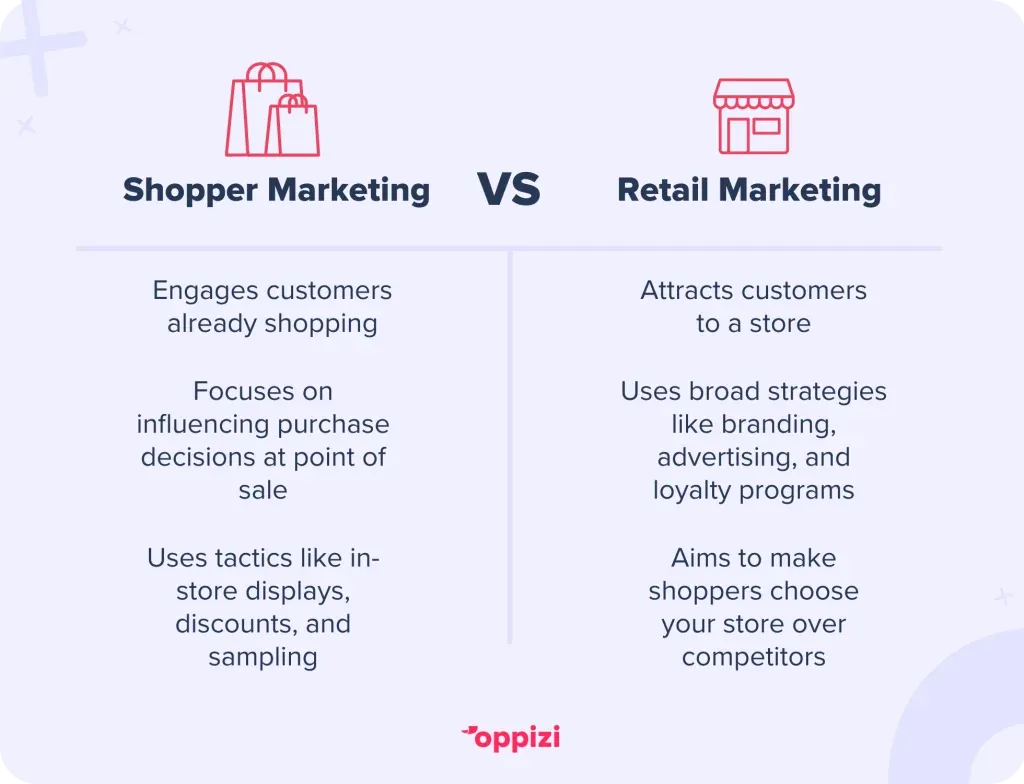
Although shopper marketing and retail marketing might seem similar, they focus on different stages of the customer journey:
- Retail marketing is about attracting customers to a physical or online store. It includes broad strategies like advertising, branding, loyalty programs, and promotions to make sure people choose your store over competitors.
- Shopper marketing happens when customers are already shopping. It focuses on influencing their decisions at the point of purchase through tactics like in-store displays, discounts, product sampling, and personalized recommendations.
In short, retail marketing gets shoppers to the store, while shopper marketing helps convert them into buyers once they’re there.
Benefits of shopper marketing
Shopper marketing offers several key advantages. Here are some of the key benefits:
Increased sales
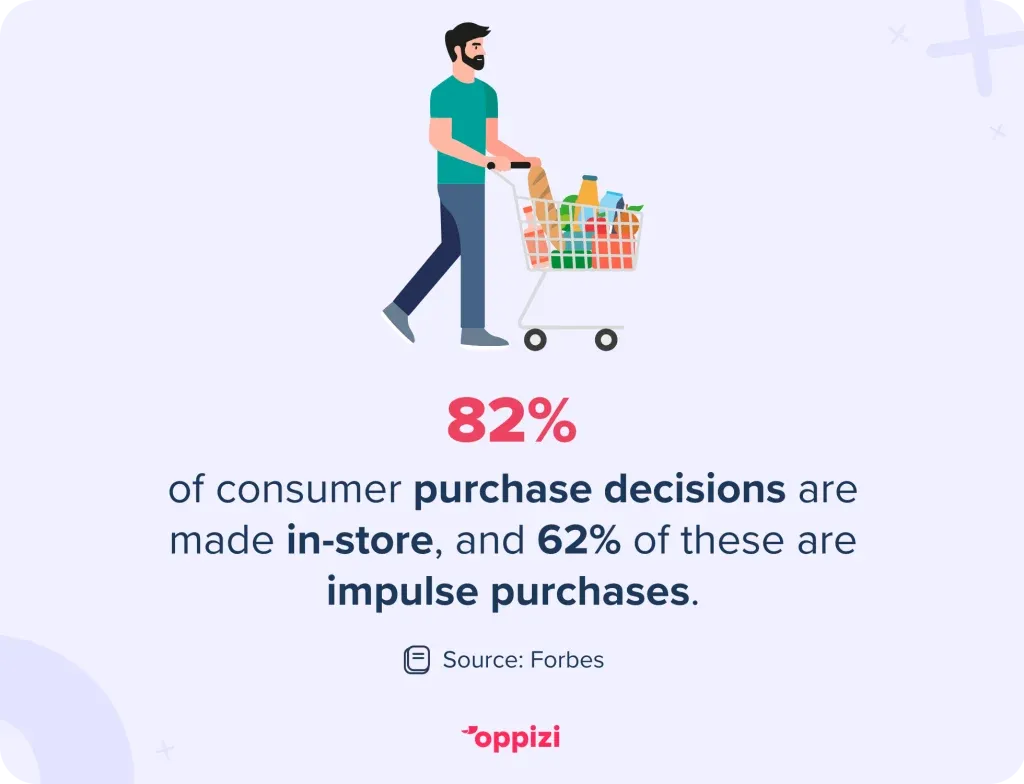
Targeting shoppers right at the point of purchase can significantly impact sales. According to Forbes, 82% of consumer purchase decisions are made in-store, and 62% make impulse buys. Therefore, your shopper marketing efforts can directly translate to increased revenue.
Better shopper insights
Shopper marketing relies heavily on data and insights. Analyzing shopping behavior helps brands tailor promotions and improve product placement, leading to higher engagement and sales.
Improved ROI
Shopper marketing is highly targeted, maximizing the impact of your marketing budget. Well-executed in-store displays can drive significant revenue. One study found that rear-end cap displays increased sales for featured products by 416%, while front-end caps increased sales by 346%.
Enhanced shopping experience
Ever notice how some stores just feel easier to shop in? By understanding what shoppers want and need, you can create a smoother, more enjoyable shopping journey which can boost customer satisfaction and encourage repeat purchases.

Effective shopper marketing tactics
Shopper marketing can significantly enhance the shopping experience. Here are some proven strategies to implement at your business:
1. In-store displays
Strategically placed displays can grab shoppers' attention and highlight your products. These displays should provide clear information about the product and any promotions.
Design your printed advertisements to be visually appealing. Use bold colors, attractive graphics, and clear signage to draw shoppers' attention. The goal is to make your display stand out in a busy retail environment. High-quality product images, vibrant backgrounds, and well-designed banners can make a significant difference.
One of the best places to position your displays is at the end of the aisles. These endcap displays are highly visible to shoppers walking through the store. They are a great place to showcase special offers, new products, or seasonal items.
2. Promotions and discounts
Offering promotions and discounts can motivate shoppers to make a purchase. For example, you can use limited-time offers, buy-one-get-one-free deals, and bundled discounts. These promotions create a sense of urgency. They encourage shoppers to take advantage of the deal while it lasts.
The key is to highlight the deal's time-sensitive nature. Clear signage and countdown timers can sway last-minute purchase decisions.
3. Product sampling
Offering free samples can significantly increase sales. According to Marsh Supermarkets, 68% of consumers have been persuaded to purchase after receiving free samples.
Set up sampling stations where shoppers can try products before they buy. These stations should be placed in high-traffic areas of the store, like the entrance or along the main aisles.Ensure your staff knows the product well and can explain its features and benefits. This can help build trust and make shoppers more comfortable making a purchase.
4. Digital integration
The majority of shoppers use their mobile devices when shopping. According to eMarketer, 69% of customers check their phones in-store to look at reviews on a product, 58% compare with similar products, 55% look for product specifications, and 53% look for deals or discounts.
Integrating digital elements into your displays can bridge the gap between online and offline marketing. For example, you can place QR codes on in-store displays. These codes can link to product information, instructional videos, or customer reviews. This gives shoppers instant access to valuable information which can significantly influence their purchasing decisions.
You could also develop a mobile app to enhance the shopping experience. This will allow you to offer personalized recommendations, digital shopping lists, and a digitalized loyalty program.
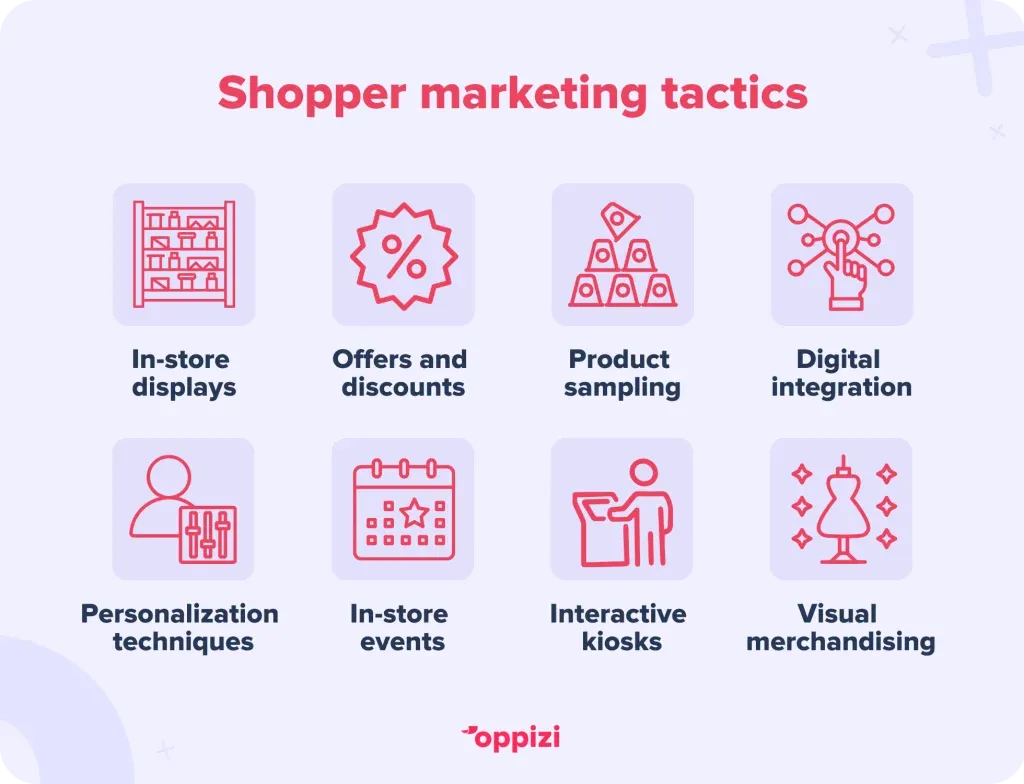
5. Personalization
Personalization strategies play a key role in the shopper experience, with 80% of businesses reporting that customers spend about 38% more when their journey is tailored to them.
Leverage data to understand shopper preferences and craft targeted promotions, email marketing, and ads that resonate with individual needs. For instance, if a customer regularly purchases skincare products, offer them exclusive deals on new skincare lines or complementary items to enhance their routine.
6. In-store events
Hosting events like live demonstrations or product tastings engages shoppers and drives traffic. For example, if you sell kitchenware or food products, you could invite a chef to demonstrate recipes using your products. Shoppers could then taste samples and learn new cooking techniques.
You can use social media and flyer distribution to spread the word and increase attendance. Have your staff hand out flyers to customers as they make purchases and distribute flyers in high-traffic areas near your store.
7. Interactive kiosks
Touchscreen kiosks provide detailed product information, customer reviews, and stock availability, helping shoppers make informed decisions. This can be especially useful for complex or high-value items where customers may need more information before buying.
8. Visual merchandising
Visual merchandising can significantly affect how products are perceived. Well-organized displays help customers quickly find what they need. Create visually appealing displays that highlight your products. Use colors, shapes, and textures to draw attention and make products stand out.
Make sure your high-demand products are easily accessible. Everyone has heard the expression “eye level is buy level.” You can boost revenue by placing high-margin and popular products at eye level where they are most likely to be noticed.
Want to convert more in-store shoppers? Check out our guide on how to increase retail sales.
How to implement a shopper marketing strategy
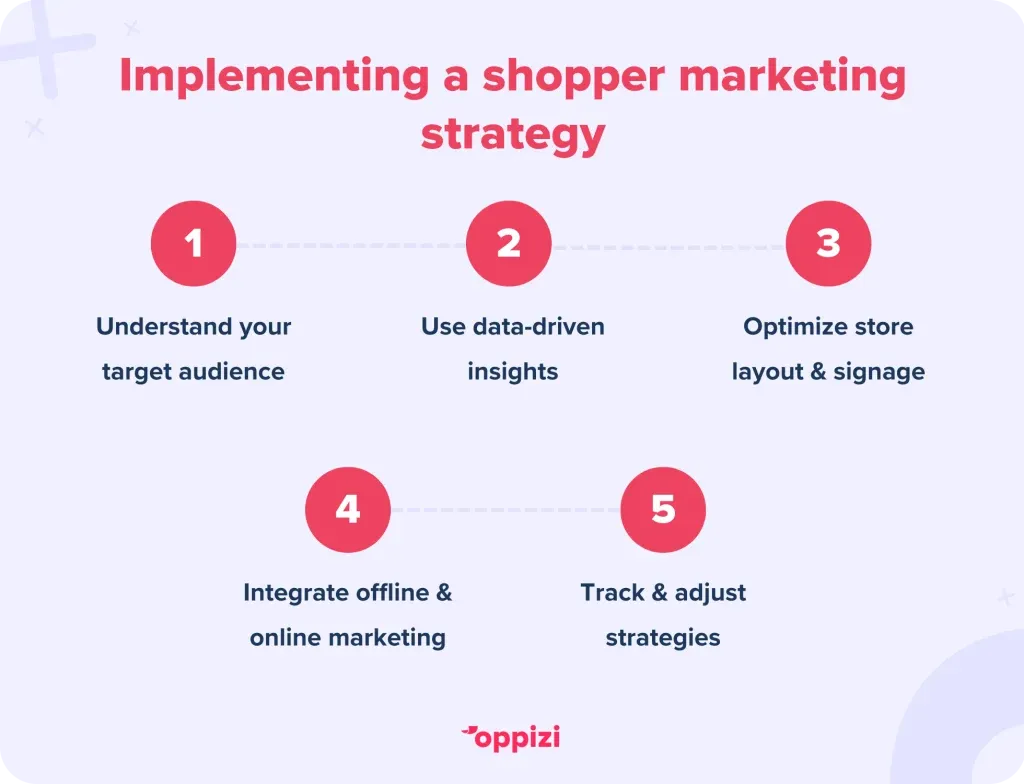
1. Understand your target audience
Gather data on shopper behavior, preferences, and pain points to create effective marketing strategies.
2. Leverage data-driven insights
Use real-time data and purchase history to tailor promotions and product placements to shopper preferences.
3. Optimize store layout and signage
Ensure product placement and store layout encourage easy navigation and highlight key promotions.
4. Integrate online and offline marketing
Connect online and offline marketing efforts to reach customers more effectively. Utilize digital marketing tools like mobile apps, QR codes, and personalized emails to enhance in-store experiences.
5. Measure and adjust strategies
Analyze sales performance, customer feedback, and engagement metrics to refine and improve your shopper marketing efforts.
Shopper marketing FAQs
1. What Is an example of shopper marketing?
An example of shopper marketing is a grocery store setting up a promotional display for a new snack product near the checkout area. This could be coupled with a limited-time discount offer. This setup captures the shopper's attention at a key moment, encouraging impulse purchases.
2. What does shopper marketing work best for?
Shopper marketing works best for products that benefit from in-store decision-making. It works well for food and beverages, personal care items, and household goods. You can also use it for new product launches and seasonal promotions.
3. Is shopper marketing the same as trade marketing?
No, shopper marketing and trade marketing are not the same. Trade marketing is all about helping products get into stores and making sure they sell well once they’re there. Instead of targeting shoppers directly, it focuses on working with retailers, wholesalers, and distributors to promote products.
For example, a snack brand might offer a grocery store special discounts, free displays, or advertising support to encourage them to stock and promote their chips. However, shopper marketing focuses on influencing the shopper's behavior and decisions at the point of purchase.
4. How can small businesses use shopper marketing?
Small businesses can leverage shopper marketing by using in-store promotions, well-placed product displays, personalized discounts, and digital tools like QR codes.
5. Does shopper marketing work for online stores?
Yes! E-commerce brands use shopper marketing tactics like personalized recommendations, targeted ads, and limited-time offers to influence purchasing decisions.

Conclusion
Shopper marketing is a powerful tool that can help businesses boost sales, engage customers, and enhance the shopping experience. By implementing targeted strategies such as in-store displays, promotions, and personalization, brands can significantly impact consumer purchasing decisions.
To maximize your shopper marketing efforts, integrating offline marketing tactics like direct mail and flyer distribution can be highly effective. At Oppizi, we help businesses connect with their ideal customers through offline marketing solutions, ensuring your message reaches the right audience at the right time.
Ready to take your shopper marketing to the next level? Partner with Oppizi today and drive more customers to your store!