Last updated October 13, 2026
Summary
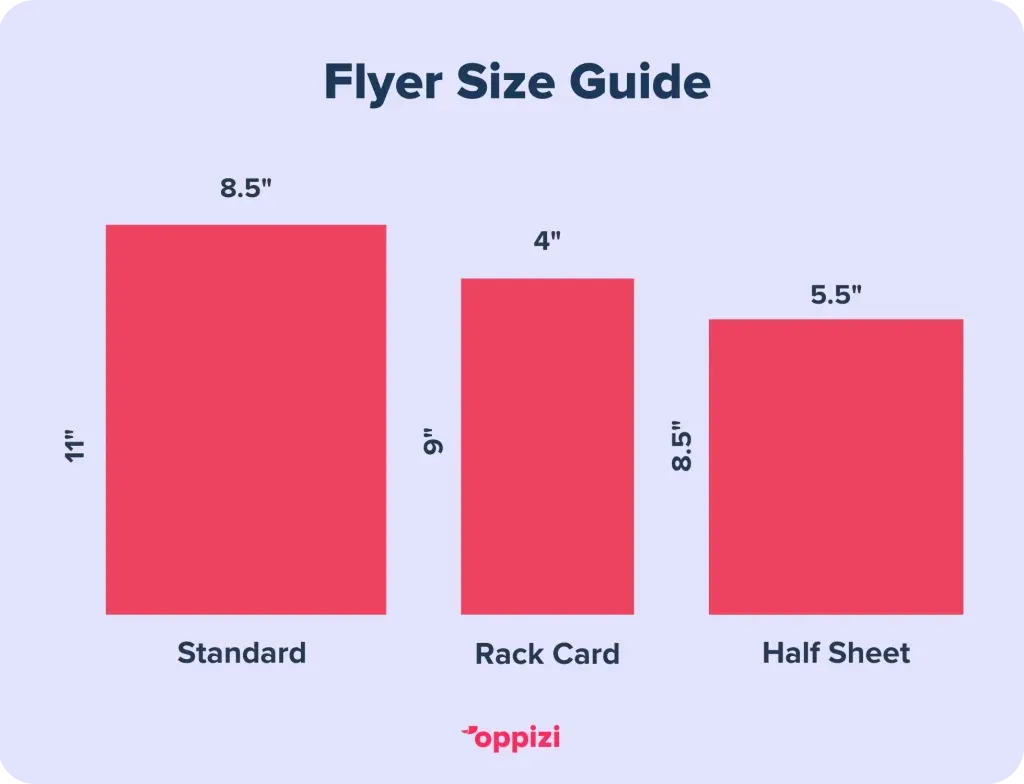
- The most common US flyer size is Letter (8.5 x 11 in); A4 (8.3 x 11.7 in) is the equivalent elsewhere
- The half-sheet (5.5 x 8.5 in) is the most practical size for handing out, and it prints two to a Letter sheet
- Quarter-sheets and A6 suit door-to-door drops, rack cards (4 x 9 in) suit display stands, and 11 x 17 in suits posters
- A 4 x 6 in card qualifies for the USPS postcard price; anything larger than 4.25 x 6 in mails at the letter price
- Choose the size from the distribution method first, then design: set files to 300 DPI with a 0.125 in bleed
A well-designed flyer doesn't end up in the trash. It gets noticed, remembered, and acted on. When done right, flyer marketing is a powerful tool, but success starts with smart planning. That means choosing the right size, layout, and design to match your message and goals.
The short answer: the most common flyer size in the US is 8.5 x 11 inches (Letter), and the most practical size for handing out is the 5.5 x 8.5 inch half-sheet. Outside North America, A4 and A5 are the equivalents. Everything else depends on what you're promoting, where you're distributing, and how many you're printing.
Whether you're promoting an event, launching a new product, or simply building brand awareness, your flyer needs to look great and feel right. This guide covers the most popular flyer sizes, their uses, and how to choose the best fit for your campaign.
Common flyer sizes for print marketing
The size of your flyer affects everything from how much content you can include to how it's distributed, displayed, and perceived by your audience. In the US and Canada, flyer sizes follow the Letter system in inches. Most other countries use the ISO A-series in millimeters. Here are the most common flyer sizes used in print marketing:
| Size | Inches | Millimeters | Best for |
|---|---|---|---|
| A6 | 4.1 x 5.8 in | 105 x 148 mm | Coupons, inserts, and high-volume drops |
| Quarter-sheet | 4.25 x 5.5 in | 108 x 140 mm | Door-to-door drops and counter handouts |
| A5 / Half-sheet | 5.8 x 8.3 in / 5.5 x 8.5 in | 148 x 210 mm / 140 x 216 mm | Handouts, event flyers, and street distribution |
| A4 / Letter | 8.3 x 11.7 in / 8.5 x 11 in | 210 x 297 mm / 216 x 279 mm | Bulletin boards, detailed promotions, and menus |
| Rack card | 4 x 9 in | 102 x 229 mm | Display stands, hotel lobbies, and reception desks |
| Small formats | 4 x 6 in, 5 x 7 in | 102 x 152 mm, 127 x 178 mm | Postcard mailers, invitations, and compact promotions |
| Large format (Tabloid) | 11 x 17 in | 279 x 432 mm | Posters, windows, and large event announcements |
When to use each flyer size
To make the right choice, here's a breakdown of common flyer sizes and the best scenarios to use each one.
A6 (4.1 x 5.8 inches)
This compact flyer size suits quick promotions, coupons, and event reminders. It's easy to hand out, tuck into packaging, or leave on counters, which makes it a good fit for high-volume campaigns on a budget. Despite its size, a well-designed A6 flyer can still make a strong impression.
A5 / Half sheet (5.8 x 8.3 inches or 5.5 x 8.5 inches)
A5 and half-sheet flyers offer a good balance between space and portability. They're ideal for event flyers, promotional handouts, and small product showcases. You can include a bold headline, imagery, and a few key details without overwhelming the reader.
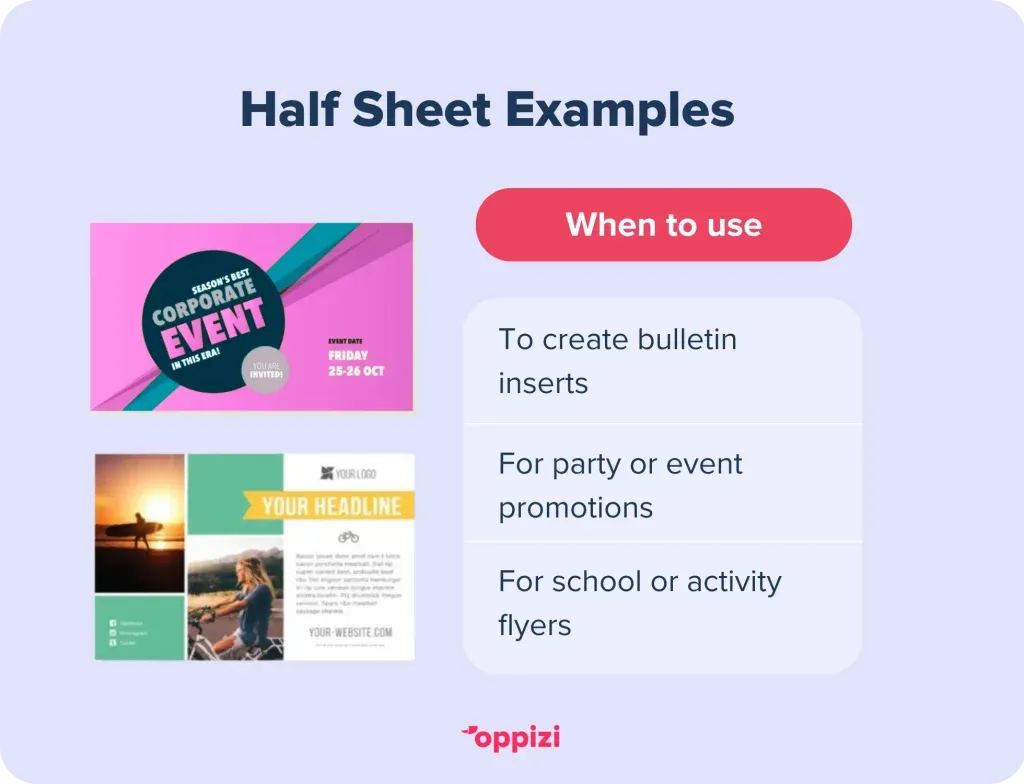
They're smaller than A4 flyers but come with a few key advantages. Use them when:
- You need something low-cost
- You want to print and hand out a lot
- You're reaching people in busy areas like shops or streets
A4 / Standard letter (8.3 x 11.7 inches or 8.5 x 11 inches)
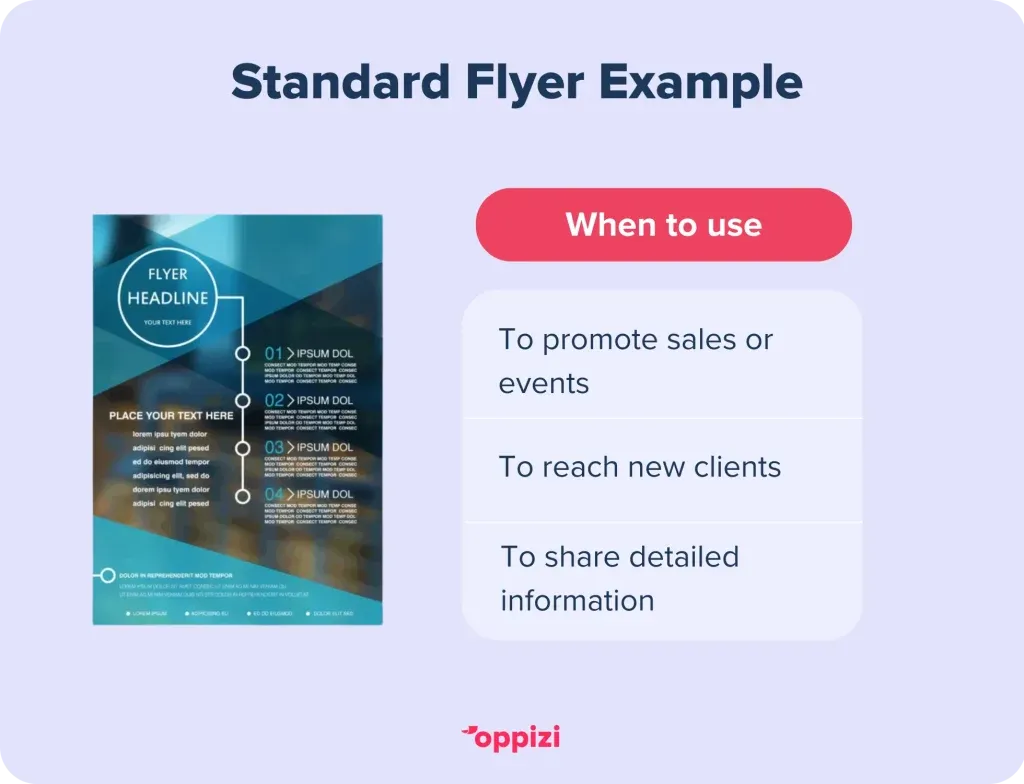
This full-size format suits detailed marketing materials. It's commonly used for posters, menus, product sheets, and informational flyers where you need room for both images and comprehensive text. It also works well on bulletin boards or handed out at events.
Rack card (4 x 9 inches)
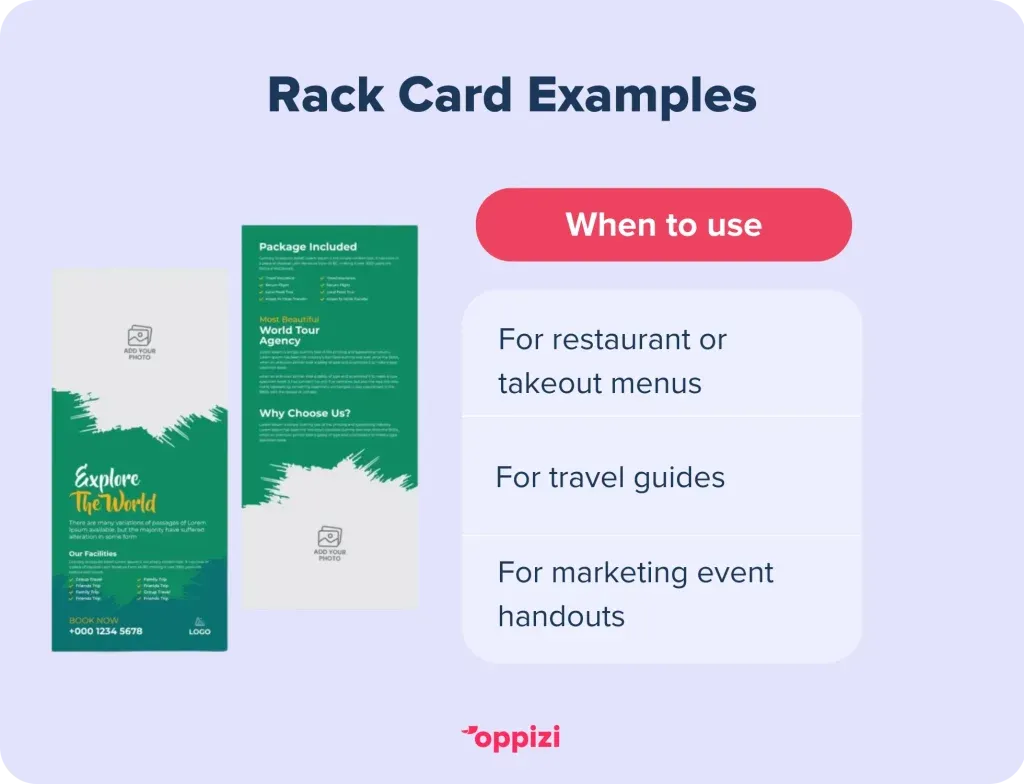
Tall and slim, rack cards are designed to fit into display stands, brochure holders, and standard No. 10 envelopes. They're often used in hotels, restaurants, and visitor centers to highlight services, tours, or menus. Their narrow format keeps the message focused.
Use rack cards when:
- You want to promote one main thing like a service, offer, or menu
- You need something that fits in a display rack or standard envelope
- You're sharing info in travel, wellness, or retail spaces
Smaller formats (4 x 6 inches, 5 x 7 inches)
These postcard-sized flyers are great for casual promotions, invitations, and thank-you notes. They're easy to print in bulk, fit into standard envelopes, and work well as handouts or mailers. If you plan to mail them, size matters for postage: USPS caps postcards at 4.25 x 6 inches, so a 4 x 6 inch card qualifies for the postcard price, while a 5 x 7 inch card mails at the letter price.
Larger format (11 x 17 inches)
Also known as tabloid size, this larger flyer is the choice when you need a bold visual impact. It's commonly used for event posters, menus, mini-posters, and folded brochures. The extra space gives you room for large graphics, multiple sections, or detailed information.
Which flyer size works best for each distribution method?
Size and distribution method aren't separate decisions. They're the same decision. The way a flyer reaches someone's hands should determine its dimensions before you open a design tool.
| Distribution method | Recommended size | Why |
|---|---|---|
| Hand-to-hand (street, events, foot traffic) | Half-sheet (5.5 x 8.5 in) or A5 | Easy to accept, fits in a bag or pocket, and economical at volume |
| Door-to-door (doorsteps and door handles) | Quarter-sheet (4.25 x 5.5 in), A6, or a half-sheet | Small enough to tuck into a door; in the US, never in a mailbox |
| Display stands and reception desks | Rack card (4 x 9 in) | Built to fit standard brochure pockets, and the tall format draws the eye |
| Bulletin boards and window posters | Letter (8.5 x 11 in) or A4 | Competes with surrounding materials and leaves room for a headline and detail |
| Direct mail | 4 x 6 in for the postcard price, 5 x 7 in at the letter price | USPS postcards max out at 4.25 x 6 in |
Half-sheet flyers print two-up on a single Letter sheet, so every sheet of stock yields two flyers. For a high-volume hand-to-hand campaign, that makes the half-sheet the efficient default.
Before a door-to-door drop, check the local rules. In the US, federal law reserves mailboxes for postage-paid mail, so flyers go on doors, not in mailboxes. Our guide to distributing flyers in a neighborhood legally covers the details.
Why use flyer marketing?
Flyer marketing reaches your audience directly and personally. It offers tangible, easy-to-distribute materials that grab attention and deliver clear messages.
In fact, distributing flyers in the right places can often earn more attention than digital ads. You can't skip or block a flyer like you can with an ad. If someone hands you a flyer, you're probably going to look at it.
Flyers are also cost-efficient, versatile in design and size, and work well for local businesses promoting events, special offers, or new products, especially in local or targeted areas where face-to-face engagement matters.
You can hand them out near your shop, post them at community spots, or leave them at local events. It's a simple way to reach the people who live or work nearby, and those are the ones most likely to become customers.
Why flyer size matters
Flyer size matters because it directly affects how your message is received and acted upon. The right size gives you enough space for clear, compelling content without overwhelming the reader.
Larger flyers like A4 or A5 give you more space for images and details. They stand out and work well for events, product lists, or anything that needs room to be explained. Smaller flyers like A6 or a quarter-sheet are easy to carry, quick to read, and cheaper to print. They suit special offers, coupons, and simple menus that need to grab attention fast.
Choosing the right dimensions makes sure your flyer fits its purpose, budget, and distribution method.
A quick note on print setup: whatever size you choose, set your design file to 300 DPI for sharp print quality, and add a 0.125-inch (3 mm) bleed on each edge if your design runs to the border. This prevents thin white slivers after trimming. Your print provider's spec sheet will confirm both before you export.
How Chipotle used half-sheet flyers to boost in-store orders
Chipotle wanted to increase foot traffic to its restaurants in Paris and Lyon. To do that, it partnered with Oppizi on a flyer campaign that delivered fast, measurable results.
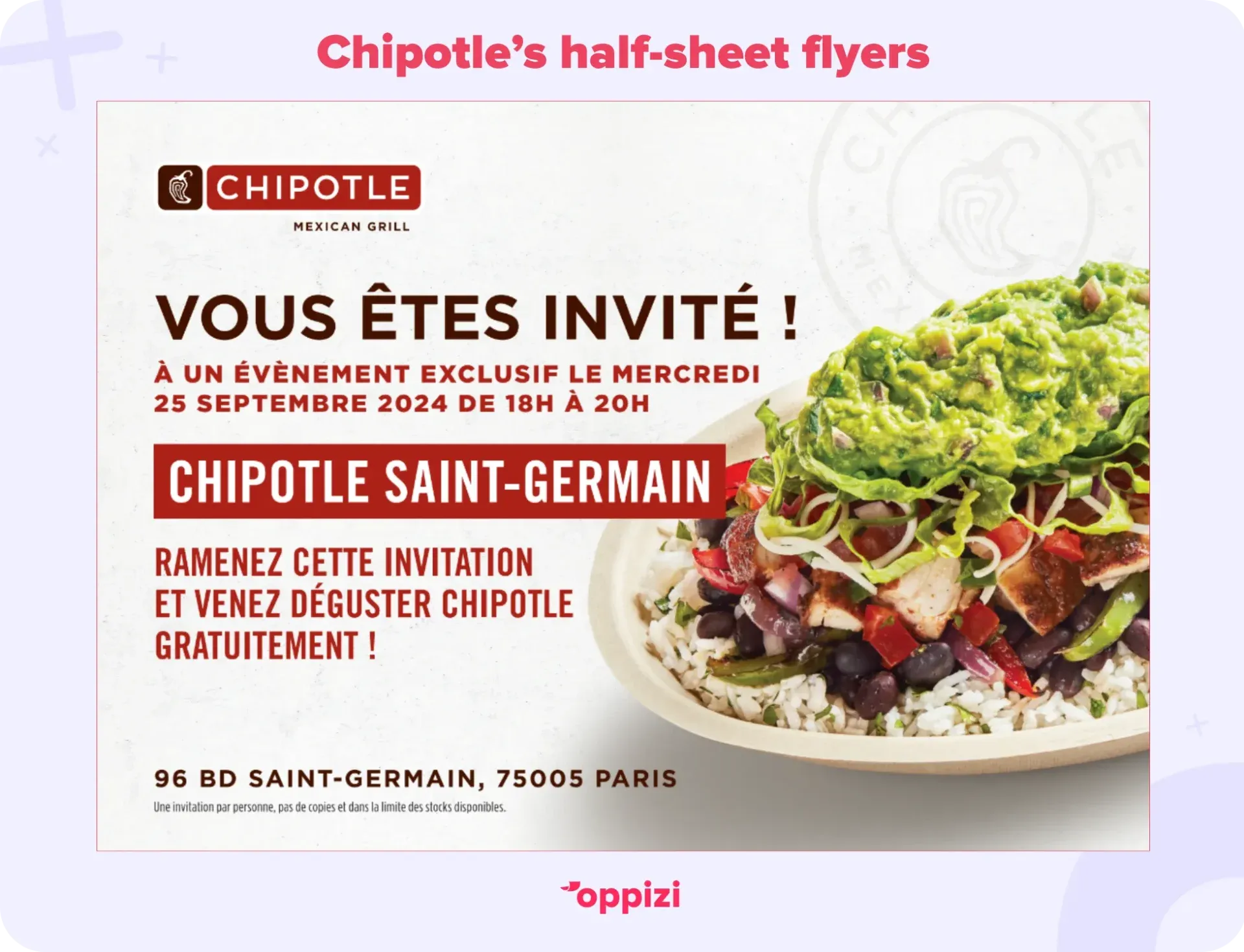
The campaign used half-sheet flyers: compact, eye-catching, and easy to hand out, which suited a limited-time offer. The size struck the right balance, small enough to carry and large enough to clearly showcase the "Buy One, Get One Free" offer.
Its manageable size made it simple for brand ambassadors to distribute by hand, giving the offer high visibility without overwhelming recipients. In just four weeks, the flyers generated over 550 in-store purchases.
Flyer marketing is now a core part of Chipotle's local strategy in France, and it continues to run campaigns with Oppizi.
Choose Oppizi for flyer marketing made simple
Flyers are still one of the best ways to promote your business in person. Choosing the right size and layout helps your message land. Whether you're promoting an event, sharing a new offer, or bringing people to your store, the right flyer design can make a difference.
Not sure where to start? With Creative Studio, you can create professional designs in minutes, no experience needed. From design to distribution, you get a complete process that lets you focus on your goals.
Ready to launch your next flyer campaign? Get started with Oppizi today.
Frequently asked questions
- What is the standard size for flyers?
The standard flyer size in the US is 8.5 x 11 inches (Letter). Internationally it is A4, which measures 8.3 x 11.7 inches (210 x 297 mm). Both give plenty of room for images, text, and layout, which is why they are the default for events, product promotions, menus, and informational handouts.
- Are flyers usually A4 or A5?
Flyers are commonly printed in both, depending on the job. A4 (or US Letter) gives more space for detailed content and visuals, so it suits posters and in-depth promotions. A5 (or the US half-sheet, 5.5 x 8.5 inches) is smaller and more portable, so it suits handouts, events, and short, single-offer messages.
- What is the best flyer size for handing out?
For hand-to-hand distribution, the half-sheet (5.5 x 8.5 inches in the US, or A5 internationally) is the most practical choice. It is easy to accept and carry, leaves room for a headline, an offer, and a call to action, and prints two to a Letter sheet. Chipotle used this size in France and generated over 550 in-store purchases in four weeks.
- What flyer size works best for door-to-door drops?
A quarter-sheet (4.25 x 5.5 inches) or A6 (4.1 x 5.8 inches) works well for door-to-door drops: small enough to tuck into a door or hang on a handle, and cheap to print in volume. Move up to a half-sheet if the message needs room. In the US, never put an unstamped flyer in a mailbox.
- Are brochures and flyers the same?
No. A flyer is a single unfolded sheet built around one short message, such as an offer or an event. A brochure is folded into panels and carries more detail, such as a service menu or a product range. Think of a flyer as a quick ad and a brochure as a mini guide to your business.