Last updated July 28, 2026
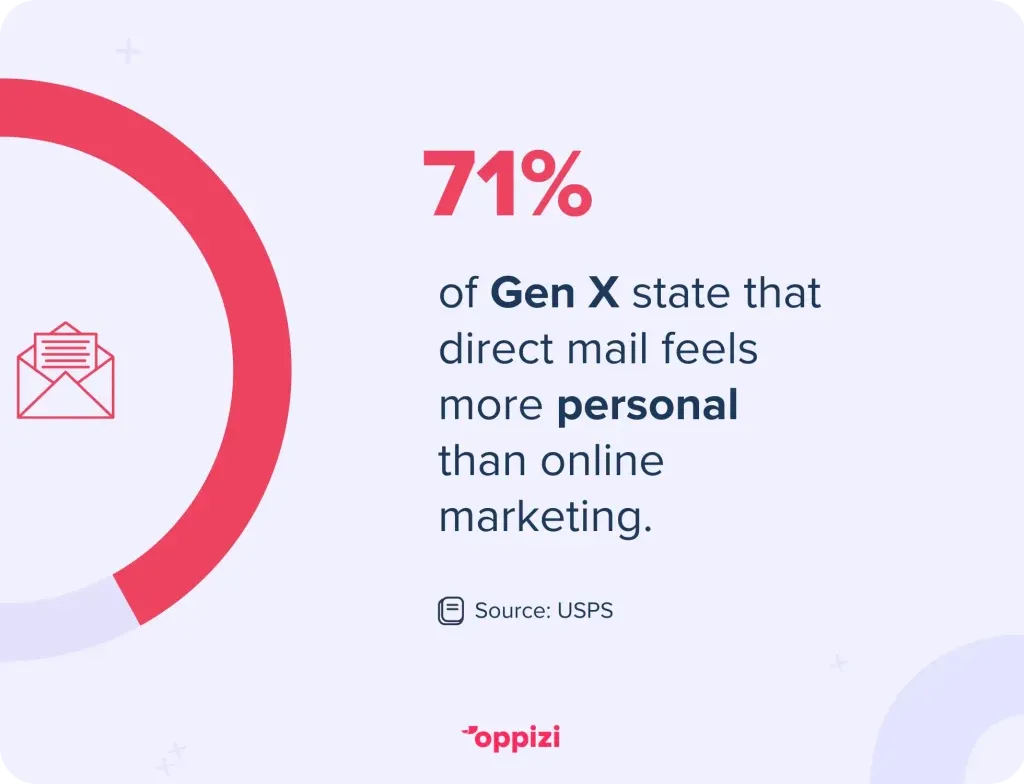
Direct mail marketing remains one of the most effective ways to connect with customers of all ages on a personal level. In fact, 71% of Gen X say direct mail feels more personal than online marketing and 72% of Gen Z (also known as the digital generation) said they would feel disappointed if they no longer received physical mail.
For businesses aiming to maximize efficiency and impact, direct mail templates are invaluable. This article covers everything you need to know, from understanding what templates are to designing your own.
What is a direct mail template?
Direct mail refers to the physical delivery of promotional materials, such as postcards, flyers, letters, or catalogs, directly to customers’ mailboxes. A direct mail template is a pre-designed layout that serves as a starting point for creating mail pieces. These templates provide a structure for key elements such as text, images, logos, and calls to action (CTAs), ensuring consistency and professionalism.
Whether it’s a postcard, flyer, or letter, templates simplify the design process by offering a ready-made framework that can be customized to align with your brand’s voice and goals.
What are direct mail templates used for?
Direct mail templates are versatile and can be used for a variety of purposes, including:
- Promotional campaigns: Announce sales, discounts, or new product launches.
- Event invitations: Invite customers to store openings, webinars, or special events.
- Customer retention: Send personalized messages to existing customers, like thank-you notes or loyalty offers.
- Lead generation: Capture the interest of potential customers with compelling offers.
- Surveys and feedback: Encourage recipients to share their opinions or participate in surveys.
Templates make it easier to create targeted, visually appealing materials that resonate with the audience.

Benefits of using direct mail templates
Using direct mail templates offers several advantages. Let's explore five key reasons to use templates when designing your direct mail marketing materials.
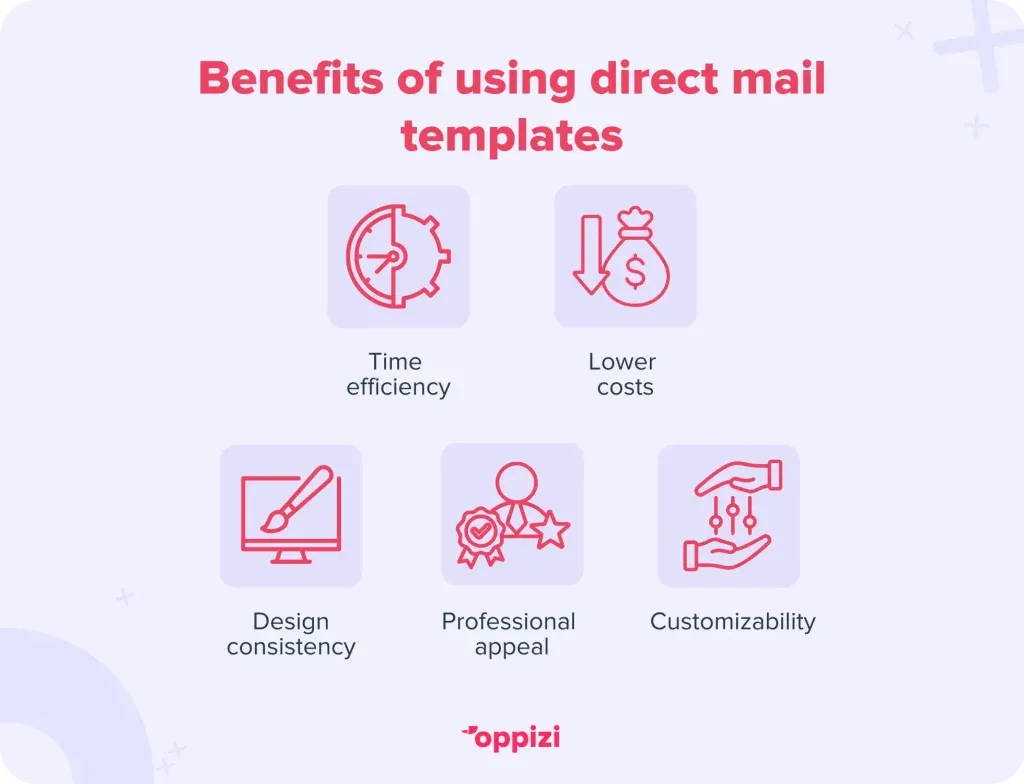
Time efficiency
Templates reduce the time spent on design by providing a ready-to-use structure. You don’t have to start from scratch, enabling quicker turnaround for campaigns.
Cost savings
By streamlining the design process, templates help reduce costs associated with hiring graphic designers or marketing agencies.
Consistency
Templates ensure brand consistency by incorporating pre-set fonts, colors, and layouts that align with your visual identity.
Professional appeal
Well-designed templates give your materials a polished and professional look, which enhances credibility.
Customizability
Despite being pre-made, templates are highly customizable. You can adjust elements like text, images, and colors to fit specific campaigns.
How to design your own direct mail template
If pre-made templates don’t meet your exact needs, you can design your own mailer which you can simply adjust for future campaigns. Here’s how to design a direct mail template from scratch:
1. Define your goals
Before designing, be clear about the purpose of your direct mail. Use the SMART goal-setting framework to establish your objectives for your campaign. Are you promoting a sale? Communicating about an event? Introducing a new product? Defining your goals will guide the design process.
2. Choose the correct format
Select the type of mail piece that works best for your campaign. Examples include:
- Postcards: Great for quick, visually driven messages. In fact, these are the most used type of direct mail, with 66% of marketers choosing to use postcards.
- Letters: Ideal for more detailed communication.
- Brochures: Useful for showcasing multiple products or services.
3. Create a layout
Use design tools like Adobe InDesign, Canva, or Oppizi’s flyer design tool to create a layout. Ensure there’s a logical flow to your mailer, with distinct sections for:
- Headline: Captures the reader’s attention immediately.
- Body text: Provides further details about your offer or message.
- Images: Visually reinforce your message.
- Call-to-Action (CTA): Encourages the recipient to take the next step, such as visiting a website, signing up for an event, or making a purchase.
4. Incorporate branding
Include your logo, brand colors, and fonts to ensure the template aligns with your overall brand identity. 54% of Generation Z recipients state that easy-to-find branding is one of the most effective elements in a direct mail piece.
5. Optimize for readability
Use clear fonts, adequate spacing, and concise text to make your message easy to read. Make sure any important information is highlighted, such as discounts or deadlines.
6. Test your design
Before finalizing, print a sample to check how it looks and feels. Adjust any elements that don’t translate well to print.
What to include in your direct mail template
A successful direct mail template should include the following key components:
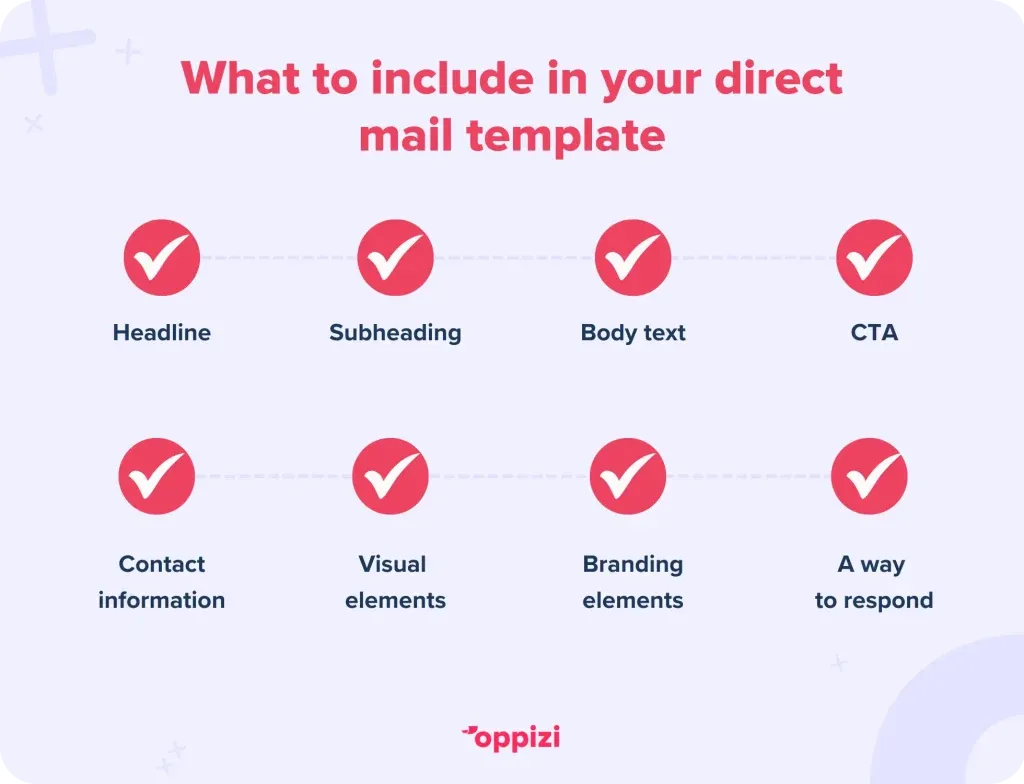
- Headline: A compelling, attention-grabbing headline that conveys your message quickly.
- Subheadline: Additional text that supports the headline and provides context.
- Body text: Clear and concise details about your offer, product, or service.
- Call to Action (CTA): A strong, actionable statement such as “Visit our website,” “Call now,” or “Redeem this coupon.”
- Contact information: Include phone numbers, email addresses, and website URLs.
- Visuals: High-quality images or graphics that complement the message.
- A return address: Provide a way for customers to reply, such as a return address, QR code, or perforated response card.
- Branding elements: Logos, taglines, and brand colors to reinforce your identity.
FAQs about direct mail templates
Are direct mail templates only for large businesses?
No, direct mail templates are equally beneficial for small businesses, as they offer cost-effective ways to create professional-looking campaigns.
Can I use the same template for multiple campaigns?
Yes, but it’s a good idea to tweak the content and visuals for each campaign to keep them fresh and relevant.
What tools can I use to design a direct mail template?
Popular tools include Adobe InDesign, Canva, and Microsoft Publisher. To send a flyer as a direct mail piece, you can also use Oppizi’s flyer creator tool which allows you to create attractive flyers effortlessly.
How can I measure the effectiveness of a direct mail campaign?
You can incorporate tracking methods into your mailer piece like unique promo codes, QR codes, PURLs, or dedicated phone numbers in order to measure response rates.
Conclusion
Direct mail templates are a game-changer for businesses aiming to create professional marketing materials efficiently and cost-effectively. By using templates, you can save time, ensure your mailers are consistent, and concentrate on crafting compelling messages that resonate with your audience.
Why wait to discover the positive impact a direct mail campaign can have on your business? Start your campaign with Oppizi today and experience how this powerful offline marketing strategy can elevate customer engagement and drive results.