Last updated 30 September 2026
Building a direct mail campaign that actually works requires more than printing flyers and buying a mailing list. It demands strategic planning, precise targeting, compelling creatives, and meticulous execution. Get it right, and you'll generate qualified leads, drive conversions, and build lasting customer relationships. Get it wrong, and you've wasted your budget on mailers that don’t make an impact.
Successful direct mail marketing campaigns follow similar patterns and once you understand which elements drive performance and where to focus your resources for maximum impact, you’ll be set to replicate one for your business.
This guide walks you through every step of creating a campaign from the ground up. To further support your efforts, we’ve included practical advice that will help you maximize the unique strengths of direct mail.
Let’s get started.
Step-by-step process for creating a direct mail campaign
The strongest campaigns follow a structured sequence that connects audience intelligence, creative development, postal logistics, and performance analytics into a single workflow.
1. Build your mailing list
Your mailing list is the backbone of your direct mail campaign. There are multiple pathways to securing a high-performing mailing list:
Create a mailing list from your own customer data
Your existing customer database contains people who've already engaged with your brand, made purchases, or expressed interest in your products. This first-party data allows for sophisticated segmentation based on purchase history, customer lifetime value, engagement levels, or demographic characteristics.
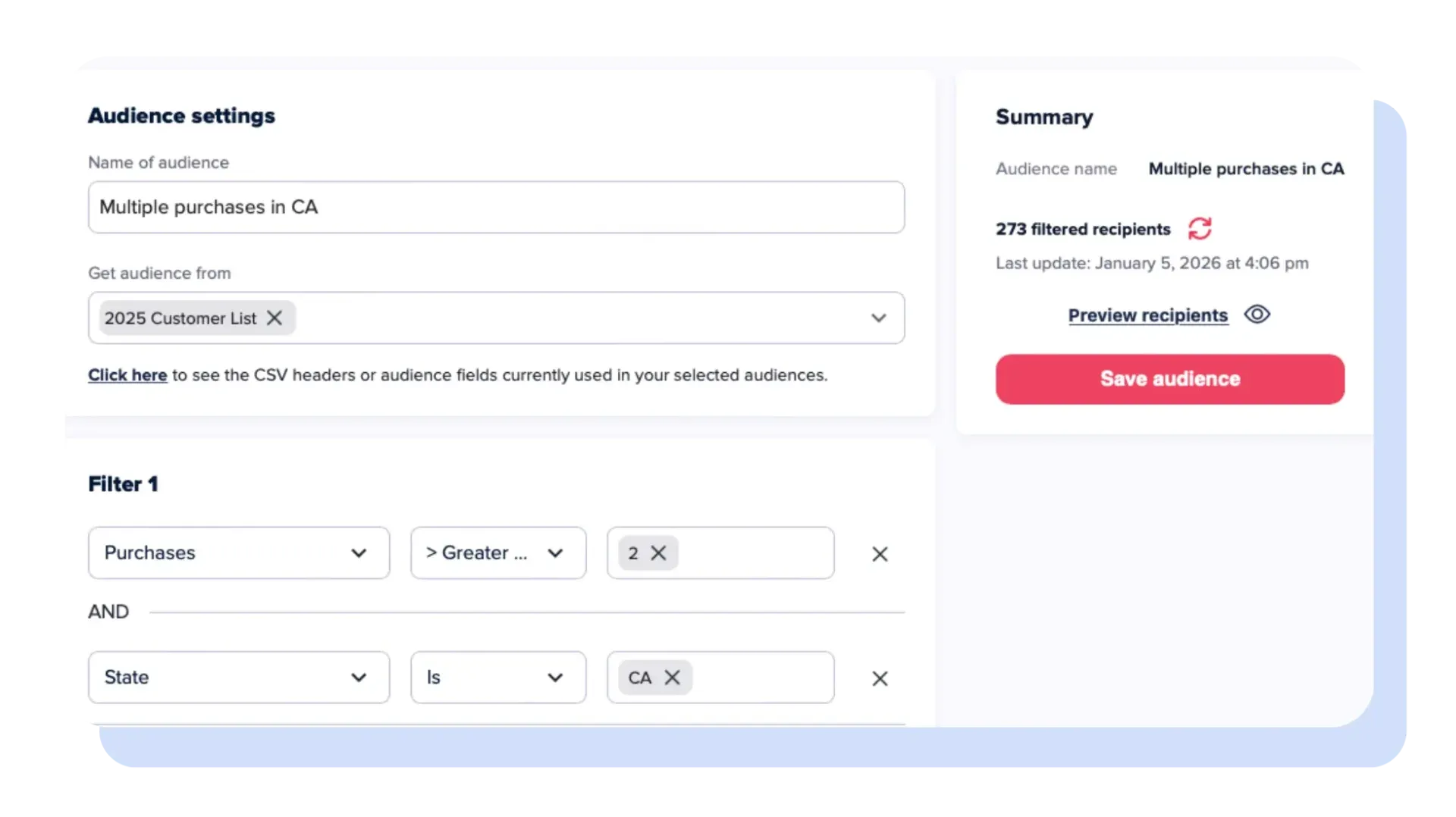
Modern automation makes this approach even more powerful. Integrations with platforms like Shopify or Braze enable you to automatically segment audiences based on real-time triggers. From there, you can set up programmatic direct mail waves to deliver personalized materials to potential customers, dramatically improving response rates compared to broad, generic campaigns.
Purchase targeted mailing lists
When you need to reach new prospects beyond your existing database, purchasing mailing lists opens access to fresh audiences. Reputable list brokers offer highly specific targeting options. The key is working with quality providers who maintain clean, regularly updated data and comply with privacy regulations.
Leverage lookalike audiences
Lookalike audience targeting bridges the gap between your known customers and new prospects. By analyzing the characteristics, behaviors, and attributes of your best customers, you can identify and target new recipients who share similar profiles, even if they've never interacted with your brand.
This approach combines the precision of first-party data with the reach of prospecting. Instead of guessing which new audiences might respond, you're targeting people who statistically resemble your most valuable customers.
Combine strategies for more impact
You can also layer strategies: retargeting existing customers with personalized offers, reaching cold prospects through carefully selected purchased lists, and scaling successful campaigns by targeting lookalikes of their best responders. Each audience segment receives messaging tailored to their familiarity with your brand and likelihood to convert.
2. Set objectives
Direct mail is too costly to run on vague goals like “building brand awareness.” When setting up a campaign, it’s best to define a specific economic objective, such as:
- Reactivation of dormant customers
- Increasing repeat purchase rate
- Boosted appointment bookings
- Subscription conversion
- High-value lead acquisition
- Reducing digital drop-off (cart abandonment, incomplete applications)
- Driving event attendance
Each objective should have a corresponding, deterministic metric (QR scans, unique URL visits, code redemptions, match-back conversions) defined before you even get started on the creative asset. This will inform your budget allocation and set the benchmark against which you'll evaluate success.
Be specific; setting goals like "Generate 500 qualified leads with a maximum cost per lead of $13" or "drive 200 new customer acquisitions from lapsed customers who haven't purchased in 6+ months" gives you clear targets to design toward and measure against. If your organization cannot articulate how success will be measured, your campaign isn’t ready to launch.
3. Choose your offer
Once the objective is clear, your offer becomes the mechanism that drives recipients toward that goal. It must be compelling enough to motivate action. For lead generation campaigns, you could offer free consultations, educational resources, product samples, or exclusive access to tools or content.
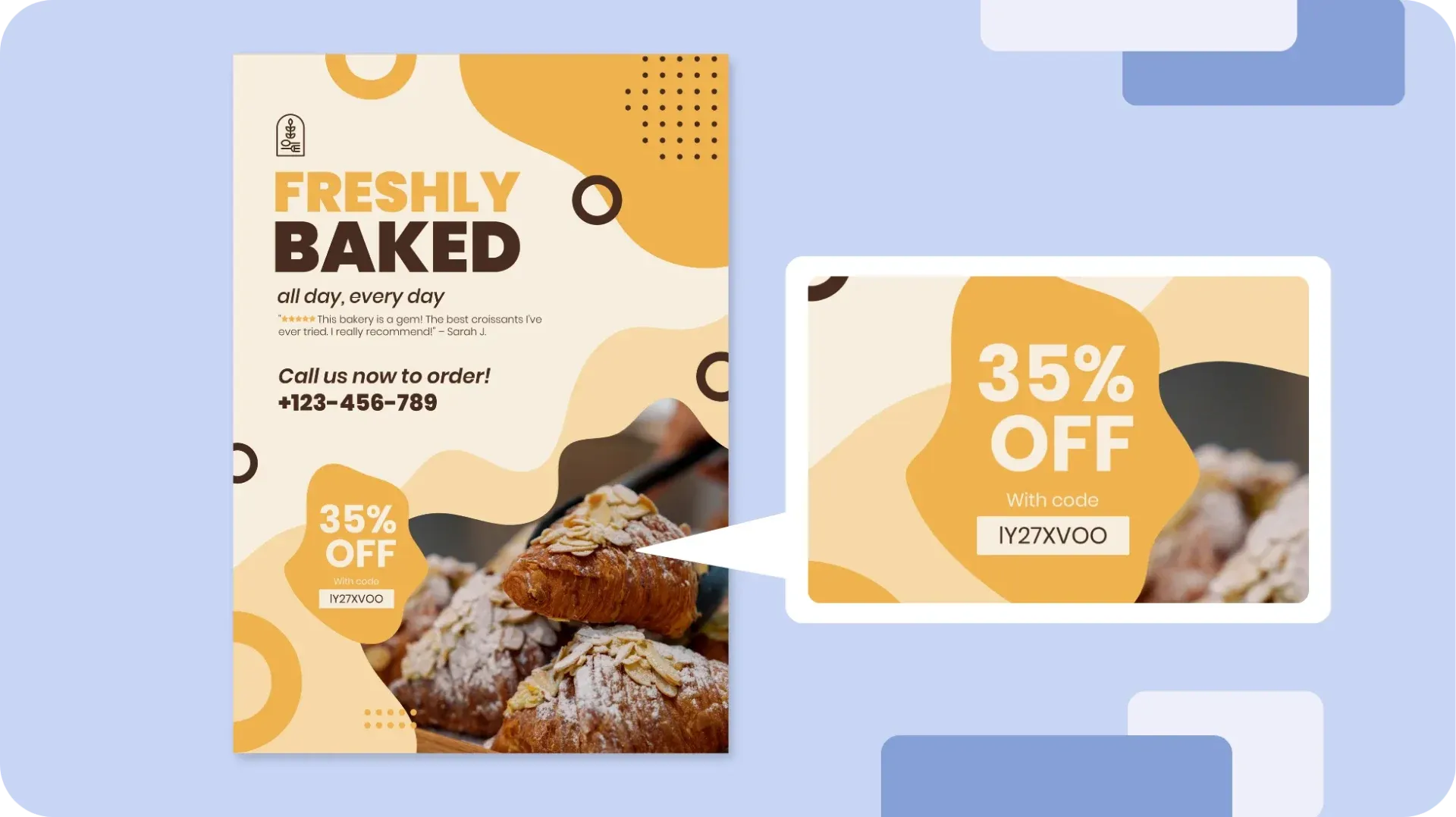
If your goal is to drive direct sales, your offer must combat purchase hesitation and create urgency. Limited-time discounts, exclusive bundles, free shipping, 50% off your first order, risk-reversal guarantees (money-back guarantees, free trials) reduce friction and accelerate buying decisions.
For retention and reactivation campaigns, personalization matters. Offers that reference past purchases, exclusive loyalty rewards, or tiered incentives based on customer value work well.
4. Choose the right direct mail format for the job
Format is more than just an aesthetic decision; it is a performance variable. You should consider:
- Postcards for lower-cost, broad retargeting
- Letters for more formal or regulated industries
- Self-mailers or brochures for storytelling and visual products
- Dimensional mailers for small, high-value segments where impact > cost
Choosing the right type of direct mail should align with the economics of the audience. High-LTV customers justify more substantial formats; cold acquisition often requires lighter options to scale.
5. Design your mail piece
Your mailer should be clear, visually appealing, and aligned with your brand. Poor creative execution can still undermine an otherwise strong campaign.
Focus on three core principles:
- Have a single dominant message. Avoid diluting impact with multiple competing messages.
- There should be a clear, immediate call-to-action: scan, visit, redeem, or book. Make it unmistakably clear what recipients should do next and design it to stand out.
- Good design increases engagement, memorability, and the likelihood of conversion.
Physical mail piques the interest of addressees when it’s crafted thoughtfully and delivered with relevance — and for that both design and personalization matter. Dull, generic mailers will be dismissed as junk, whereas customized pieces convey an upscale feel and strengthen brand loyalty.
“Dear valued customer” will hardly land as strongly as seeing your actual name on the mailer. But personalization can go beyond printing a recipient’s name. Variable data printing allows you to customize offers, imagery, and messaging based on recipient characteristics, behaviors, or purchase history.
Oppizi’s direct mail platform offers an intuitive built-in design tool that lets you choose your mailer format and create custom mail pieces with personalized variables as you build your campaign.
6. Integrate digital components for tracking
Every modern direct mail campaign should include digital connectors. Some examples include:
- QR codes
- Unique URLs
- Custom landing pages
- Unique promotional codes
- On-page retargeting pixels
These elements allow marketers to attribute actions that consumers take: website visits, form completions, coupon redemptions, purchases. This turns physical mail into a measurable channel, enabling multi-touch attribution, lift analysis, and A/B testing. If your physical mail cannot be traced back to digital behavior, you lose half its value.
Oppizi’s system records all interactions (such as QR scans) in real time, and the campaign activity flows into one intuitive dashboard where you have access to 14 KPIs. At a glance, you can track distribution progress, engagement, and conversions, allowing you to efficiently measure the success of your campaign.
Operational excellence has a direct impact on performance. Beyond just printing and mailing, production planning encompasses timing, quality control, fulfillment, and delivery reliability.
Additional optimization tips
The best send times are driven by your audience’s needs and decision cycles. Align mail drops with natural moments of relevance: seasonal demand, contract renewals, product launches, event deadlines, or known pain-point peaks. Aim to arrive shortly before the audience is ready to act, when your message feels timely. If you’re sending personalized mail, you can trigger a birthday postcard or a thank you note after a recent interaction.
Additionally, balance your mailing schedule with digital touchpoints such as email reminders, retargeting ads, or SMS follow-ups to support recall and conversion. Timing alignment across channels creates momentum and increases response rates.
Some organizations may handle production internally. However, there’s also the option of partnering with a dedicated direct mail provider like Oppizi which streamlines the entire workflow. These partners bring pre-existing infrastructure for printing, personalization, compliance, postal optimization, and fulfillment, reducing both operational risk and campaign turnaround times.
Mistimed mail can miss critical purchase windows, and poor-quality printing or packaging can undermine perceived value and brand credibility.
7. Measure and track
Efficient direct mail campaigns don’t run on a ‘send it and forget it’ type of strategy. Instead, they are measurable, testable, and continuously refined via the digital connectors mentioned above.
There are a number of metrics that are used to measure the success of your campaign.
- Delivery and response time
- Conversion rate
- Cost per acquisition
- Customer lifetime value
After you launch your campaign with trackable assets and people start scanning, redeeming, or visiting your campaign pages, it’s important to monitor the live engagement. This will also have implications for your future campaigns as drawing from the insights, you can scale your upcoming marketing efforts.
Are you ready to launch a successful direct mail campaign?
Direct mail delivers results, but managing the logistics can quickly become overwhelming. The right partner eliminates this complexity. With an end-to-end platform that handles every operational detail, you can focus on strategy while your campaigns execute flawlessly at scale.
With over 10 years of experience, Oppizi can be that partner.
From precise targeting and automated audience segmentation to an intuitive design tool and robust tracking and measurement capabilities, Oppizi helps you create and scale campaigns that cut through digital noise and drive measurable action.
Now it's time to put these principles into practice and watch direct mail prove its value in your marketing mix.
Create a direct mail campaign today.