Paid channels keep getting dearer
A small auction pool means NZ retail brands bid against the same rivals for the same shoppers every week
New Zealand retail is a three-city market with tight catchments. Oppizi covers the suburbs around each store with flyers and letterbox mail, then ties store visits and online orders back to the streets that produced them.
Retail teams here work with a small population and a wide spread: a few dense city catchments, then suburbs where digital reach costs more than it gives back.
A small auction pool means NZ retail brands bid against the same rivals for the same shoppers every week
Once the obvious online audience is reached there is not much more of it to buy in a market of five million
Store numbers and online numbers land in separate reports, so nobody sees the full picture
Main street and mall traffic swings with weather, seasons and paydays, and is hard to plan around
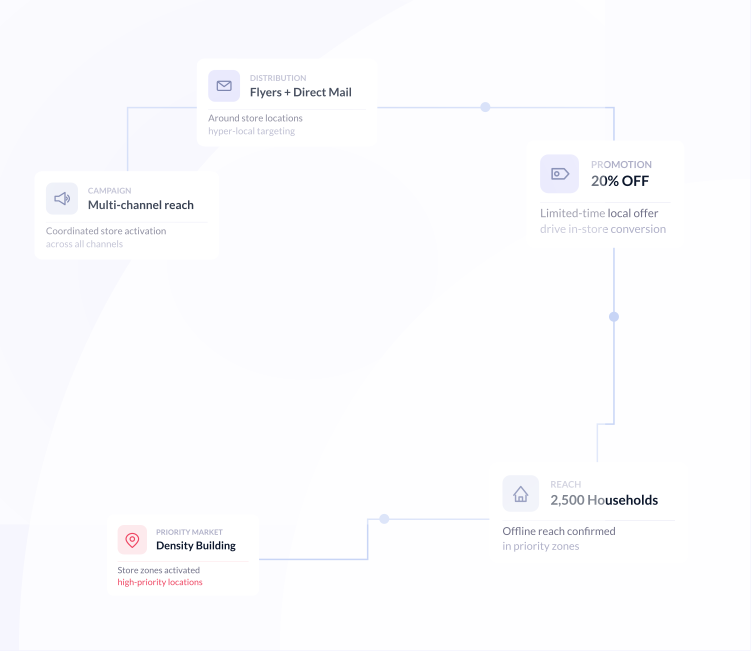
 Reach new householdsChoose the suburbs around each store by demographics and location and pay per piece, not per auction. A single run in Auckland, Wellington or Christchurch can cover a meaningful share of the city, and it is built to produce orders rather than impressions.
Brief a campaign yourself, or hand it to Copilot. Agents shortlist the suburbs worth covering around each store, tighten the audience and tune creative, while your customer file arrives on a secure SFTP feed.
Reach shoppers at home and on the street, in the same three cities your stores compete in.
Post addressed mail built on your own customer file — named households, personalised before it prints, posted through NZ Post and measured to the conversion.
Learn more about Direct MailNo integration project to run. Drop a file on a secure feed and Oppizi turns it into targeted mail and flyering.
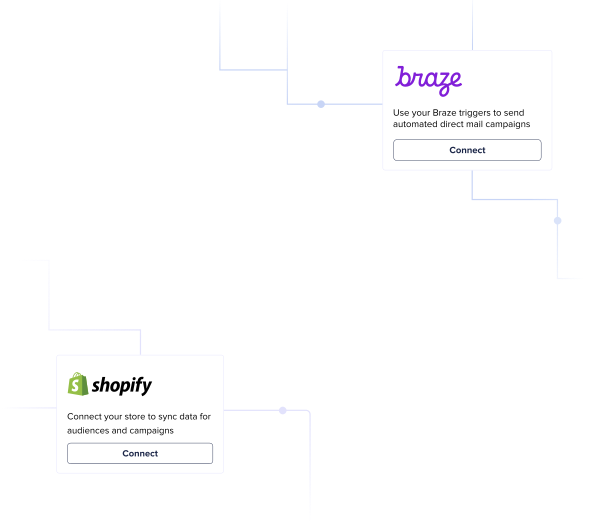
Send customer, order and suppression files to Oppizi over a secure SFTP connection, on whatever schedule suits your team.
New Zealand performance from Oppizi campaigns, measured the same way across every channel in the platform.
16M+ flyers distributed across New Zealand campaigns
16M+ flyers distributed across New Zealand campaigns
16M+ flyers delivered and more than 300,000 conversions tracked in New Zealand
Still deciding? Our New Zealand team will talk it through with you.
Most New Zealand retail demand sits in three cities, so a campaign can cover a meaningful share of a catchment rather than a thin slice of a national audience. Oppizi puts flyers into the streets and letterboxes around each store and posts addressed mail to your own customer list, which reaches shoppers who scroll past ads.
Flyering does the local work: hand-to-hand on main streets and at mall entrances, then letterbox by letterbox through the residential blocks near a store, targeted on local demographics. Unaddressed Mail is the saturation option when you want every letterbox in a suburb rather than a selection. Direct Mail is the precise one, selected off your own customer, loyalty and basket records for acquisition, win-backs and reorder prompts.
Yes. Put customer, order and suppression files on a secure SFTP feed and use them to select and segment the audience for an addressed mail run. New Zealand campaigns use only the data you supply, so Oppizi does not append or resell third-party consumer lists here. Suppressions travel back the same way, keeping shoppers who have already converted out of the next drop.
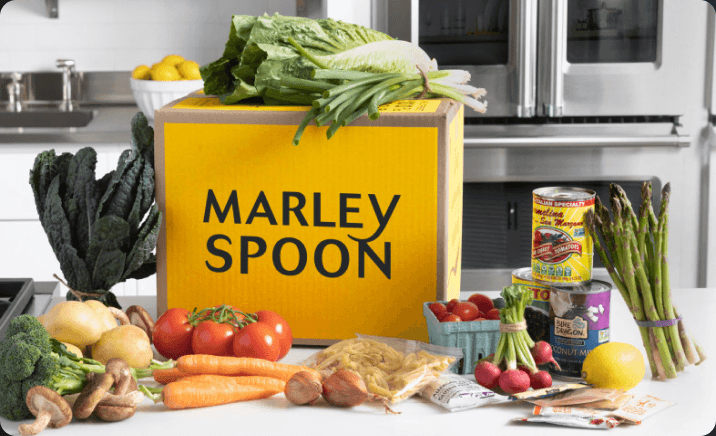
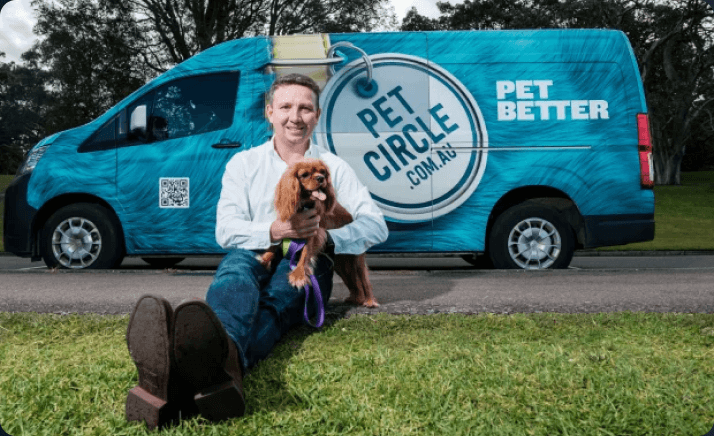
The wider Oppizi network holds the case histories: 76,800 new customers for The Iconic, 6,777 for Pet Circle, and 3.6 million flyers across 13 Marley Spoon campaigns. None of those are New Zealand programmes, so read them as network evidence. For a local benchmark use this market's own record: over 16 million flyers and more than 300,000 tracked conversions.
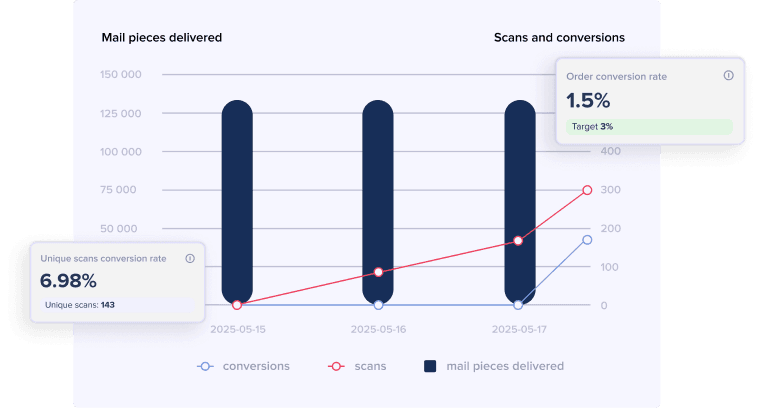
Every campaign carries QR codes and unique offer codes, issued per suburb, channel and creative. A scan or a redeemed code identifies the exact round that produced it, and distribution itself is GPS tracked. Store visits, online orders and cost per acquisition all report in one dashboard, so an offline round can be compared against a paid channel on the same basis.
Alongside it, not instead of it. Printed and digital catch the same shopper in two unrelated moments: a piece in the hand or on the kitchen bench, then the ad in the feed later. Oppizi runs the targeting, print, distribution and measurement, and reports offline in a shape your performance team can read.
Make offline a measurable line in your retail growth plan, city by city.