Last updated July 28, 2026
Digital ad fatigue on the rise, and as a marketer, you're probably looking for alternative strategies that can help you stand out. As a result, offline marketing strategies, such as direct mail, are experiencing a resurgence. In fact, 61% of marketers increased their investment in direct mail in 2024.
However, as direct mail marketing gains popularity, so too do concerns about its environmental impact. Businesses must address the carbon footprint associated with these campaigns and take steps to minimize their effects. By implementing sustainable practices, companies can reduce and offset carbon emissions while maintaining the effectiveness of their direct mail efforts.
In this article, we’ll explore how direct mail contributes to carbon emissions and share actionable strategies to help marketers create more environmentally friendly campaigns.
Understanding the carbon footprint of direct mail
There are several ways in which direct mail can have an impact on the environment. Below are some examples:
Material production
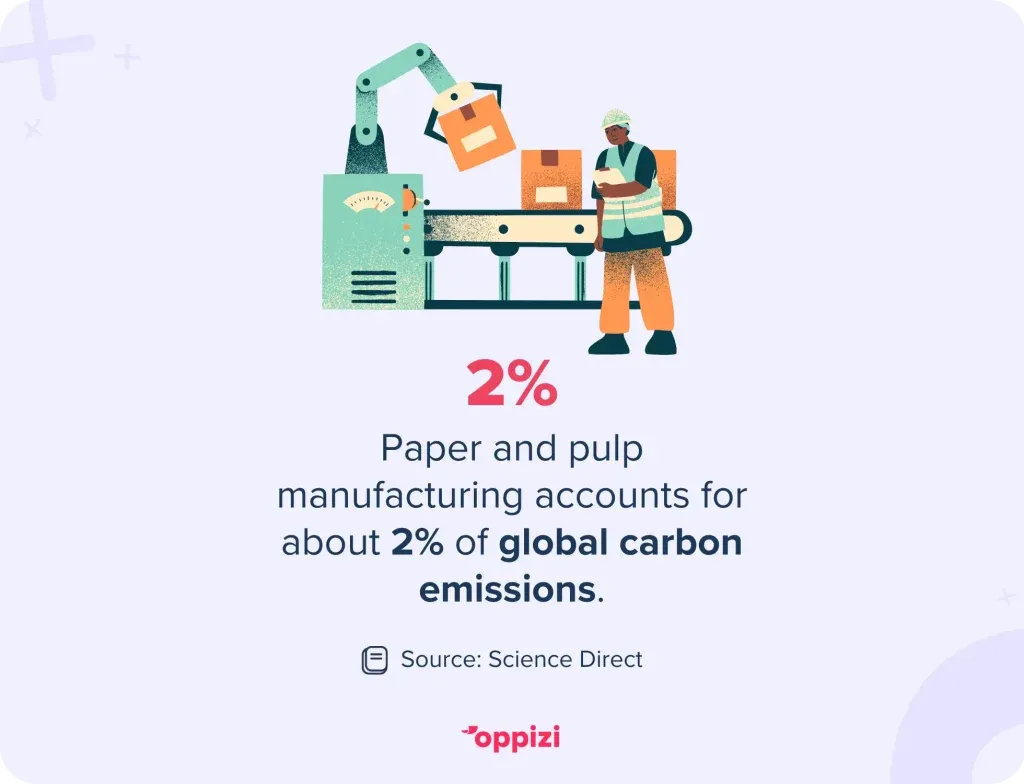
Creating paper, envelopes, and other mailing materials requires significant natural resources, including trees, water, and energy. Paper and pulp manufacturing accounts for roughly 2% of global carbon emissions, with additional environmental impacts from deforestation and chemical processing. Choosing recycled or sustainably sourced paper can help mitigate these effects.
Printing process
Direct mail printing involves using inks, adhesives, and coatings, many of which contain volatile organic compounds (VOCs) that contribute to air pollution. Additionally, operating large-scale printing presses consumes electricity, often sourced from fossil fuels, further increasing the campaign’s carbon footprint. Opting for vegetable-based inks and energy-efficient printing facilities can significantly reduce emissions.

Mail distribution
Once printed, direct mail materials need to be transported. Each stage of transportation, from printing facilities to distribution centers and finally to recipients, requires fuel, contributing to CO₂ emissions. Optimized delivery routes, electric vehicles, and carbon-neutral shipping options can help offset this impact.
Strategies to offset carbon emissions in direct mail campaigns
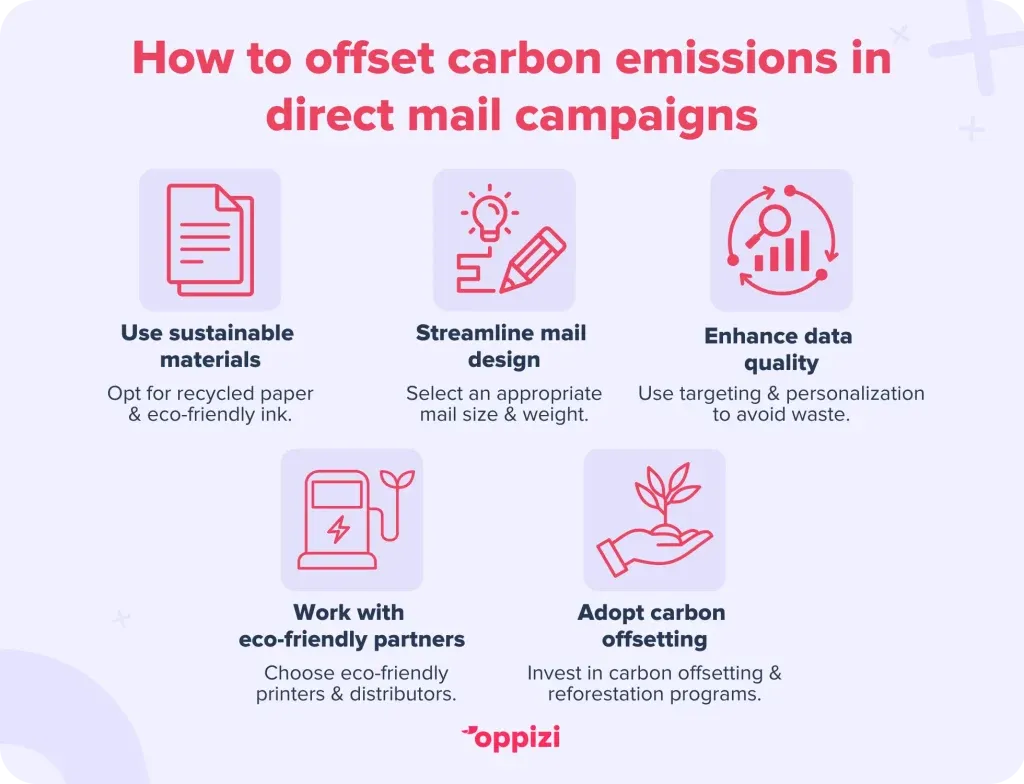
1. Opt for sustainable materials
- Recycled paper: Using recycled paper reduces the demand for non-recycled materials and decreases energy consumption.
- Eco-friendly inks: Choosing vegetable-based or water-based inks minimizes harmful emissions during printing.
2. Streamline mail design
- Mail size: Select a direct mail type that is no larger than necessary, in order to save on materials.
- Lightweight materials: Using lighter paper can reduce shipping weights, leading to lower transportation emissions.
3. Enhance data quality
- Accurate targeting: Ensure your direct mailing lists are up-to-date to prevent sending mail to incorrect or outdated addresses, therefore reducing waste.
- Personalization: Personalize the content of your mail to cater to recipients' interests. Tailored content can increase engagement and reduce the likelihood of mail being discarded. 75% of marketers say that personalization in marketing increases engagement.
4. Collaborate with eco-conscious partners
- Eco-friendly printers: Partner with printing companies that prioritize sustainability, such as those offering carbon-neutral printing services.
- Sustainable logistics: Choose distribution partners committed to reducing their carbon footprint through measures like electric delivery vehicles or optimized routing.
5. Implement carbon offsetting
- Offset programs: Invest in certified carbon offset projects to compensate for emissions generated by your campaign.
- Reforestation initiatives: Support reforestation projects that absorb CO2, balancing out the emissions from your mailers.
The role of digital alternatives
While digital marketing is often perceived as a greener alternative to printed ads, it’s important to recognize that it, too, carries a carbon footprint. Every online interaction, whether it's an email or website visit, requires energy to be processed and stored in data centers, many of which still rely on fossil fuels.
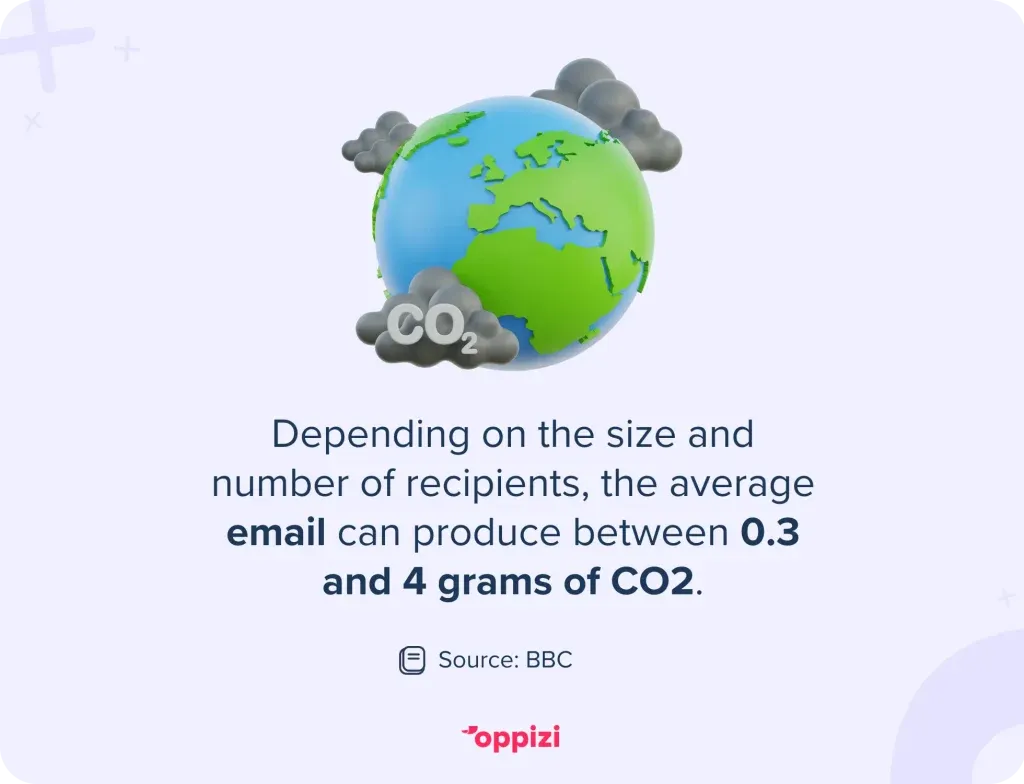
For instance, an average email generates between 0.3 and 4 grams of CO2, depending on factors like its size and the number of recipients. Emails that include large attachments or are sent in bulk produce even higher amounts of CO2. A shocking study by OVO Energy estimated that if every adult in the UK sent one fewer “thank you” email per day, it could save 16,433 metric tons of carbon annually, which is the equivalent of taking 3,334 diesel cars off the road for a year.

Rather than viewing direct mail and digital marketing as competing forces, businesses can adopt a hybrid approach that leverages the strengths of both while minimizing their environmental impact. For example, marketers can use targeted digital campaigns to refine audience segments before sending direct mail to a more engaged and relevant audience, thereby reducing waste. Additionally, incorporating QR codes or personalized URLs in printed advertising can bridge offline and online interactions to maximize engagement while reducing excessive digital energy use.
By integrating offline and digital marketing efforts, businesses can create a more sustainable and efficient strategy that reduces unnecessary carbon emissions across both channels.
Final thoughts
By adopting sustainable practices in direct mail campaigns, businesses can significantly reduce their environmental impact while achieving marketing success. At Oppizi, we are committed to providing eco-friendly solutions for brands looking to engage audiences through offline marketing. As part of the climate action platform Ecologi, we have successfully avoided 100 tonnes of CO₂ emissions.
Ready to launch a direct mail campaign that’s both impactful and sustainable? Partner with Oppizi today and connect with your audience in a way that benefits both your brand and the planet.