Last updated October 14, 2026
Summary
- Healthcare direct mail reaches patients at home for acquisition, reminders, plan education, and community outreach
- HIPAA governs how covered entities and business associates use protected health information, not the mail itself
- Marketing that uses PHI needs written authorization, while refill reminders and treatment mail are generally excluded
- Cold addressed mail averages a 1% response rate and 0.4% in the medical sector, per JICMAIL (UK-measured)
- With Oppizi, a practice can run EDDM or addressed postcards with tracked responses and no monthly platform fee
Last updated: October 2026
Direct mail gives you a direct line to your patients. In healthcare, trust is everything. A well-crafted mailer lands in the right hands, delivers the right message, and gets results. Whether you're promoting services, reminding patients of checkups, or explaining Medicare options, direct mail works because it feels personal.
In this guide, you'll learn how to do it right: how healthcare organizations use direct mail, how HIPAA applies to it, and how to craft messages that get read. We'll also walk through how a practice would run a campaign with Oppizi, the offline marketing platform for addressed direct mail, EDDM, package inserts, and flyering.
Why use healthcare direct mail marketing?
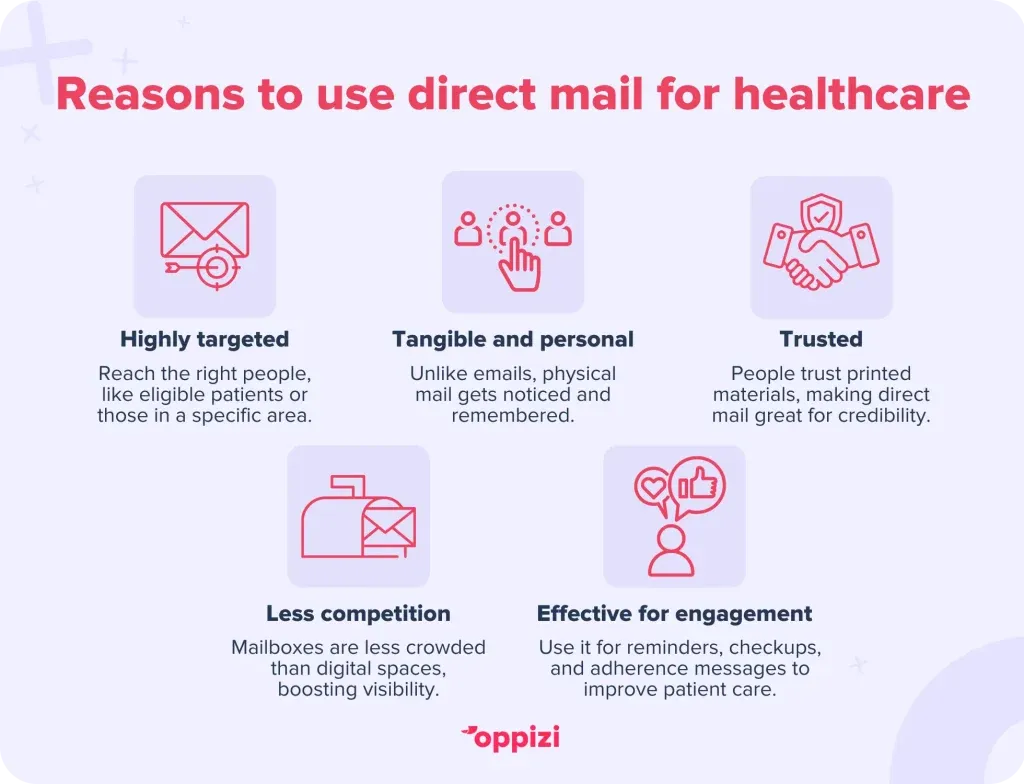
Healthcare brands use direct mail because it reaches people at home, in a format they can keep, with targeting by age, location, and insurance type. Healthcare marketing needs a mix of trust, compliance, and engagement. While digital marketing is popular, direct mail offers distinct advantages:
- Highly targeted: Direct mail lets you send specific messages to the right people, like those eligible for Medicare or patients in a specific area.
- Tangible and personal: Unlike emails that can end up in spam folders, physical mail sits on the kitchen counter and gets noticed.
- Trusted by consumers: People tend to trust printed materials, which helps healthcare brands build credibility with patients.
- Less competition: Mailboxes aren't as crowded as digital spaces, so your message stands out.
- Great for patient engagement: Sending appointment reminders, health checkup invites, and medication adherence messages helps improve patient relationships and health outcomes.
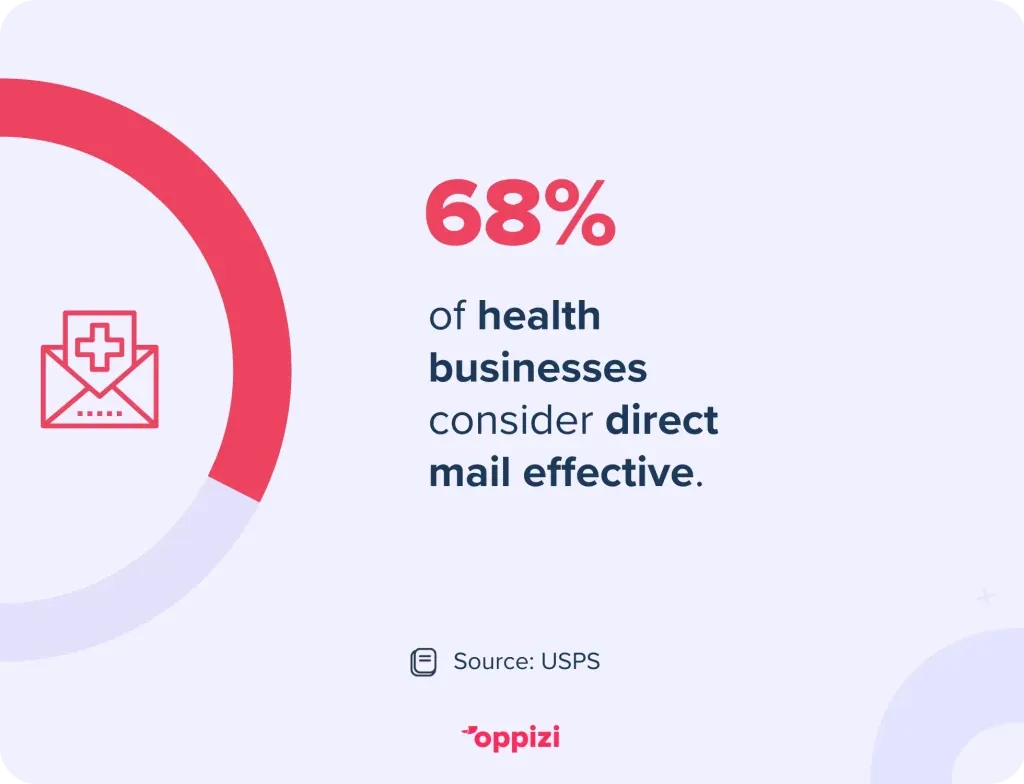
How does it perform? Cold addressed mail averages a 1% response rate, and 0.4% in the medical sector, per the JICMAIL Response Rate Tracker, which measured 4,939 UK campaigns through matchback and tracking codes rather than by survey. These figures are UK-measured, and there's no equivalent US benchmark. Cold mail also returned 2.1 times its campaign cost, in revenue. For more benchmarks, see our direct mail statistics.
Is direct mail HIPAA compliant?
Direct mail can be HIPAA compliant, because HIPAA regulates how protected health information (PHI) is used, not the mail itself. The rules apply to covered entities (health plans, healthcare clearinghouses, and healthcare providers that handle standard electronic transactions such as insurance claims) and to their business associates, so the real question is what data your mailing draws on.
Under the HIPAA Privacy Rule, marketing means a communication about a product or service that encourages recipients to purchase or use it (45 CFR 164.501). A covered entity needs the individual's written authorization before using or disclosing PHI for marketing (45 CFR 164.508(a)(3)). The only exceptions are face-to-face communications and promotional gifts of nominal value.
Some patient mail isn't marketing under the rule at all. Refill reminders about a drug someone is currently prescribed are excluded, as long as any payment from a third party is reasonably related to the cost of sending them. Communications for treatment, care coordination, or describing your own health-related services are also excluded, unless a third party pays you to send them. Mail sent to a rented prospect list or to every household on a postal route doesn't draw on patient records, so it typically involves no PHI.
If you share patient data with a mailing vendor, HHS requires a written business associate contract with that vendor. The primary sources are HHS guidance on marketing under the Privacy Rule and on covered entities and business associates. Review your plan with your privacy officer or counsel. Here's how to stay compliant:
- Limit personal health details: Don't include specific health conditions or treatments in your mail.
- Get written authorization: If your marketing uses PHI, get the patient's written authorization first, unless an exception applies.
- Encrypt and safeguard data: Keep mailing lists and recipient information safe and secure.
- Educate your staff: Make sure everyone involved in the campaign understands HIPAA rules.
By following these steps, you can safeguard your business and your recipients' privacy while building trust.
What privacy laws apply outside the US?
Outside the US, HIPAA doesn't apply, and local data protection laws govern how you use personal information in marketing. If you're running healthcare direct mail campaigns in other countries, it's important to know the rules in each area.
Here are some examples:
- European Union: The General Data Protection Regulation (GDPR) controls personal data protection, including marketing.
- Canada: The Personal Information Protection and Electronic Documents Act (PIPEDA) sets privacy rules for handling consumer data.
- Australia: The Privacy Act and Australian Privacy Principles (APPs) guide how businesses collect and use personal information.
Before starting a healthcare direct mail campaign outside the US, make sure you follow local privacy laws. This will help you avoid penalties, build trust, and run a compliant campaign.
What are healthcare direct mail best practices?
The best healthcare direct mail campaigns define a clear audience, keep the message simple, keep PHI out unless you have authorization, match the format to the job, and track every response. Here's how to put each one into practice:
Define your target audience
Understanding your audience is crucial. Are you reaching out to seniors eligible for Medicare? Promoting a new medical practice? Sending appointment reminders? Knowing your audience helps shape your message and design. You can segment your audience by:
- Age and demographics
- Healthcare needs
- Geographic location
- Insurance type, such as Medicare or private coverage
Craft a clear and compelling message
Keep your message simple and direct. Use friendly language that patients can easily understand. Focus on the benefits instead of just listing services. Personalizing your message helps build trust. Address common concerns, like affordability, convenience, or quality of care.
Design for impact
Use easy-to-read fonts and a clean layout. Include high-quality images of medical professionals or happy patients. Choose colors and branding that match your healthcare facility. Don't forget a strong call to action, like "Schedule your appointment today." You can also add QR codes that link to online appointment scheduling or information pages.
Choose the right mail format
- Postcards: Great for reminders and quick promotions.
- Letters: Ideal for sharing detailed information.
- Brochures: Useful for explaining medical services in depth.
- Self-mailers: A folded piece with a perforated section can be interactive and engaging.
Track and measure results
Use tracking codes, QR codes, or custom phone numbers to see how well your campaign is working. This helps you measure your return on investment (ROI). You can also A/B test different messages and formats to find what resonates best with your audience.
By following these tips, you can build a healthcare direct mail campaign that performs, and prove it.
How is direct mail used in healthcare marketing?
Healthcare organizations use direct mail for new patient acquisition, appointment and screening reminders, refill reminders, plan education, and community outreach, and it works for providers of every size. Here are some ways different providers can use it:
- Medical clinics: Promote new services, introduce staff, or remind patients about screenings.
- Pharmacies: Send refill reminders or share special discounts.
- Health insurance providers: Educate consumers about Medicare plans or open enrollment options.
- Hospitals: Share information about community health initiatives or upcoming events.
- Specialists and therapists: Reach out to potential patients about services like physical therapy, mental health support, or specialized care.
- Wellness centers: Promote health programs, fitness plans, or nutrition services.
No matter your healthcare specialty, direct mail helps you reach patients where they live.
How do you make it easy for patients to respond?
Give every mailer one clear response path: a booking link, a phone number, or a QR code that takes patients straight to scheduling. Here's what that path can do:
- Instant access to information: Patients can scan a QR code or type a short URL to get more details about services, upcoming health events, or how to schedule appointments.
- Easy appointment booking: Direct patients to an online portal where they can book appointments quickly.
- Medication and refill reminders: Link to services for prescription refills or medication instructions.
- Video content: Share educational videos about medical procedures, insurance options, or wellness tips.
- Secure online forms: If a link leads to a form that collects health information, make sure that page and its data handling meet your HIPAA obligations.
Connecting physical mail to an online next step gives patients an easy way to act and gives you a response you can count.
What do healthcare direct mail campaigns look like?
Healthcare direct mail campaigns range from reminder postcards to awareness drives. If you're curious what a healthcare direct mail campaign looks like, here are some examples showing how different organizations connect with their audiences:
Dental clinic postcards
A dental clinic sends postcards to remind patients about their upcoming cleanings. These postcards include a special discount for early booking, encouraging patients to schedule sooner. With bright visuals and friendly language, the clinic shows its commitment to patient care while increasing appointment attendance.
Health insurance provider brochures
A health insurance provider mails out brochures explaining Medicare enrollment deadlines and plan options. The brochures break down complex information into easy sections, helping seniors understand their choices. By offering valuable content, the provider becomes a trusted resource, encouraging recipients to reach out for help.
Pharmacy refill reminders
A local pharmacy sends personalized refill reminders to patients. Each reminder has a unique QR code that lets recipients quickly reorder medications online. This convenience helps patients stick to their prescriptions and strengthens loyalty between the pharmacy and its customers.
Medical specialist free consultation offers
A medical specialist sends mail promoting a free consultation for new patients. This offer makes it easier for people to seek specialized care and encourages them to book an appointment. The mailer includes testimonials from satisfied patients and highlights the benefits of the specialist's services, helping to create trust and encourage action.
Wellness center seasonal self-mailer
A wellness center uses a self-mailer to promote seasonal flu shots and other preventive care services. The mailer features engaging graphics and clear information about the importance of vaccination, making it easy for recipients to see why they should take advantage of the services. By including details about walk-in hours and costs, the center prompts immediate action.
Health awareness campaigns
A hospital runs a direct mail campaign to raise awareness about conditions like diabetes or heart disease. The mailings include pamphlets with statistics, risk factors, and prevention tips, along with invitations to free community seminars. By educating the public, the hospital positions itself as a proactive health partner and encourages attendees to seek further care if needed.
Chronic care management invitations
A primary care practice sends personalized letters to patients with chronic conditions, inviting them to join a care management program. The letter explains the benefits of the program, like personalized health coaching and regular follow-ups. This approach boosts patient engagement and promotes better health outcomes by making patients feel supported in managing their conditions.
By providing valuable information, personalized incentives, and clear calls to action, these campaigns build stronger relationships with patients.
What mistakes should you avoid in healthcare direct mail?
The most common healthcare direct mail mistakes are jargon, a missing call to action, skipped compliance checks, no tracking, and stale mailing lists. Here's what to watch for:
- Using technical language: Keep your message simple. Use words that patients can easily understand.
- Lacking a clear call to action: Make sure each piece tells readers what to do next. Guide them toward the next step.
- Skipping compliance checks: Don't overlook HIPAA rules. Violating them can be costly and hurt trust.
- Ignoring tracking and analytics: Measuring your success is important. It helps you improve future campaigns.
- Not updating mailing lists: Keep your addresses current. This helps avoid wasted resources.
Avoiding these mistakes improves the performance of your healthcare direct mail campaigns.
How do you combine healthcare direct mail with other channels?
Pair direct mail with digital, phone, event, and broadcast touchpoints so each one reinforces the same message. Here's how you can do that:
- Digital marketing: Use social media, email, and online ads to support your direct mail message. This helps reinforce what you're saying.
- Call center follow-ups: After sending out mailers, make a follow-up phone call. This catches people who meant to book but haven't yet.
- Event marketing: Send out mail invitations for health seminars, flu shot clinics, or Medicare enrollment sessions. It's a great way to draw people in.
- Website integration: Include QR codes or special URLs in your mail. This makes it easy for people to find more information online.
- TV and radio ads: Share your message on multiple channels. This helps people remember your brand.
By blending direct mail with digital and traditional marketing, you create a multichannel strategy that reinforces your message and drives response.
How would a practice run a direct mail campaign with Oppizi?
A practice would use Oppizi to plan, print, deliver, and track the mail from one platform. Here's how a dental practice opening a second location might run it. It sends EDDM postcards to every household on the postal routes around the new office, at about $0.45 per piece all-in on average, or addressed postcards to a list Oppizi builds by age, income, and location, at $0.54 to $0.65 per piece with the data included. There's no monthly platform fee.
Oppizi handles the design, printing, and delivery, and each piece carries a trackable QR code or URL, so the practice can see which routes and audiences booked. Neither option touches patient records, so there's no PHI in the mailing. Mailing existing patients is a different job: talk to your compliance team about authorization and business associate agreements before any patient data leaves your systems.
Start your healthcare direct mail campaign with ease
Starting a healthcare direct mail campaign can be simple. With Oppizi, you can plan, print, deliver, and track addressed direct mail or EDDM in one place, so you can focus on reaching the right people with the right message.
We handle the printing and delivery, so you can concentrate on delivering great care. Ready to put your message in the hands of the people who need it most? Start your campaign with Oppizi today.
Frequently asked questions
- Is direct mail HIPAA compliant?
Direct mail can be, because HIPAA regulates how protected health information is used, not the mail itself. Covered entities and their business associates need a patient's written authorization before using PHI for marketing (45 CFR 164.508). Refill reminders and treatment communications are generally excluded, and mail to a rented prospect list typically involves no PHI.
- How is direct mail used in healthcare marketing?
Healthcare organizations use it for new patient acquisition, appointment and screening reminders, refill reminders, Medicare plan education, and community health outreach. For example, a dental practice could use Oppizi to send EDDM postcards to every household around a new location, then track bookings through a QR code or URL printed on each piece.
- What are healthcare direct mail best practices?
Define a clear audience, such as Medicare-eligible seniors or families near a new clinic. Keep the message simple and friendly, keep personal health details off the piece, and get written authorization before using PHI for marketing. Match the format to the job, include one clear call to action, and track every response so you can scale what works.
- Do direct mail campaigns still work?
Yes. Cold addressed mail averages a 1% response rate, and 0.4% in the medical sector, per the UK-measured JICMAIL Response Rate Tracker, and it returned 2.1 times its campaign cost in revenue. Results turn on your audience, offer, and creative, so track every campaign and compare it with your other channels before scaling up.
- Do I need permission to send direct mail?
Usually not, for general mail to households. Healthcare is the exception: if a HIPAA covered entity uses patients' protected health information to send marketing, it needs each patient's written authorization first, unless an exception applies. Follow local privacy laws and postal rules too, and keep your mailing lists current so you only reach the people you intend to.
- Is direct mail profitable?
It can be. JICMAIL's UK-measured tracker found that cold addressed mail returned 2.1 times its campaign cost in revenue on average, rising to 2.7 times above 100,000 pieces. Profit depends on patient lifetime value, your offer, and targeting, so measure the cost of each new patient against the revenue each booking brings in.