Last updated July 23, 2026
If you run a law firm and want more clients, you're not alone. Being a good lawyer is important, but people also need to know you’re out there. That’s where a law firm marketing plan comes in. This guide will show you how to market your law firm, step by step. You don’t need marketing experience. Just follow along.
Why you need a law firm marketing plan
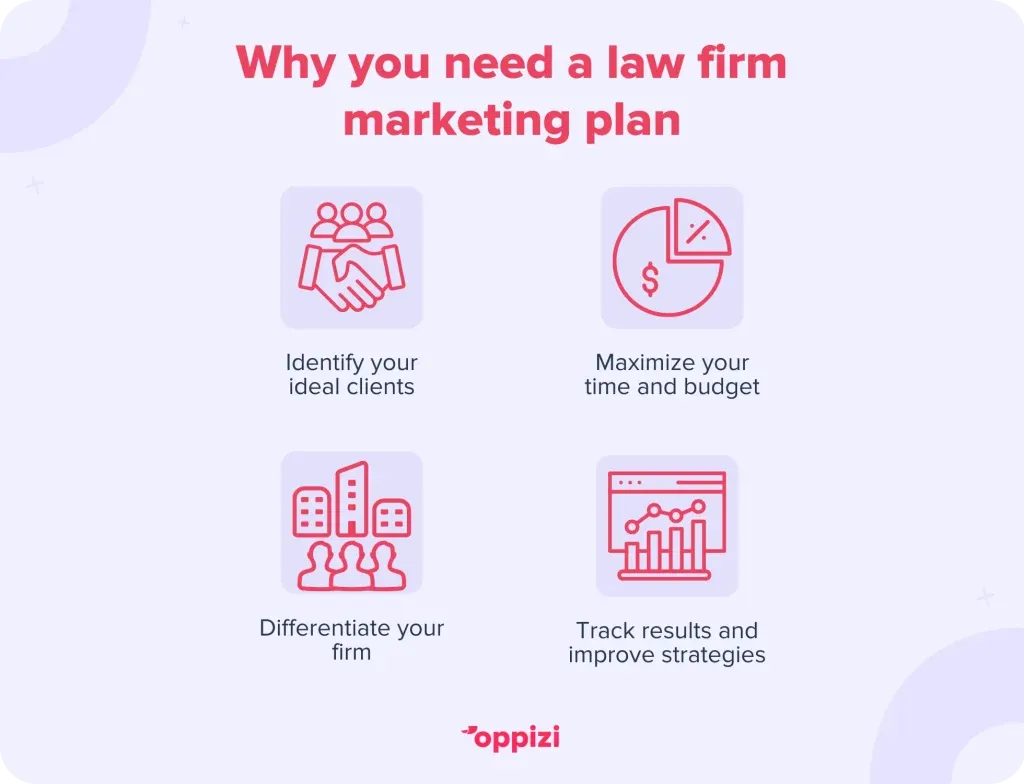
Think of your marketing plan as a map. It helps you:
- Know who your ideal clients are
- Use your time and money wisely
- Stand out from other law firms
- See what’s working, and what’s not
Without a plan, it’s easy to waste time and guess at what might help. A clear plan helps you focus, make smart choices, and build trust with new clients.
Step 1: Set clear goals
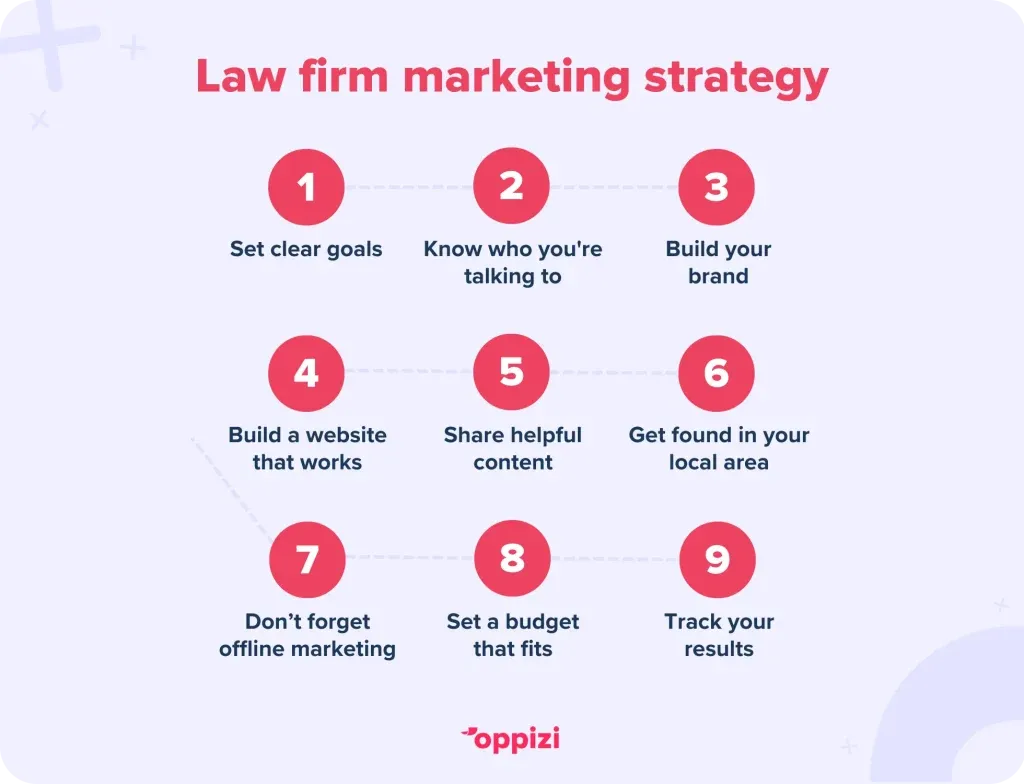
What do you want from your marketing? Be specific.
Here are a few common goals:
- Get more leads
- Be more visible in your area
- Bring more people to your website
- Attract a certain kind of client (like startups or families)
Don’t just say “get more clients.” Try something like “get 20 new client inquiries each month from the website.” That’s easier to track.
Step 2: Know who you're talking to
Good marketing starts with knowing your audience. Think about your ideal client:
- What legal help do they need?
- Where do they spend time, online or in person?
- What are they worried about?
Build a simple picture of your typical client. If you're in family law, it might be parents in their 30s or 40s who just separated. If you’re a business lawyer, it might be local small business owners.
Step 3: Build your brand
Your brand is what people think of when they see or hear about your firm.
It includes:
- Your logo and colors
- The way you speak in emails, ads, and your site
- Your values and how you talk about your work
Keep everything consistent. It helps people remember you and trust you. Even using the same colors everywhere can make a difference. Want to stand out? Think about your personality. Are you warm and approachable? Or tough and direct? Your brand should match how you work, and who you want to help.
Quick check:
- Are your colors and fonts the same on every platform?
- Do you use the same tone of voice everywhere?
- Can someone visit your homepage and quickly understand what matters to you?
Step 4: Build a website that works
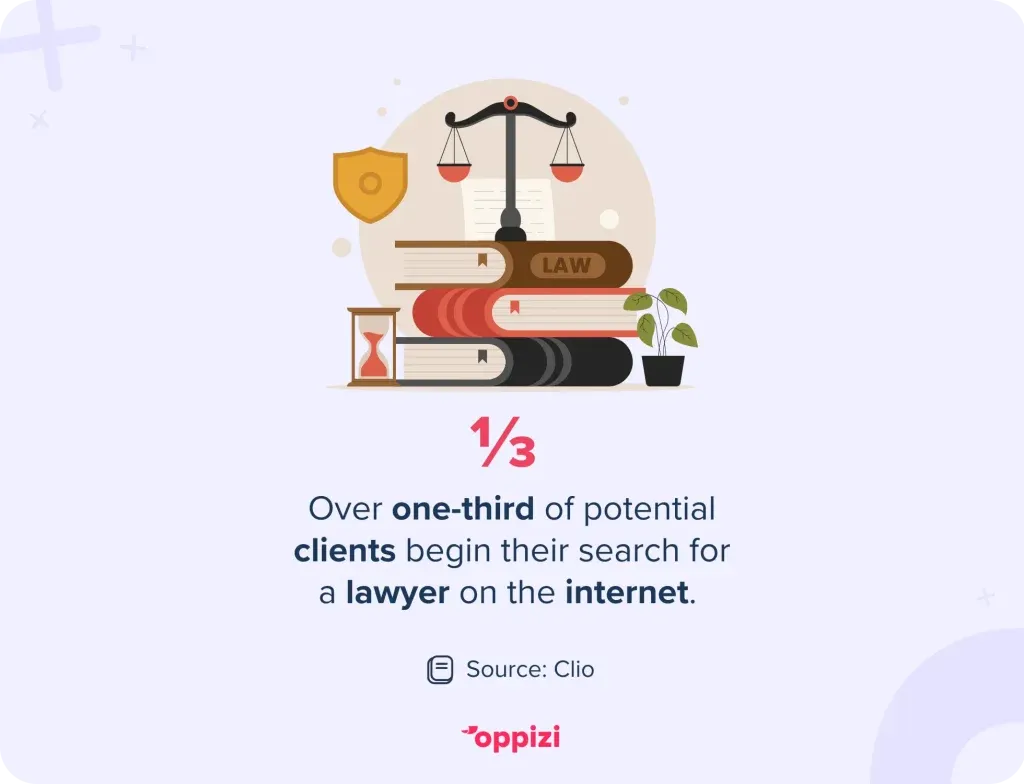
More than 1 in 3 people look online first when they need a lawyer. When doing so, your website is often the first thing people see. Make it simple and helpful.
Here’s what matters:
- Easy to use on phones and computers
- Clear language, no legal jargon
- Short descriptions of your services
- Easy ways to contact you
- Clear buttons like “Book a free consultation”
- Reviews or testimonials to build trust
Don’t hide your phone number. Put it front and center.
Step 5: Share helpful content
Content marketing means sharing useful info so people trust you and understand their options.
Try things like:
- Blog posts that explain common questions
- Free checklists or guides
- Short videos to explain legal topics
- Social media posts that answer FAQs
It builds trust and helps people find you on Google. Start with questions you already hear from clients. If you’re an injury lawyer, write about what to do after a car crash.
Here’s a simple monthly plan:
- Week 1: “How much does it cost to hire a [your specialty] lawyer?”
- Week 2: “5 things to know before your first consultation”
- Week 3: “What to do right after [a legal event]”
- Week 4: Share a client story or review (with permission)
Add a clear next step to each piece, like “Book a consultation.”
Step 6: Get found in your local area
Most people want a lawyer nearby. Local SEO helps you show up when they search things like “divorce lawyer near me.”
Start by:
- Setting up your Google Business Profile
- Making sure your name, address, and phone number are the same everywhere
- Using local keywords like “family lawyer in Denver” on your site
- Listing your firm on legal directories and review sites
Ask happy clients to leave Google reviews. They help others trust you and improve your ranking.
Step 7: Don’t forget offline marketing
Online marketing is important. But offline marketing still works, especially in your local area.
Things like:
- Flyers
- Local events
- Sponsorships
These can help people in your neighborhood remember you. What’s more, direct mail for attorneys working on their own initiative can also work well for law firms.
Flyer tips:
- Use a strong headline, like “Need help with a custody case?”
- Include your contact info and a clear next step
- Keep the design clean—less is more
Want it to be easy? Oppizi can handle printing, tracking, and delivery for your flyers. You choose the area, and we take care of the rest. Ready to try it?Sign up with Oppizi and launch your first campaign in minutes.
Step 8: Set a budget that fits
You don’t need a big budget to start. Spend what you can, then adjust as you grow.
Some common costs:
- Website hosting and updates
- Ads on Google or Facebook
- Creating content like blogs or videos
- Printing and delivering flyers
Track what you spend. Keep what works. Change what doesn’t.
Step 9: Track your results
Marketing isn’t one-and-done. Keep an eye on what’s working.
Use tools like:
- Google Analytics (for website traffic)
- CallRail (to track phone calls)
- HubSpot CRM (to track leads)
Watch things like:
- How many people visit your site
- How many calls or form submissions you get
- Where your leads come from
- What each lead costs
You don’t need to be a data expert. Just start small. Look at last month. How many leads did you get? Where did they come from? If something isn’t working, ask yourself:
- Are we talking to the right people?
- Is our content answering the right questions?
- Can people find and trust us?
Tweak one thing at a time and keep going.
Simple law firm marketing plan: month one
Here’s what your first month of marketing could look like:
Week 1
- Decide who your ideal clients are
- Set up your Google Business Profile
- Start writing a blog (like “What to do after a car accident”)
Week 2
- Update your website with clear calls to action
- Add a phone number you can track
- Design and order flyers with Oppizi
Week 3
- Publish your blog and share it on LinkedIn or Facebook
- Launch your local flyer campaign
- Ask past clients to leave a review
Week 4
- Check your numbers (site visits, calls, form submissions)
- See what worked
- Plan content and campaigns for next month
How to use social media (without feeling pushy)
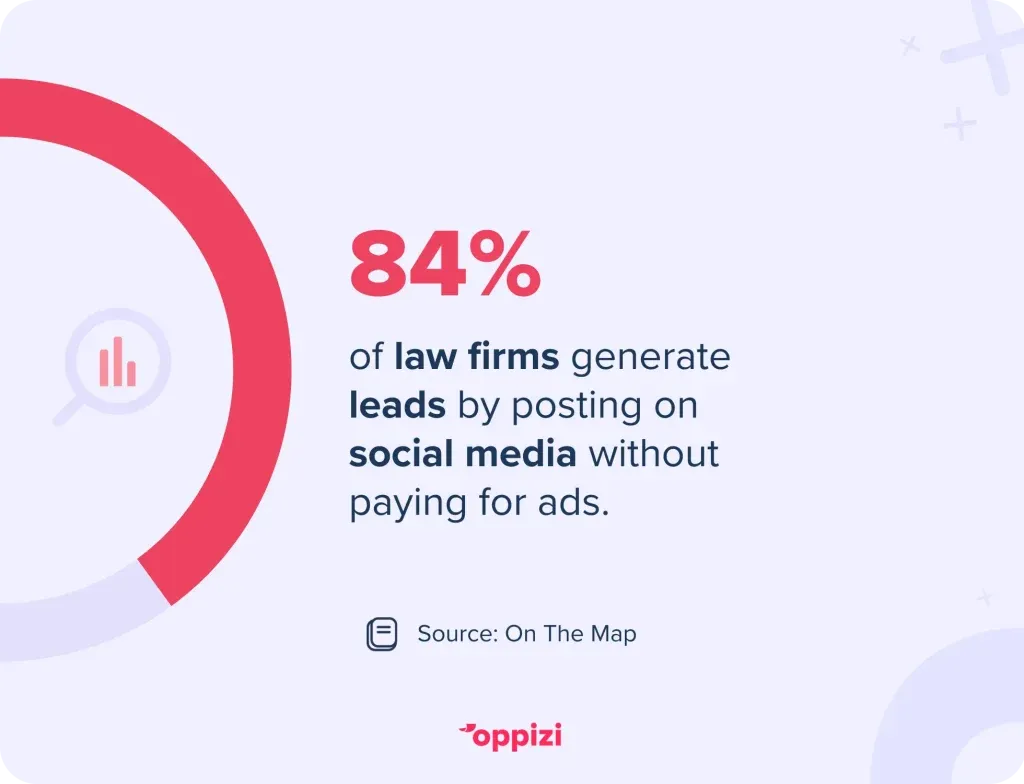
84% of law firms get new leads from people who find them through social media posts, not paid ads. Despite that, many lawyers avoid social media because they don’t want to seem too casual or too salesy. But it doesn’t have to be either. It’s just another way to stay visible and helpful.
Pick one or two platforms where your clients already spend time.
- Facebook is great for family or personal law
- LinkedIn works well for business or corporate law
Not sure what to post? Try this:
- Share quick legal tips
- Link to blog posts
- Post client success stories (with permission)
- Highlight awards or community work
- Answer common questions
You don’t need fancy graphics or viral videos. Just show up regularly. Be helpful. Speak like a real person.
Grow your reach through partnerships
Referrals still matter. The right people already have your clients' trust—you just need to connect with them. Try building referral partnerships with:
- Accountants
- Financial advisors
- Therapists
- Real estate agents
- Local business groups
You can co-host workshops, write guest articles, or simply agree to send each other clients. It’s an easy way to build trust in your community without spending a lot.
Common mistakes to avoid
Even good marketing can fall flat if you're not careful. Here are a few things to skip:
- Using too much legal jargon - speak clearly
- Spreading yourself too thin - pick a few channels and do them well
- Ignoring reviews - respond to the bad ones, thank people for the good ones
- Running ads without a plan - know what you want to get from them
The goal is simple: Be clear, helpful, and easy to reach.
FAQs about law firm marketing plans

How do you market a law firm?
Start with a clear goal. Do you want more clients? A stronger reputation? More local visibility? Then focus on things like a solid website, content marketing, appearing in local searches, and offline tactics like flyer distribution. Make sure your brand is consistent and your message is clear.
What should a marketing plan include?
A good marketing plan usually has:
- A brief summary
- Your business goals
- Your target audience
- A look at your competition
- Marketing strategies and channels
- Your budget
- How you track and measure success
These sections help you stay organized and focused.
What are the 5 P’s of a marketing plan?
The 5 P’s are:
- Product: Your legal services
- Price: How you charge (hourly, flat rate, etc.)
- Place: Where clients find you (online, in your office, etc.)
- Promotion: How you market (ads, flyers, SEO)
- People: Your team and how they treat clients
This model helps make sure your marketing matches the experience your clients get.

What are the 7 steps of a marketing plan?
Here’s a simple breakdown:
- Set clear goals
- Understand your audience
- Build your brand identity
- Choose the right marketing channels (both online and offline)
- Create a content plan
- Set your budget
- Track results and improve
These steps keep your plan on track.
What are the 7 P’s of marketing?
The 7 P’s are:
- Product
- Price
- Place
- Promotion
- People
- Process
- Physical evidence
For law firms, “process” refers to how clients experience your service, and “physical evidence” can be anything that builds trust, like your office space or brochures.

Final thoughts: Marketing your law firm doesn’t have to be hard
If it feels overwhelming, start small. A few simple steps can make a big difference. The key is to have a clear plan that fits your goals and speaks to the right clients. Mix digital tools with offline tactics like flyers. And remember—you don’t have to do it alone.
Oppizi makes offline marketing easy, data-driven, and scalable. We’re here to help you grow, one campaign at a time. Ready to market your law firm with confidence?Start your first campaign with Oppizi today.