Straightforward to use
A clean interface that gets you to a finished code in minutes.
Sign up at no cost, make as many branded codes as your campaigns call for, and every scan reports back to your dashboard.
89M
mobile users scanned a QR code in the US in 2022
57%
global rise in QR code scans between 2021 and 2022
80%
more effective when a code carries your logo and colours
36%
of QR code scans are made to redeem a coupon
Send a code to your website, your WiFi details, a video, your social profiles or a PDF, dress it in your brand, then check what it actually did.
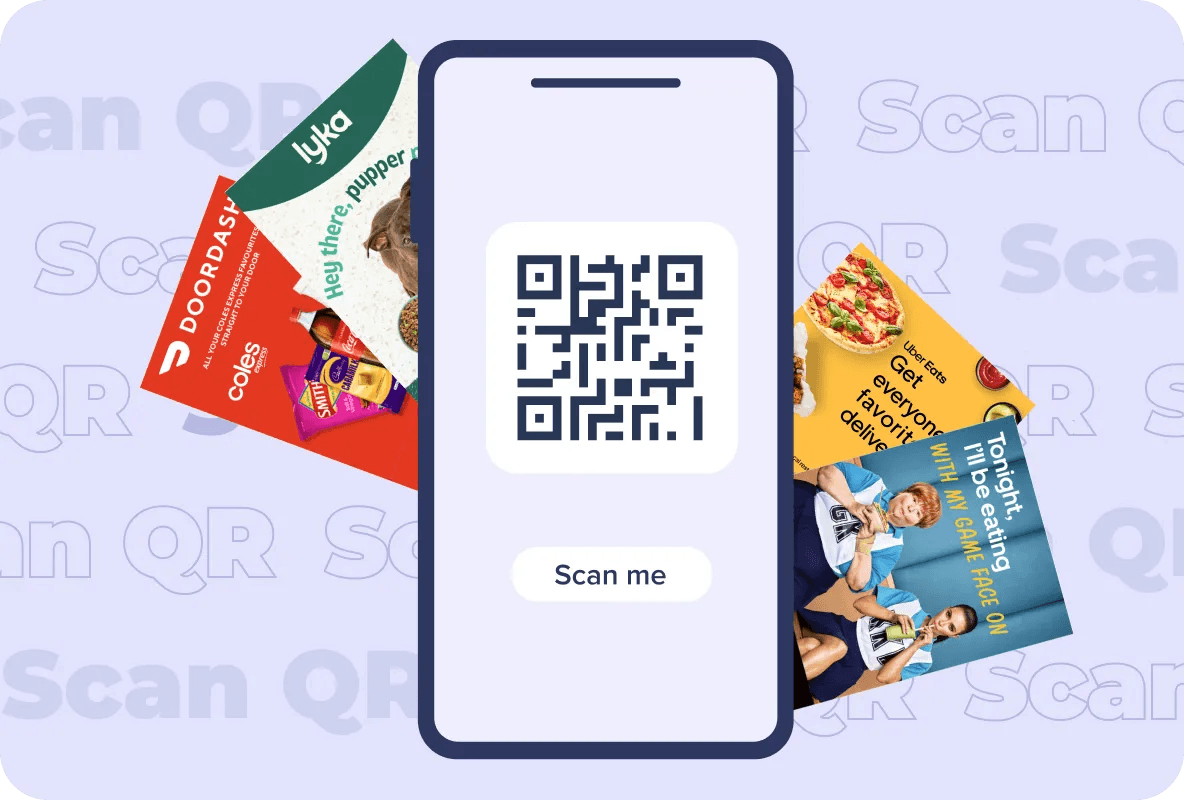
Customise it, track it, then improve it.
A clean interface that gets you to a finished code in minutes.
Send people to your website, a booking page or your WiFi network.
Scan data you can actually read, campaign by campaign.
Codes that look like your brand get scanned more.
Add a logo, your colours, patterns and a frame.
On flyers, letterbox drops, posters, packaging and screens.
How it works
Your first code takes a couple of minutes. Here is the whole process.
A free account turns a one-off code into something you can measure and manage. Four things you get:
Follow scan rates, locations and behaviour for as long as the code is live.
Every code you have made, in one place, with performance side by side.
Change where a code points without generating a new one or reprinting artwork.
Group codes into folders so a multi-city campaign stays tidy.
Most free generators lock the parts you need behind an upgrade. This is what is included regardless.
Everything below, included, free.
Where a typical generator stops.
Industries
A few ways New Zealand teams put codes to work.
QR stands for Quick Response. It is a two-dimensional barcode: rather than storing information along a single axis the way a supermarket barcode does, it lays dark modules across a light grid and holds data both horizontally and vertically, which is where the extra capacity comes from. That headroom means one code can carry a web address, contact details, plain text, WiFi credentials and more. A scan can open a page, surface product information, begin a payment or start a video. In New Zealand they turn up most on print, where the code is what connects something in a hand to a page you can actually measure.
A generator is a practical tool for any business, marketer or organiser who wants to promote something, share details or measure engagement. A code should do more than redirect. It is a small piece of your brand, sitting on a flyer or a letterbox drop, and it should look like it belongs there. Our generator lets you paste in a destination, then shape the code with your logo, a template, your own colours and a frame that suits the artwork. Custom codes are also more forgiving. Error correction is built in, so even a code that gets scuffed in a letterbox still scans.
Six things worth knowing: Customisation: drop in a logo, recolour the modules and patterns, and set the code's shape and size. Ease of use: a straightforward interface that gets you from destination to finished code without instructions. Brand alignment: tune the code so it reads as part of the campaign rather than something bolted on. Engagement: a code wearing your colours pulls more scans than an anonymous black grid. Analytics: follow performance, count scans, and carry what you learn into the next campaign. Versatility: one code serves a flyer, a mailer, packaging or a screen.
Designing the code is a chance to show what the brand looks like, not just where it points. Choose your colours and shapes, or place your logo in the middle of the code itself. Keep contrast strong, keep the quiet zone around the edge clear, and the result is a code that looks deliberate and still scans first time.
A few placements that consistently earn scans in New Zealand campaigns: Flyers and letterbox drops: a code on a hand-to-hand flyer or a letterbox drop turns a printed offer into a trackable visit. Product packaging: give customers product detail, instructions or extra content after purchase. In-store and point of sale: posters, counter cards and window signage are easy places to put a promotion one scan away. Wherever it goes, make sure the code is big enough to scan at arm's length and say what someone gets for scanning it.
A code is only as good as what happens after the scan. Worth checking: Mobile-ready destination: the page behind the code will almost always be opened on a phone, so make sure it loads fast and fits the screen. Give people a reason: a bare code gets ignored. Name the reward, whether that is a discount, a menu or a booking. Test across devices: scan it on a few phones before the artwork goes to print. Mind the print: keep the code clear of folds and trim, and print it large enough to read in low light.
Tracking is the difference between a QR code and a printed URL. What comes back: Scan volume: how many scans landed, and how the daily curve moved. Place and timestamp: where and when each scan happened, which shows you the suburbs and the hours that worked. Device and browser: what people scanned on, so you can be sure the landing page holds up.
The metrics worth reviewing after a campaign: Total scans: everything the code received. Unique scans: how many individual people scanned it. Scan location: the area each scan came from. Scan time: the date and hour of each one. Device and browser: phone or tablet, and which browser.
More tools
Shape, colour scheme, logo and frame, so the finished code sits inside your brand guidelines instead of beside them.
Yes. Codes generated here follow the standard, so any phone camera or QR reader will open them.
Upload it in the design view and drop it into the middle. Enough of the surrounding pattern is preserved that the code still reads.
Yes, once you have signed up. You then see total scans, when and where they happened, and the devices used, for every code on your account.
Yes. Enter your destination, customise the code to your brand, generate it and download it, at no cost and with no limit on how many you make.
They do not. A static code carries fixed data and works for as long as its destination stays live, which makes it a good fit for print that sits around for months.
They tend to be. A code carrying your logo and colours is recognisable and looks intentional, and research puts branded codes at around 80% more effective than plain ones.
Generate as many codes as you need, track every scan, and turn printed campaigns into numbers you can act on.