Last updated September 28, 2026
The best direct mail campaigns don’t happen by accident. They’re carefully timed to reach people when they’re most likely to notice and respond. If you send mail without thinking about when your audience checks it, you risk lower engagement and a smaller return on your budget.
Timing affects everything, from open rates to scan rates and conversions. Setting up strategic automations and planning your delivery schedule with care can give your campaign a real lift.
In this guide, you’ll learn which days work best for sending direct mail, why timing makes such a difference, and how tools like Oppizi can help automate scheduling, connect with platforms like Shopify, and improve ROI.
By the end, you’ll know how to plan campaigns that reach mailboxes at just the right time and deliver better results without extra effort.
Why timing matters in direct mail
Timing can make or break your campaign. A great mailer that lands on the wrong day might go unnoticed, while the same mail arriving at the right time can drive attention, clicks, and conversions. Here’s why it matters:
- Open and scan rates: People usually check their mail on certain days. If your mail arrives outside that window, it might sit unopened.
- Response and conversion: Mid-week deliveries give people time to read, think, and act before the weekend.
- ROI impact: Sending mail at the right time increases your chances of converting leads, making every dollar go further.
Even a small change in timing, like mailing on Tuesday instead of Monday, can make a big difference. When you pair direct mail with email marketing or SMS sent on the same days to boost impact, you can amplify your results and strengthen your entire marketing mix.

Planning when your mail arrives is just as important as what’s inside it. The right timing helps your campaign reach people when they’re most likely to notice and respond. Oppizi make this easier by automating delivery, tracking direct mail performance, and helping you find the days that work best.
Best and worst days for direct mail delivery
Not every day performs the same. The right timing can improve your direct mail response rate, while the wrong one can leave even a great offer unnoticed.
Tuesday, Wednesday, Thursday: the midweek sweet spot
When looking at overall mail performance, results vary by industry, audience, and time of year. But once the data is combined, a clear pattern emerges: midweek tends to win.
CoSchedule, for example, analyzed multiple email studies and found that midweek sends get the best engagement. In their LinkedIn poll, 74% of marketers reported the highest engagement for emails sent in the morning, 22% in the afternoon, and only 4% in the evening.
While direct mail works differently, it shares similar behavioral patterns. The key difference is that physical mail doesn’t vanish with a click. It lingers in homes, serving as a constant reminder. That lasting presence might explain why direct mail stats show response rates average between 5 to 9 percent on house lists and 3 to 5 percent on prospect lists, compared to about 2.3% for email.
Monday: crowded and less effective
Mondays bring a flood of bills and work updates. Your piece risks getting lost in the clutter. It’s not always a bad day, but midweek generally performs stronger.
Friday–Sunday: the weekend slowdown
By Friday, attention shifts to the weekend. Saturday and Sunday see inconsistent delivery, and many people simply don’t check their mail. That means lower engagement and wasted spend.
Bank holidays and seasonal timing
Holidays can delay delivery and disrupt habits. Plan around them to make sure your mail arrives when people are most likely to notice and act.
Days of the week vs engagement potential
Syncing direct mail with the buyer’s journey
Timing isn’t only about the day your mail arrives. It’s also about where your audience is in their buying process of the marketing funnel. When your message matches what people need at that moment, your campaign feels more relevant and performs better.
Top of funnel: awareness and education
At this stage, people are just getting to know your brand. Focus on sharing helpful information, simple tips, or an introduction to your product or service. Timing isn’t critical for action yet, but sending mid-week still helps your mail stand out and get read.
Middle of funnel: solution evaluation
This is when potential customers are comparing options and looking for answers. Sending your mail on Tuesday, Wednesday, or Thursday gives you the best chance to reach them when they’re focused and ready to consider your offer.
Bottom of funnel: conversion and offers
Here, your goal is to drive action, redeem an offer, schedule a demo, or make a purchase. Mid-week delivery gives people time to respond before the weekend, which often leads to higher conversion rates. Add a personal touch, like a discount or loyalty reward, and your timing will work even harder for you.
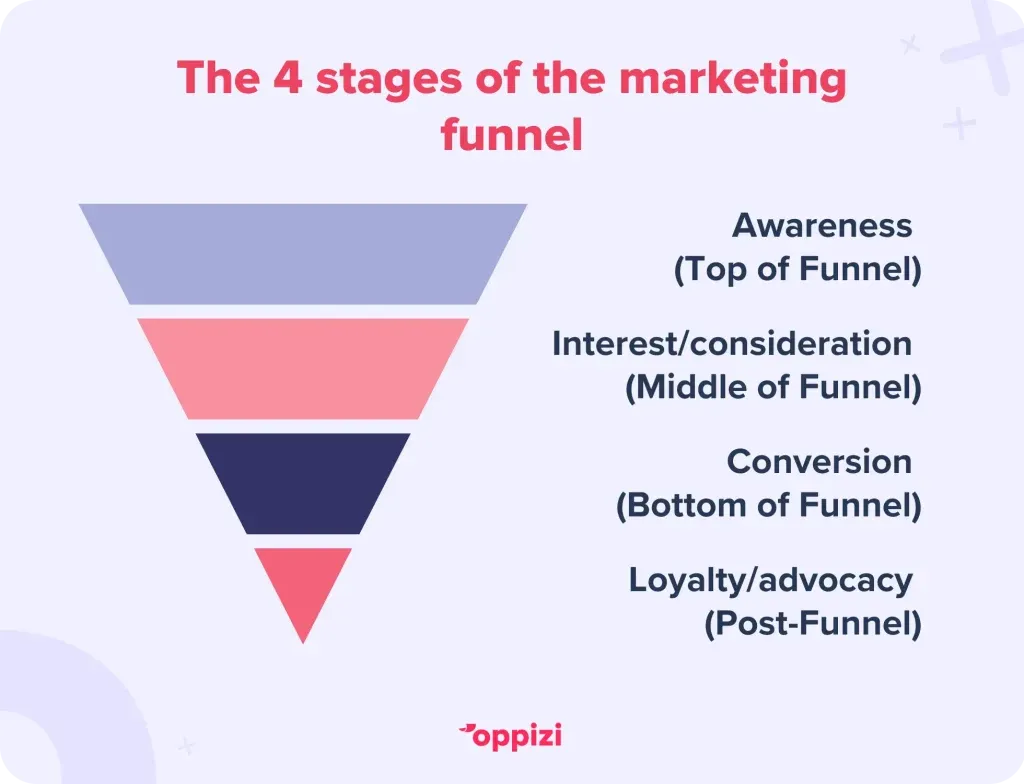
Every stage of the buyer journey benefits from good timing. Oppizi makes it easy to plan and automate your schedule so your mail reaches people when they’re most likely to respond. That helps boost engagement and ROI without extra effort.
Practical tips for optimizing delivery timing
Knowing which days work best is only the start. To get the most from your campaigns, you need to plan carefully, segment your audience, and track results. Here are some ways to do that:
- Verify addresses and plan lead time: Keep your mailing list clean and accurate. Factor in delivery times so your mail arrives exactly when you want it to.
- Segment your audience: Timing can vary by group. People in cities, rural areas, or different age brackets may respond better on different days. Adjust your schedule to match their habits.
- Integrate with digital campaigns: Combine direct mail with email or SMS for a connected experience. Sending messages across channels at the right time helps reinforce your offer and lift response rates.
- Use Oppizi: Use Oppizi to schedule campaigns in advance, track deliveries, and refine future sends based on performance data. Automation helps ensure your mail reaches the right audience at the optimal time.
- Test and refine: Try small A/B tests using different delivery days to see what works best. Use the data to guide your next campaign.
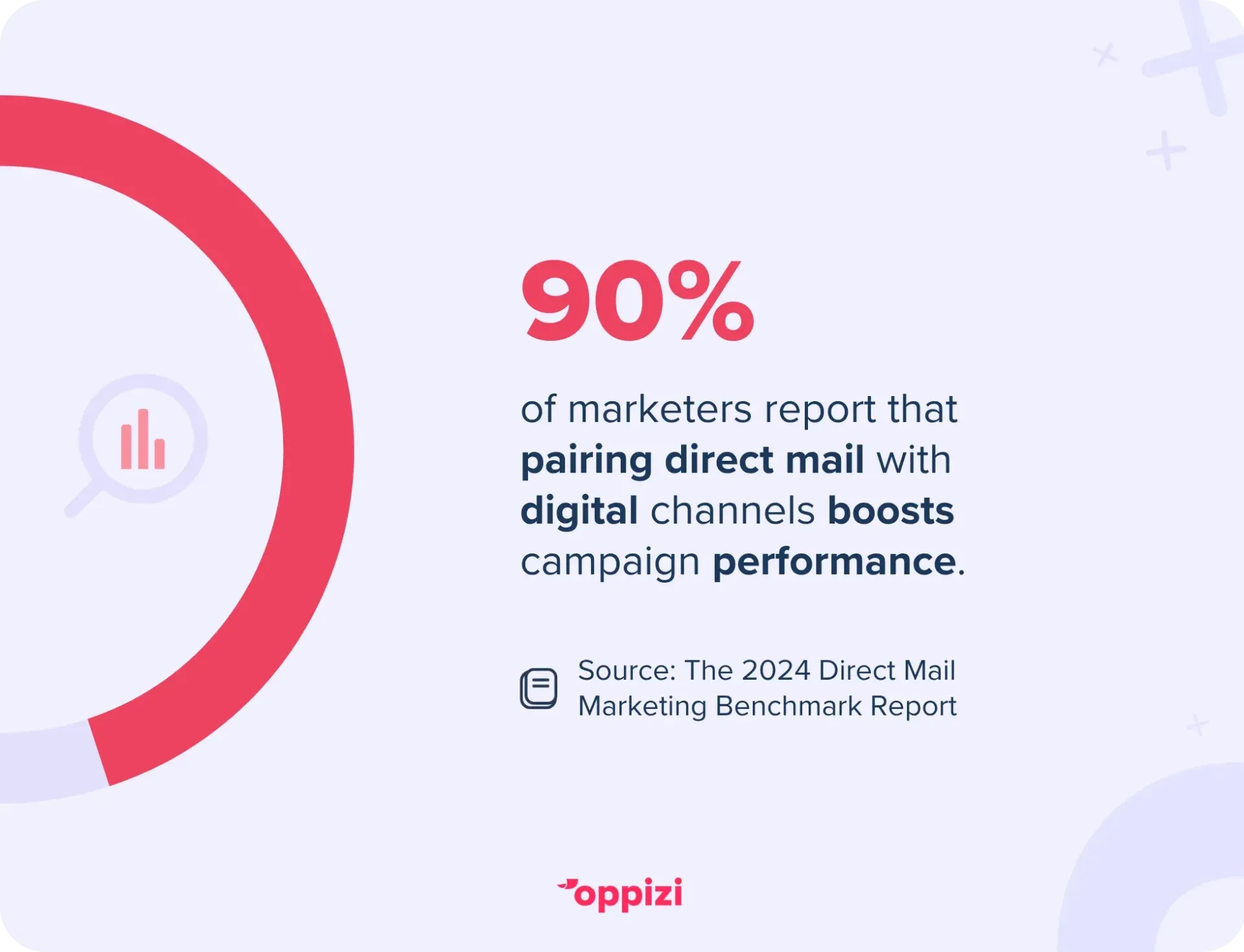
Following these steps helps your mail reach people when they’re ready to engage. It’s a simple way to make every campaign more effective. In fact, 90% of marketers say combining direct mail with digital channels improves their overall performance.
Measuring and improving ROI with timing
Perfecting your delivery timing isn’t a one-time task. It’s something you refine over time. Tracking results helps you see which days, audiences, and strategies bring the best return.
- Track response rates by day: Look at how different delivery days affect open, scan, and conversion rates. This helps you identify the best days for your audience.
- Analyze segment performance: Timing can vary across groups. Urban and rural areas, or even different age ranges, may respond at different times. Pay attention to those patterns.
- Test and compare: Run A/B tests with different delivery days. Use the results to adjust your schedule and improve your ROI.
- Integrate campaign data: Combine your direct mail results with data from email, SMS, or online campaigns. This gives you a full view of how each channel works together.
- Use Oppizi for insights: Oppizi automates tracking, monitors delivery, and generates detailed reports. You can easily see which days perform best, measure your direct mail ROI, and fine-tune your next campaign with confidence.
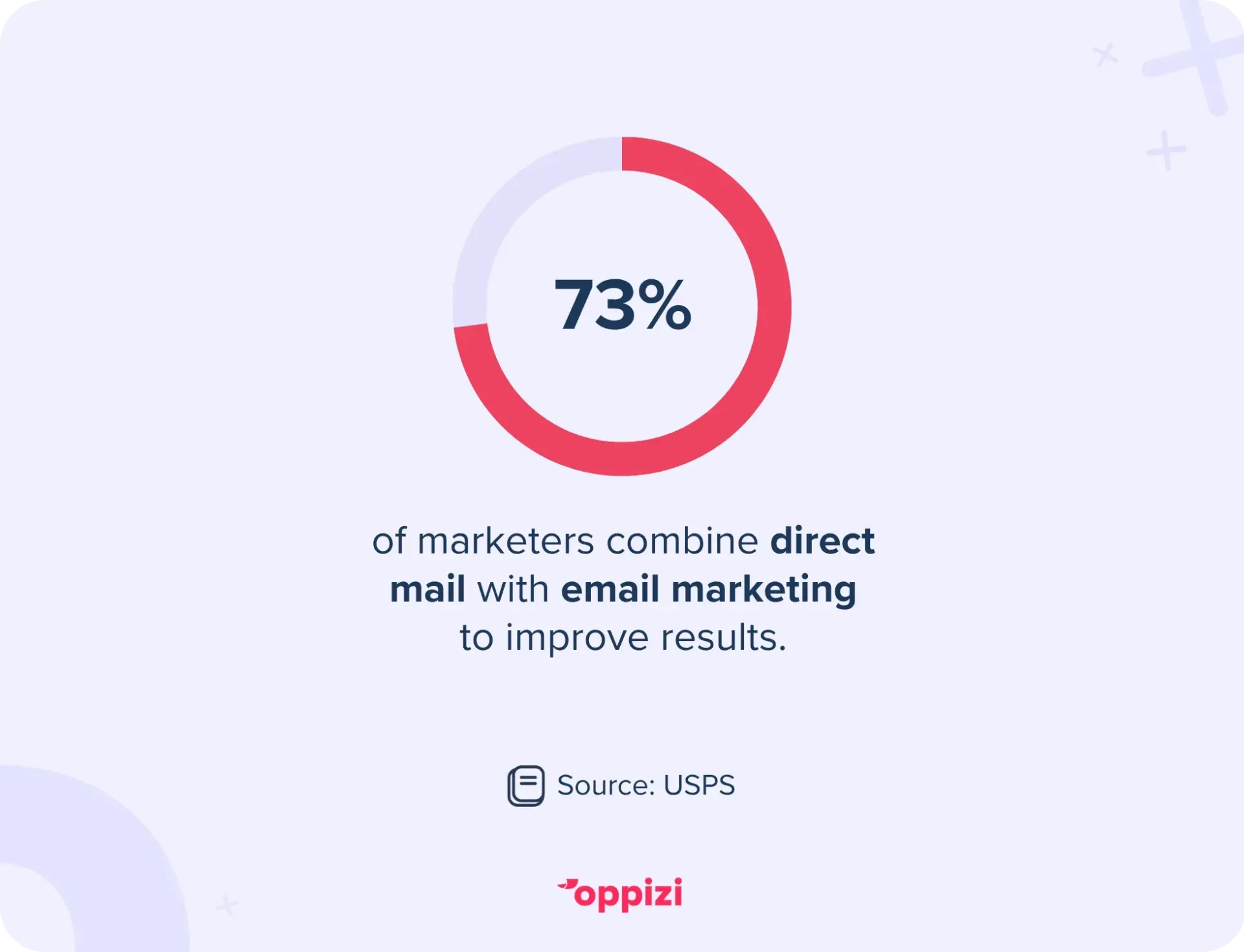
When you track and refine your timing regularly, your campaigns become more predictable and effective. And you’re not alone. 73% of marketers use direct mail alongside email marketing to strengthen performance.
Remember this when planning your mail
Timing plays a big role in how well your direct mail performs. Here’s what to keep in mind:
- Mid-week works best: Tuesday, Wednesday, and Thursday usually bring the highest engagement.
- Skip Mondays and weekends: Mail that arrives at the start or end of the week is often ignored or set aside.
- Match timing to the buyer’s journey: Send mail that fits where your audience is, whether they’re learning about your brand, comparing options, or ready to buy.
- Plan ahead: Consider delivery times, holidays, and your audience’s daily routine.
- Keep testing and improving: Track your results, experiment with different days, stay on top of the latest direct mail trends, and use data to fine-tune your timing.
FAQ: timing your direct mail campaigns
When should I send direct mail for the best ROI?
Aim for mid-week. Tuesday, Wednesday, and Thursday tend to bring the best results because they fit into people’s regular routines and get more attention.
How long does it take for direct mail to reach recipients?
Delivery times depend on location and mail service. Standard mail usually takes two to five business days. Planning ahead helps your campaign arrive right when you want it to.
How can I sync direct mail with email or SMS campaigns?
Schedule your mail to arrive on key days, then time your emails or texts to match. Using an integrated platform like Oppizi makes coordinating across channels simple.
Can Oppizi help automate delivery timing?
Yes. Oppizi lets you schedule, track, and adjust campaigns based on real data. Automation helps you time deliveries accurately and improve ROI.
Should I send direct mail to all audience segments on the same day?
Not always. Different groups respond better at different times. Testing and sending based on each segment’s behavior can lead to higher engagement and stronger results.

Conclusion
Timing plays a big role in how well your direct mail performs. Sending mail mid-week usually delivers the best results, helping you increase engagement, response rates, and ROI. Avoid Mondays, weekends, and holidays when people are distracted or less likely to check their mail.
When you match delivery to the buyer’s journey, your message reaches people at the right moment, whether they’re learning about your brand, comparing options, or ready to buy. The key is to plan carefully, test different days, and track what works best.
With Oppizi, you can automate delivery, sync direct mail with your digital campaigns, and monitor performance with ease. Your mail reaches the right audience at the right time, giving you consistent, measurable results.
Get started today with Oppizi and see how the right timing can drive stronger engagement and better ROI.