Last updated September 28, 2026
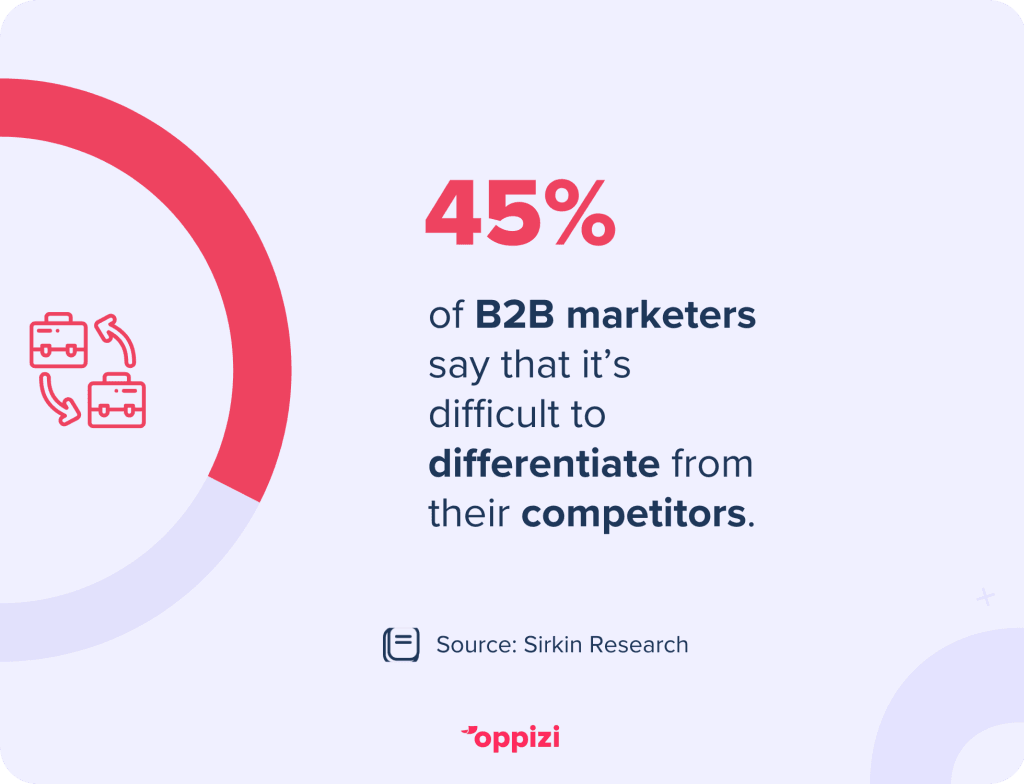
Direct mail marketing provides a tangible experience that leaves a lasting impression and helps build deeper connections. In fact, 45% of B2B marketers say it’s difficult to differentiate from the competition in a saturated market.
To avoid becoming just another overlooked email and to capture the attention of key decision-makers, B2B direct mail offers a powerful solution. This article explores various types of direct mail that B2B companies can use, along with real-world examples to inspire your next offline marketing campaign.
1. Personalized letters and handwritten notes
Why it works: A personalized message is always more impactful than a generic one, and 52% of consumers now expect direct mail to be tailored to them. A well-crafted, personalized letter can make recipients feel valued, especially when it addresses their specific pain points or business challenges.
Example: A company can send personalized letters to potential clients, addressing their specific business needs and offering tailored solutions. This personal touch helps build stronger connections and leads to higher response rates compared to generic outreach efforts.
2. Dimensional mailers (3D packages)
Why it works: Dimensional mailers stand out because they pique curiosity. They’re hard to ignore, often leading recipients to engage with the content immediately.
Example: A tech company could mail small boxes containing puzzle cubes branded with their logo. The accompanying note could read something like, "Piecing together your IT strategy? Let us help!" This creative approach helps keep your brand top-of-mind for decision-makers, increasing the likelihood of engagement.
3. Branded merchandise and gifts
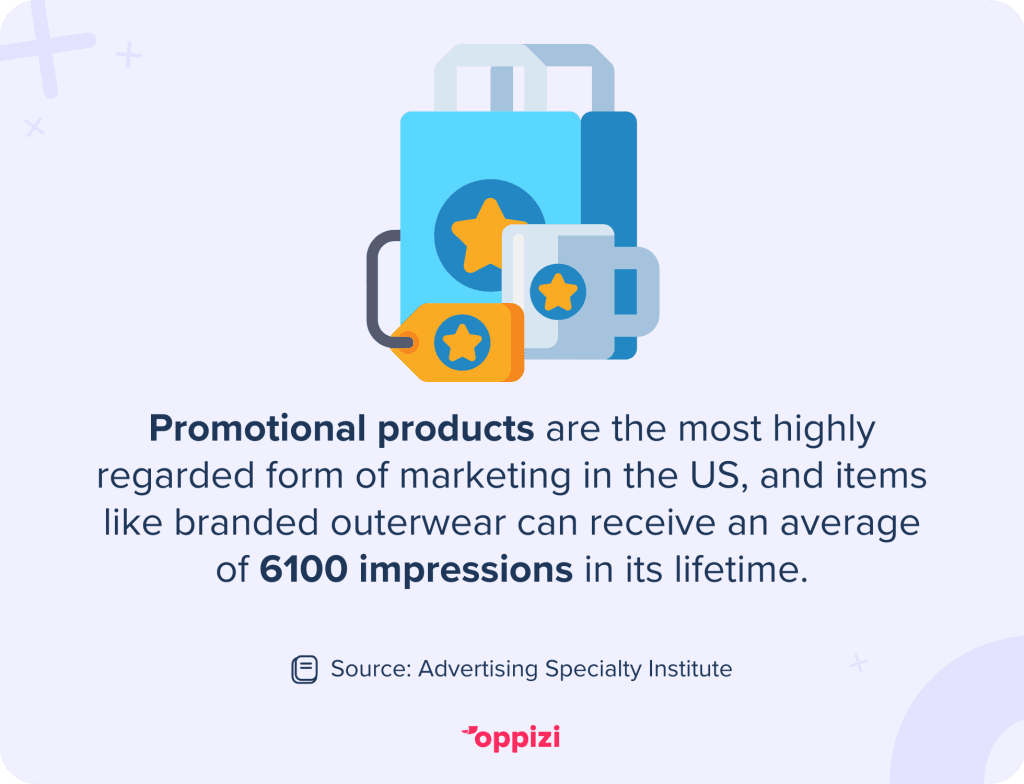
Why it works: Useful branded items like notebooks, mugs, or tech gadgets help keep your brand top-of-mind. According to the Advertising Specialty Institute, promotional products are the most highly regarded form of advertising in the U.S. For example, a branded pen can generate up to 3,000 impressions over its lifetime, while clothing items can earn between 2,300 and 6,100 impressions. Pairing these items with a compelling message can significantly boost engagement.
Example: A cybersecurity firm could send companies branded RFID-blocking wallets. This not only aligns with their value proposition but also reinforces the importance of data security.

4. Event invitations and VIP packages
Why it works: Inviting prospects to exclusive events or webinars through beautifully designed and eye-catching mailers adds a personal touch that digital invites often lack.
Example: A SaaS company targeting enterprise clients could send luxury invitations in elegant envelopes sealed with wax. The invite can include a personalized message and a high-quality brochure detailing the event agenda. This extra effort and personalization help the invitation stand out compared to typical e-invites.
5. Sample products or trial kits
Why it works: Letting potential clients experience your product firsthand can be highly persuasive, especially for companies offering tangible goods or innovative tech solutions.
Example: A company could send trial kits that include USB drives preloaded with demo versions of their software, along with a quick-start guide. This hands-on approach allows prospects to explore the product more deeply and also develops a sense of trust in the business.
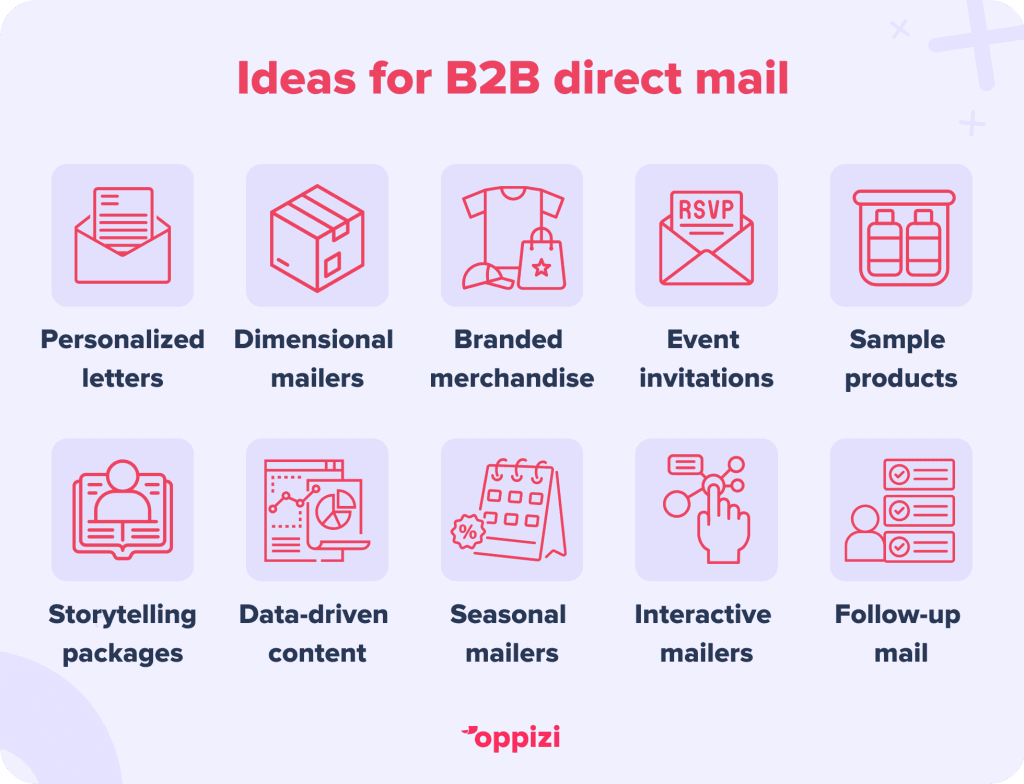
6. Creative storytelling packages
Why it works: Storytelling helps brands connect emotionally with their audience. A direct mail package that tells a compelling story can captivate recipients and drive them to take action. Studies have shown that effective storytelling in marketing can lead to a 30% increase in conversion rates.
Example: A company could send an attractively designed booklet that tells a story related to overcoming common industry challenges. Each section of the booklet highlights a problem and shows how the company's solution made a difference. The final page could include a personalized note and a clear call-to-action to book a consultation.
7. Data-driven campaigns with hyper-personalization
Why it works: Leveraging data to personalize direct mail content makes the message highly relevant to the recipient, increasing the likelihood of engagement.
Example: A company could analyze potential clients' recent business activities and send tailored mailers highlighting how their solutions could address specific challenges. This data-driven approach can help capture qualified leads.
8. Seasonal and holiday-themed mailers
Why it works: Tapping into seasonal themes can create timely relevance and foster goodwill, especially when combined with a thoughtful message or gift.
Example: During the holiday season, a logistics company could send custom-designed calendars with tips on optimizing supply chain operations throughout the year. This practical yet festive mailer keeps their brand visible on clients' desks year-round.
9. Interactive mailers
Why it works: Incorporating technology like QR codes or augmented reality elements bridges the gap between physical and digital marketing, offering an interactive experience.
Example: A business could send postcards with QR codes that lead to personalized video messages from account managers. This blend of physical and digital engagement can increase conversion rates compared to traditional mailers.
10. Follow-up mailers with nurturing sequences
Why it works: Direct mail doesn't have to be a one-off. A well-planned sequence of follow-up mailers can nurture leads effectively over time.
Example: A B2B SaaS company could implement a three-part direct mail sequence: an introduction letter, a case study booklet, and a final follow-up with a special discount or offer. This systematic approach can help move prospects through the B2B sales funnel.

Conclusion
Direct mail offers endless opportunities for creativity and improved connection with your clients. Whether you’re sending personalized letters, 3D packages, or interactive mailers, the key is to deliver value and make your message memorable.
If you’re ready to elevate your B2B marketing strategy, Oppizi can help you design and execute impactful direct mail campaigns that drive results. Start a campaign with Oppizi today and get started on your direct mail journey!
Frequently asked questions
- Does direct mail work for B2B?
Yes, direct mail can be highly effective for B2B marketing. It helps build stronger connections with key decision-makers by standing out from digital clutter. Combining offline marketing efforts like direct mail with digital strategies, can significantly enhance engagement, lead generation, and conversion rates.
- What is the response rate for B2B direct mail?
The response rate for B2B direct mail can vary based on factors like targeting, personalization, and design. According to the Data & Marketing Association (DMA), direct mail response rates are typically 9%. Personalized and well-targeted direct mail campaigns tend to achieve the best results.