Last updated August 28, 2026
Summary
- B2B means businesses selling to other businesses, not individual customers.
- It often happens in the supply chain. For example, a paint company might buy chemicals from another company to make its products.
- B2B deals are common in industries like auto manufacturing and real estate.
You might be an expert at marketing to everyday customers, but selling to other businesses is a completely different challenge. To succeed in B2B sales, you need to understand what it involves and how it differs from traditional consumer marketing.
At its core, B2B (business-to-business) sales isn’t like B2C (business-to-consumer) sales. Selling to a company is a different game. It’s about longer cycles, careful decision-making, and building trust on a professional level. This fundamental difference demands a fresh approach to strategy and communication.
Once we unpack these basics, we’ll give you expert tips to sharpen your B2B sales game. Whether you’re just starting or refining your methods, these insights will help you win more deals and grow faster.
What is business-to-business sales?
B2B sales is about selling products or services to businesses, not individual customers. It’s different from B2C sales because it focuses on meeting the needs of companies, not everyday shoppers.
In B2B marketing, products often go through other businesses, organizations, or even governments before reaching the end user. Each transaction usually has a higher value, which makes B2B a big driver of economic growth around the world.
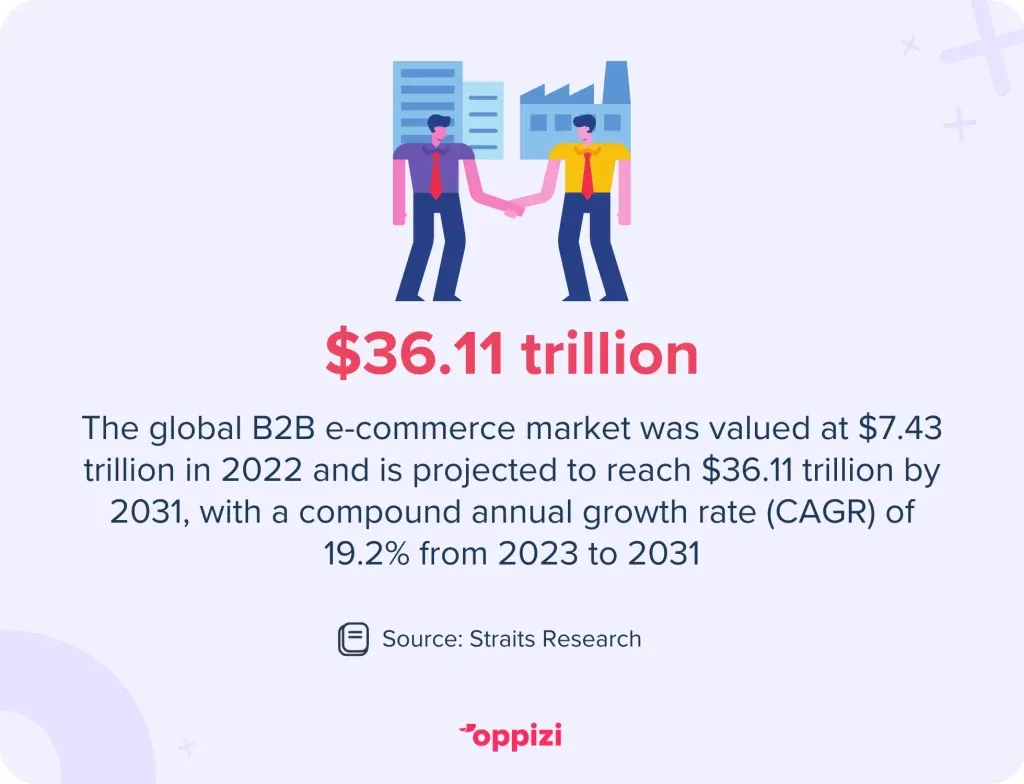
The global B2B e-commerce market was valued at $7.43 trillion in 2022 and is expected to reach $36.11 trillion by 2031, growing at a compound annual growth rate (CAGR) of 19.2%. This growth highlights the increasing importance of B2B in the global economy.
What is the difference between B2B and B2C sales?
- B2C sales is when businesses sell products or services directly to consumers.
- B2B sales is when one business sells something to another. These sales are usually smaller in number and rely on the buyer’s decision.
Examples of B2C sales:
- A clothing store selling jeans to a customer.
- A streaming service offering monthly subscriptions.
- A coffee shop selling a latte to a customer.
- An online retailer delivering a smartphone to a buyer.
- A fitness app offering a membership plan to individuals.
Examples of B2B sales:
- A company selling office supplies to a corporation.
- A software provider offering accounting tools to small businesses.
- A wholesale distributor supplying food to restaurants.
- A marketing agency creating ads for another business.
- A construction company buying machinery from an equipment manufacturer.
B2B sales funnel
The B2B sales funnel looks at the customer’s journey, not the seller’s process. It shows how close a potential buyer is to making a purchase by mapping out their thoughts and feelings at each step.
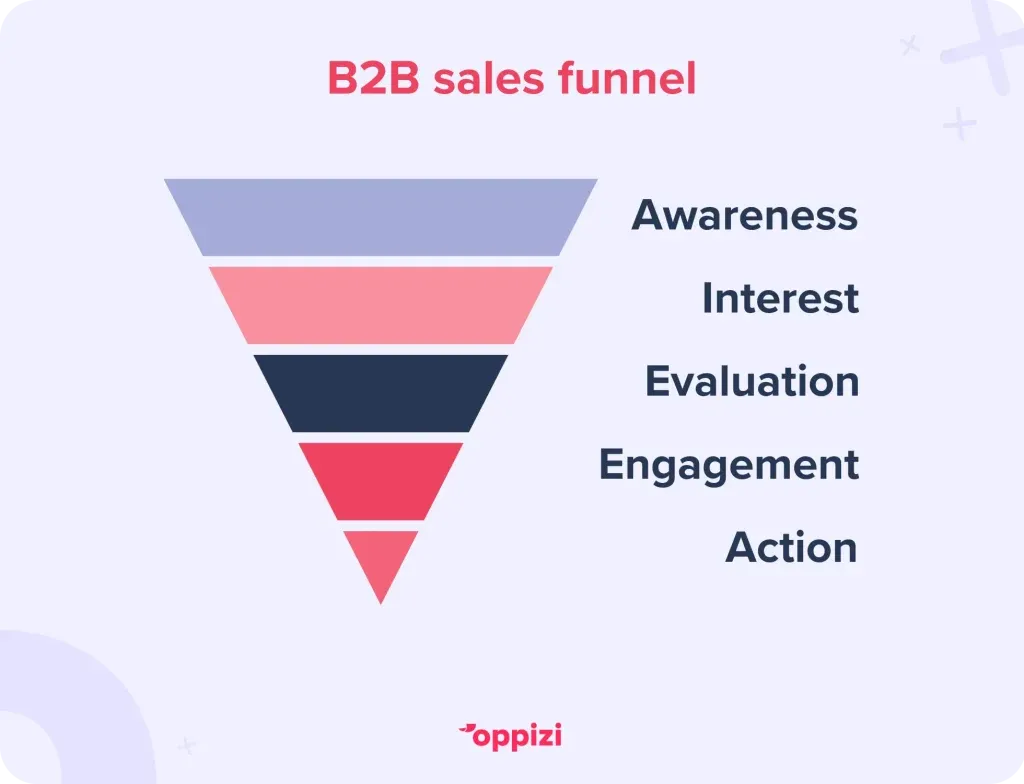
Most sales funnels have five stages. Here’s a simple guide to help you build one that drives results and grows your business:
- Awareness – Get your audience to notice your product or service.
- Interest – Spark their curiosity and show them how you can help.
- Evaluation – Help them weigh their options and understand your value.
- Engagement – Build trust and connect with them personally.
- Action – Guide them to make a purchase or take the next step.
How can you make the most of the sales funnel? Let’s break down what you should do at each stage to get the best results.
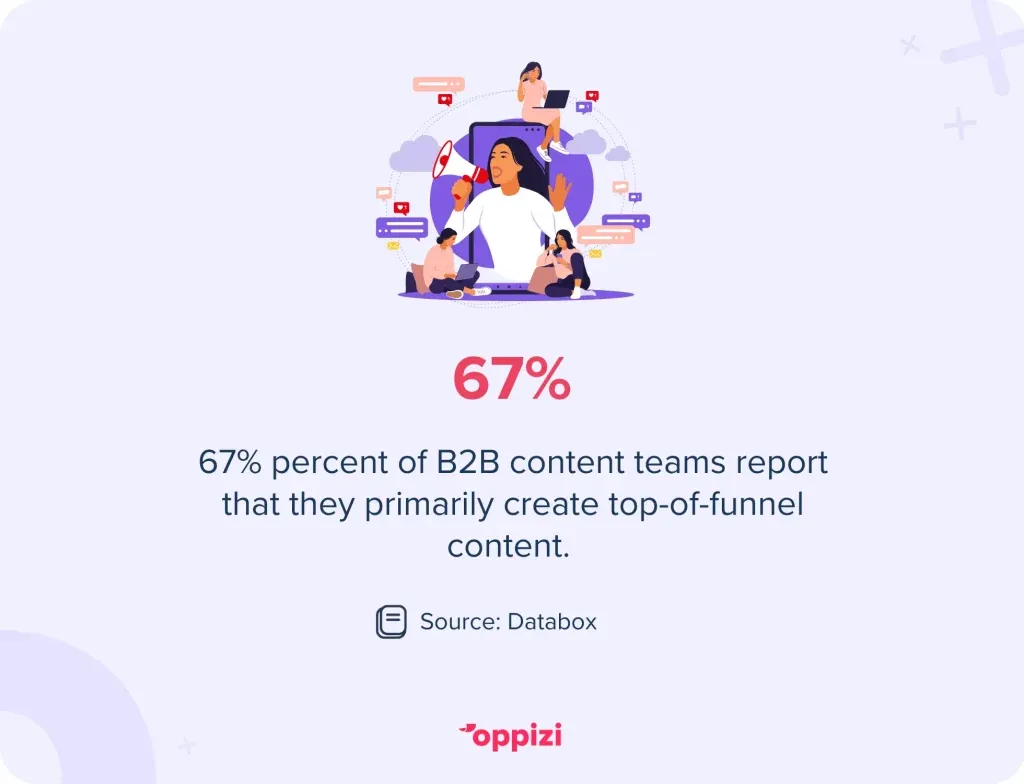
Awareness: Let potential customers in your target area know about your product or service with smart marketing campaigns. 67% of B2B content teams report that they primarily create top-of-funnel content, indicating a focus on raising brand awareness above all else.
Interest: Once customers are aware of you, reach out to those who show interest. You can do this through direct meetings or emails.
Evaluation: Make your marketing efforts strong enough to grab the attention of B2B buyers. Help guide them through the evaluation process and encourage them to reach out to you.
Engagement: At this point, the customer will contact your sales team for a quick chat. This is your chance to impress them with an engaging presentation that will influence their decision to choose you.
Action: This is the final stage where the customer decides whether to buy from you. The success of this stage relies on your efforts in the earlier ones. Make sure to connect with the client during the engagement stage to close the deal.

How to accelerate your B2B sales?
You need a plan to help your business grow. If you don’t have one, that’s okay—we’re here to help! To boost your B2B sales, follow these steps: target the right companies and work your way to closing the deal.
B2B selling is all about strategy, so stay focused and aim for leads that are likely to convert.
1. Hunting the right client
Start by researching potential clients who might be interested in your products or services. Once you find the right prospects, reach out to them to discuss working together.
2. Shortlist interested candidates
After contacting everyone, narrow down the prospects who show interest in what you offer. Organize them and create customized sales pitches that meet their specific business needs.
3. Meet with your prospects
Schedule meetings with the interested candidates. During these meetings, give a clear and appealing presentation that highlights how your product or service can benefit their business.
4. Offer a quote
First, understand what your potential buyer needs. Then, provide a quote that covers everything they require at the best price. This approach helps influence their decision and makes it easier for them to accept your offer.
5. Seal the deal
Once you send your quote, be ready for some negotiation. Talk to your prospects and help them see why it’s important to choose you over others. Show them how your products or services can benefit their business, and then finalize the deal.
6. Following up
After you close the deal, make sure to deliver what you promised on time. Ask for feedback from the client to improve your service. Keep following up after the sale to stay in touch. This helps build a relationship for future purchases or referrals.
B2B sales strategy
A B2B sales strategy helps you set your goals and create a plan to reach them. Different businesses may have different sales goals, but here are some common B2B sales strategies to get you started:
- Bring your sales and support teams together to work as one.
- Use social media to promote your products and services.
- Highlight the benefits of what you offer.
- Give your sales team the right tools to succeed.
- Provide a personalized sales experience for your clients.
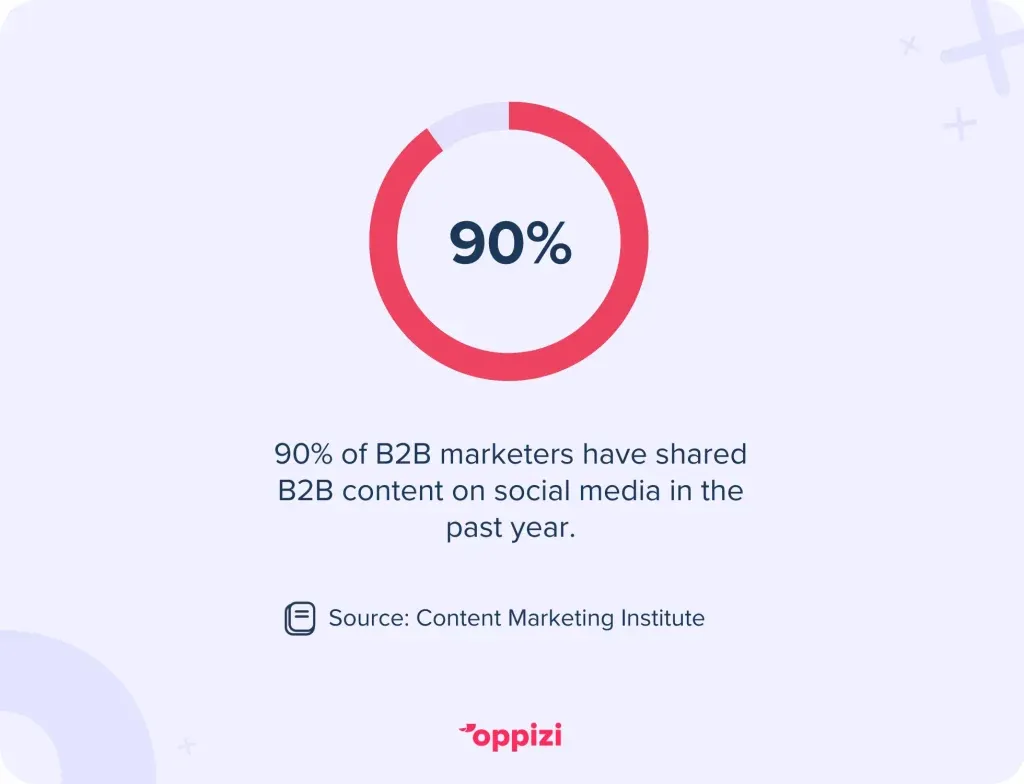
90% of B2B marketers have distributed content on social media in the past year, making it the most popular distribution channel. For that reason, incorporating social media platforms into your B2B strategy is essential. However, there are several other channels that should not be overlooked.
B2B sales methods
Here are some methods designed for B2B sales that focus on the client:
- Consultative selling: This means getting to know your client’s needs and offering solutions to their problems.
- Solution selling: In this approach, you show how your product or service is better than the competition, making it seem essential to the client.
- Value selling: Here, you emphasize the benefits of your products and services, showing real-world advantages and how they can help the client make money in the future.
Top tips for B2B sales success
- Selling to individuals is usually easier than selling to businesses. To boost your B2B sales, focus on your customers. Understand what they want and how you can help them. This approach will help you build trust and keep customers coming back.
- The key to growth is continuous learning. Make sure your sales team is always learning and getting to know new practices for a better customer experience. Providing a great experience results in more sales success and higher customer retention and referrals.
- It’s important for your sales and marketing teams to work together to reach your sales goals. Ensure that both teams communicate well and are on the same page. When everyone collaborates, it’s easier to attract new customers, keep your company’s message consistent, and make the best use of resources.
By focusing on these strategies, businesses can boost their sales and provide great value to customers. Doing so helps the company grow and stay ahead of the competition.
Want to outsmart your competition and grow your business? Sign up with Oppizi for free and gain powerful offline marketing tools that are easy-to-use and give you an edge over digital-only competitors.
Conclusion
B2B sales can be challenging, but the rewards are worth the effort. They can rival B2C sales in volume and offer incredible opportunities for growth and revenue. By following the steps we’ve shared, you’ll be on track to elevate your business.
Before diving into B2B sales techniques, take a moment to understand what B2B is and how it fits your business. Once you’re ready, use the tips we’ve provided to sharpen your approach and seize the opportunity to differentiate yourself from the competition.
Embrace offline marketing with Oppizi today. Sign up for free, and let our straightforward tools guide you toward effortless business growth!
Frequently asked questions
- What is B2B sales?
Business-to-business (B2B) sales happen when one company sells products or services to another company, not to individuals.
- What is an example of a B2B sales product or service?
For example, a furniture manufacturer sells office furniture to a company that is setting up a new office. This is a B2B sale because it involves two businesses.
- Is B2B sales difficult?
B2B sales can be challenging because it requires careful planning and building strong relationships. This is different from B2C sales, where individuals usually make decisions more quickly.