Last updated September 28, 2026
When we think of brochures, we often picture stacks of them in hotel lobbies or tourist offices. And let’s be honest, we almost always take a look. Maybe it’s a striking image, a clever headline, or a glossy finish that catches our eye. Even if we don’t hang onto them, the ones that stand out still leave an impression.
At its core, a brochure is a compact, professionally designed offline marketing tool that presents your brand, product, or service in a tangible, lasting format. Whether it’s handed out at events, delivered door-to-door, or displayed in-store, a good brochure gives people something real to hold, read, and remember.
In this article, we’ll explore what makes brochures effective, why they still matter, what they typically include, and how they’re best used.
What makes brochures stand out?
Here’s what sets brochures apart from other marketing channels:
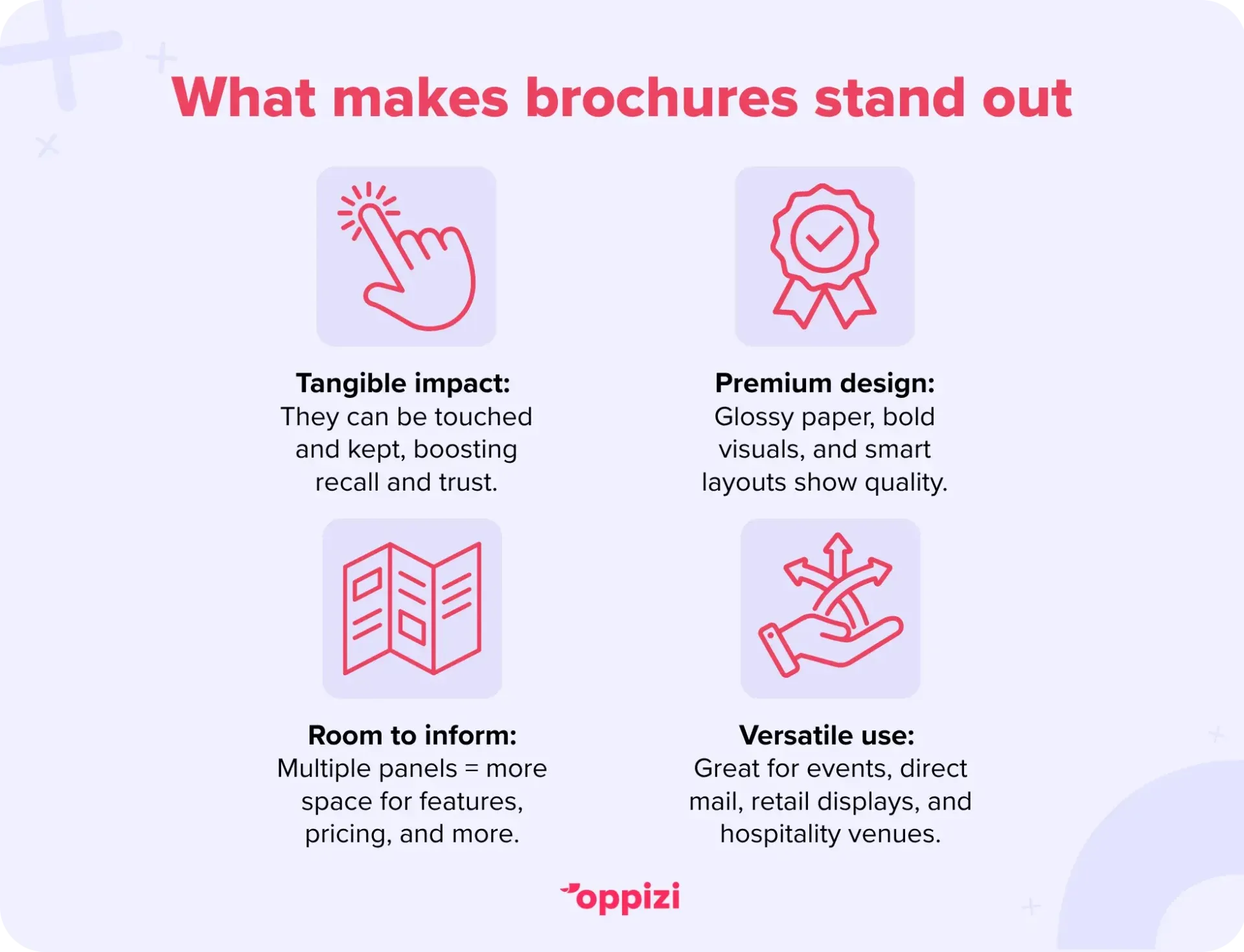
- Tangibility: You can hold it. Feel the paper. This sense of tangibility boosts brand recall and credibility.
- Design sophistication: Glossy stock, rich colors, and carefully crafted layouts are all signals of good quality.
- Content volume: With multiple panels or pages, you can share in-depth information like features, pricing, case studies, and testimonials.
- Strategic flexibility: Perfect for networking, targeted direct mail campaigns, retail placement, hospitality check‑ins, and event takeaways.
Why brochures still matter
1. They build trust and credibility
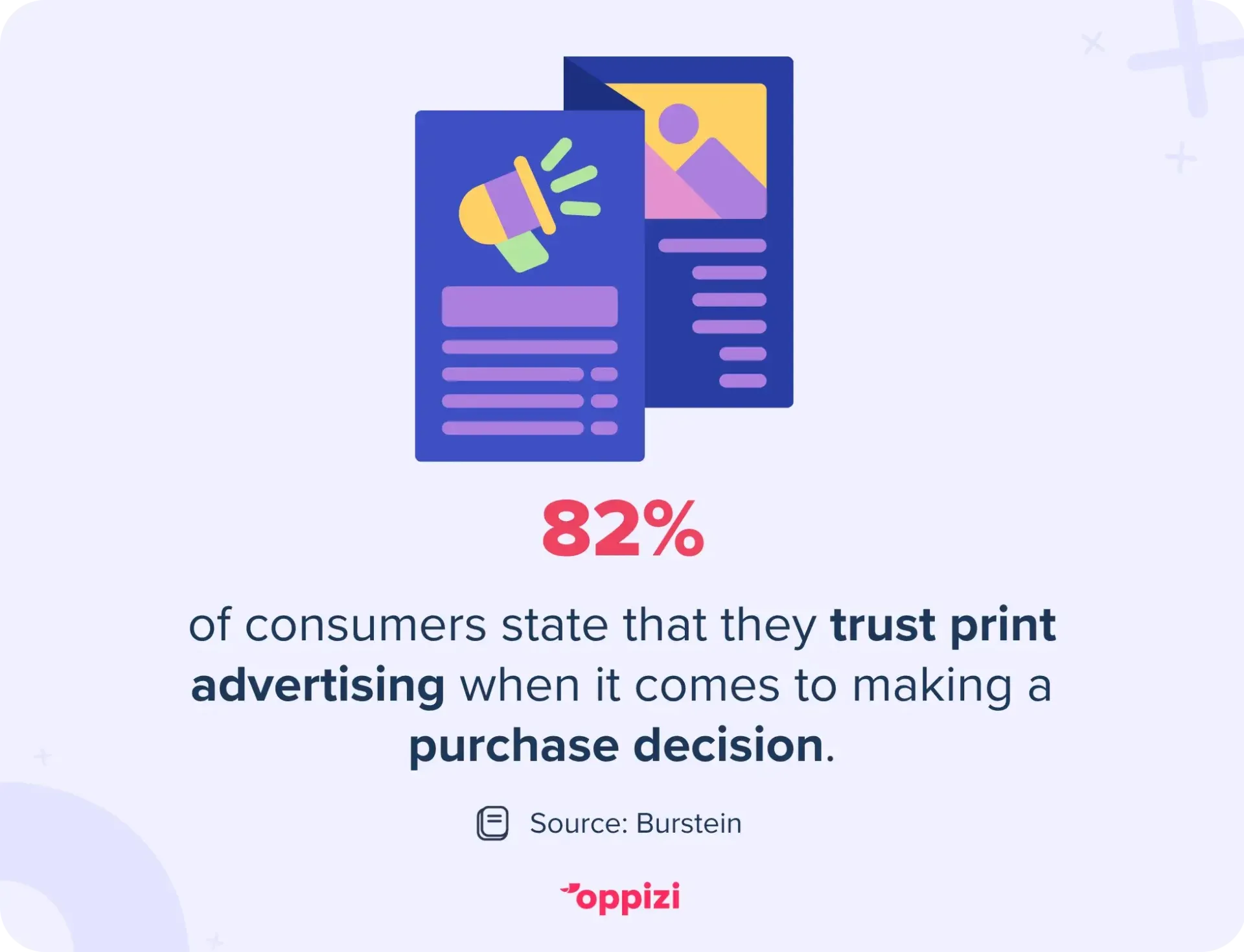
It’s not a coincidence that 82% of consumers say they trust print advertisements when making purchase decisions. Direct mail, flyers, and brochures are perceived as more real and less invasive than digital ads.
2. They drive action
Print still delivers results, achieving an average 9% response rate, compared to around 1% for email, paid search, or social media.
3. They influence purchase decisions
Brochures are more than just a way of sharing information - they’re conversion tools. Whether it's a restaurant menu, holiday resort flyer, or charity information pack, brochures turn brand awareness into action.

What is included in a brochure?
A great brochure isn't just well-designed - it's well thought-out. From the format you choose to the quality of the materials and the message you craft, every element works together to deliver a strong brand impression. Here's what goes into an effective brochure:
Format: How your brochure folds
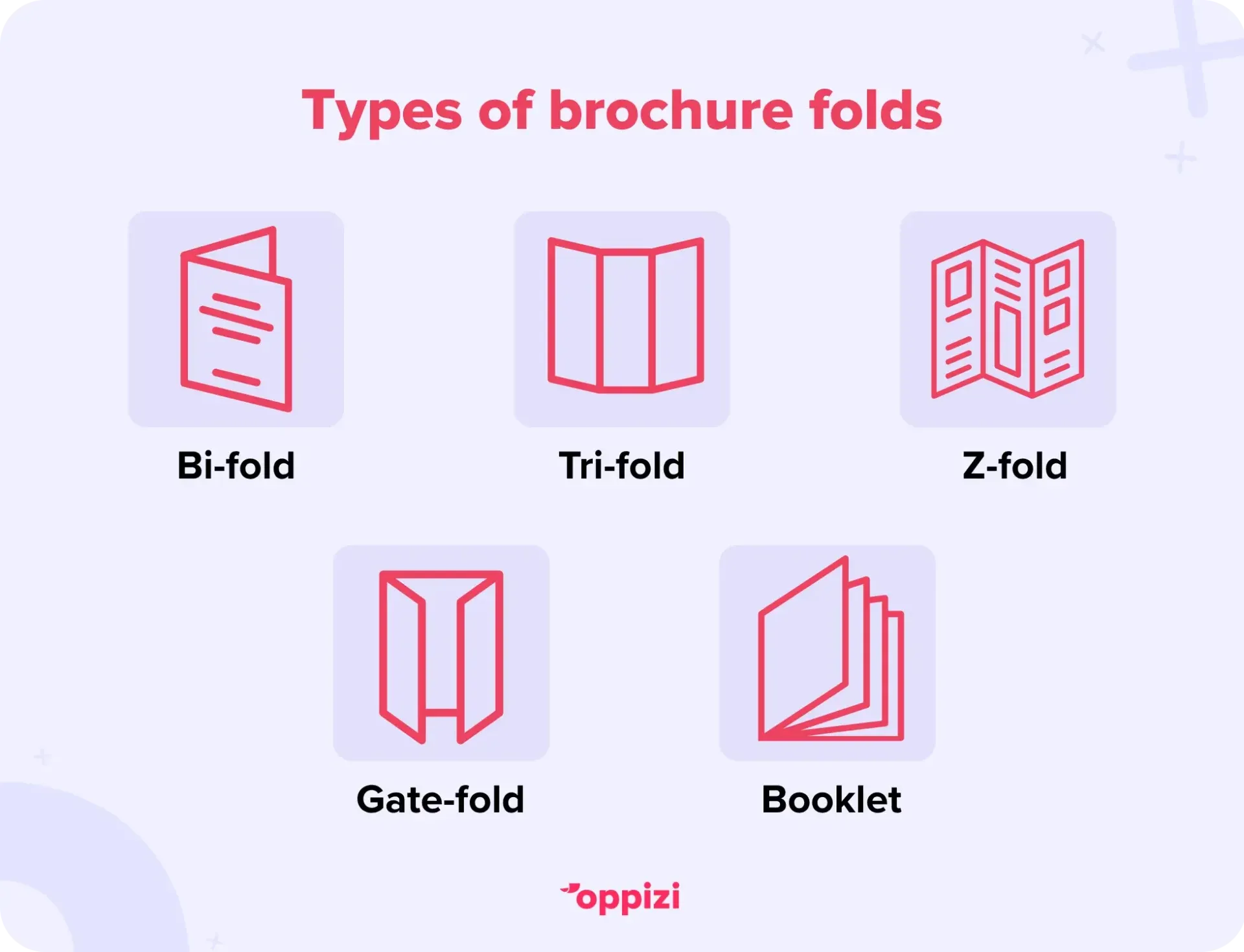
The way a brochure is folded directly affects how the information flows and how it's experienced. Different formats suit different goals. Here are the most common types:
Bi‑fold:
One central fold gives you four panels - a front cover, two internal pages, and a back cover. It’s clean, simple, and ideal for straightforward messaging like product spotlights or service overviews.
Tri‑fold:
With two folds and six panels, tri‑folds are one of the most popular brochure formats. They’re great for storytelling, step-by-step walkthroughs, or showcasing features and benefits in a digestible sequence.
Z‑fold:
This accordion-style layout unfolds like a zig-zag. It's dynamic and ideal for timelines, travel guides, or layouts where each panel has its own unique focus.
Gate‑fold:
This is a dramatic choice where two outer panels open up to reveal a large central panel. It’s perfect for unveiling products, launching campaigns, or high-end presentations.
Booklet:
Stapled multi-page brochures resemble mini-magazines. These are perfect for detailed guides, catalogs, menus, or service portfolios.
Materials: The look, feel, and quality of your brochure
A brochure’s physical quality speaks volumes before a word is read. The materials you choose impact how your brand is perceived.
Paper stock:
Choose between matte, glossy, recycled, satin, or even textured finishes. Glossy paper gives a polished, vibrant look, while matte paper feels modern and professional. Recycled paper, on the other hand, can signal eco-conscious values.
Weight:
Heavier stocks (measured in GSM) feel more premium and durable. For example, a 250-300 GSM cover gives a brochure substance, while lighter interior pages (120-170 GSM) balance readability with weight.
Finish:
Laminates or spot UV coating can add a layer of tactile interest or emphasize key visuals or text. It's these small details that can make a brochure feel more like a keepsake and less like an ad.
Pro tip: Your brochure’s look and feel should align with your brand. For example, a luxury spa and beauty salon might use a matte paper with a heavier stock to reflect the premium nature of their brand.
Core design principles
Even the most beautiful layout and top-quality paper can fall flat if the content doesn’t connect. Here's how to make the overall content work:
Cover impact:
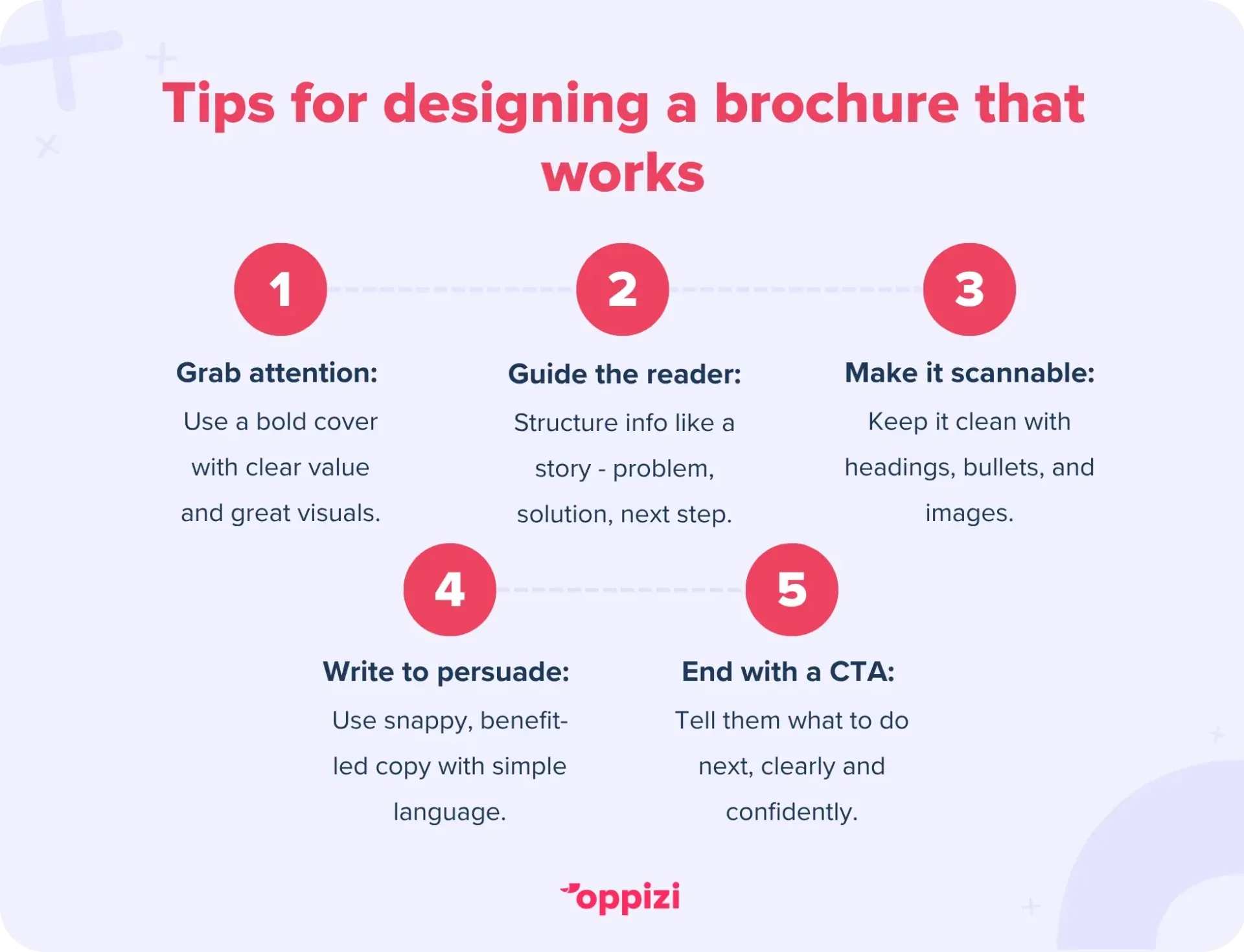
Your front panel is the hook. It should include a clear value proposition, eye-catching visuals, and immediate relevance to your target audience.
Logical flow:
Whether it’s a tri-fold or booklet, your brochure should guide the reader naturally. Lead with a problem or desire, introduce your offering, and end with next steps or key contact info.
Visual hierarchy:
Use headlines, subheadings, bullets, and images to help readers scan and absorb key messages quickly. Don’t overload any panel with dense text, as this increases the likelihood of readers ignoring your message.
High-quality copy:
Keep the copy snappy, benefit-led, and trust-focused. Use plain language, a persuasive tone, and avoid complicated jargon.
Clear call-to-action (CTA):
Whether it’s “Book a free consultation”, “Visit our showroom”, or “Get 10% off today”, your CTA should be specific and actionable. Make it easy for readers to take the next step.
When and where to use brochures
- Networking events: Sharing a brochure allows you toleave a professional impression after a quick pitch.
- Direct mail campaigns: Targeted drop‑offs still get noticed with 46% of consumers paying attention to leaflets delivered to their homes.
- Retail spaces & hospitality: Put brochures in racks, hotel foyers, or even local tourist boards. Brochures are particularly beneficial in the travel industry, with 79% of people stating that they’ve picked up a brochure during their travels.
- Parcel inserts: Add value, encourage re‑orders, and spread awareness.
5 smart tips to make your brochure stand out
- Get personal: Personalized messages can boost customer spending by an average of 38%.
- Add digital triggers: QR codes and trackable URLs bridge offline and online seamlessly.
- Match your audience: Make sure your messaging aligns with your target audience to ensure you make an impact on the right people.
- Keep it compact: 6-8 panels offer space for substance without overwhelming the reader.
- Measure & learn: Include promo codes, trackable URLs, and dedicated phone numbers to track ROI. Assess what works best for you and use these learning in future campaigns.

Conclusion
Brochures prove that print advertising can still make an impact. They offer a tangible and focused way to connect with your audience, without the distractions of a digital feed. Whether you're designing a product catalog, a service menu, or a promotional handout, a well-made brochure helps people see, feel, and remember your brand.
And if you're looking to take that offline impact even further, Oppizi can help. We specialize in targeted flyer and direct mail campaigns that bring your message straight into the hands of your ideal customers.
Want to launch an offline marketing campaign that gets noticed? Start a campaign with Oppizi today and make it happen!
Frequently asked questions
- What’s the best size and fold for brochures?
The best brochure format depends on your goal. Tri-folds are ideal for storytelling, bi-folds work well for clean, straightforward presentations, while booklets are perfect for detailed proposals.
- Can I track a print brochure’s effectiveness?
Yes, by using trackable promo codes, QR codes linked to analytics, and unique URLs, you can measure the impact of your brochure.
- What is an example of a brochure?
A common example could be a travel brochure highlighting must-see attractions, hotel deals, and local maps.
- Where are brochures used?
Brochures can be used in retail stores, hotels, tourist offices, real estate offices, clinics, restaurants, and direct mail campaigns.
- What is the difference between a brochure and a pamphlet?
A brochure is typically multi-fold and promotional, used for marketing products or services. A pamphlet is often a single sheet, used more for informational or educational content.
- What is the point of a brochure?
A brochure presents key information about a business, product, or service in a tangible, well-designed format, making it easy to inform, persuade, and convert potential customers.
- How to build a brochure?
Start with a clear goal, outline your content, choose a format, design for readability and brand consistency, include strong visuals and a CTA, then print using high-quality materials.