Last updated August 28, 2026
With so many hotels competing within the hospitality landscape, effective marketing strategies are no longer optional - they’re essential for standing out, attracting guests, and driving consistent revenue.
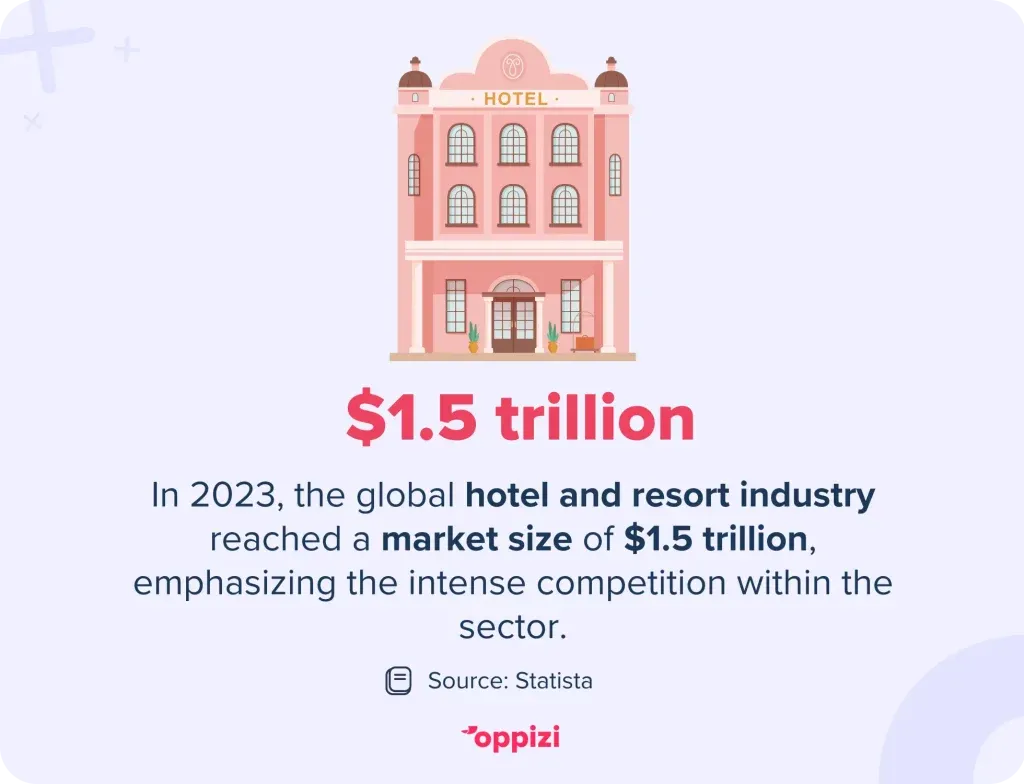
The global hotel and resort industry reached a staggering $1.5 trillion in market size in 2023, which goes to show how much competition exists within this sector. Whether you run a boutique hotel, a luxury resort, or a budget-friendly inn, a well-executed marketing plan can mean the difference between fully booked rooms and missed revenue opportunities.
This guide offers actionable tips to enhance your hotel’s marketing efforts and answers some of the most common questions regarding crafting a successful strategy. Whether you're looking to boost your online presence, increase direct bookings, or leverage offline marketing to reach new customers, this guide shares practical insights to help you navigate the ever-evolving hospitality landscape.
The importance of investing in hotel marketing
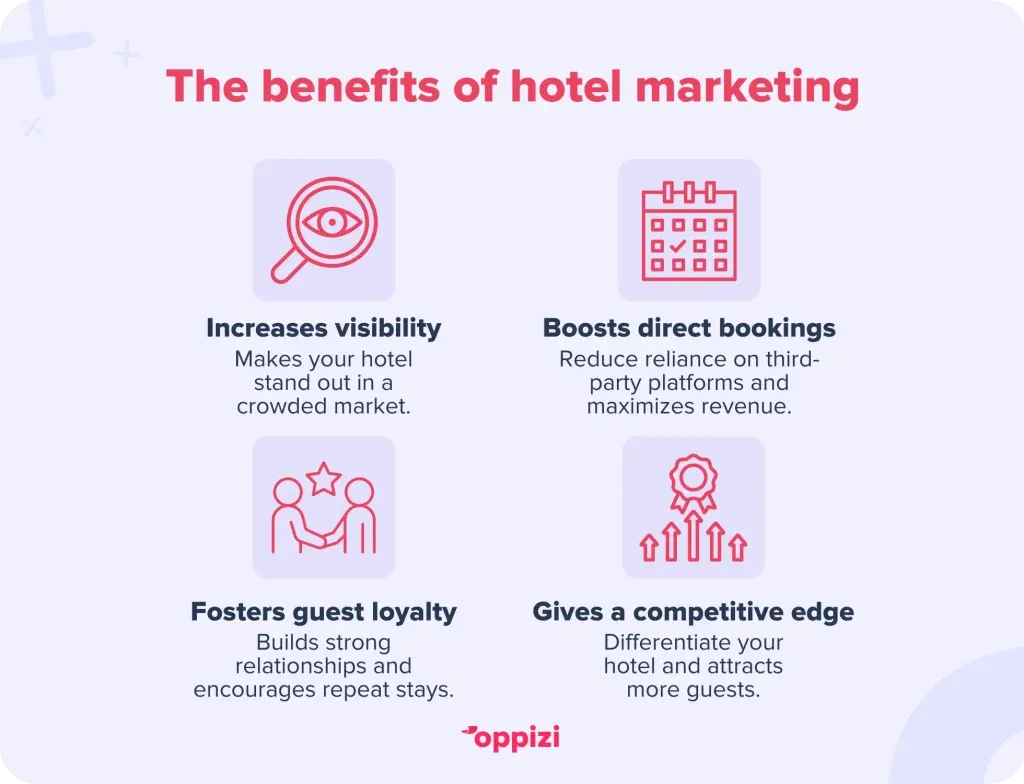
Here are some of the reasons why investing in hotel marketing is a necessity:
- Enhanced visibility: Effective marketing gives your hotel greater visibility, making it more likely for potential guests to discover it.
- Direct bookings: By promoting direct booking channels in marketing communications, hotels can reduce reliance on third-party platforms, saving on commission fees.
- Guest loyalty: Consistent and personalized marketing efforts foster stronger relationships with guests, encouraging repeat visits.
- Competitive edge: In a well-crafted marketing strategy, you can highlight your unique selling propositions, differentiating your hotel from competitors.
Tips for marketing your hotel
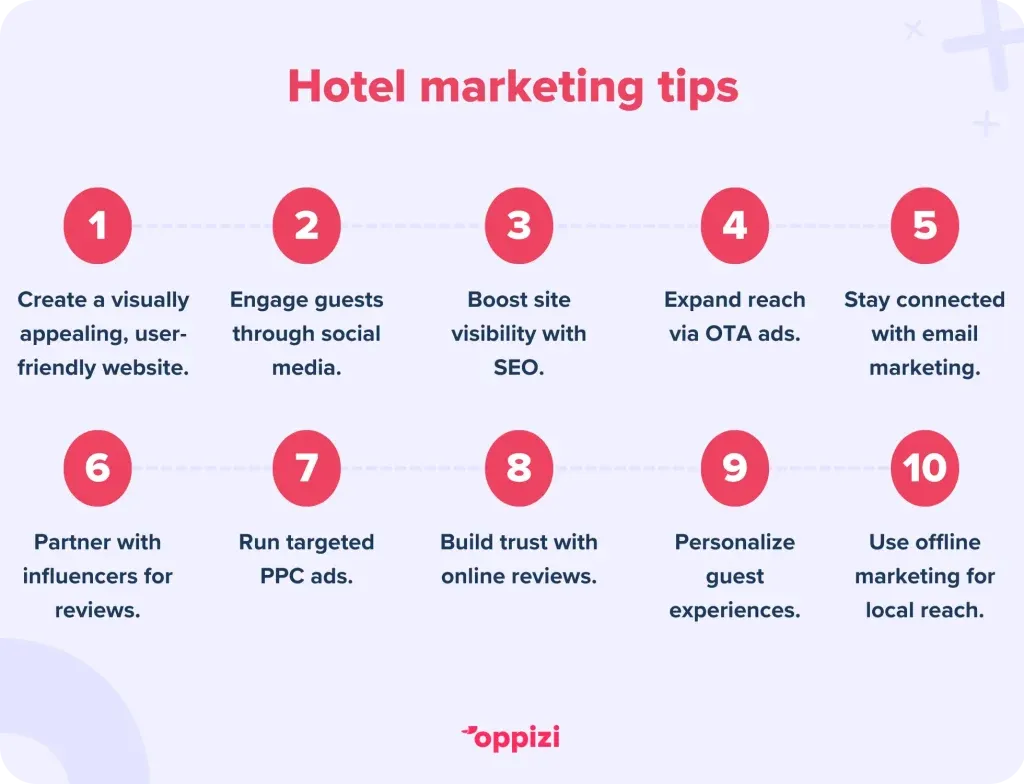
1. Develop a user-friendly website
Your hotel's website serves as the digital storefront. Ensure it is:
- Responsive: It should be optimized for all devices, including smartphones and tablets.
- Informative: Provides comprehensive details about rooms, amenities, and services, so guests don’t have any doubts when booking.
- Visual: Features high-quality images, videos, and virtual tours to give potential guests a realistic view and to build trust. Properties with at least one photo on their website see a 138% increase in engagement and are 225% more likely to receive a booking inquiry.
2. Leverage social media platforms
Social media is a powerful tool to showcase your hotel's personality, and features, and to engage directly with guests.
- Instagram: Share captivating photos and stories to entice guests to book. 61% of people have booked a hotel after seeing it featured on their Instagram feed.
- Facebook: Engage with guests through updates, and promotions, and respond to inquiries promptly.
- User-generated content: Encourage guests to share their experiences and repost their content, enhancing authenticity. Consumers are 2.4x more likely to view user-generated content as more authentic than brand-generated content.
3. Optimize for search engines (SEO)
Use SEO techniques to enhance your website's visibility on search engines through:
- Keyword research: Identify and incorporate relevant keywords that potential guests might use.
- Quality content: Publish blogs, guides, and articles that provide value and attract organic traffic.
- Local SEO: Optimize for local searches by claiming your Google My Business listing and encouraging reviews.
4. Advertise on online travel agency (OTA) platforms
Listing and advertising your hotel on platforms like Booking.com, Expedia, and Airbnb can significantly boost visibility and bookings.
- Increased reach: These platforms attract millions of users actively searching for accommodation.
- Enhanced credibility: Many travelers trust OTAs for reviews and secure booking options.
- Flexible promotions: Utilize OTA advertising features like sponsored listings to increase your ranking and visibility.
- Data insights: Leverage analytics provided by OTAs to refine your pricing and promotional strategies.
While OTAs charge commission fees, they can be a valuable part of your overall marketing strategy, especially for reaching international travelers.
5. Implement email marketing campaigns
Email marketing remains a cost-effective tool, especially when it comes to retargeting past guests or leads. Email can be used to:
- Promote offers: Share exclusive deals and packages with subscribers.
- Personalize communication: Tailor messages based on guest preferences and booking history.
- Maintain engagement: Send newsletters with updates, events, and local attractions.
6. Utilize influencer partnerships
Collaborating with influencers is an effective way to amplify your hotel's reach and to boost credibility. Studies have shown that for every $1 spent on influencer marketing, businesses can earn back $6.50 in revenue.
- Authentic reviews: Influencers can provide genuine insights into their stay, building trust among their followers.
- Targeted audience: Partner with influencers whose audience aligns with your target demographic.
7. Invest in Pay-Per-Click (PPC) advertising
PPC campaigns can drive immediate traffic as they’re highly targeted to those who are most likely to follow through with a booking.
- Targeted ads: Reach specific demographics based on location, interests, and online behavior.
- Budget control: Set daily budgets to manage expenses.
- Measurable results: Track performance metrics to optimize your campaigns continually.
8. Focus on online reviews and reputation management
Guest reviews can significantly influence booking decisions. In fact, 66% of US consumers say they are influenced by online reviews when it comes to making a purchase. Here’s how leverage online reviews to your benefit:
- Encourage feedback: Ask satisfied guests to leave positive reviews on platforms like TripAdvisor and Google.
- Respond promptly: Address both positive and negative feedback professionally and in a timely manner. This can build confidence in your brand as it highlights that you take feedback seriously.
- Monitor mentions: Use tools to track online mentions in order to manage your hotel's reputation.
9. Personalize guest experiences
Tailored experiences can lead to higher guest satisfaction and loyalty. Additionally, McKinsey found that personalization strategies can result in a 10-15% revenue lift.
- Data utilization: Use guest data to offer personalized services and recommendations.
- Special touches: Acknowledge special occasions like birthdays or anniversaries with customized offers.
10. Utilize offline marketing for local reach
While digital marketing is essential, especially for reaching a broader audience, offline marketing tactics can be equally impactful when targeting local customers. Not only can you advertise weekend getaways to local or domestic tourists, but you can also share information on any other services you might offer like your restaurant, spa facilities, and event space.Here are some of the methods you could use to target a local audience:
- Flyer distribution & direct mail: Target local travelers, event planners, and businesses with tangible advertisements, keeping your business top-of-mind next time they want to book a getaway or event.
- Sponsorships & local partnerships: Collaborate with local attractions and event organizers to get your name out there and to build trust.
- Branded merchandise & loyalty cards: Encourage repeat guests with exclusive offers.
Conclusion
Effective hotel marketing isn’t just about filling rooms - it’s about building a strong, recognizable brand that keeps guests wanting to come back. By combining digital strategies with offline marketing efforts, hotels can maximize their reach, drive direct bookings, and create meaningful connections with both local and international travelers.
Want to stand out in a crowded market and attract more guests? Start an offline marketing campaign with Oppizi to put your hotel directly in front of potential customers. Whether it’s flyer distribution or direct mail, Oppizi helps you engage travelers in the real world.
Frequently asked questions
- Why is digital marketing important for hotels?
Digital marketing is important for hotels as it increases online visibility, drives direct bookings, and enhances guest engagement through multiple online channels.
- How can I attract more direct bookings to my hotel?
Invest in SEO, offer exclusive website-only deals, use PPC advertising, and maintain a strong social media presence.
- What role do online reviews play in hotel marketing?
Positive reviews enhance credibility and influence potential guests' booking decisions, making reputation management crucial.
- Should I use offline marketing for my hotel?
Absolutely! Strategies like direct mail, flyering, and event sponsorship can complement digital efforts and target local guests effectively.
- How do I measure the success of my hotel marketing campaigns?
Track your website traffic, direct bookings, social media engagement, and customer feedback to gauge the effectiveness of your marketing campaigns. Tracking the success of campaigns is crucial in order to know what works and what doesn’t, so that you can bring your learnings to future campaigns.