Last updated August 28, 2026
Sales emails are like the digital equivalent of a first handshake - except you only get one shot, and the person might delete it without ever reading.
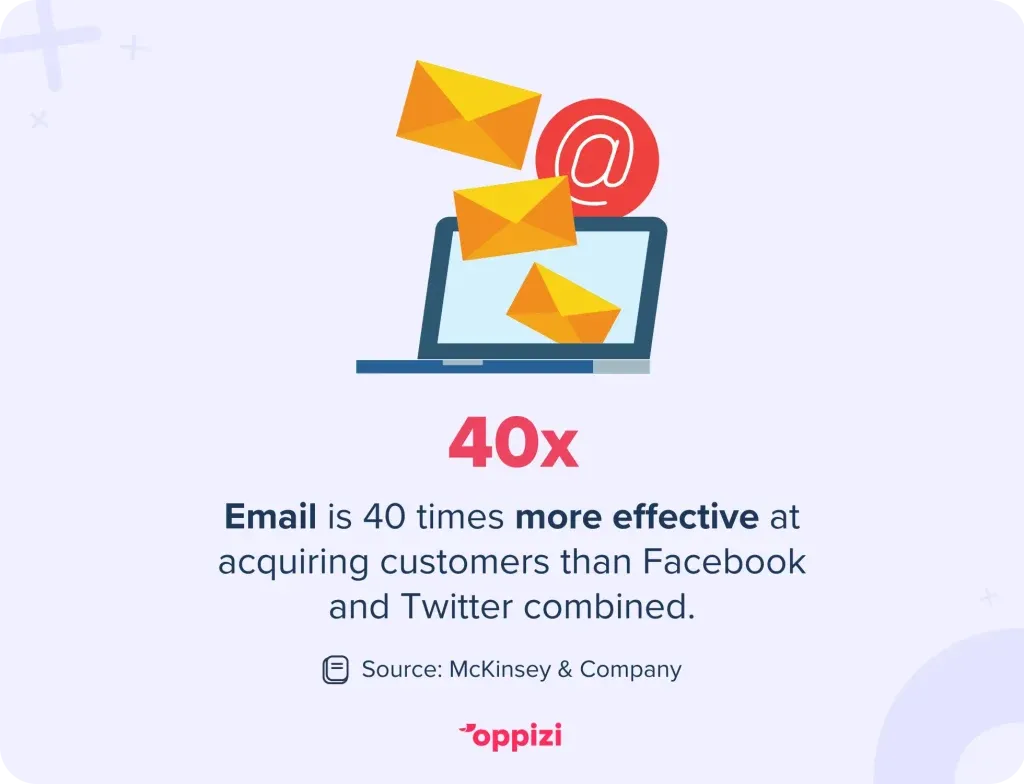
According to McKinsey & Company, email is 40 times more effective at acquiring customers than Facebook and Twitter combined. When used strategically, a sales email can transform a cold lead into a loyal customer and spark serious growth for your business.
That’s why it’s crucial to get it right. A well-crafted sales email can be your golden ticket to landing new clients, reviving old leads, and starting conversations that drive revenue.
In this guide, we’ll break down how to write the perfect sales email and share actionable tips to help you stand out and stay memorable.
What is a sales email, and why is it important?
A sales email is a message sent to potential or existing customers with the goal of moving them along the sales/us/en/resources/blog/lifecycle-marketing/customer-acquisition-funnelfunnel - whether that’s generating interest, nurturing a lead, booking a call, or closing a deal.
Unlike newsletters or marketing emails, sales emails are often personalized, direct, and crafted to initiate one-on-one engagement.
Why they matter:
- Direct contact: Sales emails put you directly in your lead’s inbox.
- Scalable: You can automate sequences but still personalize them at scale.
- Data-driven: With tools like email tracking and CRM integration, you get measurable insights. When you analyze your sales emails' performance, you can pinpoint the areas that need improvement.
- Cost-effective: Sales emails are more affordable than other sales efforts like flash sales, contests, and free samples.
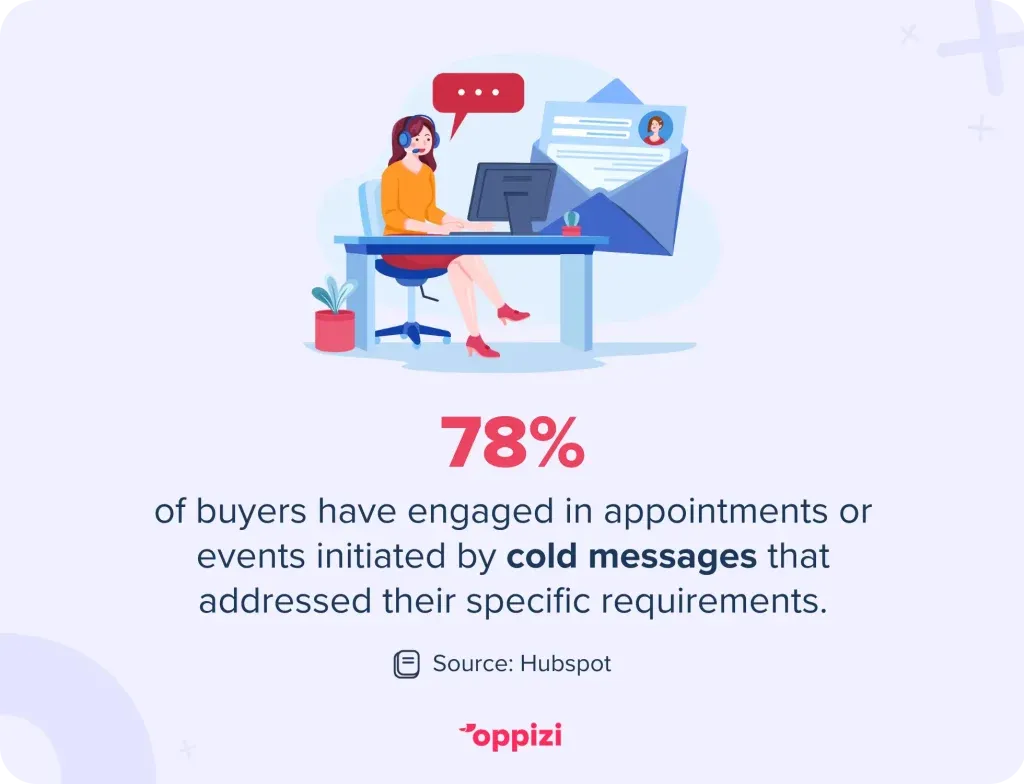
- Proven results: According to Hubspot, 78% of buyers have scheduled appointments or attended events that began with a cold message that was relevant to their needs. This is proof that a well-written message can open real doors.
Components of a high-converting sales email
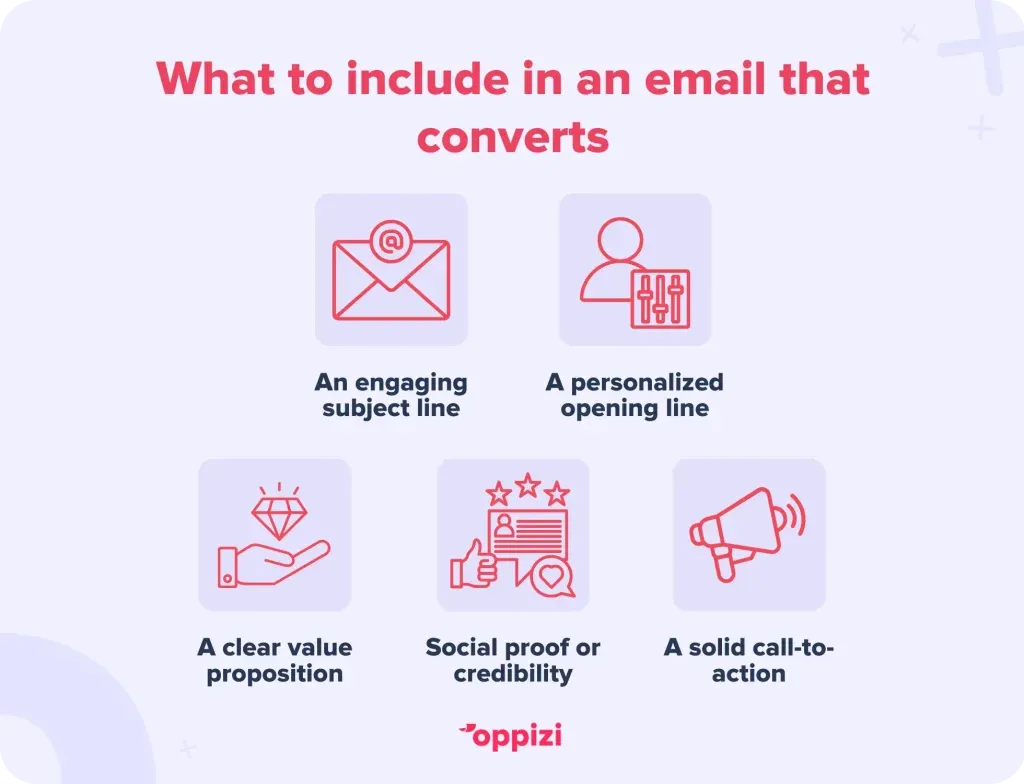
Great sales emails aren’t just generated by luck - they’re methodical. Here's what goes into a killer email that gets clicks, replies, and results:
1. Compelling subject line
This is your foot in the door. Many customers base their decision to open or ignore an email on the subject line. It should be short, personalized, and spark curiosity. You can make your subject lines engaging by asking a question, addressing a pain point, or presenting relevant data.
Examples:
- "Quick idea to boost your Q2 leads."
- "I see you're hiring - here’s a shortcut."
2. Personalized opening line
It's not enough to have a catchy subject line. It's also crucial to hook customers in with a personalized opening line. Start with something specific to them: a recent post, company news, or shared connection. It shows you’ve done your homework, and it pays off.
In fact, emails with personalized message bodies get 33% more responses than generic ones.
Instead of saying, “I hope this email finds you well,” try something like, “Loved your recent LinkedIn post on sustainable growth - especially the part about team autonomy.”
3. Clear value proposition
Get straight to the point. In one or two sentences, clearly state your offer and its specific benefits for the recipient.
Example:“We help SaaS startups reduce churn by 30% with an AI-powered feedback loop - no dev time needed.”
4. Social proof or credibility
Mention names of some recognizable companies you’ve worked with, results, or credentials to build trust.
Example:“Used by teams at Monday.com, Buffer, and over 50 high-growth startups.”
5. Call-to-action (CTA)
Be clear about what you want them to do next. Avoid vague closing statements like “Let me know what you think.”
Examples:
- “Are you available for a quick 15-minute call next week?”
- “Should I send over a quick demo?”
Sales email best practices
It can be tough to stand out in an overcrowded email inbox. Here's how to make sure yours doesn’t get ghosted.
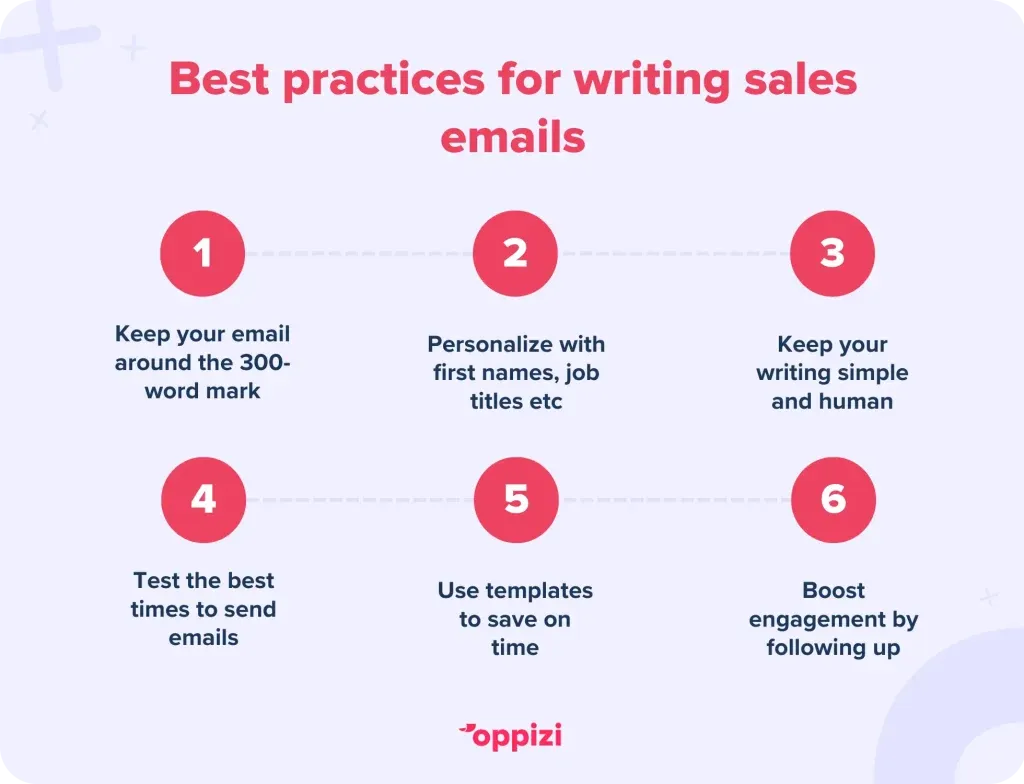
Personalize at scale
Use first names, mention roles, and reference specifics. But don’t overdo it. Authenticity > flattery.
Keep it concise
Try to keep your email around 300 words long. Overloop found that emails that were around 300 words long performed significantly better than emails that were less than 100 words long.
Use simple language
Avoid using complex jargon and instead write like a human. Your goal is to start a conversation, not impress them with buzzwords.
Find the right time
Timing is also an important factor when it comes to ensuring your emails stand out.
According to research, the best time to send an email is on weekdays between 9 am and 11 am, because most people start their workday by checking their inboxes. However, the best times may vary depending on factors like industry norms or your target audience's demographics.
Follow up (persistent but polite)
Beyond personalization and timing, there's another key factor to success - persistence. Don’t quit after just one try. 80% of sales require at least 5 follow-ups, yet most sales reps give up after 1–2.
To boost engagement following an initial sales email, think about personalizing subsequent emails using recipient data or feedback. Consider segmenting recipients based on how they interacted with your first email, such as identifying those who opened it but didn't reply. Alternatively, leverage insights gathered from surveys and social media to tailor your follow-up approach.
Utilize templates for efficiency
Email templates enhance the efficiency of email creation and ensure brand communication consistency. An effective template should be adaptable for varied messages and personalization, while maintaining a consistent brand identity.
Read on to find out tips for crafting your sales email templates.
Sales email templates for different scenarios
Cold email
Tips:
- Craft a compelling subject line designed to resonate with your prospect. Personalize it by incorporating details such as their name, company, or location, which can often be found on their LinkedIn or other social media profiles.
- Be clear about what's in it for your prospects. Instead of listing every product feature, focus on the ones that will address this specific customer’s needs.
- This template is designed for outreach to email addresses obtained through marketing efforts or gated content. It is also well-suited for engaging leads who have demonstrated an interest in your company.
Template:
Subject: Quick idea for [lead's company]Hi [First Name],I noticed [personal detail — e.g., “you’re expanding your product team”].
I work with [similar companies] to help them [benefit — e.g., “cut hiring costs by 40% with referral-based recruiting”].
Would you be available for a 15-minute chat next week?
– [Your Name]
Follow-up email
Tips:
- Start your follow-up email with a personalized greeting to establish a friendly tone.
- Provide context to your last conversation.
- Add more value by presenting new information or highlighting essential details.
- Include a call to action and be clear about the next steps you want your prospect to take.
- Show appreciation for the prospect's time and consideration.
Template:
Subject: Just checking in, [First Name]
Hi [First Name],
Hope you’re doing well. I wanted to follow up on my last message - especially since I came across [new insight, feature, or result] that I think could be a real help with [specific challenge or goal].
I’d be happy to send over a short Loom video or set up a quick call to walk you through it. Would either option work for you this week?
Thanks again for your time - really appreciate it!
– [Your Name]
Referral request email
Tips:
- Personalize your message by bringing up specific interactions you've had with the customer. You can also talk about other similarities you may have with them.
- Highlight mutual connections. Talking about people they know will add a touch of familiarity and help the customer to trust you more.
- Maintain a light and friendly tone in your sales emails. Remember you're asking for something, so avoid sounding entitled or demanding.
Template:
Subject: Quick favour — know anyone at [Company/Industry]?
Hi [First Name],
Hope you're doing well! I was thinking about our chat on [shared topic/event] and realised you might be connected with people in [company/industry].
I help [describe service briefly], and I’d love to connect with anyone you think might find it useful. If someone comes to mind, I’d really appreciate an intro. And of course, I’m happy to return the favour however I can.
Thanks so much! Really appreciate your time.
– [Your Name]
Final thoughts
A great sales email is like a well-built house. Every element, from the subject line to the CTA, works together to create something that stands out and delivers results.
But here’s the truth: while email starts the conversation, offline marketing techniques like direct mail or branded handouts can cement your brand in a way that no email ever could.
Whether you’re booking meetings, nurturing leads, or building product awareness, combining email with offline marketing gives you a multi-touchpoint strategy that’s hard to ignore.
If you’re ready to boost your outreach with a blend of digital and physical tactics, Oppizi can help. We specialize in smart, scalable offline campaigns that support your digital efforts - and get your brand noticed.
Want to take your outreach from "just another email" to a brand experience they remember?
Start your offline campaign today with Oppizi and make your sales strategy truly unforgettable.
Frequently asked questions
- How long should a sales email be?
While some experts say short emails (from 50-125 words) get the highest response rates, research suggests that around 300 words is the sweet spot for delivering value without overwhelming your reader. Aim to be concise but informative - just enough to spark curiosity and a reply.
- What’s the best time to send a sales email?
Generally, weekdays between 9am-11am perform best, especially Tuesday to Thursday when inboxes aren’t as crowded. However, every audience is different. Test your send times and track engagement to find your ideal window.
- How many follow-up emails should I send?
Studies show that 3-5 follow-ups are often needed to get a response. Make sure you space them out over a few weeks and that each one adds value.
- What tools help improve sales emails?
Sales engagement tools like Lemlist, Apollo, Mailshake, and HubSpot CRM make it easier to personalize, automate, and track your outreach. They can also help A/B test subject lines, optimize timing, and scale your efforts without losing the human touch.