Last updated September 28, 2026
Direct mail is far from obsolete. In fact, it often outperforms email by far in response rates. But design plays a huge role in the recipe for success. An exceptional design makes people take notice. A bad one sends them running a mile away.
A carefully crafted mailer captures attention, conveys your message swiftly, and leaves a lasting impression of your brand. At Oppizi, we’ve rigorously tested what truly works, and we’re here to share our top tips for achieving outstanding results.
Why good design matters
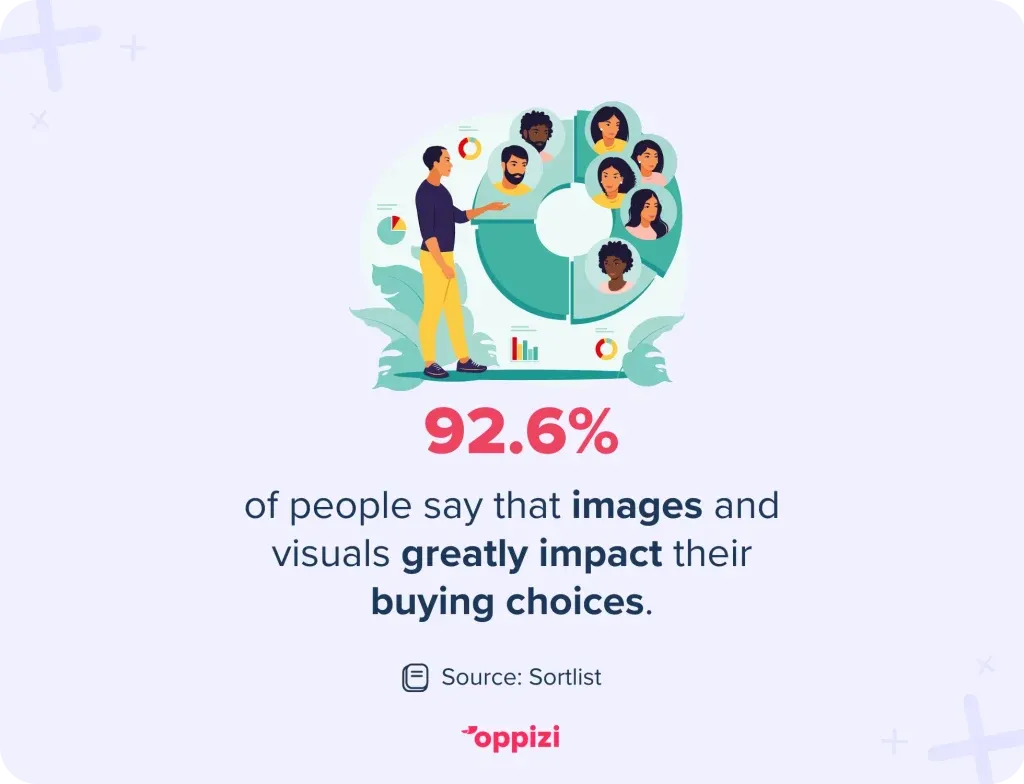
Direct mail isn’t just paper—it’s a way to connect with people. A strong design helps your mail stand out, speak to the right audience, and get them to act. In fact, 92.6% of people say that visuals play a significant role in their purchase decisions.
Whether you want more leads, to promote something new, or to reconnect with customers, great design makes all the difference. Here’s how to do it right.
Step 1: Know your target audience
A good direct mail campaign starts with knowing your audience. Your design should match their interests, needs, and habits.
How to define your audience:
- Do some research. Look at customer data, send surveys, or use tools like Google Analytics to learn what your audience likes.
- Segment your audience. Group people by age, interests, or shopping habits. The more specific, the better.
- Find their pain points. What problems do they have? How can your product or service help? Use that to shape your message.
Examples:
- New customers: Show what makes your business stand out, like great prices, quality, or service.
- Past customers: Send updates on new products, special offers, or rewards to bring them back.
At Oppizi, we help businesses target the right audience so their direct mail delivers real results.
Step 2: Define clear objectives
Before you design anything, be clear about what you want to achieve.
Common direct mail goals:
- Boost sales. Offer a discount or special deal.
- Build brand awareness. Use strong visuals and messaging that make people remember you.
- Promote something new. Highlight key features and benefits.
- Re-engage past customers. Send personalized offers to bring them back.
Your goal will shape everything—your design, message, and call to action.
Step 3: Choose the right postcard size and format
The size and format of your mail matter. They affect how much attention your piece gets and how well your message comes across.
Popular formats:
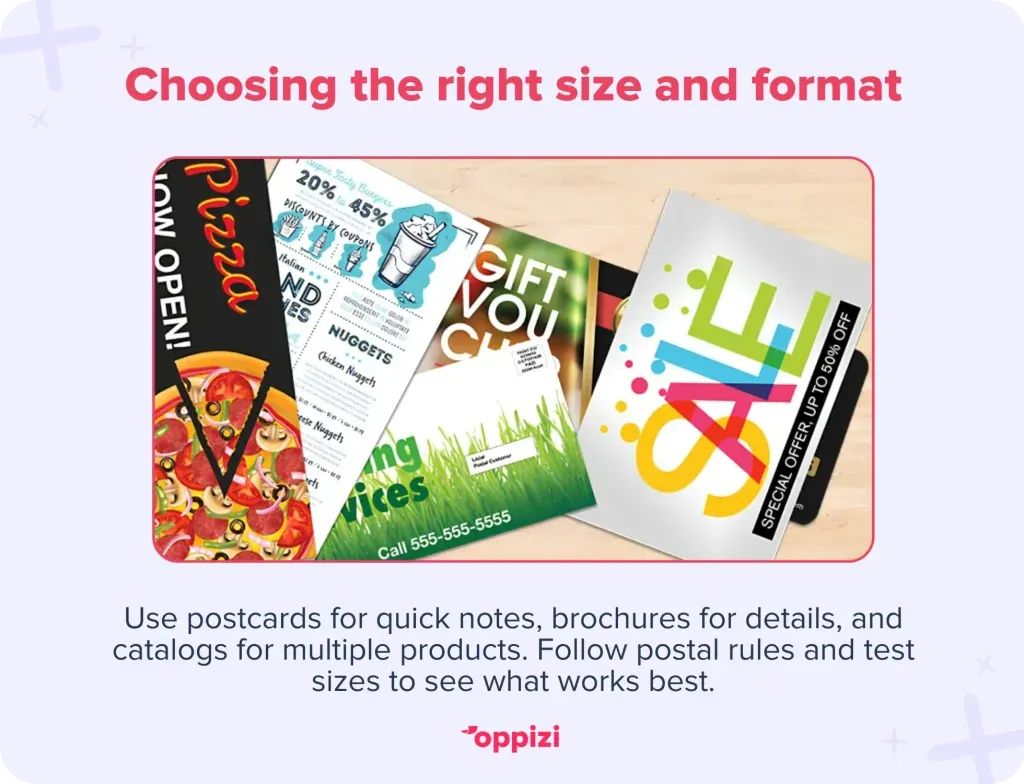
- Postcards. Simple, eye-catching, and great for quick messages.
- Brochures. More space for details and visuals.
- Catalogs. Perfect for showing off multiple products.
How to pick the right size:
- Follow postal rules. Check USPS or local guidelines to avoid extra costs or delays.
- Test different sizes. Try different formats to see what works best.
Step 4: Use colors that match your brand
Colors do more than look nice. They set the mood, send a message, and make your brand memorable.
How to pick the right colors:
- Stick to your brand colors. Keep it consistent so people recognize you.
- Think about emotions. Red feels urgent and exciting. Blue feels calm and trustworthy.
- Make sure it’s easy to read. Pick colors that stand out so your message is clear.
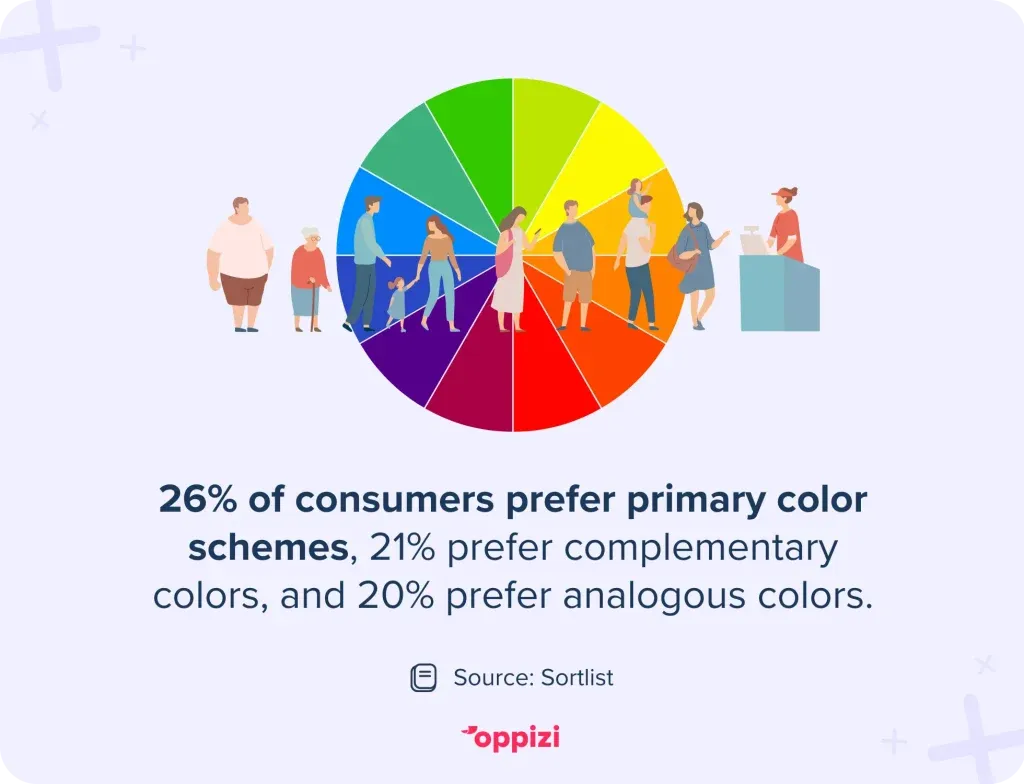
Did you know that 26% of consumers prefer primary color schemes, 21% prefer complementary color schemes, and 20% prefer analogous color schemes? Consider consumers’ color preferences when choosing your colors. This will help you select the most appealing options.
Step 5: Personalize your direct mail
People pay more attention when something feels made just for them. Adding personal touches can make a big difference.
Ways to personalize your mail:
- Use their name. A simple touch that makes it feel personal.
- Mention past purchases. Show products they might like based on what they bought before.
- Give them a special offer. A personalized discount or deal encourages action.
At Oppizi, our design tools help businesses create mail that feels tailored to each person.
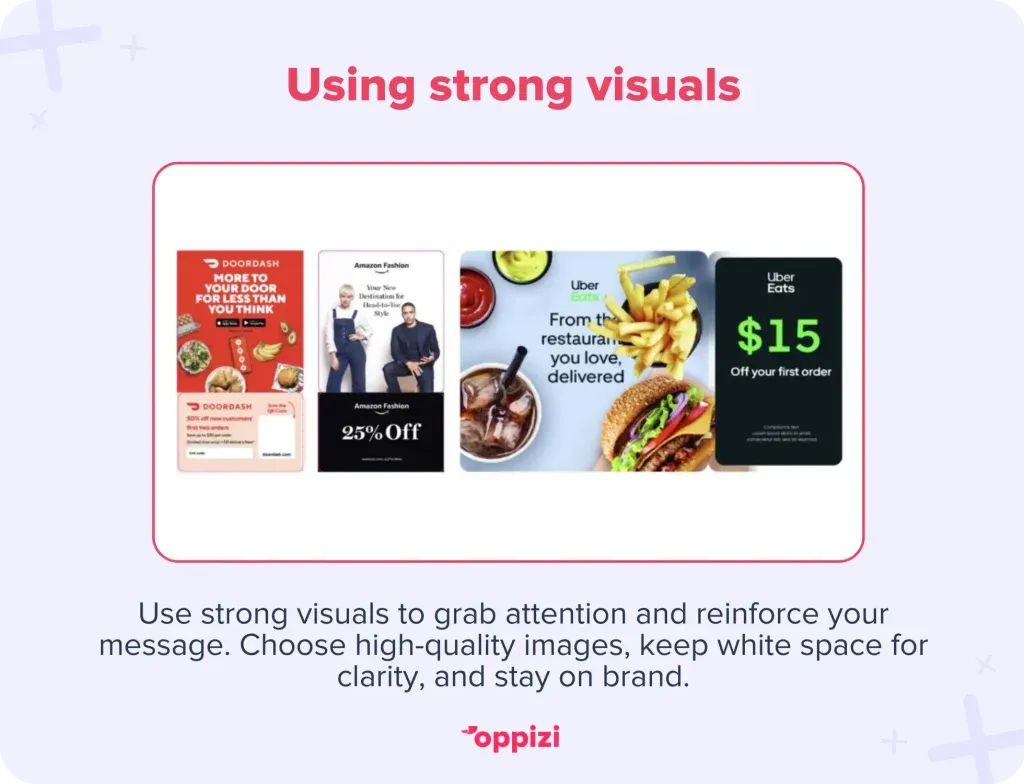
Step 6: Use strong visuals
Great visuals grab attention and help your message stand out.
How to make your design pop:
- Use high-quality images. Make sure they’re sharp, clear, and relevant.
- Keep it clean. White space makes everything easier to read.
- Stay on-brand. Your visuals should match your brand’s look and feel.
Step 7: Include a clear offer and call-to-action
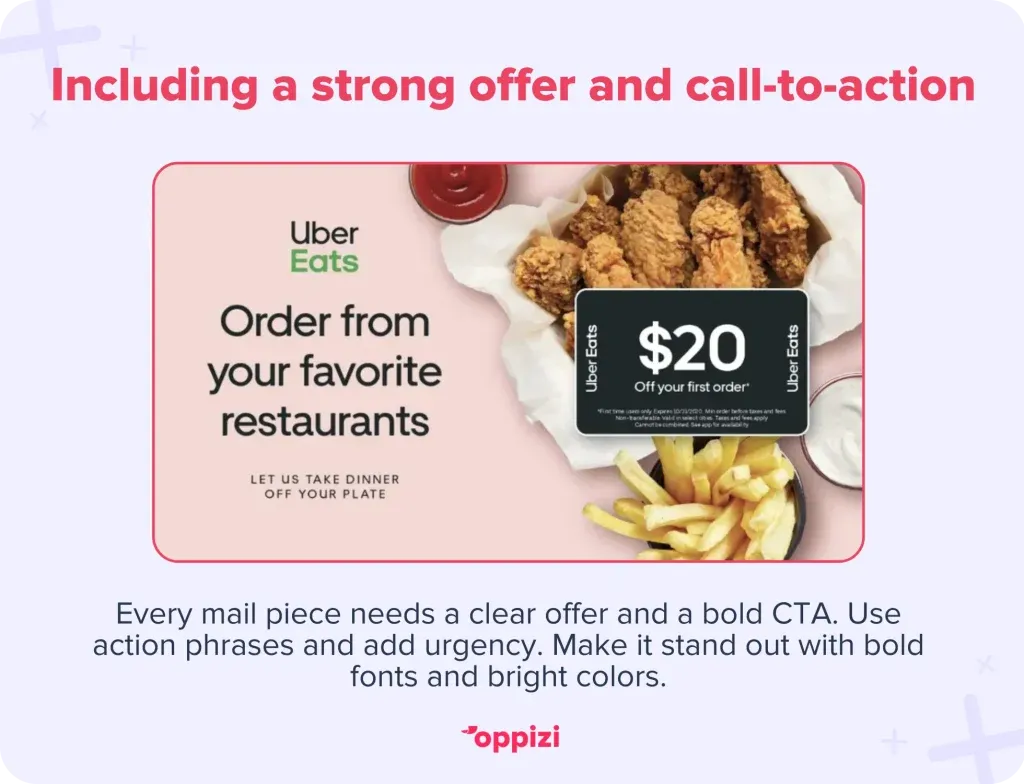
Every piece of direct mail needs a strong offer and a clear call-to-action (CTA).
How to create an effective CTA:
- Be specific. Use action words like “Shop Now,” “Call Today,” or “Scan the QR Code.”
- Create urgency. Phrases like “Limited Time Offer” or “While Supplies Last” encourage quick action.
- Make it stand out. Use bold fonts, bright colors, and good placement so your CTA is easy to see.
Step 8: Optimize the address box
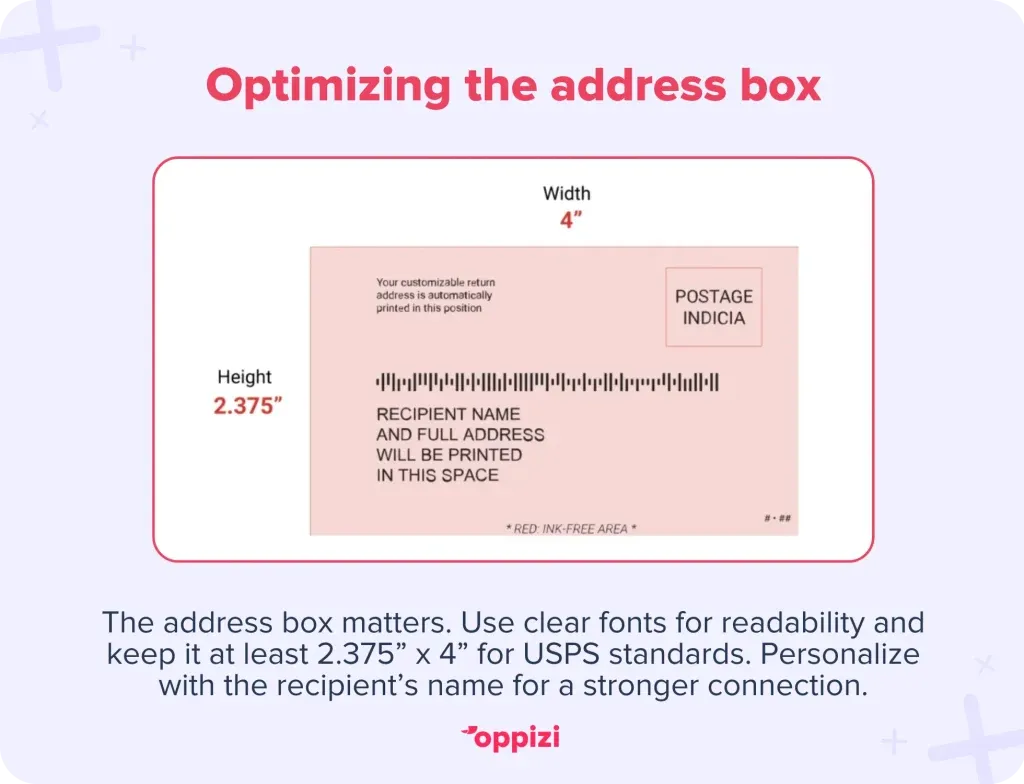
The address box is an important part of your mail, but it’s often forgotten.
Best practices for the address box:
- Make it easy to read. Use clear, simple fonts.
- Follow size guidelines. Keep it at least 2.375” x 4” to meet USPS standards.
- Add a personal touch. Include the recipient’s name or other details to make it feel special.
Step 9: Test and improve your design
Designing direct mail isn’t a one-time task. Keep testing and improving for the best results.
How to test your design:
- Try A/B testing. Change up colors, images, and CTAs to see what works best.
- Track your results. Look at response rates, conversions, and ROI to find ways to improve.
- Keep refining. Use the data to make your designs better for future campaigns.

Step 10: Leverage AI for content creation
AI tools like ChatGPT, Gemini, and Phrasee can make creating content easier and faster. Here’s how they can help:
- Save time. AI quickly generates ideas and drafts, so you can focus on other tasks.
- Enhance personalization. AI analyzes audience data to create messages that resonate with your readers.
- Maintain quality. AI helps ensure your content is clear and well-organized, with grammar and style tips for a polished look.
- Explore new ideas. AI offers fresh content options to keep your messaging engaging.
- Test different approaches. You can create multiple versions of your messages to see what works best.
- Adapt quickly. AI helps you stay on top of trends and changes in audience preferences, keeping your content relevant.
Using AI in your content creation saves you time and boosts your marketing efforts. These tools help you create personalized, high-quality copy that connects with your audience.
Frequently Asked Questions (FAQs) about direct mail design
1. What is direct mail design?
Direct mail design is all about creating attractive mail pieces that businesses send to their audience. It combines layout, colors, images, text, and more to grab attention, share a clear message, and encourage people to take action, like making a purchase or visiting a website.
2. What is the format of direct mail?
Direct mail comes in different formats based on what you want to achieve and who you’re targeting. Common formats include:
- Postcards: Short and sweet, great for quick messages and eye-catching designs.
- Letters: Personalized and detailed, perfect for longer messages or formal notes.
- Brochures: Multi-panel designs that provide space for more info and visuals.
- Catalogs: Ideal for showcasing a variety of products or services.
- Self-mailers: Folded pieces that don’t need an envelope, combining the benefits of postcards and brochures.
Choosing the right format depends on your campaign goals and your audience's preferences.
3. Can direct mail be personalized?
Absolutely! Personalizing direct mail is key to boosting engagement and response rates. This goes beyond just using the recipient's name. It involves customizing the content, offers, and visuals to fit the recipient’s preferences and past interactions with your brand.
To personalize direct mail:
- Use variable data printing (VDP) to tailor each piece.
- Offer personalized deals, like discounts on items they’ve bought before.
- Reference their location, interests, or purchase history for a more relevant experience.
Personalized campaigns can lead to much higher response rates and better ROI.
4. What is a good example of direct mail?
A great example of direct mail combines eye-catching design, clear messaging, and a strong call-to-action (CTA). Here’s a scenario:
- Scenario: A local gym wants to attract new members.
- Design: A colorful postcard featuring energetic images of people working out.
- Message: “Get Fit This Summer! Join Now and Get Your First Month FREE.”
- CTA: “Scan the QR Code to Claim Your Offer!”
- Personalization: The recipient’s name and a special offer for “Exclusive [City] Residents.”
This example works because it’s visually appealing, has a clear offer, and makes it easy for people to take action.
5. Is direct mail a good business?
Yes, direct mail can be very profitable, especially when done right. Here’s why:
- High response rates: Direct mail response runs 5 to 9 percent on house lists and 3 to 5 percent on prospect lists, per the ANA/DMA Response Rate Report 2018, far higher than an email click rate of 2.3%.
- Tangible impact: Physical mail leaves a lasting impression and is less likely to be ignored than digital ads.
- Targeted marketing: With smart audience segmentation and personalization, businesses can reach the right people with the right message.
- Versatility: Direct mail works for many purposes, from attracting new customers to keeping existing ones.
For businesses wanting to stand out in a crowded digital world, direct mail offers a unique way to connect with customers offline.

Conclusion: Design direct mail that delivers results
Direct mail design is a blend of art and science. To create mailers that truly stand out and inspire action, you must understand your audience, establish clear goals, and incorporate personalized, appealing elements.
At Oppizi, we’re your partners in this journey. Our platform simplifies audience segmentation, design, and distribution, allowing businesses to launch impactful direct mail campaigns in just minutes.
Are you ready to enhance your marketing strategy? Begin your Oppizi campaign today and forge meaningful connections with your audience offline.