Last updated August 28, 2026
Flyer marketing has long been a staple of offline promotion. It’s affordable, tangible, and capable of targeting specific local areas. Yet despite its popularity, many businesses struggle to make their flyer campaigns truly effective. If you’ve ever sent out flyers only to wonder whether they even got noticed, you’re not alone.
In this post, we’ll break down the top 5 problems associated with flyer marketing and show you exactly how to avoid or fix them. Plus, we’ll share how Oppizi can help you upgrade your flyer campaigns so customers can’t overlook them.
Problem #1: Poor targeting and distribution
Targeting the right audience is one of the biggest challenges in flyer distribution. Poor timing or location can mean your flyers never reach the people they’re meant for. Many companies also lack the resources or expertise to identify their ideal audience, making it hard to balance reach and accuracy. Without proper research into demographics and media habits, campaigns risk wasting time and budget on the wrong crowd.
How to fix it:
- Define your audience: Know who you're trying to reach and tailor your messaging accordingly.
- Consider locations and timing: Focus on locations your audience frequents. E.g., hand out flyers on college campuses if you're targeting students.
- Partner with experts: Flyer distribution companies like Oppizi use data-driven insights and past campaign performance to target effectively. They also have tracking tools so you can find out what’s working and use this information to adjust your campaign.
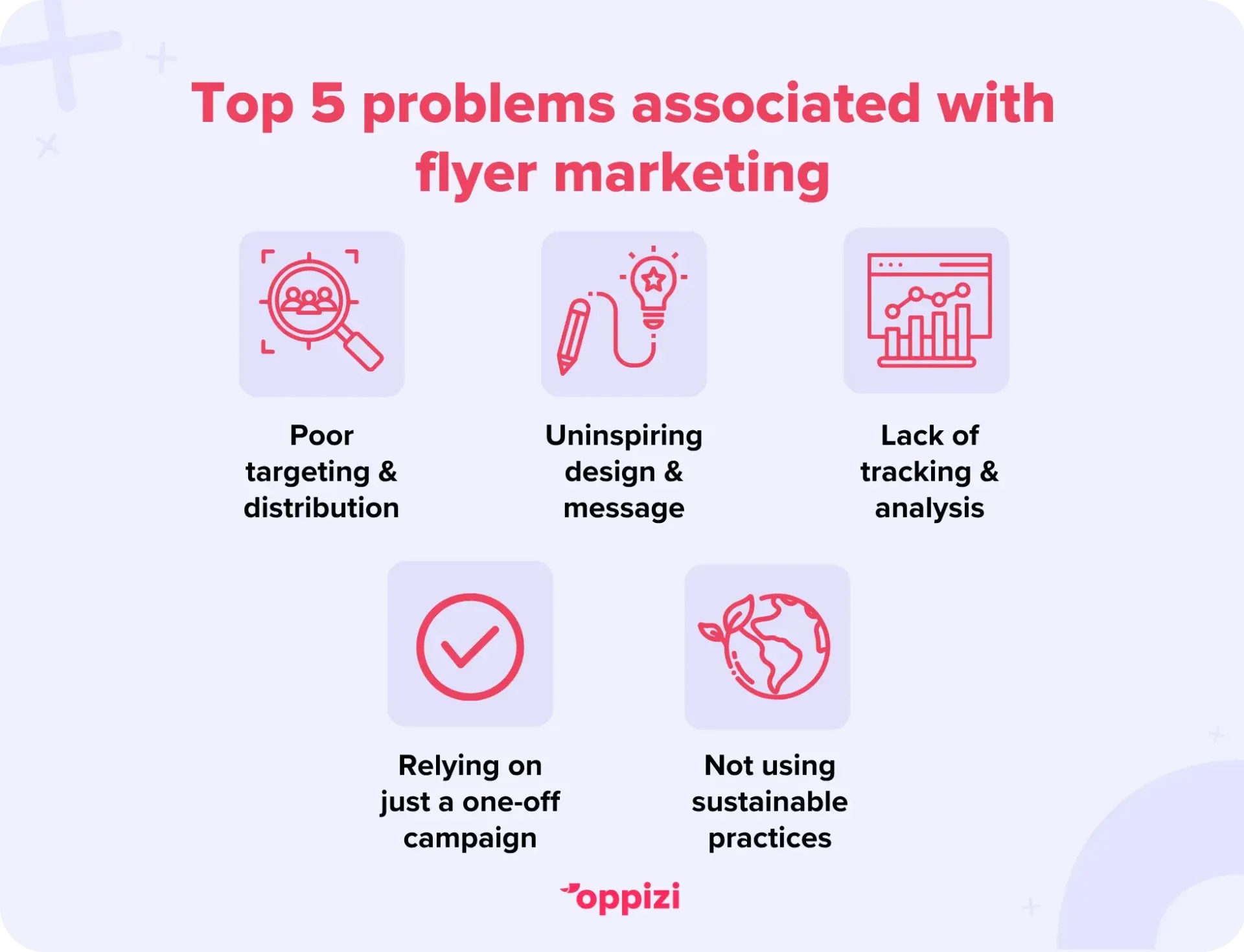
Problem #2: Uninspiring design and messaging
A flyer that has a cluttered, outdated, or generic design will quickly be tossed aside. Many flyers fail because they don’t communicate a clear, compelling message or visually grab attention.
How to fix it:
- Keep the design clean and focused: Avoid overcrowding the flyer and stick to one core message or offer.
- Use bold headlines: Grab attention fast with clear, benefit-driven titles.
- Include a strong call to action: Tell the reader exactly what to do next, whether that’s visit, call, scan a QR code, etc.
- Use high-quality visuals: Choose professional-looking images that reflect your brand and appeal to your target audience.
- Make use of white space: Give your content room to breathe. White space helps guide the reader’s eye to key information.
- Consider professional design or templates: Using a template or collaborating with a professional can instantly elevate your flyer’s look and credibility.
Remember: design is something that shouldn’t be overlooked. According to HubSpot, 65% of buyers are visual learners, meaning your layout directly impacts engagement.
Problem #3: Lack of tracking and measurement
Without measuring how your flyer campaign performs, it’s impossible to know what’s working or where to improve. Many businesses distribute flyers but never track conversions or engagement, leading to wasted budget and missed opportunities. Additionally, some flyer distribution platforms don’t offer built-in tracking tools, making it harder to monitor results accurately.
How to fix it:
- Use trackable elements in your flyers such as unique promo codes, QR codes, or dedicated landing pages to directly connect responses to your flyers.
- Set clear goals before launching your campaign, whether that’s boosting foot traffic, website visits, or sales, so you know exactly what you’re measuring and what success looks like.
- Regularly analyze your results to understand what’s working and where you need to improve.
- Partner with companies like Oppizi that offer real-time tracking and detailed reporting, making it easier to monitor performance and optimize your campaigns.
Problem #4: Overlooking frequency and follow-up
It’s not realistic to do one flyer distribution campaign and expect immediate, massive results. Many businesses don’t realize that flyer marketing needs repetition and follow-up in order to achieve the best results.
Why it’s a problem:
- One-time flyer drops can sometimes get lost or forgotten by recipients.
- Building brand awareness requires repeat exposure.
- Without follow-up, potential customers may lose interest or forget your offer.
- Marketing is a long-term process, not a quick fix.
How to fix it:
Here are some ideas on how you can make the most of your flyer campaign:
- Plan multiple flyer drops: Schedule campaigns spaced over a weeks or months to reinforce your message and stay top-of-mind.
- Integrate offline with online: Support flyer campaigns by following up with emails, social media ads, or SMS to deepen engagement.
- Use reminders or special offers: Send exclusive discounts or event invites to encourage conversions after the initial flyer drop.
- Track frequency impact: Monitor which timing and repetition cycles generate the best response, then optimize accordingly.
Problem #5: Environmental and perception concerns
Let’s be honest, when people think of flyers, they often think of paper waste. Brands that don’t use targeting and hand out flyers to just about anyone and everyone, or those who overlook sustainable practices, are more likely to face negative perceptions. This can affect how their flyers are received and even impact their overall brand image.
With 61% of US customers considering sustainability in their purchasing decisions, it’s clear that incorporating eco-friendly choices and precise targeting not only helps the environment but also strengthens customer trust and engagement. By focusing on quality over quantity and thoughtful distribution, businesses can reduce their environmental impact and create more meaningful connections with their audience.
How to fix it:
- Use eco-friendly materials: Where possible,opt for recycled paper and sustainable printing methods to reduce your environmental footprint.
- Highlight your green efforts: Include a note or symbol on your flyer that communicates your commitment to sustainability. This adds a level of trust.
- Use smart targeting: Use precision targeting to reach your relevant audience instead of just distributing to the masses. Not only does this improve the overall effectiveness of your campaign, but also reduces paper waste.
- Distribute legally: Be aware of local laws and regulations around flyer distribution. In many cities or residential areas, handing out flyers without permission can result in fines, reputational damage, and wasted resources, especially if your flyers are immediately removed or discarded.
- Partner with responsible vendors: Work with companies that prioritize eco-conscious practices.
How Oppizi can help you overcome flyer marketing challenges
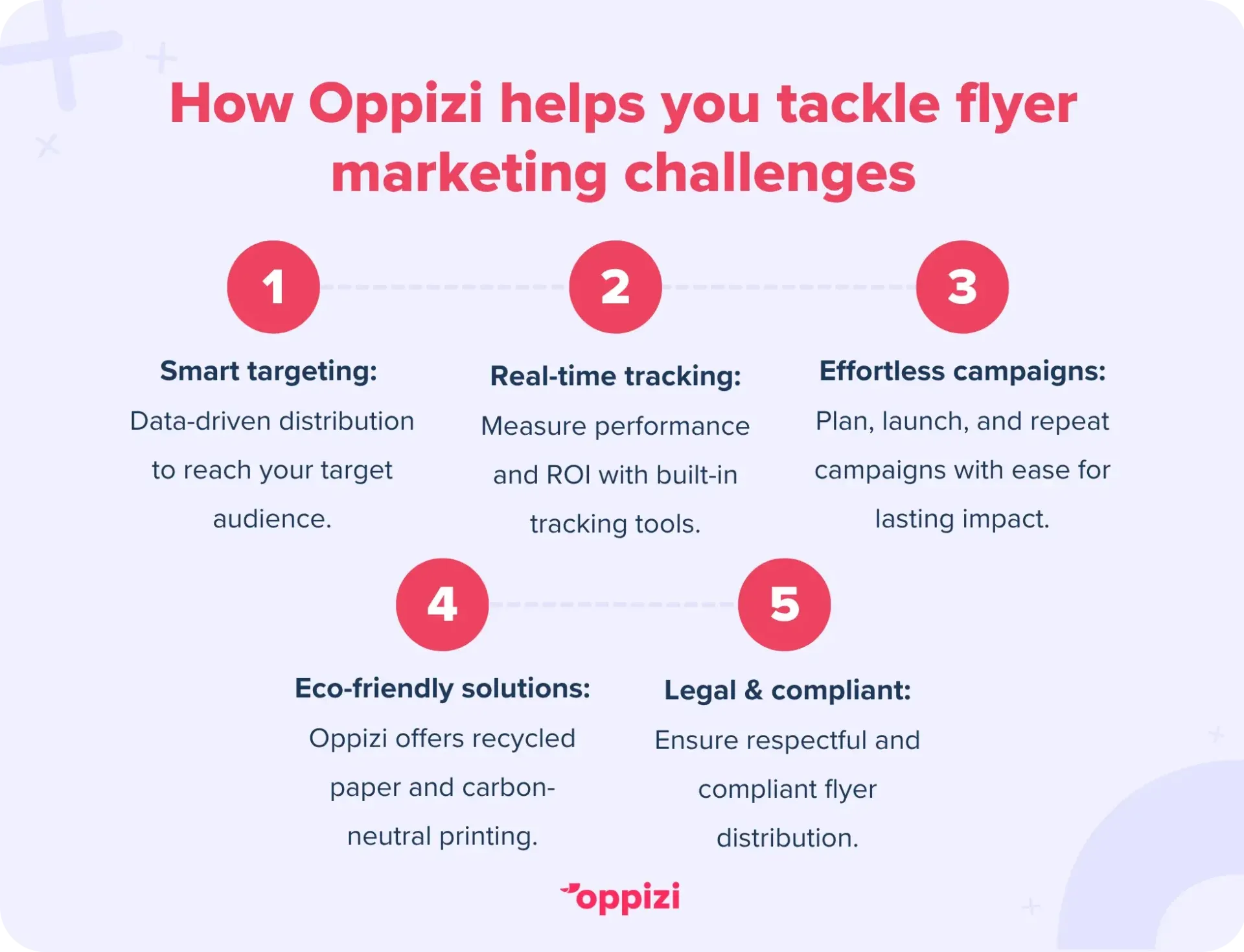
Oppizi specializes in helping businesses create targeted, impactful offline marketing campaigns by employing a number of best practices. Here’s how Oppizi can tackle the problems outlined above:
- Precise targeting: Oppizi’s uses data to help you choose the best location and time to distribute your flyers based on your target audience.
- Performance tracking: Integrated tracking solutions help you measure responses and ROI effortlessly.
- Campaign management: Schedule and repeat campaigns with ease to build consistent frequency and maximize impact.
- Sustainability focus: Oppizi offers recycled paper options and carbon-neutral printing, and also partners with Ecologi to offset their carbon emissions.
- Compliance and legal distribution: Oppizi’s brand ambassadors are trained to distribute flyers legally and respectfully, ensuring your campaign aligns with local laws and avoids wasted materials or fines.
By using Oppizi, you not only streamline your flyer marketing but also maximize your investment by reaching the right people with the right message.
Ready to transform your flyer marketing?
There’s no doubt that flyer marketing still works - but only when it’s done with purpose, strategy, and precision. By avoiding these common mistakes and applying the best practices we’ve outlined, your flyers can become more than just a piece of paper. They can become a cost-effective, highly targeted marketing tool that drives real results.
From smart design and eco-conscious printing to precision targeting and measurable outcomes, every detail matters. And that’s exactly where Oppizi comes in. We help businesses like yours build offline campaigns that are data-driven, sustainable, and set up for success.
Don’t let your next flyer campaign fall flat due to poor planning, guesswork, or outdated tactics. Let us help you reach the right people, at the right time, in the right way.
Start an offline marketing campaign with Oppizi today and create a real impact locally.
Frequently asked questions
- How often should I distribute flyers?
To build brand awareness and reinforce your message, aim for multiple drops, at least 3 times over the space of a few months.
- What’s the average response rate for flyer campaigns?
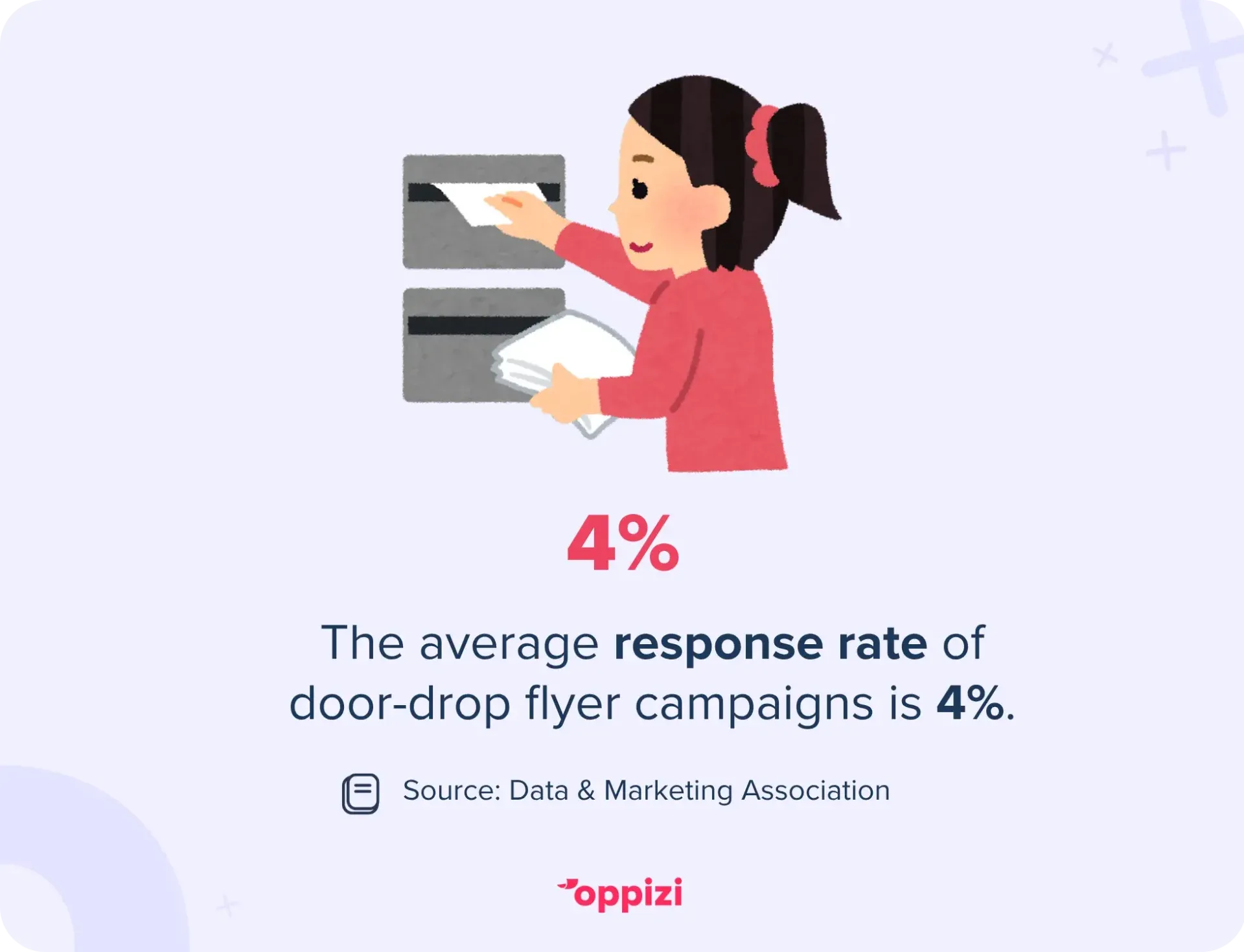
According to the Data & Marketing Association, the average response rate for flyer campaigns is approximately 4%.
- Can I combine flyer marketing with digital marketing?
Absolutely. Combining flyer distribution with online channels such as email or social media can reinforce your message and boost overall campaign effectiveness.
- How do I track flyer responses effectively?
To track your flyer responses, incorporate unique promo codes, QR codes, or dedicated landing pages into your flyers.
- Are flyers still effective?
Yes. According to the Data & Marketing Association, 89% of consumers remember receiving door drop flyers, and the average door drop is interacted with 3.1 times in a month.