Last updated July 28, 2026
Good marketers know about direct mail. Great marketers use it intentionally. While many acknowledge that this offline channel “probably works” for building awareness or driving retention, the best teams don’t rely on assumptions. They can back up these claims with certitude after investing in direct mail marketing, measuring the results over time, and integrating it into their strategies across specific high-impact use cases.
They treat it like a high performance channel, especially since the infrastructure, data, and targeting capabilities exist to make direct mail excel, with the added benefit of arriving in a physical mailbox where it doesn't compete with 200 other marketing messages.
In this article, we’ll explore the use cases where marketers are winning with direct mail and why it is such a valuable addition to the modern marketing mix.
Why direct mail fits in the modern marketing mix
When many professionals picture direct mail, they think of mass leaflets, generic design, and a strategy with hard to measure results. But contrary to these beliefs, direct mail marketing capabilities have advanced over the past decade to allow precision targeting, personalization at scale, real-time tracking and comprehensive measurement, as well as efficient integration with your digital campaigns.
Here’s what modern direct mail looks like today:
Hyper-local targeting
Marketers can now access highly targeted mailing lists based on demographic, geographic, psychographic, and behavioral insights. These lists allow brands to target with real precision, selecting exactly where and to whom their campaigns are delivered.
You can build lists based on:
- Location (postcodes, streets, neighborhoods)
- Household profiles (age ranges, income levels, family status)
- Property types (apartments vs houses)
- Lifestyle interests or consumption patterns
This level of targeting ensures every piece of mail lands with audiences most likely to convert, whether that’s promoting a meal delivery app to young professionals or supporting marketing for heating, ventilation, and air-conditioning businesses aiming to reach suburban homeowners who may need an AC tune-up. Smart mailing lists are what take direct mail from a volume-first channel to a performance driven one.
Data-driven personalization
Advanced targeting unlocks the potential for sending personalized direct mail. This can include simple touches, like using the recipient’s name, or more advanced strategies, such as tailoring content according to past purchases or individual preferences. The goal is creating a one-on-one experience where each recipient feels individually addressed. When executed well, recipients can't tell whether you sent 10 pieces or 10,000.
This is made possible through variable data printing, which is the technology allowing brands to adjust messaging, visuals, offers, and calls to action within a single campaign based on audience segments or geographic insights.
Advanced automation
Programmatic mail operates on the same logic as email automation—behavioral triggers, audience segmentation, personalized content, automated deployment—but delivers physical pieces instead of digital messages.
Cart abandonment, renewal windows, engagement lapses, milestone events, customer retargeting are only a few of the customer behaviors that can trigger a mail sent through platforms integrated with your CRM and marketing automation tools.
With this technology, businesses are able to easily align their mail ads with customer behaviors and preferences, save time and resources, and ensure a higher likelihood of response to direct mail sent.
Performance tracking and measurement
With the right tools (QR codes, unique promo codes, custom landing pages), every piece of mail can be tracked, measured, and linked back to specific audience segments or campaign objectives.
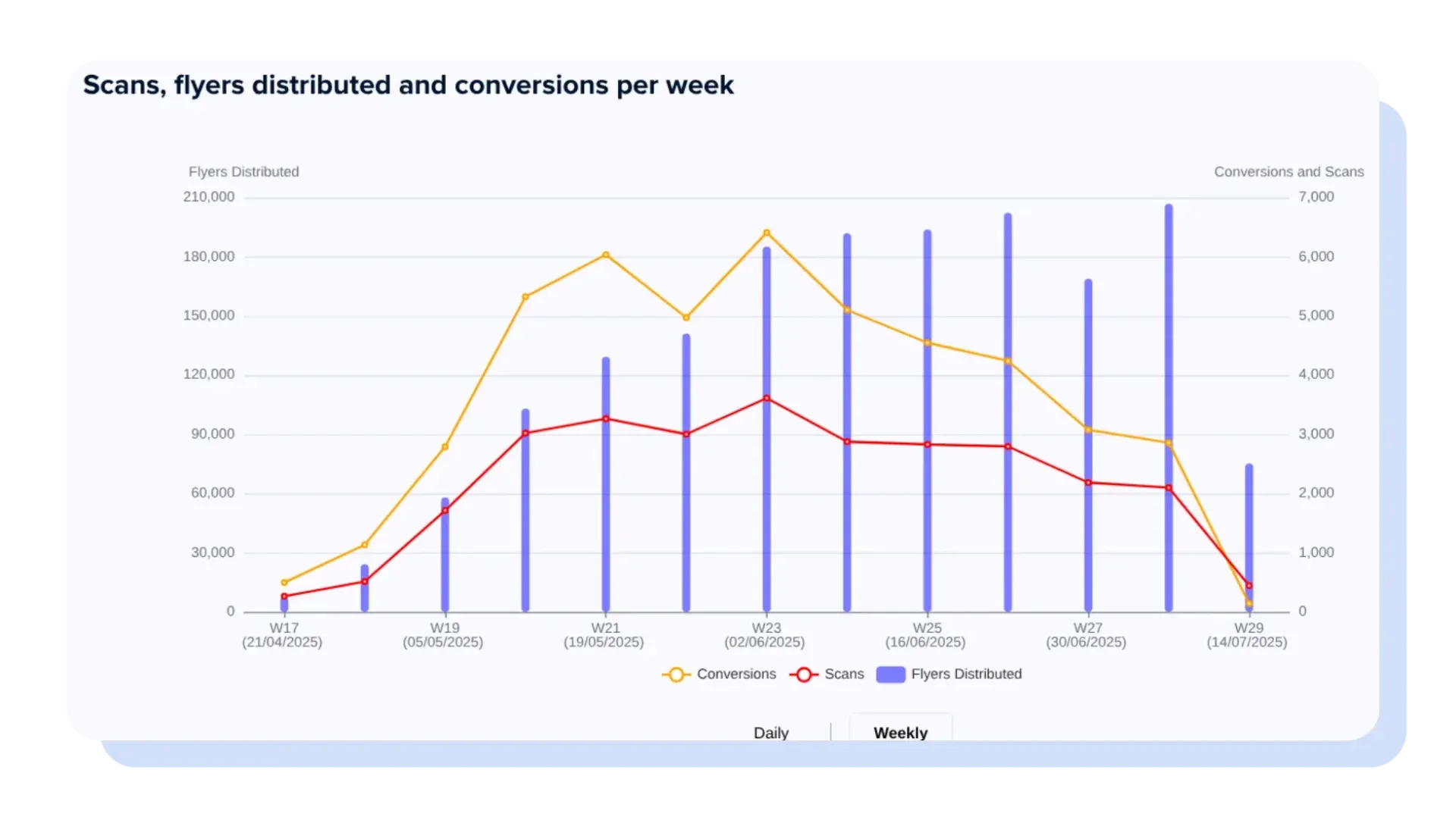
You can measure response rate, conversion rate, average order value, customer acquisition cost, lifetime value, and full campaign ROI. The measurability and trackability of the channel is what gets direct mail approved and scaled. CFOs don't fund marketing efforts on faith. They fund channels with clear performance data and demonstrable return. Direct mail now delivers both through providers like Oppizi, which make it possible to design, send, and track mail response through a single platform.
Component of an omnichannel strategy
Direct mail achieves peak performance when used as a part of a broader marketing strategy. This is a documented fact: MIT Sloan surveys show 80% of direct mail recipients are far more likely to research brands online or visit physical locations after receiving mail. So, a multichannel approach where direct mail integrates with digital channels for the sake of a unified customer experience is the smart play.
You can execute this integration across multiple touchpoints:
- Use mailers to complement websites: enable instant online engagement by adding QR codes or personalized URLs to your postcard.
- Sequence mail and email marketing campaigns: i.e., announce a new product via mail, followed by sending customers a time-sensitive offer via email.
- Follow direct mail campaigns with social media retargeting: shortly after receiving mail, the recipients get related digital ads.
Sustainability
Sustainability is top of mind for many companies and, therefore, reducing the carbon footprint associated with direct mail campaigns is an important consideration for marketers using this channel.
Good news is that direct mail can be both effective and environmentally responsible. Many campaigns now utilize recycled or responsibly sourced paper, eco-friendly inks, and optimized distribution routes to minimize environmental impact. By working with partners who are equally interested in helping the planet and reducing waste through precise targeting and personalization, brands can achieve strong results while aligning with their sustainability goals.
Core use cases for direct mail campaigns
In light of these advancements, the way marketers use direct mail has evolved significantly. No longer a one-dimensional channel, direct mail now supports a wide range of objectives across the customer journey.
Here are some of the key ways modern marketers are using direct mail today:
Building brand awareness in local markets
Businesses that rely on nearby customers, such as retail stores, restaurants, gyms, or service providers, find direct mail to be one of the most effective channels for raising awareness at a local level.
By leveraging geographically targeted mailing lists, marketers can deliver flyers or postcards directly to households in specific neighborhoods, streets, or zip codes. Local boutiques can announce their launching; cafes can promote opening, fitness studios are able to attract neighborhood members without unnecessary spending in irrelevant areas.
Acquiring new customers
Direct mail serves as a dependable acquisition lever, especially in markets where digital saturation drives up CPMs and lowers attention quality. By putting a tangible piece of marketing directly into the hands of potential buyers, businesses can introduce their products or services in a memorable way that encourages first-time engagement. Not only is it a far less saturated acquisition channel, but it also comes with higher trust levels than digital ads.
Using first-party customer data, marketers can create lookalike audiences by analyzing shared characteristics of their best existing customers. Insights such as demographics, location, purchasing behavior, or household attributes can be used to identify and target similar customers who haven’t yet engaged with the brand. Leveraging lookalike audiences allows direct mail campaigns to reach new prospects who closely match proven profiles, making acquisition more efficient and easier to scale.
Existing customer retention
As a channel, direct mail is widely used for customer retention and is an excellent tool for keeping existing customers engaged and encouraging repeat business.
For example, e-commerce brands can send a mailer offering loyalty rewards. Banks can send renewal reminders, and beauty salons can promote repeat appointments. Healthcare providers may use this medium to remind clients of check-ups, or independent bookstores can highlight members-only discounts. Thank-you mailers or anniversary cards also strengthen retention because physical tokens of appreciation create emotional connections that drive long-term value.
Reactivating lapsed customers
Modern marketers know better than to treat customers who haven’t engaged with their brand in a while as lost opportunities. Quite the opposite. These are people who already know your brand, they've already bought your services. You can win them back with a smart campaign.
Many industries could benefit from direct mail’s ability to reactivate customers. Meal kit providers, for example, can reach former subscribers with a “we miss you” mailer that highlights what’s new since they left (updated menus, dietary options, or improved delivery flexibility), paired with a limited-time incentive such as a discounted return period. Car dealerships can use direct mail to reconnect with past service customers who haven’t returned in 12–18 months by sending maintenance reminders tied to vehicle age or mileage, along with service offers, like safety checks or seasonal servicing.
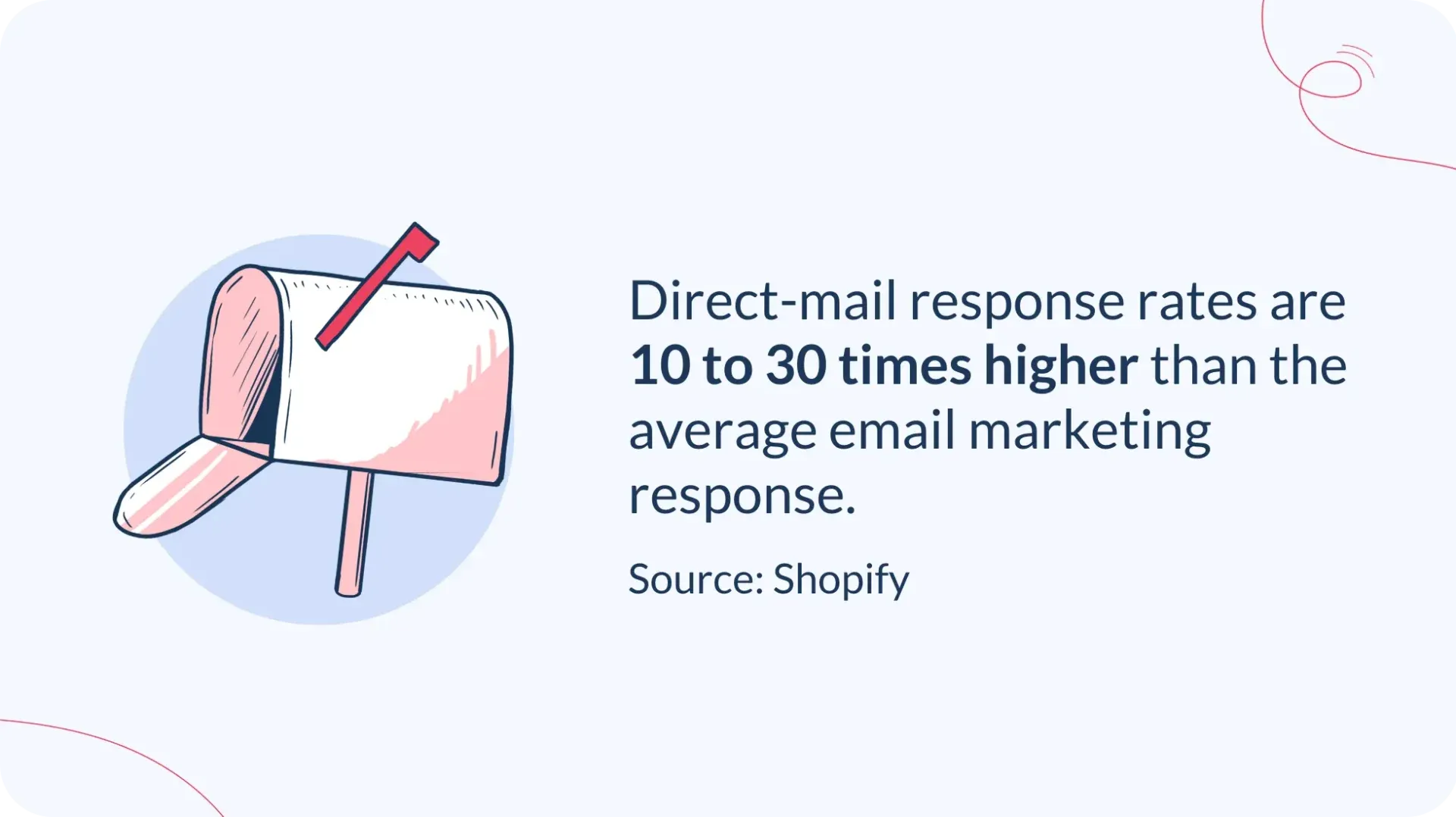
Win-back campaigns via direct mail consistently outperform digital-only approaches in both response rate and customer lifetime value recovery.
Cross-selling and upselling
Direct mail excels at targeted cross-sell and upsell campaigns because you can segment audiences with precision and deliver messaging that feels premium.
Send existing customers personalized recommendations based on their purchase patterns. For example, a customer who bought cameras can be sent a curated selection of compatible lenses, tripods, and accessories. If they bought running shoes, custom insoles might pique their interest, as well.
The bottom line is that you’re marketing to customers who already trust you and the personalization of the offer makes it relevant, elevating perceived value.
Amplifying event marketing and community activation efforts
Event invitations delivered by mail command attention and drive registration in ways that calendar invites buried in inboxes could hardly hope to achieve. Physical invites create anticipation and signal exclusivity. Plus, they have a much higher keep rate. They sit on desks and refrigerators as reminders, down the line increasing the chance of attendance.
Use direct mail for VIP customer events, industry conferences, product launches, webinars, or in-store experience. Include event details, speaker highlights, and a clear RSVP mechanism. Follow up with reminder cards as the event approaches. For B2B event marketing especially, a well-designed mailer positions your event as worth attending and increases show rates significantly.
Entering new markets
When entering a new market or expanding your business into new areas, you need to quickly gain visibility. Direct mail provides that immediate, tangible impact that lets your brand launch with authority into new territories.
B2C companies find it useful to include a market-entry offer that drives trial of their service or product. For example, a food delivery brand could distribute first-order discount postcards in a newly launched delivery zone. For B2B market expansion, target decision-makers by title and company size with personalized messaging that addresses region-specific pain points.
Converting promotional and seasonal offers
Holiday promotions, back-to-school sales, seasonal inventory clearance — all of these are proven direct mail plays. Mail arrives during peak buying windows when purchase intent is already high. Your piece sits on kitchen counters and desks, serving as a persistent reminder throughout the promotional period.
Use bold creative, clear offers, and expiration dates to drive urgency. Coordinate your mail timing with digital campaigns for maximum lift. Track redemption with unique codes to measure ROI precisely.
Accelerating account-based marketing (ABM) campaigns
Account-based marketing demands personalization at scale, and that’s one area in which direct mail excels. Sending dimensional mailers, premium kits, personalized packages, or custom publications demonstrates research and commitment. These create high-impact moments with stakeholders.
It’s particularly efficient if used at key stages in the pipeline: initial outreach, deal advancement, post-meeting follow-up. If you combine it with synchronized outreach from SDRs and targeted digital retargeting, direct mail will help accelerate deals and improve your results.
What challenges does direct mail solve for marketers?
Direct mail addresses many pain points that professionals often face in an overcrowded, competitive, ad-fatigued marketing environment. These are some of the most prominent challenges:
Driving repeat usage and preventing churn
Mobility apps (ride-share, car-share, e-bikes), food delivery platforms, pet supply subscriptions, fitness and wellness studios fight constant churn in competitive markets. They're deploying win-back campaigns for lapsed customers, loyalty reward mailings for active users, and promotional offers to drive frequency.
Boosting foot traffic
Restaurants, boutiques, bookshops, home decor stores, or beauty salons often operate in defined geographic territories where proximity drives conversion. They use geo-targeted direct mail, grand opening campaigns, and neighborhood offers to drive visits, bookings, and calls from existing and prospect customers.
High customer acquisition costs
Industries like fintech, insurance, and subscription services using direct mail for abandoned cart recovery and referral program activation can significantly cut down on CAC. E-commerce brands with high-ticket items and meal delivery services use cart abandonment mailers to recover stalled purchases at conversion rates that justify the mail investment.
Low engagement from high-value targets
B2B sectors (professional services, enterprise tech, industrial equipment) deploy ABM direct mail to reach executives or high-level professionals. Real estate agents can target prospects and sellers using market analysis and listing presentations that position them above the competition.
Commoditized market with price competition
Healthcare practices, home services, and automotive dealerships differentiate through customer appreciation campaigns and personalized follow-up that builds loyalty beyond price. Grocery delivery services and meal kit subscriptions use recipe cards, cooking tips, and loyalty milestone mailings to create emotional connection in categories where switching costs are zero.
Long consideration cycles
Education, wealth management, and complex B2B sales use nurture sequences with physical touchpoints to stay top-of-mind without creating email fatigue.
Ready to use direct mail strategically?
Direct mail brings manifold opportunities for marketing professionals, as you’ve seen outlined in these use cases. It’s clear it delivers measurable performance: higher response rates, better conversion, strong ROI. The infrastructure exists to deploy it with the same precision and accountability as digital channels.
But understanding the opportunity isn't the same as executing it. Many marketers face real barriers: unfamiliarity with modern direct mail platforms, concerns about cost and complexity, lack of internal expertise, difficulty integrating with existing martech stacks, uncertainty about where to start.
That’s where having a trusted direct mail partner comes in. Oppizi can help make this offline channel as accessible, measurable, and scalable as your digital ones.
Ready to get started? Head to our campaign builder here.