Last updated July 23, 2026
If you’re in B2B sales or marketing, you’ve probably heard the term account-based marketing (ABM). But what is it? ABM isn’t just a buzzword; it’s a game-changer that can dramatically enhance your sales performance.
If you’re new to ABM, you may be wondering where to start. So let’s begin with the basics—what ABM is, why it works for B2B sales, its pros and cons, and how you can use it. We’ll also look at where ABM is headed in the future.
By learning how it works, you’ll be better equipped to plan your campaigns, use your resources wisely, and boost your sales.
What is account-based marketing?
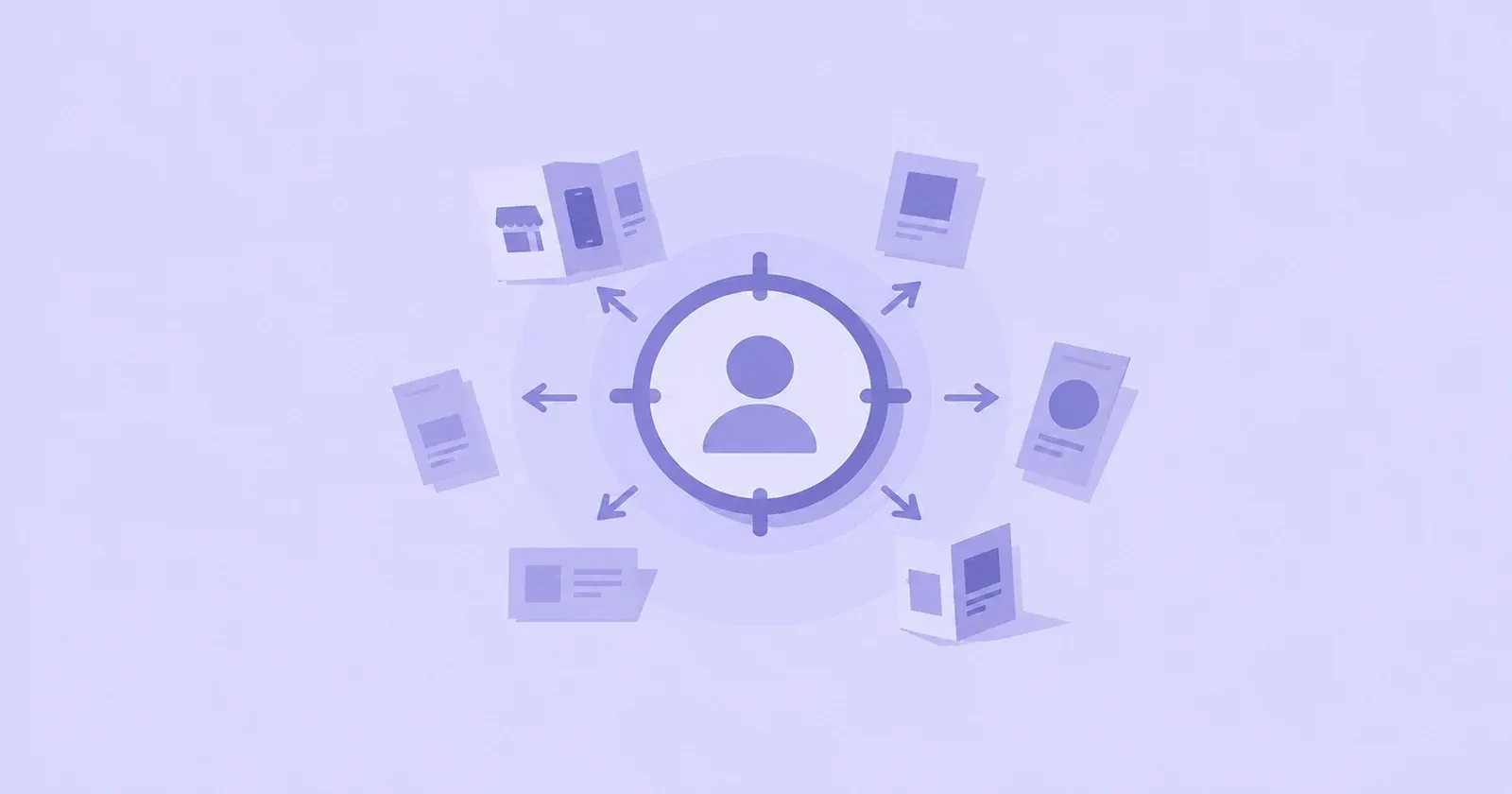
Account-based marketing (ABM) flips the usual approach to B2B marketing. Instead of trying to reach as many people as possible, you focus on specific, high-value companies or organizations, otherwise referred to as accounts.
Once you know which companies you’re targeting, you create marketing and sales efforts tailored to their needs and challenges. It’s all about precision and being as relevant as possible. That way, you connect with your target accounts most effectively.
Think of traditional marketing as casting a wide net to catch lots of fish. ABM is like designing a custom trap for the exact fish you want. It’s focused, intentional, and resourceful.
There are three main types of ABM:
- One-to-One ABM: For individual, large accounts.
- One-to-Few ABM: For small groups of similar accounts.
- One-to-Many ABM: For larger groups or segments.
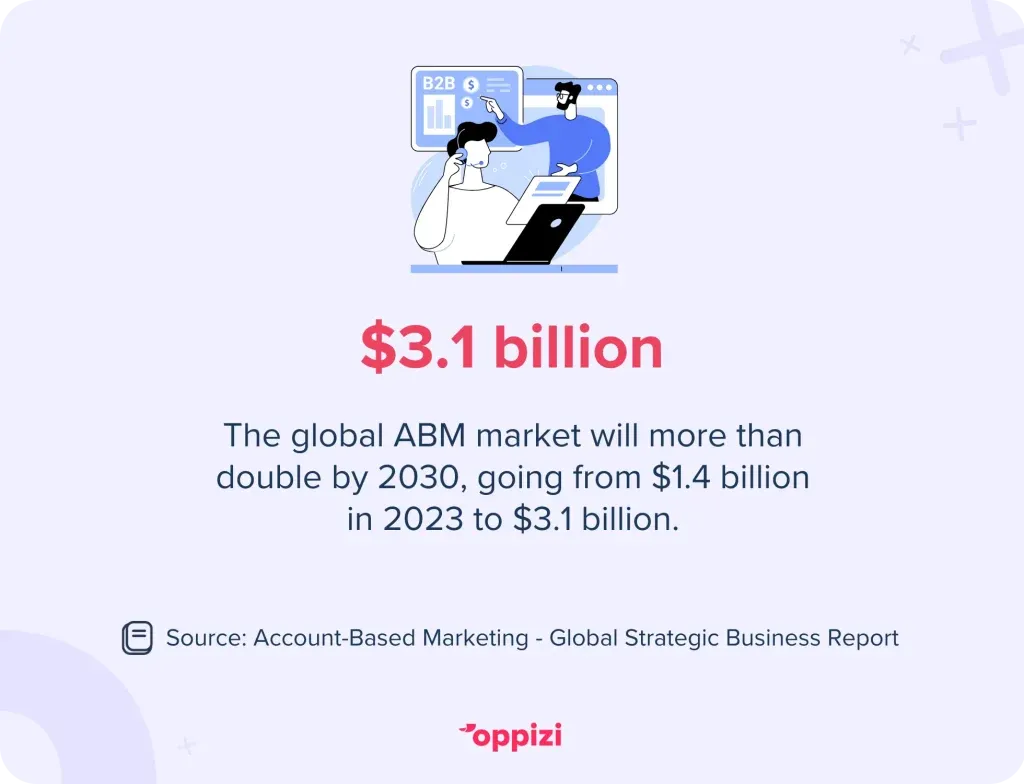
Done right, you can strengthen relationships with your top customers, keep them coming back, and boost your revenue. That’s why ABM is growing fast—experts say the global ABM market will more than double by 2030, going from $1.4 billion in 2023 to $3.1 billion.
Examples of account-based marketing
- Personalized emails: Send messages that speak directly to a company’s challenges or goals.
- Custom landing pages: Build web pages with content tailored to a specific account.
- Exclusive events: Host webinars or small events for key people at your target accounts.
- Targeted ads: Show ads only to employees of the companies you want to reach.
- Direct mail: Deliver personalized packages, brochures, or gifts to decision-makers using ABM direct mail for a targeted, high-impact approach.
- Executive outreach: Have your CEO or leadership connect directly with their counterparts at target companies.
- Case studies: Share success stories that match the prospect’s industry or challenges.
- Collaborative workshops: Offer customized sessions to help a target account solve a specific problem.
- Social media: Engage with key decision-makers on platforms like LinkedIn or share content designed for them.
- Custom proposals: Create detailed, personalized proposals that address the account’s exact needs.

How ABM supports B2B sales
So, why focus on high-value accounts with personalized campaigns? The answer is simple: To create a smooth, engaging experience for potential customers while making sales efforts more efficient.
Key benefits of account-based marketing in B2B sales
- Better ROI: You get more out of your efforts by focusing on the clients that matter most.
- Stronger relationships: Personal touches build trust and keep clients coming back.
- Sales and marketing alignment: Everyone works together with the same goals in mind.
- Smarter resource use: Time and money go where they’ll have the biggest impact.
- Faster sales: By targeting decision-makers directly, you speed up the process.
- More engagement: Personalized content grabs attention and gets better responses.
- Stronger pipeline: Focused campaigns bring in higher-quality leads.
- Tailored messaging: You speak directly to what your clients need or struggle with.
- Competitive advantage: Custom strategies make it tough for competitors to keep up.
- Better data insights: ABM uses analytics to fine-tune your approach and make campaigns more effective.
Does account-based marketing work?
Those who use ABM in their strategy agree—it delivers results. A 2023 survey showed that 93% of marketers had great success with account-based marketing (ABM). Why? Because personalized campaigns are far more effective than broad, generic ones.
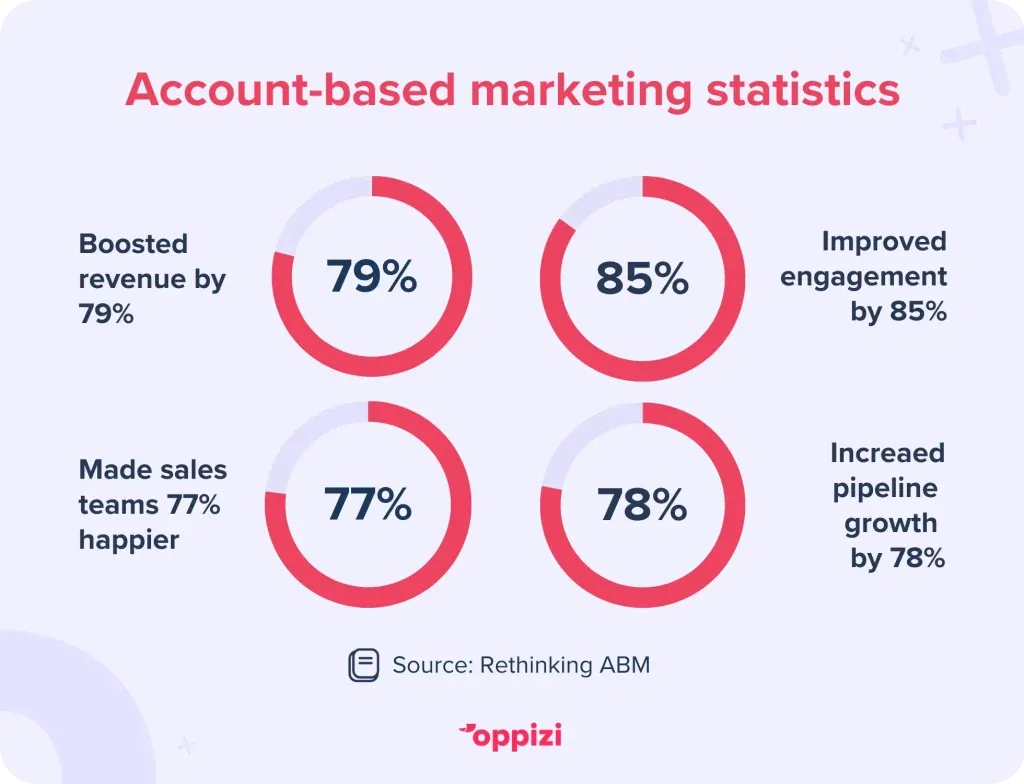
According to a 2023 report on account-based marketng, marketers reported the following successes:
- Boosted revenue growth by 74%
- Improved engagement by 85%
- Made sales teams 77% happier
- Increased pipeline growth by 78%
And there’s more—HubSpot’s 2024 state of marketing report says ABM with personalized messaging can re-engage customers up to 50% better.
When sales and marketing teams work together to target fewer, high-value accounts with tailored content, the results are clear. You can grow revenue, create more effective campaigns, build a stronger sales pipeline, and win back customers.
Plus, your team will feel more satisfied with their work.
The drawbacks of account-based marketing
Creating personalized campaigns needs a lot of effort, money, and planning. This can be tough for smaller companies or those with limited budgets. Focusing on a few big accounts might also mean overlooking smaller prospects with potential.
Personalization and targeting only work if your information is up-to-date and detailed. Outdated or incomplete data can lead to wasted efforts and missed opportunities. Managing this data can also be expensive and requires the right tools and expertise.
Finally, ABM is a high-risk, high-reward approach. If a big target account doesn’t convert, the return on your investment can feel too low for the effort put in.
How to implement account-based marketing
Implementing a successful Implementing a successful account-based marketing (ABM) strategy isn’t easy. It requires careful planning and execution. Here’s a simple guide to help you get started with ABM in your organization.
Define your ideal customer profile (ICP)
Start by defining your Ideal Customer Profile. This means figuring out which accounts would be the best fit for your business. Look at factors like company size, industry, revenue, location, and buying habits.
Identify target accounts
Once you have your ICP, identify specific accounts that match it. Use data from your CRM, market research, and insights from your sales team to make a list of target accounts. Prioritize them based on their potential value to your business.
Develop personalized content and campaigns
Create customized content and campaigns for each target account. This might include personalized emails, case studies, whitepapers, and targeted ads. Your goal is to make content that speaks to each account’s unique challenges and goals.
Measure and optimize
Regularly check how your ABM efforts are performing using key metrics like engagement rates, pipeline growth, and revenue from target accounts. Use this information to see how well your campaigns are working and where you can improve.
ABM isn’t just about closing deals; it’s about building strong relationships. Keep providing value to your target accounts with regular communication and personalized support as their needs change.
How to measure account-based marketing
- Monitor win ratesWhat percentage of deals from your target accounts are closing?
- Check deal speedLook at how fast deals move through your sales process compared to non-ABM accounts.
- Track account engagementSee how often target accounts interact with your campaigns—check email opens, clicks, website visits, or content downloads.
- Measure pipeline growthCount the number of qualified leads or opportunities coming from your target accounts.
- Focus on retention and upsellsSee if ABM helps keep your clients longer or drives them to spend more.
- Calculate ROIAdd up your ABM costs and compare them to the revenue those efforts generate.
- Evaluate revenue impactCompare how much revenue ABM campaigns bring in versus your other marketing efforts.
- Gather customer feedbackAsk your target accounts how helpful or relevant your campaigns were to their needs.
Regularly reviewing these numbers helps you fine-tune your strategy and get better results.
Future trends in account-based marketing
Account-based marketing (ABM) is always changing as businesses adopt new technologies and strategies. Here are some trends to watch for:
- AI and machine learning: These technologies will improve personalization and targeting. Marketers will be able to create more effective campaigns and get real-time insights to adjust their strategies quickly.
- Better use of data: Predictive analytics and big data will help marketers understand customer needs and behaviors more accurately. This means they can target and engage high-value accounts more effectively.
- Multi-channel approaches: ABM will start to use a mix of digital and traditional marketing channels. This will create a smooth and consistent experience for customers across all touchpoints.
- Integration with marketing technology: Closer ties with CRM systems and marketing automation tools will streamline ABM processes. This will improve coordination between sales and marketing teams.
- Focus on ethical data management: As data privacy rules change, it will be crucial to manage data ethically. Following regulations and being transparent with target accounts will help build trust and make strategies more successful.
Combining account-based marketing with traditional approaches
Account-based marketing (ABM) is more than just a trend; it’s a powerful way to target B2B clients. This strategy can boost your sales and marketing efforts significantly.
However, ABM should be part of a broader marketing plan that includes traditional content aimed at a wider audience. Relying only on ABM can be risky. It focuses on fewer, high-value accounts, which can require a lot of resources.If you want to supercharge your marketing strategy, look no further than Oppizi. With our tools, tracking, and expertise, we help you capture the customers your competitors overlook. Start your campaign with us today and see your business thrive.