Last updated July 28, 2026
A home isn’t just something made of bricks and wood. It’s one of the most valuable and personal investments people can make. And, as a result, maintaining or improving it is often a priority. Whether it’s a dream kitchen upgrade, a fresh lick of paint, or a complete remodel, home improvement services are always in demand.
But with that demand comes a highly competitive market. From solo contractors to full-service renovation firms, businesses are vying for attention in a crowded space. To stand out, attract the right clients, and grow sustainably, you need more than great craftsmanship - you need a smart, strategic marketing plan.
That’s where home improvement marketing comes in.
Marketing your services strategically ensures that potential clients don’t just know about your business - they remember it when it matters most. In this guide, we’ll explore what home improvement marketing is, its key benefits, how to build a strategy, and the top marketing techniques you should be using to stand out.
What is home improvement marketing?
Home improvement marketing involves promoting services that help to enhance, renovate, or repair people’s homes. This includes reaching potential clients through various online and offline channels to showcase your expertise, build trust, and drive conversions.
Examples of home improvement services include:
- General contracting
- Roofing and siding
- Landscaping and lawn care
- Interior design
- Flooring and tiling
- Kitchen and bathroom remodeling
- Painting, plumbing, and electrical services
Marketing in this industry is more than just spreading the word. It’s about building a brand that homeowners trust to work on one of their most valuable possessions: their home. The same applies to marketing for construction companies, where clients first need to feel confident they can rely on you.
Benefits of home improvement marketing
Marketing is not just about selling - it's about positioning. In a saturated market, you need to give your business a distinct identity that appeals to your ideal customers and builds trust.
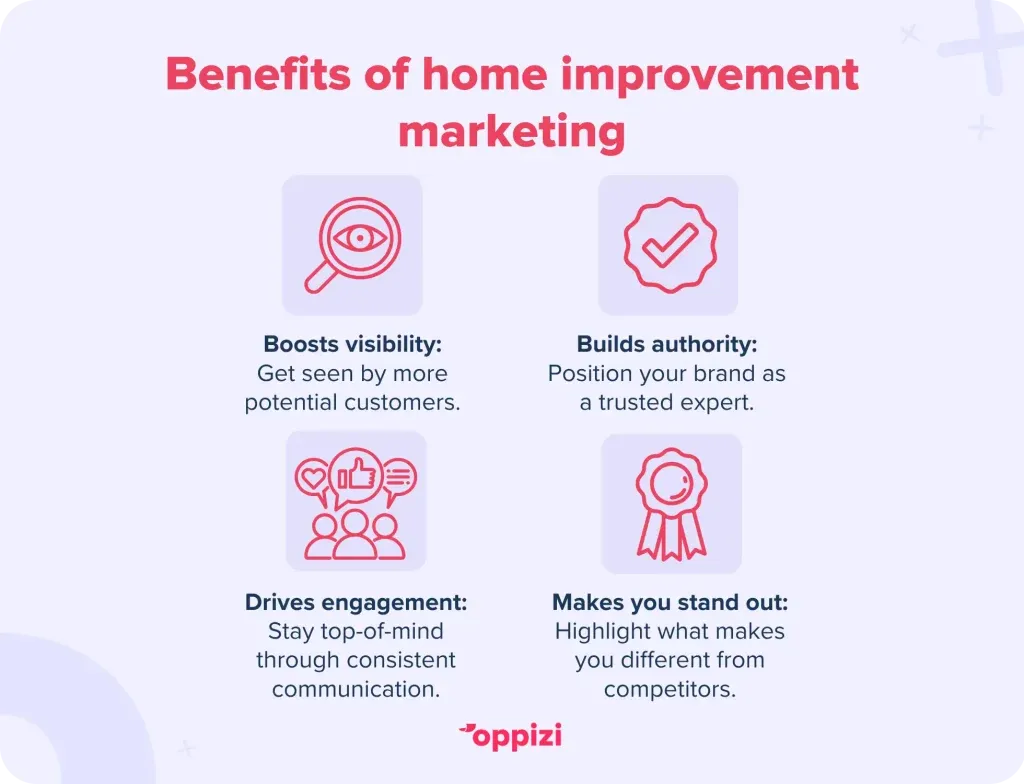
Here are four key benefits of strong home improvement marketing:
- Increased visibility: Effective marketing ensures your services are seen by a wider audience, leading to more inquiries and bookings.
- Brand authority: Consistent and professional marketing positions your business as a trusted authority in the home improvement sector.
- Customer engagement: Distributingcontent and maintaining consistent communication will more likely keep your audience engaged and keep your business top-of-mind.
- Competitive advantage: A well-executed and well-rounded marketing strategy sets you apart from competitors, highlighting your unique offerings.

Implementing a home improvement marketing strategy
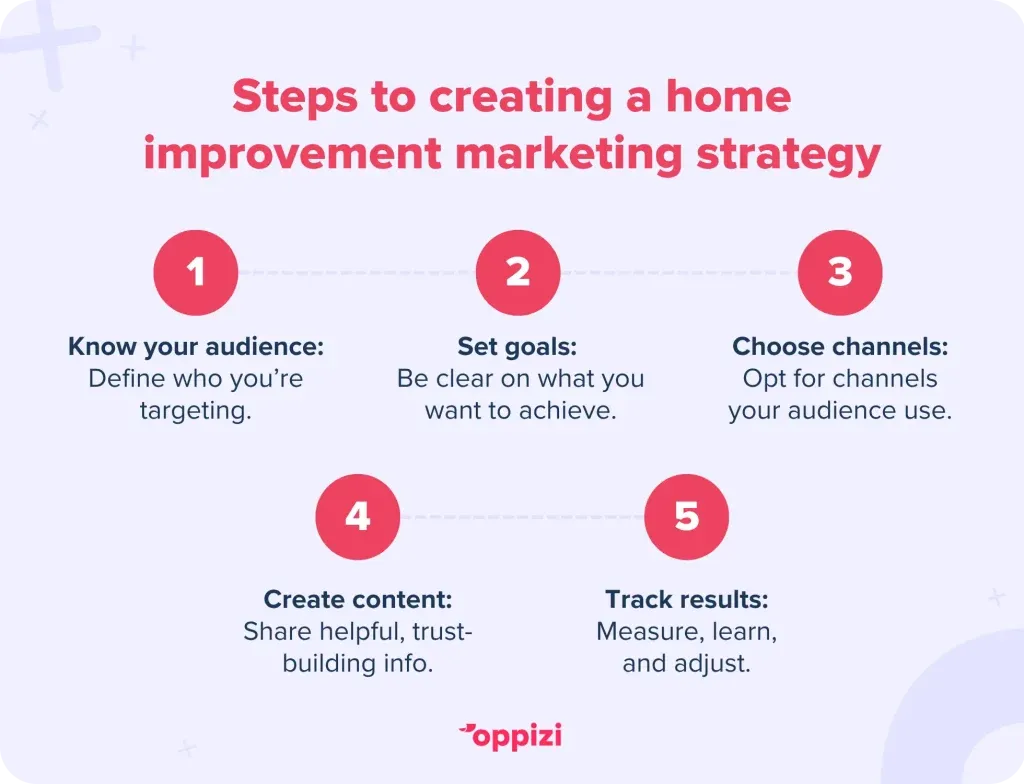
Any effective marketing campaign requires a well-thought-out strategy. Below are some of the steps you can take when implementing a marketing strategy:
1. Identify your target audience
Understanding who your ideal clients are is the foundation of any marketing strategy. Consider various factors like demographics, location, income level, and specific needs.
2. Set clear goals
Define exactly what you want to achieve by setting SMART goals. Whether it’s increasing website traffic, generating more leads, or boosting conversion rates, having clear objectives will guide your strategy and provide a benchmark to measure success.
3. Choose the right channels
Choose marketing channels that align with your target audience’s preferences - whether that’s email, direct mail, social media, or influencer advertising. Using a mix of channels helps you reach customers across multiple touchpoints, keeping your brand top of mind.
4. Create compelling content
Develop content that resonates with your audience and builds trust. Specific examples include before-and-after project photos, customer testimonials, and informative blog posts.
5. Monitor and adjust
Regularly analyze your marketing efforts to understand what’s working and where there’s room for improvement. Tools like Google Analytics can provide insights into web traffic, while platforms like Oppizi help you measure the impact of offline campaigns such as direct mail.
Home improvement marketing techniques
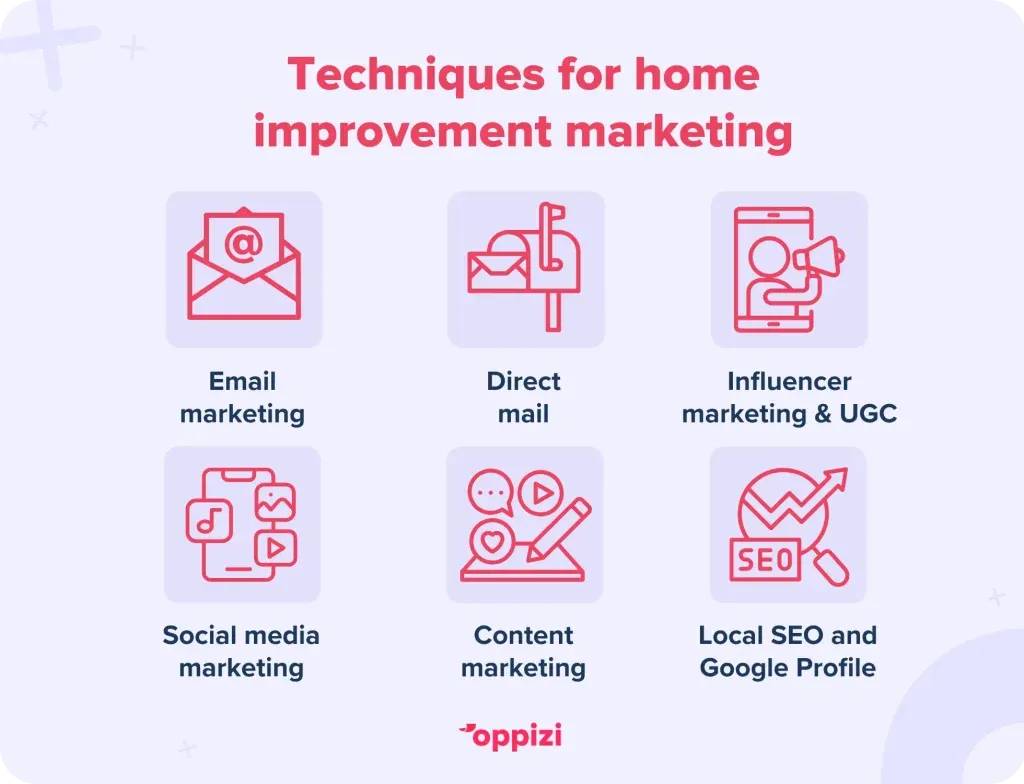
Email marketing
Email marketing allows you to reach both potential and existing clients with personalized messages. It’s also easy to automate and delivers measurable results, making it a highly efficient channel.
How to use it:
- Newsletter campaigns: Share industry updates, promotions, and tips to keep your audience engaged.
- Follow-up emails: After a service, send thank-you emails and request reviews.
- Drip campaigns: Automate a series of emails to nurture leads over time. You can include content like FAQs, client testimonials, and success stories to build trust.
Example:
A home remodeling company could send a monthly newsletter featuring a "Project of the Month," showcasing a recent renovation with before-and-after photos, client testimonials, and a breakdown of the process.
Direct mail
While it might seem that everything is moving online, offline channels like direct mail remain a powerful tool, especially for local marketing.
How to use it:
- Postcards: To communicate special offers, send eye-catching postcards to neighborhoods you serve.
- Brochures: These allow you to provide more detailed information about your services or past projects.
- Personalized letters: Addressing potential clients by name and referencing local landmarks or community events can build rapport.
Example:
A landscaping company could send a colorful, spring-themed postcard to local residents, offering a discount on seasonal services. This could be accompanied by vibrant images of their work and a QR code that leads to their website where clients can see their portfolio and book a service.
Social media marketing
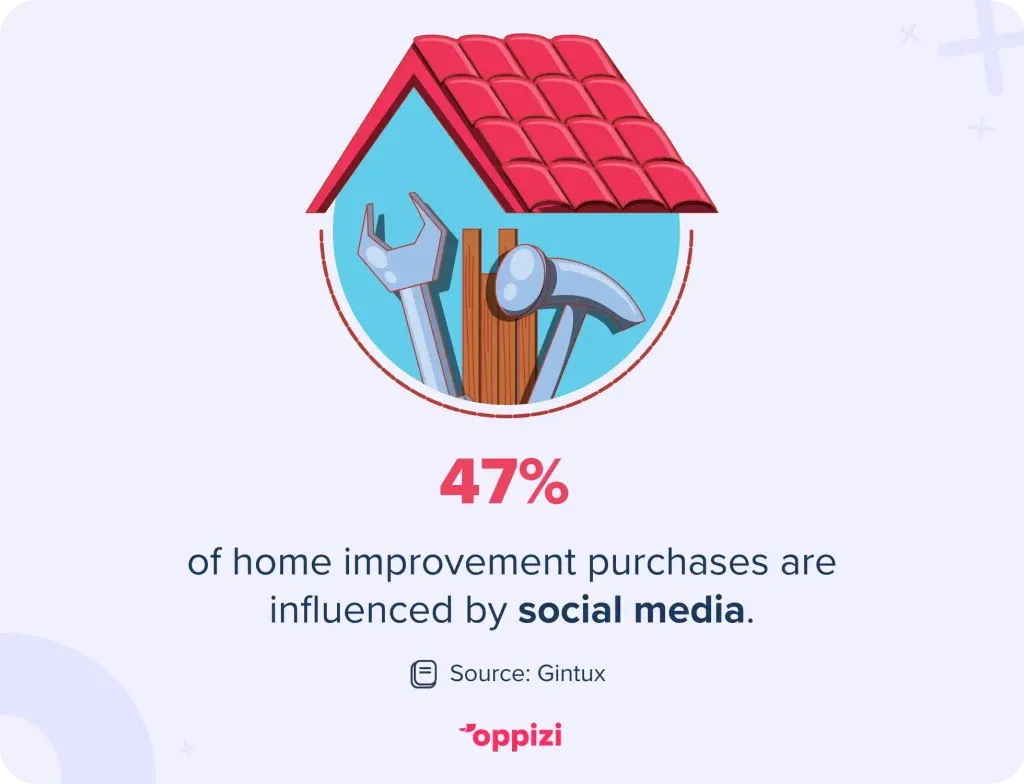
Social media platforms are essential for showcasing your work and engaging with the community, with 47% of home improvement purchases influenced by social media. They’re a means of bringing your brand’s personality to life and building a deeper connection with your audience.
How to use:
- Project showcases: People love to witness a glow-up.Post before-and-after photos and videos of completed projects, and share behind-the-scenes footage of how you got there.
- Live Q&A sessions: Host live sessions to engage with the community and to answer common home improvement questions.
- Customer testimonials: Share stories and reviews from satisfied clients to build trust.
Example:
A kitchen remodeling business could run a "Transformation Tuesday" series on Instagram and TikTok, highlighting dramatic kitchen makeovers and sharing insights into the design choices and materials used.
Content marketing
Providing valuable content positions your business as an expert and builds trust with potential clients.
How to use:
- Blog posts: Write articles on home improvement tips, trends, and maintenance advice.
- Ebooks and guides: Offer downloadable resources on topics like "Planning Your Home Renovation."
- Video tutorials: Create how-to videos for simple DIY projects.
Example:
A roofing company could publish a blog series titled "Roofing 101," educating homeowners on signs of roof damage, maintenance tips, and the uses and benefits of different roofing materials.
Influencer & user-generated content (UGC)
Influencer and user-generated content can add a layer of trust and social proof to your marketing, with 79% of consumers stating UGC highly impacts their purchasing decisions. By partnering with local influencers like home and lifestyle bloggers, you can tap into niche audiences that are already engaged. Encouraging clients to share their finished spaces online also helps build organic visibility.
How to use it:
- Partner with local influencers: Collaborate on content that showcases your work in real homes with authentic endorsements.
- Incentivize clients to share: Offer small rewards (like a discount on future work) for clients who tag your business in photos or videos.
- Create a branded hashtag: Make it easy for others to find and share user-generated content by encouraging the use of a consistent tag across platforms.
Example:
After finishing a home renovation, send the client a branded thank-you package with a handwritten note and some small home-themed gifts. This could be accompanied by a card inviting them to share a photo of their new space on Instagram using your hashtag and offering a 10% discount on their next project if they tag your account.
Local SEO & Google Business Profile
Local SEO helps ensure your business appears when people search for home services in your area. 46% of all Google searches have local intent, so by optimizing your Google Business Profile and local listings, you significantly increase your chances of being discovered by high-intent customers right when they need your services.
How to use it:
- Claim and optimize your Google Business Profile: Add photos, services, business hours, and a persuasive description.
- Encourage and respond to reviews: Reviews are important for influencing your ranking and building trust. In fact, 93% of consumers read online reviews before committing to making a purchase.
- Use local keywords: Include city- or neighborhood-specific terms in your website content and meta descriptions.
Example:
Create a simple “Leave us a review” card to leave behind after every completed project. Include a QR code that links directly to your Google Business review page, along with a message like: “Love your new space? Let your neighbors know!” This small touch makes it easier for satisfied customers to leave a review while the experience is still fresh in their minds.

Bonus tips for boosting home improvement marketing
1. Keep your website up to date
Your website is very often a customer’s first impression of your company. Make sure it reflects your brand’s message and showcases an up-to-date service list and portfolio. Outdated information can lead to lost leads.
2. Make sure your site is mobile-friendly
Most users will check you out on their phone first. With mobile devices accounting for 62% of all online home improvement searches, it’s essential to have a mobile-friendly site. A site that isn’t mobile-optimized can look unprofessional and cause people to bounce.
3. Use high-quality visuals
Invest in professional photography or learn basic mobile photography. Sharp images of your work can make or break how potential clients perceive the quality of your work.
4. Highlight testimonials & case studies
Client trust is everything. Add a testimonials section to your homepage and turn standout projects into case studies that highlight the problem, your solution, and the outcome.
5. Track your results
Use tools like Google Analytics and Oppizi’s reporting dashboard to monitor what’s working, whether it’s your blog, a mailer, or a flyer campaign, and adjust according to your results.
6. Be consistent across channels
Consistency in branding, messaging, and posting builds familiarity and trust. Make sure your visual identity and tone of voice are cohesive across all touchpoints, from your flyers to your Instagram feed.
FAQs about home improvement marketing
1. Who is the target audience for home improvement?
The target audience for home improvement services typically includes homeowners looking to renovate, repair, or enhance their living spaces. This spans a wide range of demographics, from first-time buyers to long-time homeowners investing in dream renovations.
Location and income level also play a key role in defining your audience. For instance, premium service providers might focus on high-income neighborhoods.
2. How to market a home remodeling business?
The most effective approach for marketing a home remodeling business locally is with a multichannel strategy. Combine digital tools, like a strong website, social media, email marketing, and SEO, with traditional methods like direct mail and local ads. Showcase past work, encourage reviews, and target specific neighborhoods to reach high-intent homeowners.
3. How important are online reviews for home improvement businesses?
Online reviews are extremely important. Positive reviews build trust and influence potential clients' decisions. Encouraging satisfied customers to leave reviews can significantly impact your business's reputation and growth.
Conclusion
In the ever-evolving and competitive home improvement industry, great craftsmanship alone isn’t enough. You also need a smart, strategic marketing plan to match. By understanding your audience, using a combination of online and offline channels, and consistently highlighting the value of your work, you can generate trust, grow your brand, and stay top of mind when homeowners are ready to make a change.
Whether you're a solo contractor or a growing renovation firm, marketing is what turns satisfied clients into loyal ambassadors and keeps your pipeline full year-round.
Ready to stand out in your local market? Launch a targeted offline marketing campaign with Oppizi today and get your business in front of the right homeowners, right where they live.