Last updated July 28, 2026
Digital marketing may be paperless, but it’s far from harmless. Servers run nonstop. Data centers hum day and night. Millions of devices refresh feeds and stream ads. All of this takes energy, and the carbon footprint keeps growing every year.
If digital advertising is so energy-hungry, is offline marketing the greener choice? Let’s look at the facts.
The environmental cost of digital advertising
Digital marketing is often seen as clean because it’s paperless. No printing. No deliveries. Just pixels. But behind every ad is a massive system pulling power.
- Data centers: The International Energy Agency reports that data centers use about 1–1.5% of the world’s electricity. Most of that goes into running and cooling servers that store ads, websites, and video platforms.
- Ad delivery networks: Every time an ad loads, data has to travel across networks worldwide. Multiply that by billions of ads, and the energy adds up fast.
- User devices: Phones, laptops, and TVs run ad-heavy platforms, pulling more power from batteries and grids.
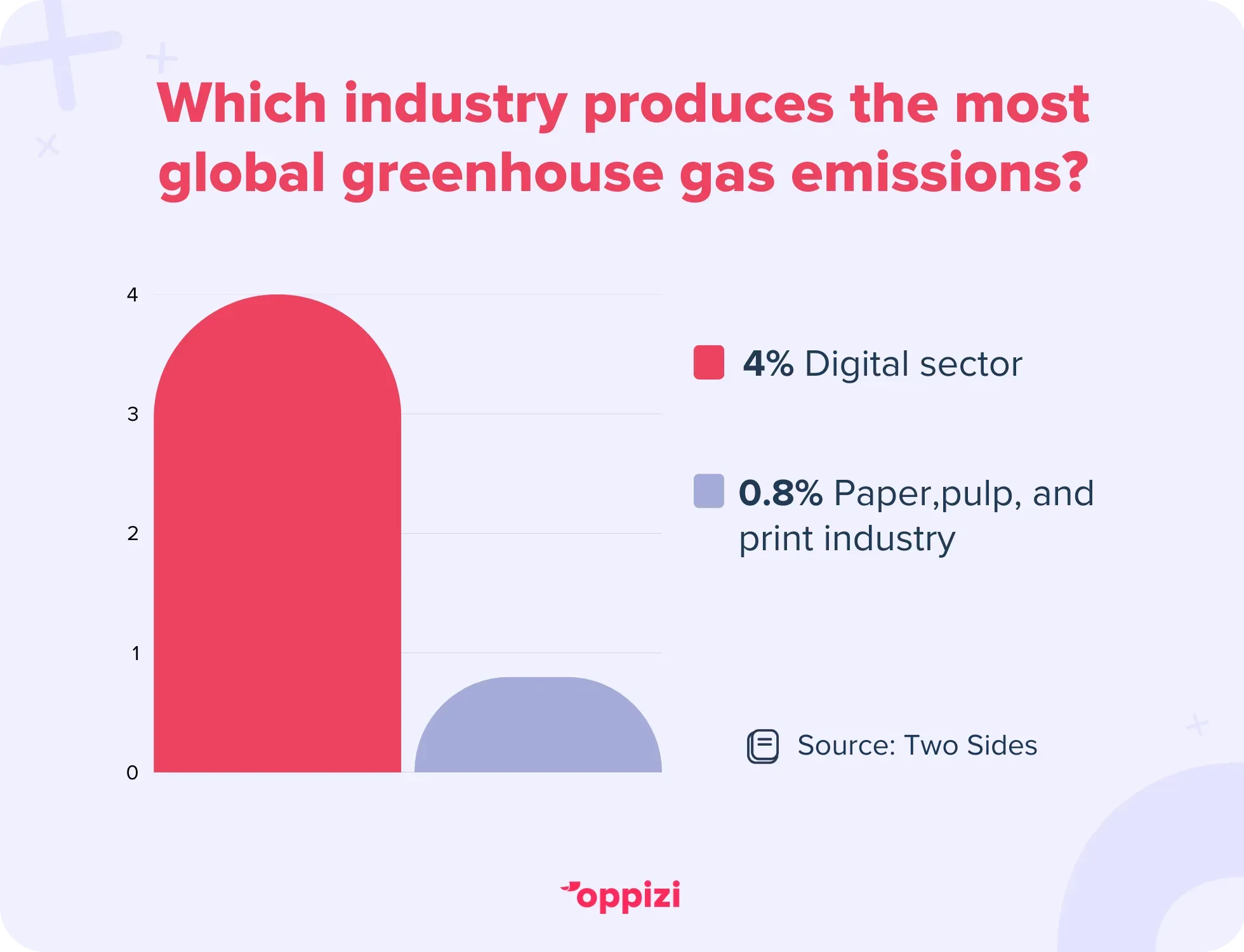
The digital sector as a whole now produces around 3.4–4% of global greenhouse gas emissions. By comparison, the entire paper, pulp, and print industry contributes only about 0.8% of emissions. That means digital infrastructure alone, from data centers to devices and networks, creates far more CO₂ than all printing combined, flyers included.
Why offline marketing is more sustainable than you think
Offline marketing has withstood the test of time, including flyers, direct mail, EDDM, billboards, and event sponsorships. Some see it as old-fashioned, but that’s not the real question. The question is whether offline strategies can be smart, measurable, and aligned with today’s sustainability goals. The answer is yes, if they’re done with care.
Offline campaigns don’t depend on constant energy use the way digital does. They also give customers something physical to connect with, which many eco-conscious people appreciate. The important part is how you do it. Some offline methods are greener than others, and execution makes all the difference.

Comparing digital vs. offline sustainability
To understand which path is greener, it helps to look at three key factors.
1. Carbon emissions
- Digital ads: Online campaigns run nonstop. They rely on servers, networks, and user devices, so the longer they run, the higher the emissions.
- Offline campaigns: Most of the footprint happens at the start with printing and distribution. Once the materials are out, there’s no constant energy drain.
2. Material use
- Digital ads: They don’t use paper or ink, but they depend on hardware like smartphones, laptops, and servers. These require rare-earth materials that are costly to extract and hard to recycle.
- Offline campaigns: They use paper, packaging, or displays. But brands can now choose recycled paper, biodegradable inks, and renewable materials to lower the impact.
3. Lifecycle impact
- Digital ads: When the budget ends, the ads disappear. The only trace is the emissions created during the campaign.
- Offline campaigns: Flyers, posters, and branded items can last longer. If designed for reuse or recyclability, they continue to deliver value without creating extra waste.
What makes offline marketing sustainable
Not every offline campaign is eco-friendly. A mass print run with plastic-coated flyers is very different from a targeted campaign on recycled paper with biodegradable ink. What makes the difference comes down to three areas.
Materials
- Use 100% recycled or FSC-certified paper.
- Pick vegetable-based or water-based inks instead of petroleum-based.
- Skip laminates, plastics, or glossy finishes that make recycling harder.
Distribution
- Use accurate data to target distribution instead of mass dropping.
- Plan delivery routes to cut fuel use.
- Print locally when possible to reduce transport emissions.
Measurement
- Track results with QR codes, promo codes, or campaign landing pages.
- Use response data to avoid reprints that don’t add value.
When these practices come together, businesses can cut waste, lower emissions, and still reach customers in a meaningful way.

Why flyers are greener than you think
Flyers are often seen as wasteful, but when done the right way, they can be more eco-friendly than digital ads. Here’s why.
Low energy after printing
Unlike digital ads, flyers don’t need a constant power supply. Once they’re printed and handed out, their footprint is set.
Biodegradable options
Flyers made with recycled paper and eco-friendly ink break down naturally. That’s not the case with server hardware or lithium batteries.
Precise targeting
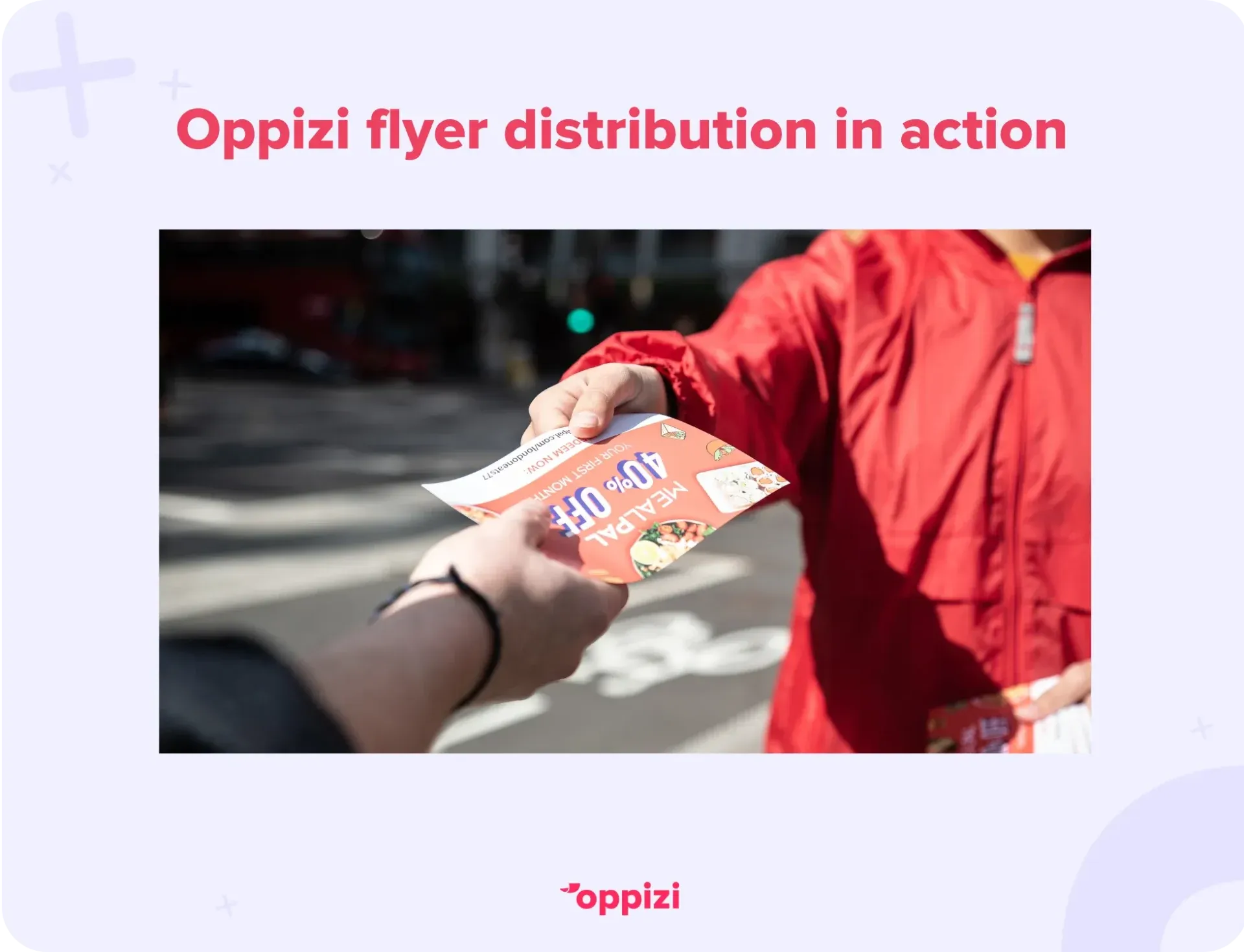
With platforms like Oppizi, flyers can be distributed by neighborhood, lifestyle, or demographic. This makes sure they reach the right people instead of being spread too widely.
End-to-end visibility
Campaigns can be tracked with modern tools, which means fewer wasted flyers and more efficient distribution.
Paper is highly recyclable
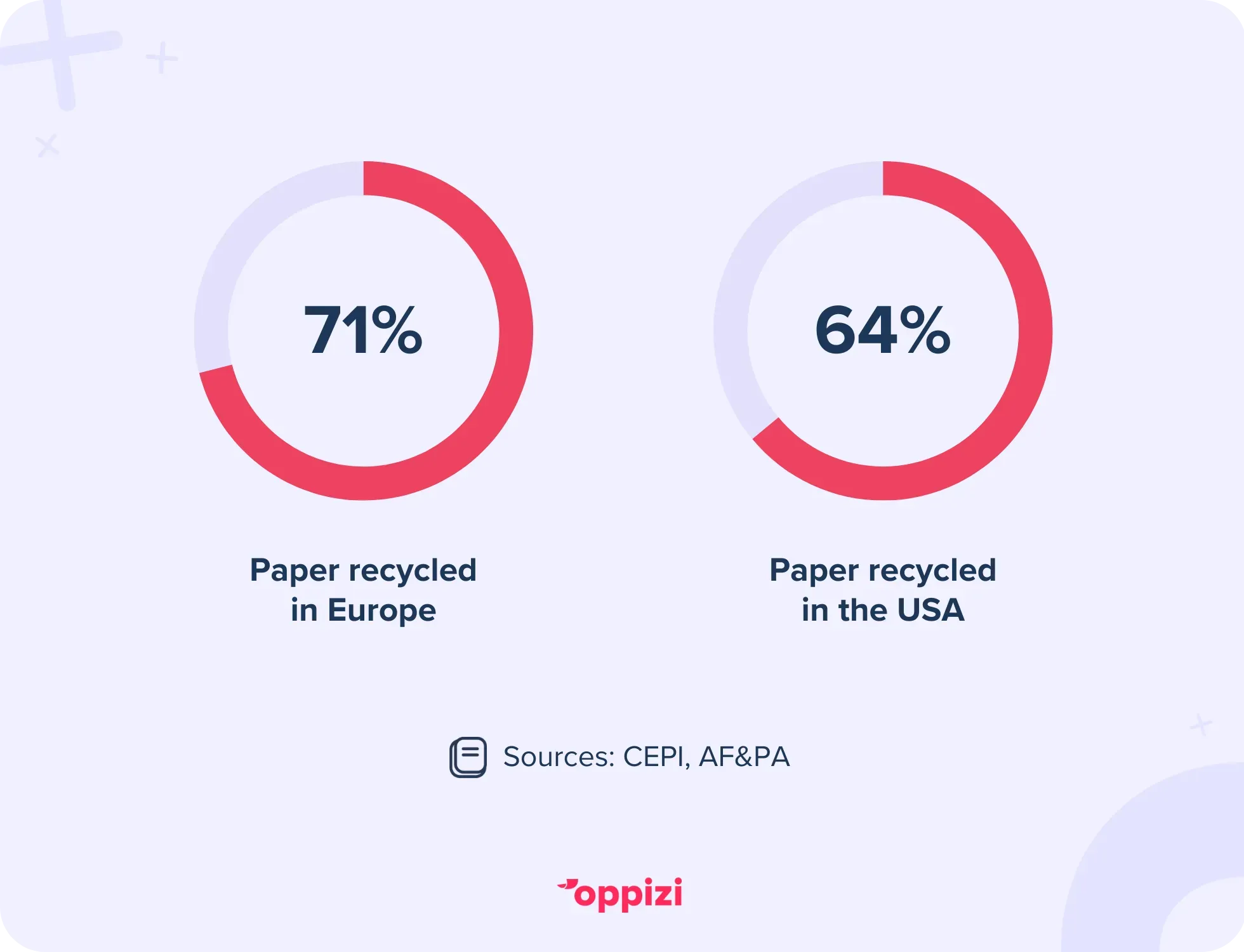
Paper is renewable and biodegradable, and most of it gets recycled. In Europe, the recycling rate for paper is over 71.4%, and cardboard and packaging reach 83%. In the U.S., about 60–64% of paper was recycled in 2024.
In Germany, 95% of waste paper is collected for recycling. Compare that to plastics, which recycle at less than 40%, or electronics in the EU, which also sit at about 40%. Flyers, made from natural and sustainable materials, are far more likely to be reused.
Offline strategies that align with sustainability values
Brands that care about the planet often ask which offline methods are truly sustainable. Here are a few that work.
1. Direct-to-door distribution with recycled materials
Reach local households with recycled-paper flyers. Add QR codes to connect readers to digital content, which reduces print needs.
2. Sustainable event marketing
Support farmers’ markets or eco-fairs. Instead of handing out disposable items, give away useful branded products like canvas bags or bamboo utensils that people will keep.
3. Out-of-home with renewable energy
Use billboards powered by solar energy or made from recycled materials. Static billboards on eco-friendly surfaces often have a lower impact than digital ones.
4. Hand-to-hand campaigns with precision
Street teams can focus on high-traffic spots like college campuses or wellness events. With this approach, fewer flyers are wasted, and connections are stronger.
5. Hybrid offline-digital strategies
Mix print with digital tracking. A flyer can lead to a digital coupon or landing page, giving you clear results without the ongoing energy use of digital ads.
Why customers care about sustainable offline marketing
People are paying attention. A Nielsen report found that 73% of global consumers are willing to change their habits to reduce environmental impact. Marketing is not just about reach. It’s also about trust.
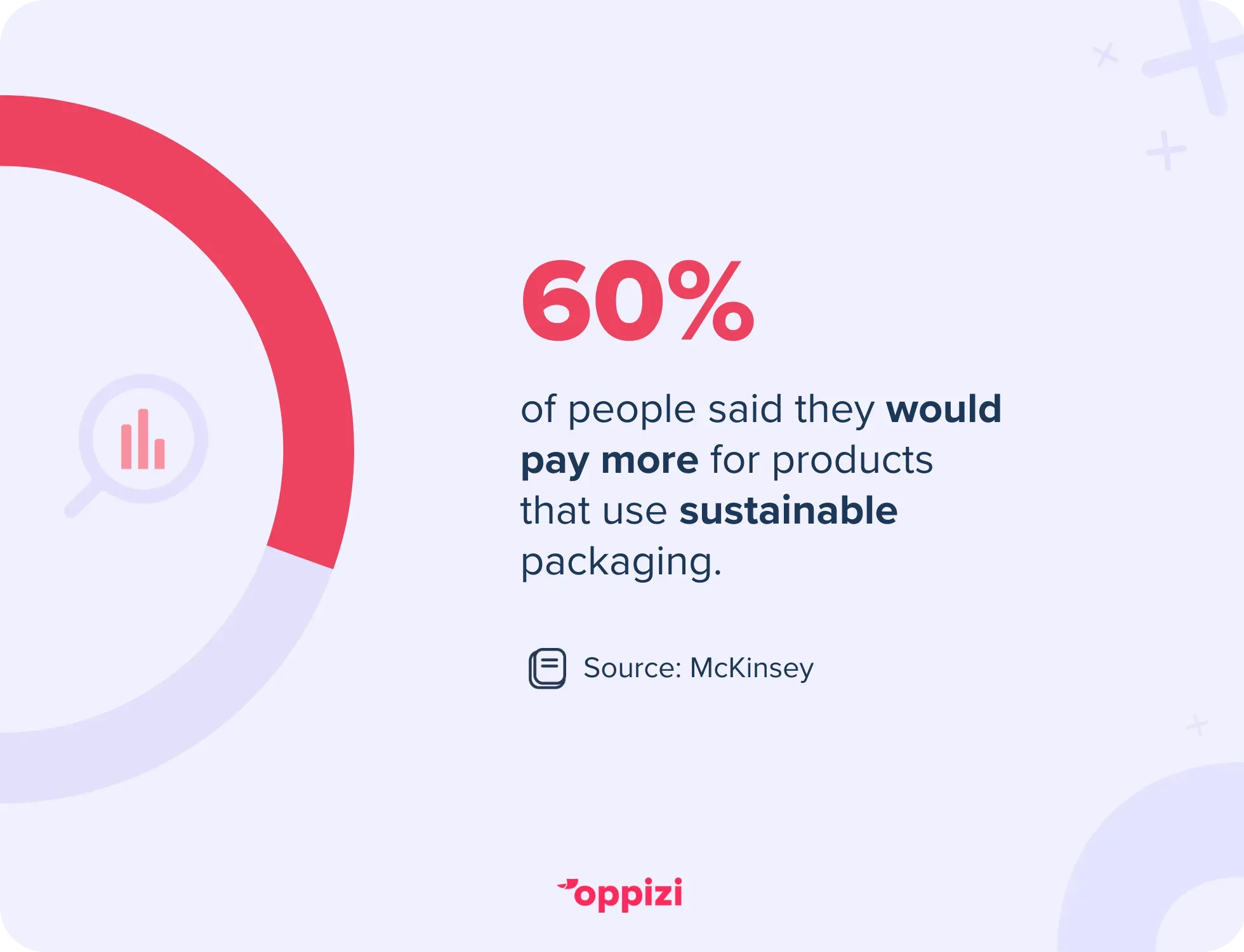
In the U.S., more than 60% of shoppers said they would pay extra for products with sustainable packaging. This willingness is strong across generations, especially among Gen Z, and across different product categories.
When brands show they care about sustainability in how they market, they prove their values go beyond words. This, in terms, wins customers who prioritize sustainable choices..
Measuring the footprint of offline campaigns
Accountability matters in sustainability. Here are steps businesses can take to measure and offset the impact of their offline campaigns:
- Calculate materials: Track the amount of paper, ink, and packaging used.
- Estimate carbon emissions: Use calculators that factor in print volume and transport distances.
- Offset where possible: Support reforestation or renewable energy projects to balance remaining emissions.
- Optimize future runs: Use campaign response data to refine targeting, reduce print volumes, and cut waste.
Oppizi’s platform makes this easier by tracking data at every step. This gives brands the ability to run campaigns with both precision and sustainability in mind.
How Oppizi promotes sustainable offline marketing
At Oppizi, sustainability is part of how we operate, not just an added promise. Here is how we help brands run greener campaigns:
- Eco-friendly materials: We use carbon-neutral printing, FSC-certified products, and recycled materials whenever possible.
- Optimized distribution: Data-driven targeting ensures flyers and other materials reach the right audience, cutting down waste and unnecessary production.
- Carbon offset initiatives: Through Ecologi, we invest in programs that neutralize the remaining impact of campaigns.
These steps allow businesses to reach their customers effectively while setting new standards for sustainable marketing.
FAQ: offline marketing sustainability
1. How do I know if my offline campaign is truly sustainable?
It comes down to materials, distribution, and tracking. Choose FSC-certified or recycled paper, and go with vegetable-based inks instead of petroleum-based ones. Avoid plastic finishes that make recycling harder. Work with partners that offset emissions and provide clear reporting. And track results so you only print what you need.
2. What happens to flyers after they’re distributed? Do they actually get recycled?
Most do. In Europe, more than 70% of paper is recycled, and in Germany the rate is about 95%. In the U.S., paper recycling rates are consistently above 60%. By comparison, plastics and e-waste are recycled at much lower rates. Flyers made with recycled paper and eco-friendly inks are easy to reclaim and reuse.
3. Isn’t digital still better for the planet since it doesn’t use paper?
Not always. Digital campaigns depend on servers, data centers, and user devices that consume large amounts of energy. The ICT sector is responsible for around 3–4% of global emissions, which is higher than aviation. Offline campaigns have a one-time production footprint and don’t need constant power to run. When done with recycled materials and careful targeting, offline often leaves a smaller carbon footprint per campaign.

The future of sustainable marketing is hybrid
The real question is not whether offline or digital is better. The question is how to use both in a way that balances impact and responsibility. Digital can be improved with greener hosting and by reducing ad frequency. Offline can be improved with recycled materials, smart targeting, and data-driven tracking.
When these approaches work together, brands can run campaigns that reach people while lowering their environmental footprint. Brands that take this hybrid approach cut emissions and also build stronger reputations with customers who want consistency between values and marketing.
At Oppizi, we make it easy. Our platform helps you plan, track, and run offline campaigns that are measurable, cost-effective, and sustainable. Ready to market smarter? Start your campaign today with Oppizi’s user-friendly platform.