Last updated August 28, 2026
Street-level marketing isn’t just about passing out flyers. It’s about showing up where your customers are. When done right, it helps people notice your brand in a way that feels real. Sometimes, it works better than digital ads because it happens face-to-face.
A recent study found that outdoor forms of advertising are nearly six times more likely than digital channels to grab and hold people’s attention. But here’s something important: location matters.
Some cities are just better for this kind of marketing. They have more foot traffic, more energy, and a mix of people who are open to new ideas. Whether you’re a new business or an established one trying something different, picking the right city can make a big difference.
In this guide, we’ll walk you through ten great cities for street-level marketing in the U.S. You’ll see why each one works, where you should go in those cities, and how to get started, even if you’ve never tried this before. Let’s get into it.
What is street-level marketing?
Street-level marketing is a form of offline marketing where brands connect with people in public spaces such as streets, events, parks, or outside transit stations. Common tactics include handing out flyers, giving free samples, or using brand ambassadors to start conversations.
It’s simple, direct, and personal. Instead of clicking a link, someone talks to a real person or sees your brand in real life.
It helps people remember you. It’s usually cheaper than online ads. And it works especially well when you know your audience and choose the right spot. Street marketing can help you find new customers and build a local presence, all without needing a huge budget.
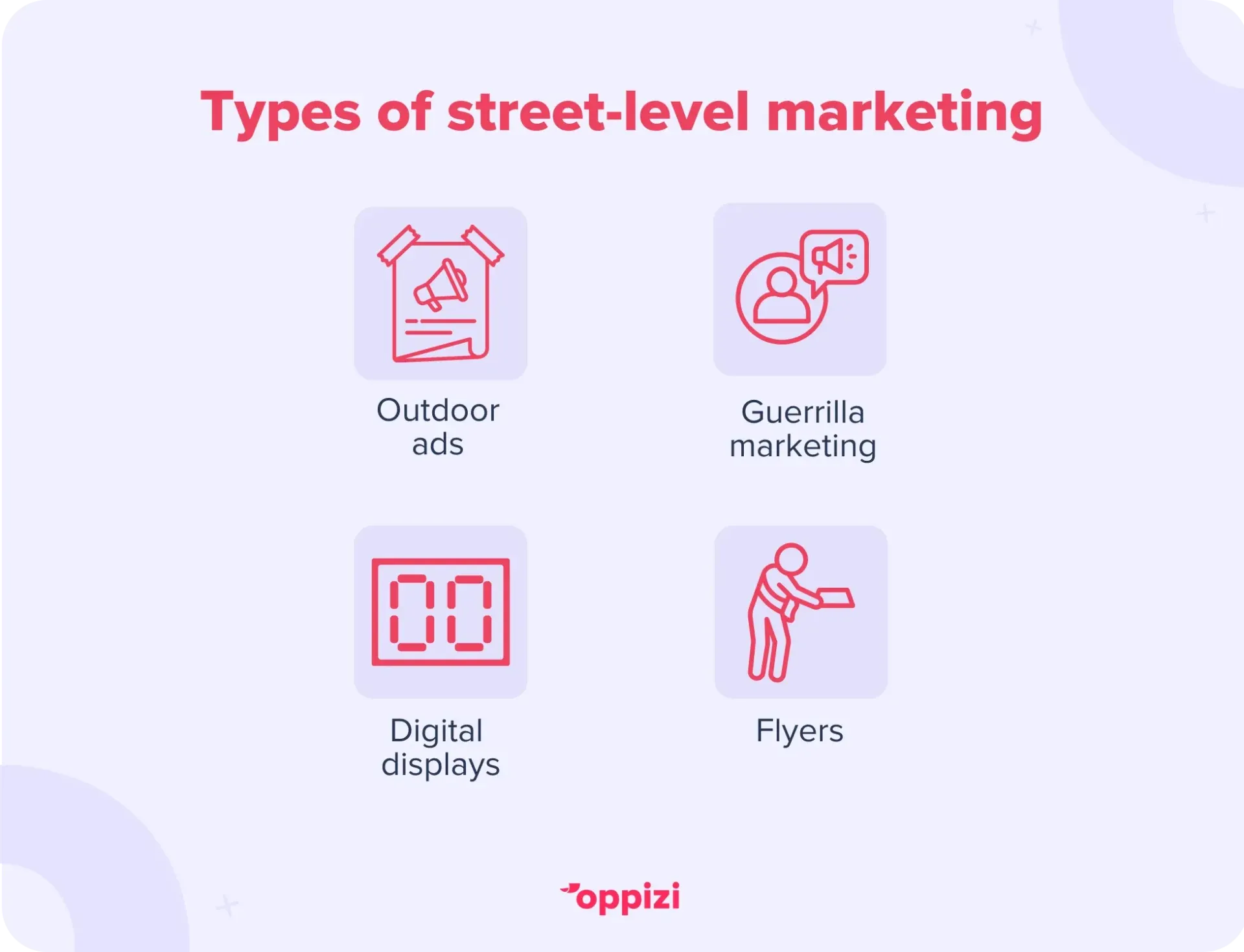
Types of street-level marketing
- Outdoor Advertising:Billboards, bus shelter ads, posters, and other visible displays for pedestrians and drivers.
- Guerrilla Marketing: Creative, unconventional tactics like street art, pop-up events, and interactive displays.
- Digital Displays: Screens in retail spaces, transit hubs, and other busy locations.
- Flyers:Printed leaflets handed out or left in high-traffic areas to share offers and information directly.
1. New York City, NY
The ultimate stress test for your campaign
With over 8.5 million residents and 60 million+ tourists annually, New York City isn’t just crowded, it’s fast, hyper-stimulated, and relentless. People don’t linger here; they move. That makes NYC the ideal place to pressure-test your creativity.
If it turns heads here, it can work anywhere. But success depends on more than just volume. You’ll need to match your message to the micro-market, understand foot traffic flows, and stay sharp on regulations.
Why NYC works for street marketing
- High-density foot traffic zones: Union Square alone sees 350,000+ pedestrians per day, perfect for high-frequency impressions.
- Transit-driven exposure: Over 50% of households don’t own a car; sidewalks and subways are your billboard.
- Micro-markets with personality: From Wall Street’s suit-and-tie polish to Bushwick’s zine-style cool, NYC neighborhoods act like different cities.
- Tough crowd, validated results: New Yorkers are ad-savvy. If your campaign lands here, it’s been through the fire.
Tips for flyering in NYC
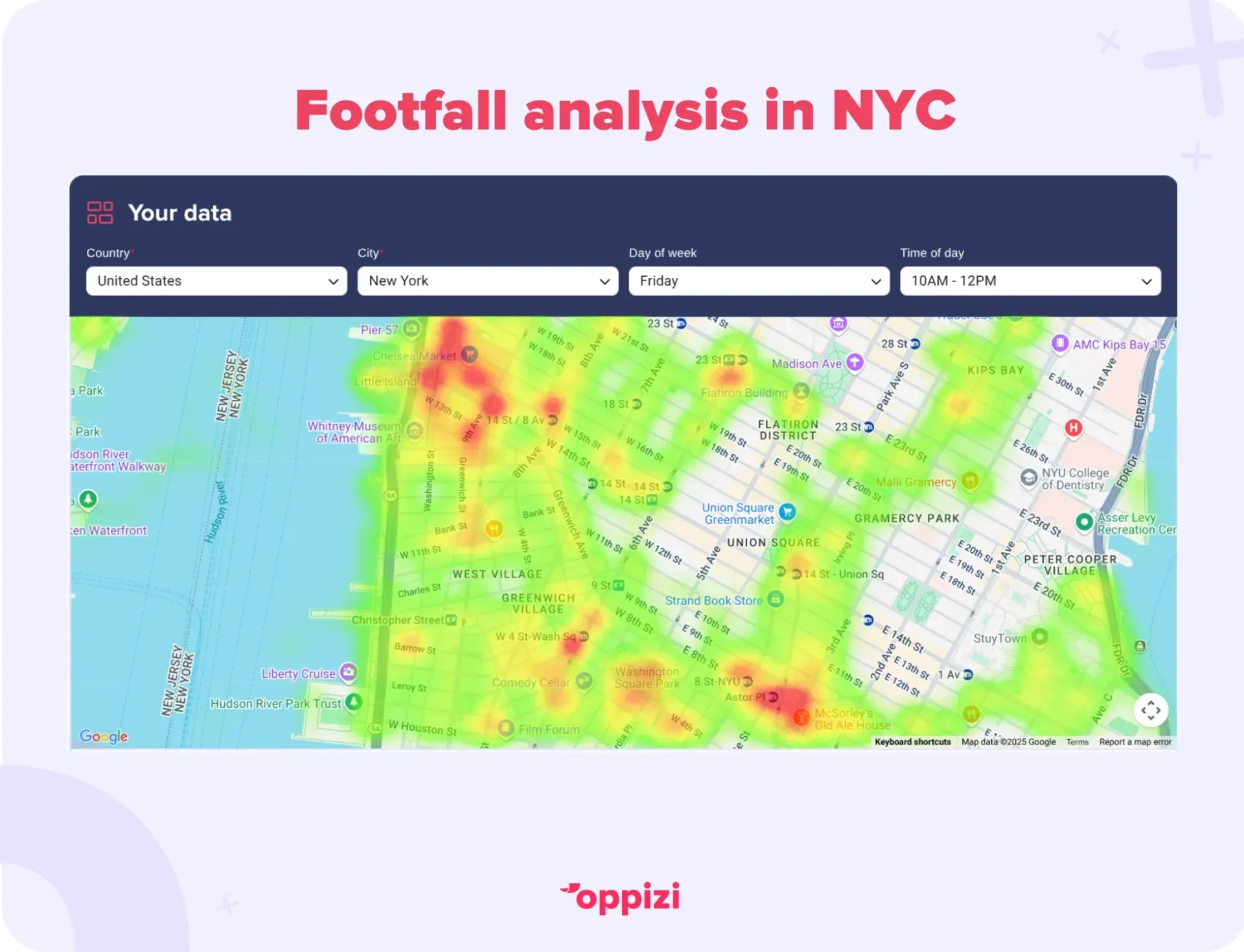
- Hit Union Square exits during rush hour. Think 8–10am and lunch 11:30am–1pm. With 14 subway lines and NYU nearby, this is a flyer goldmine, especially near Whole Foods and the south plaza steps.
- Adapt your message by zone. In Williamsburg, artful or ironic designs resonate. In Midtown, clean, benefit-led visuals work best. In SoHo, make it stylish enough to photograph.
- Go vertical. Don’t just stay on the street. Tap residential buildings, cafés, and co-working spaces for flyer placement. Many allow branded drops with permission.
- Avoid Times Square unless it’s a stunt. Tourists flood it, but so do costs and ad fatigue. Only worth it if you’re running a performance or spectacle with photo appeal.
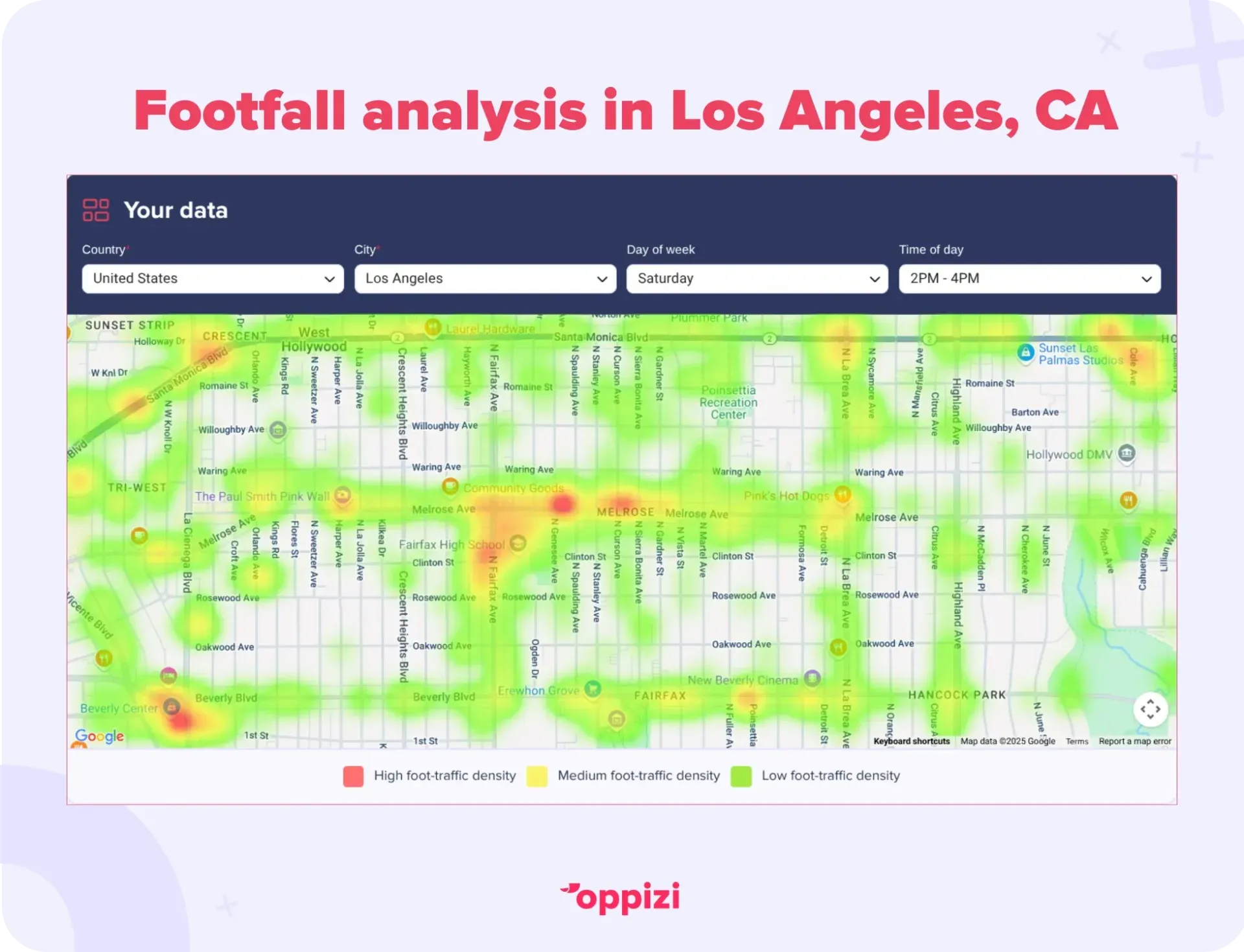
Our data-powered footfall analysis tool shows you exactly where people are, down to the street, and when foot traffic is highest.
2. Los Angeles, CA
Where aesthetics meet influence
Los Angeles isn’t built for walkers, but its destination neighborhoods flip that script. While most of the city moves by car, areas like Venice, Melrose, and Santa Monica attract heavy weekend foot traffic.
LA also leads in cultural visibility. What happens offline here often ends up online. From micro-influencer sightings to branded photo ops, LA is a flyering market where style often beats substance.
Why LA works for street marketing
- High-impact visual culture: In LA, people don’t just see flyers, they post them. Especially in areas like Melrose, visuals that feel “on-brand” can travel far online.
- Tourist magnets with dwell time: Venice Boardwalk and Hollywood Boulevard can pull 50,000+ visitors on weekends, many walking slowly or stopping.
- Outdoor lifestyle: Mild weather means campaigns can run nearly year-round, with minimal seasonal disruption.
- Diverse psychographics, dense microzones: Each neighborhood acts like a mini-market: Westwood, Silver Lake, DTLA.
Tips for flyering in LA
- Time your drop for peak footfall: Venice Beach, Melrose Ave, and The Grove see strongest activity on weekends from 11am to 3pm. Hit parking-adjacent streets like Melrose between Fairfax & La Brea for best reach.
- Design like it’s fashion: In LA, visuals matter more than the offer. Flyers should be sleek, stylized, and photo-worthy, especially in areas like Fairfax or Abbot Kinney.
- Don’t flyer. Activate: Passivity gets ignored. Use charismatic street teams who can pitch, pose, or even hand out samples to start real engagement.
- Cluster by community: Plan multi-drop campaigns across Westside (UCLA, Santa Monica), Eastside (Echo Park, Silver Lake), and Downtown. Each hits a different audience, but they rarely overlap.
3. Chicago, IL
Efficient reach, authentic results
Chicago blends big-city scale with Midwestern accessibility. It’s dense, walkable, and known for high public transit use, making it a fertile ground for street marketing. Compared to LA or NYC, it’s easier to manage permits and logistics here; less red tape, lower costs.
Seasonal weather shapes your campaign window, but spring through fall is packed with foot traffic and city-wide events.
Why Chicago works for street marketing
- High foot traffic in the Loop: Around 40,000 people board trains at central Loop stations every weekday. Flyering near station exits and bus stops here gives you strong visibility and steady reach.
- Event-rich calendar: Summer fests like Lollapalooza and Taste of Chicago bring hundreds of thousands into flyering zones.
- Cultural contrast by neighborhood: Wicker Park’s alt crowd, Gold Coast’s affluence. Tailor your tone accordingly.
- Lower friction, better ROI: Permits are more accessible, and prime areas cost less to activate than coastal cities.
Tips for flyering in Chicago
- Target The Loop during commuter surges: Weekday mornings (7:30–9:30am) and lunch hours (12–2pm) see thousands pass through State & Lake, Jackson, and Adams/Wabash L stops.
- Lean into creative neighborhoods: Wicker Park and Logan Square respond well to design-forward, offbeat campaigns. Music, art, and food tie-ins win here.
- Use indoor flyering in winter: From November to March, shift to train stations (like Union or Ogilvie), malls (Water Tower Place), or office lobbies with permission.
- Time with festival calendars: Chicago has over 400 neighborhood events each year. Plan your drop around them for guaranteed foot traffic.

4. Miami, FL
Bold, bilingual, and built for visual impact
Miami isn’t just lively, it’s layered. With around 470,000 residents in the city proper and 24M+ annual visitors, it's a multicultural magnet where Latin American influence meets luxury tourism.
Street campaigns here thrive when they mirror the city’s pace: fast, vibrant, and unapologetically bold. But success in Miami also hinges on timing and tone. Lean into aesthetics, bilingual messaging, and climate-smart tactics.
Why Miami works for street marketing
- Visual-first culture: Bright, eye-catching design wins here. If your flyer doesn’t pop, it’s invisible.
- Bilingual expectations: Spanish and English messaging isn’t optional. It’s expected.
- Event-driven footfall: From Calle Ocho to Art Basel, Miami events draw huge, walkable crowds.
- Tourism density: South Beach alone sees 10M+ visitors per year, making it one of the most brand-exposed spots in the U.S.
Tips for flyering in Miami
- Go all in during Art Basel or Calle Ocho: Foot traffic skyrockets, and locals are primed for art-forward messaging.
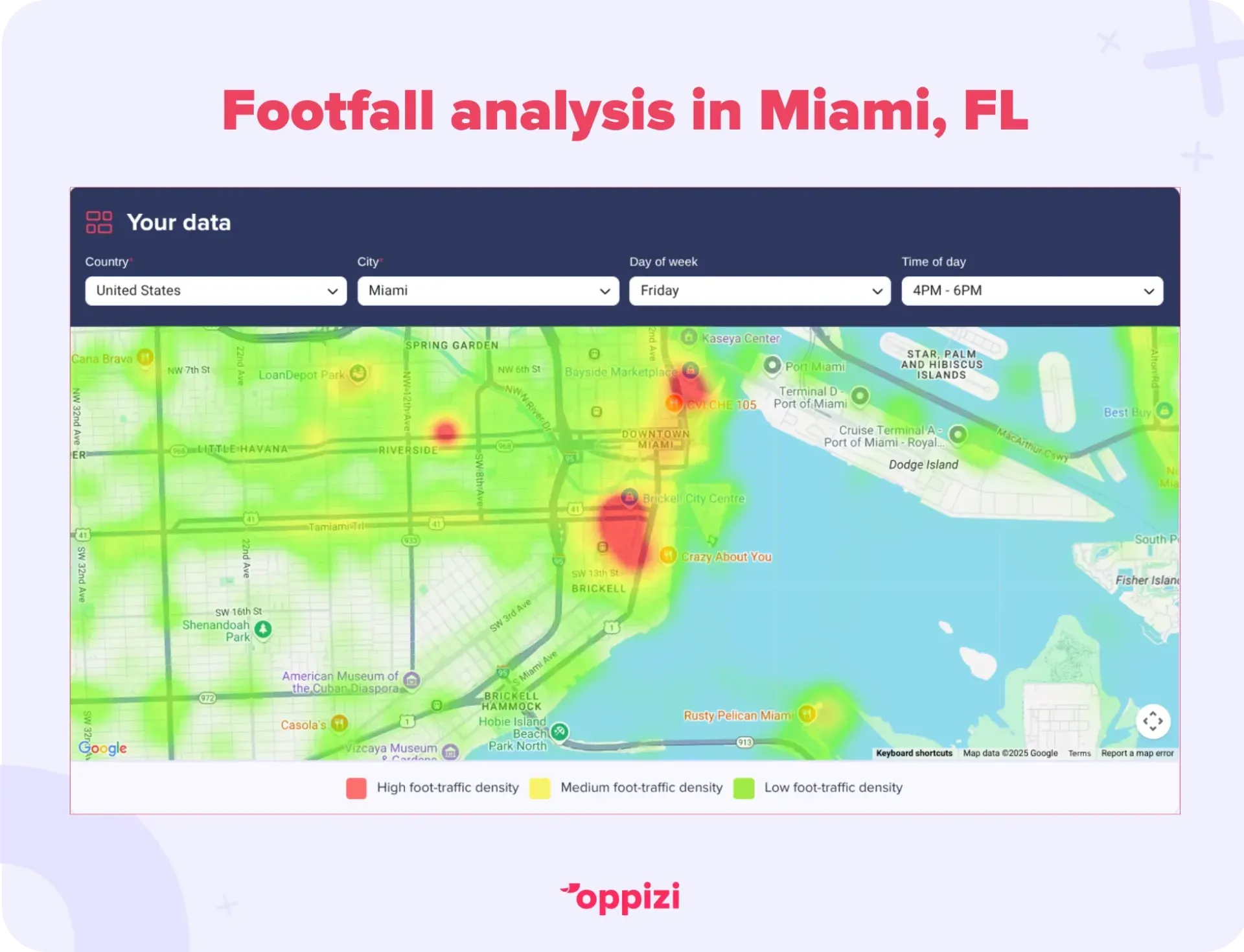
- Target Brickell Friday afternoons (4–6pm): Office workers spill out to bars and restaurants; high dwell time.
- Hydration stations = extra dwell: Set up near shaded rest spots and hand out branded water with your flyers.
- Design = trust: In Design District or Wynwood, style trumps offer strength. Use premium materials and minimal, gallery-style layouts.
5. San Francisco, CA
Small footprint, big impact
San Francisco’s 7x7-mile frame packs in nearly 900,000 residents, plus thousands of daily tech commuters and tourists. It's one of the most walkable and digitally connected cities in the U.S., making it ideal for A/B testing and data-driven activations.
Tech-first audiences here expect sophistication: QR codes, sustainable materials, and smart design aren’t optional; they’re table stakes.
Why SF works for street marketing
- Compact and walkable: Dense corridors like Market Street concentrate impressions.
- Tech-native population: QR codes, app downloads, and digital-first calls to action see high conversion.
- Sustainability matters: Messaging that reflects environmental values builds trust fast.
- October = Indian Summer: Surprisingly, fall has the city's best foot traffic weather.
Tips for flyering in SF
- Hit the Financial District Tues–Thurs mornings (7:30–9:30am): Office crowds move in predictable patterns.
- Use recycled or seeded paper: Locals notice and appreciate eco-conscious efforts.
- Target Valencia Street in the Mission on weekends: High footfall, low saturation, and an arts-forward audience.
- Pair flyering with QR experiments: Compare scan rates in Union Square vs. Market Street to optimize placement.

6. Washington, DC
High-footfall, high-stakes messaging
DC is where visibility meets influence. With 700,000+ residents, a massive commuter base, and 20M+ annual visitors, the city blends tourists, students, professionals, and policy insiders.
It’s ideal for purpose-driven, advocacy-based campaigns, but success hinges on sharp messaging, strategic placement, and permit know-how.
Why DC works for street marketing
- Cause-friendly audience: DC residents are socially engaged. Campaigns with a mission tend to land better.
- Foot-traffic hotspots: Areas like Dupont Circle and Georgetown see consistent daily flow.
- Permits matter: Enforcement is strict near federal zones, so plan accordingly.
- Student reach: George Washington, Georgetown, and American University campuses are all walkable and dense.
Tips for flyering in DC
- Avoid federal areas unless fully permitted: Stick to commercial corridors unless you’ve cleared red tape.
- Flyer Dupont Circle during lunch hours (12–2pm): Office workers, students, and tourists converge here.
- Be polished and professional: Flyers should read more like think tank briefs than flashy ads.
- For advocacy, use QR codes to petition or donate: Locals are receptive to interactive political engagement.
7. Dallas, TX
Big, growing, and ready to engage
Dallas may be known for its sprawl, but key pockets are goldmines for flyering. With a metro population of 8M+ and a booming job market, it’s full of young professionals, college students, and weekend crowds.
The trick? Stay geo-focused. Choose the right district and time, and campaigns here can move fast and scale affordably.
Why Dallas works for street marketing
- Emerging creative zones: Deep Ellum and Bishop Arts are hubs for music, art, and events.
- Young, diverse audience: 47.7% of the city is under 35. Flyers with energy and simplicity perform well.
- Affordable permits and friendly weather: Compared to LA or NYC, street campaigns are easier to execute.
- Weekend-centric city: Nightlife and festivals drive most of the organic footfall.
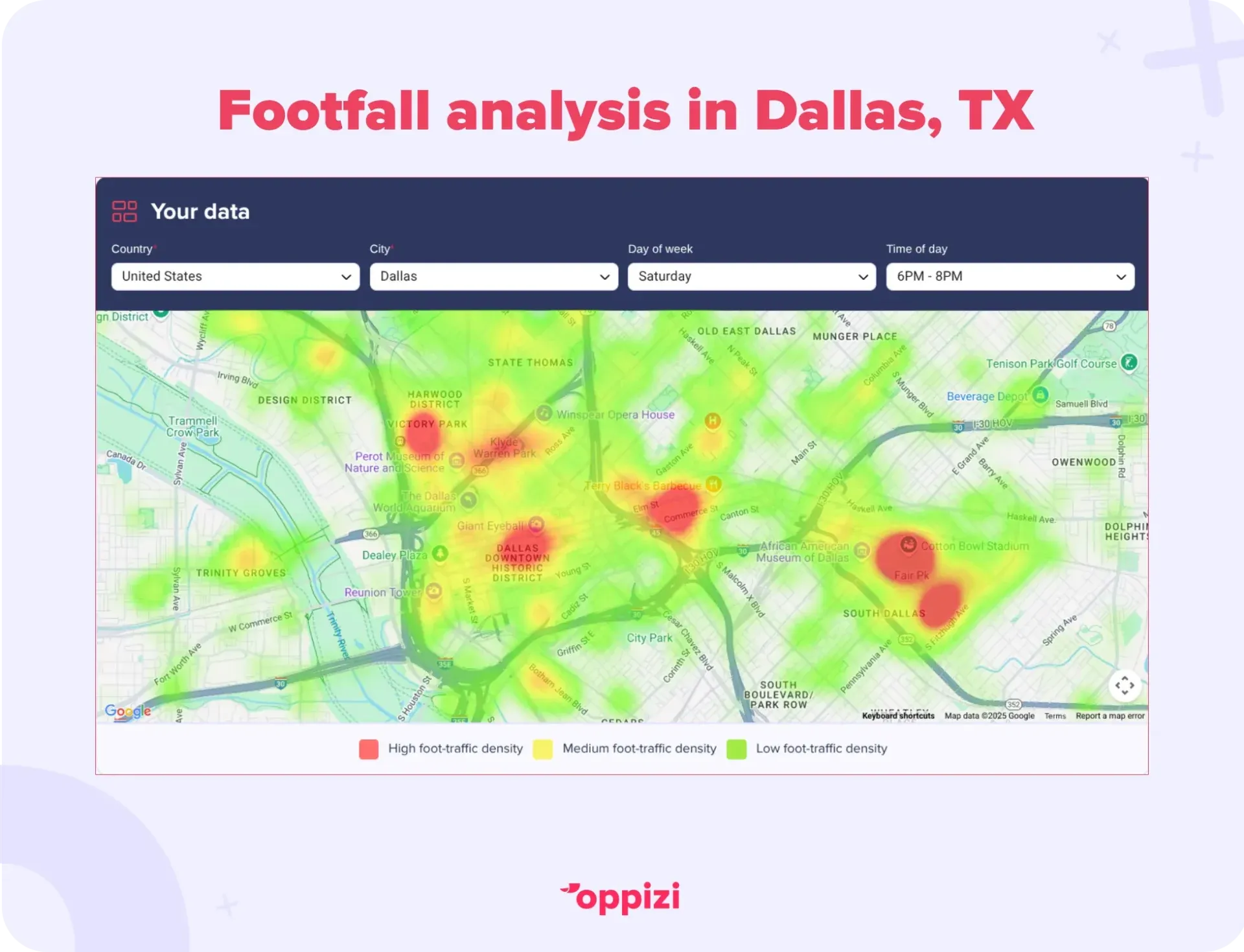
Tips for flyering in Dallas
- Focus on Deep Ellum Thurs–Sat, 7–10pm: Nightlife peaks and people are in discovery mode.
- Keep your flyer simple and bold: Fast reads win. QR codes should lead to mobile-first landing pages.
- Try Klyde Warren Park Saturdays (11am–2pm): It’s where fitness meetups, food trucks, and families all mix.
- Hand out product samples, not just paper: Locals respond well to tactile brand experiences.
8. Houston, TX
Diverse, sprawling, and full of hyperlocal potential.
Houston’s reputation as a car-first city hides the fact that it has pockets of high-density foot traffic, especially near universities, parks, and retail hubs. As the most diverse metro in the U.S., campaigns here work best when they're tailored to multilingual, multicultural audiences.
From daytime footfall near hospitals and campuses to weekend crowds at Discovery Green, Houston rewards brands that are precise in timing and culturally fluent in delivery.
Why Houston works for street marketing
- Cultural reach: 145+ languages spoken across the city, bilingual and bicultural campaigns land better here than almost anywhere else.
- Event-driven crowds: Festivals at Discovery Green and Eleanor Tinsley Park draw thousands on weekends.
- University corridors: Rice and UH campuses mean steady weekday foot traffic and access to 54,000+ students.
- Retail magnets: The Galleria hosts over 30 million visitors annually, especially strong for lifestyle and fashion brands.
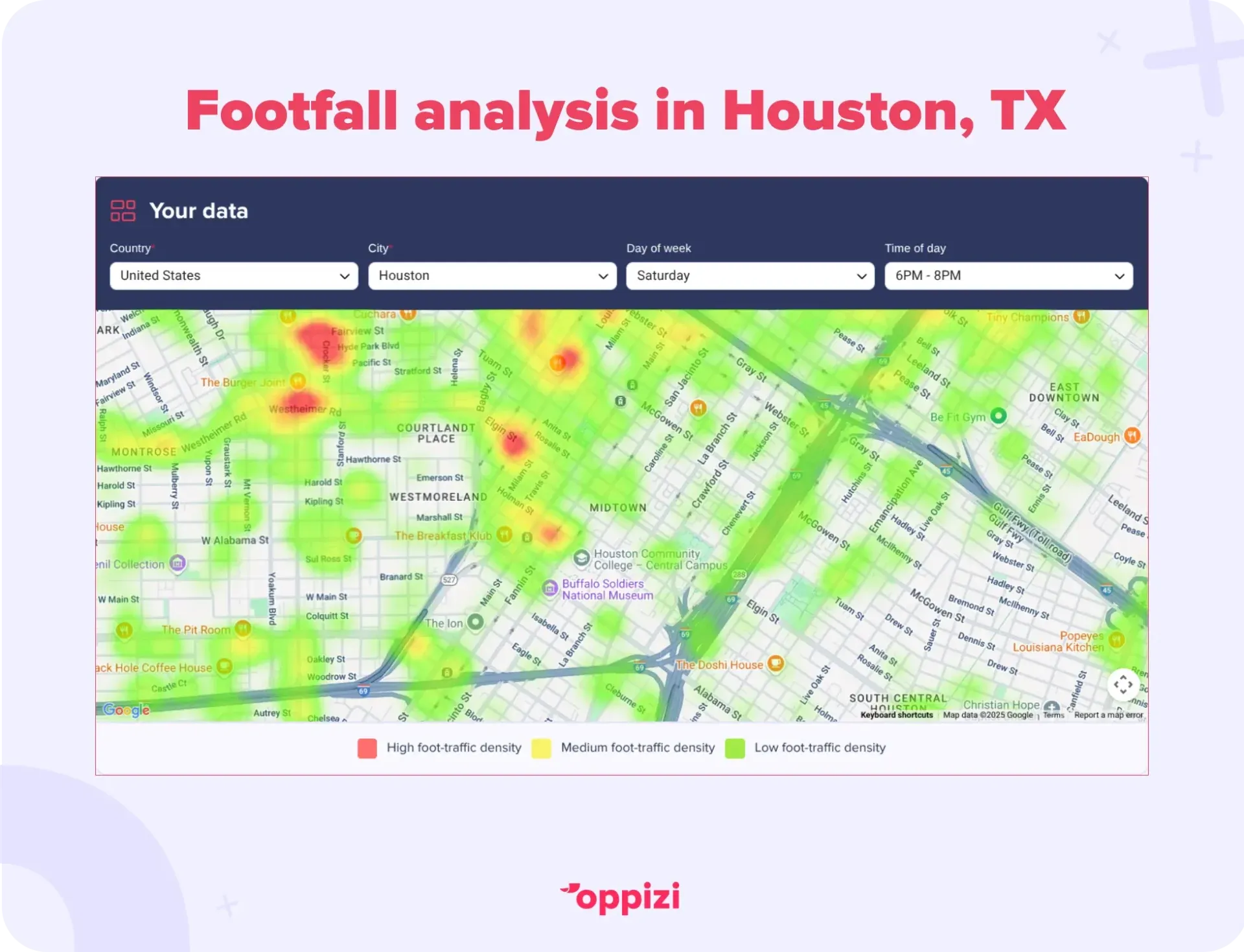
Tips for flyering in Houston
- Time around the weather: Target shaded areas like Montrose or Discovery Green after 5 p.m. to beat the heat.
- Layer in language: Spanish-language flyers perform well in Midtown and East End; Vietnamese works near Bellaire.
- Use bar zones for nighttime reach: Thursday–Saturday evenings near Midtown bars are prime for product samples or event promos.
- Pair with nearby events: Tap into foot traffic from nearby events like Comicpalooza or Bayou City Art Festival for fast exposure.
9. Denver, CO
Compact, creative, and powered by local values.
Denver’s walkability and outdoorsy ethos make it ideal for lifestyle, eco, or tech campaigns. With roughly 252 days of sunshine and a thriving local-first culture, Denverites respond best to messaging that feels community-driven.
Foot traffic peaks near art districts and transit hubs, especially on weekends and early evenings.
Why Denver works for street marketing
- Hyperlocal loyalty: Products with Colorado ties (think local craft, outdoor, or eco-angle) see stronger engagement.
- Tech-forward demos: QR codes and digital CTAs perform well here, especially near coworking hubs and startup offices.
- Young, educated audience: Over 40% of adults hold a bachelor’s degree or higher. This shows in how they engage with detailed or data-backed messaging.
- Weekend event rhythm: From farmer’s markets in Union Station to street festivals in RiNo, weekend turnout is strong.
Tips for flyering in Denver
- Hit LoDo and RiNo on Saturday afternoons: Dwell time is high from 2–5 p.m., especially around breweries and food halls.
- Use sustainability as a hook: Recycled materials, minimal waste packaging, or climate-aligned messaging gets noticed.
- Know your campus timing: University of Denver students cluster around Evans Avenue between 11 a.m.–1 p.m.
- Mix print with action: Live demos, QR giveaways, or petitions see better response than passive handouts.
10. Tampa, FL
Growing fast and increasingly foot-traffic friendly.
Tampa’s downtown revitalization, influx of young professionals, and event-packed calendar make it one of Florida’s most street-marketing-ready cities.
While still car-centric in parts, the Riverwalk, Hyde Park, and university areas create strong pockets of pedestrian engagement, especially during weekends and after work hours.
Why Tampa works for street marketing
- Population surge: One of the fastest-growing metro areas in the U.S., with young residents flocking to urban neighborhoods.
- Student access: University of Tampa sits directly downtown, with events and clubs keeping foot traffic high.
- Tourist overlap: Visitors flow through Ybor City and the Riverwalk almost daily, offering both local and national reach.
- Community-first vibe: Tampa residents respond well to friendly, face-to-face activations over hard sales.
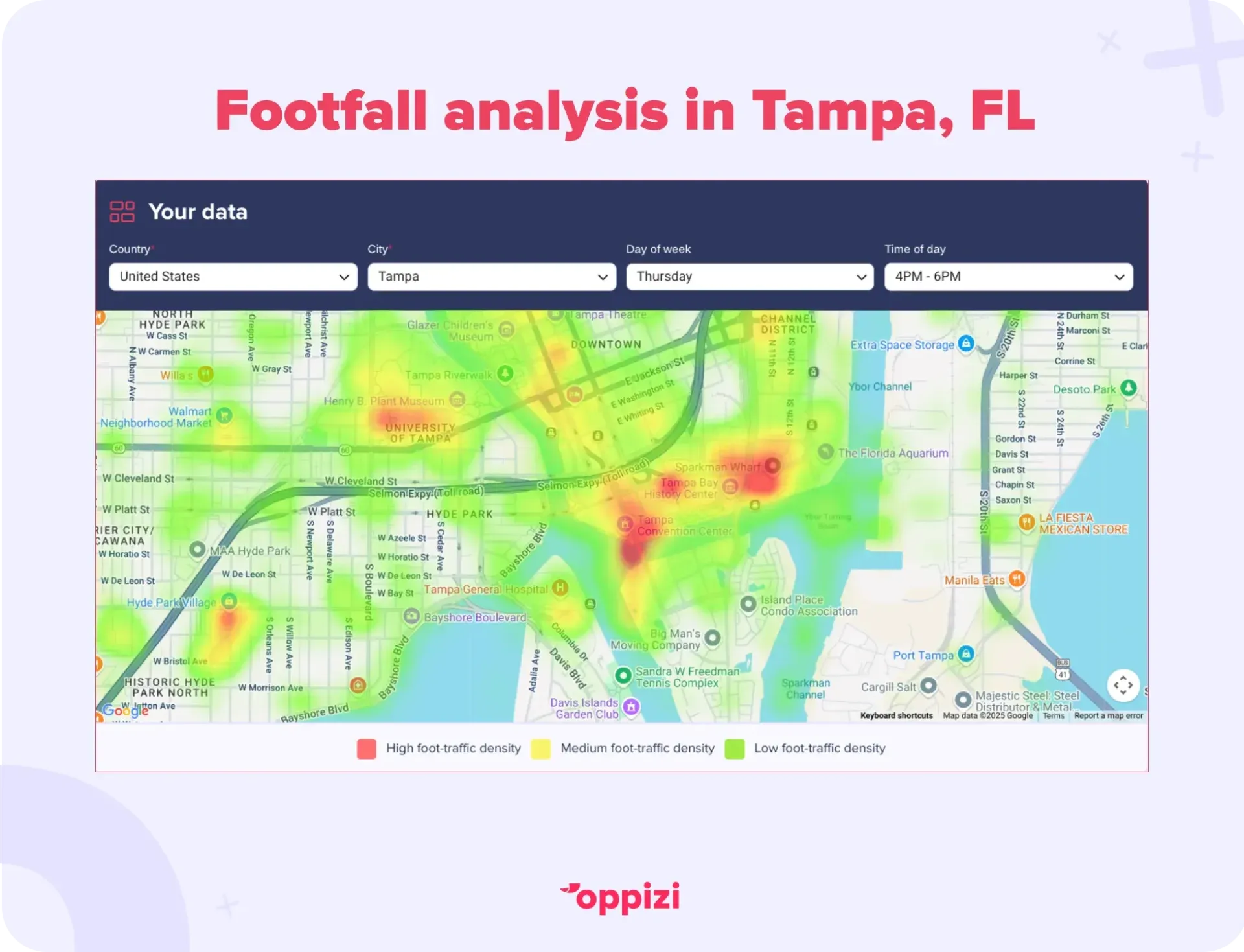
Tips for flyering in Tampa
- Aim for 3–7 p.m. along the Riverwalk: Peak timing before dinner and sunset draws.
- Weatherproof your materials: Humidity and surprise rain are common. Laminates or coated flyers last longer.
- Engage, don’t just hand out: Charismatic street teams perform best, especially in Ybor’s nightlife zone Thurs–Sat.
- Anchor to local pride: Highlight Tampa-based initiatives, local partnerships, or “Florida-first” messages to build credibility.

Conclusion
Street marketing offers something digital ads can’t: a real human connection. In the right city, with the right plan, that connection turns into sales. From busy New York streets to sunny LA beaches, and growing cities like Tampa and Dallas, there’s lots of chance to make street marketing work.
Know your audience. Pick the right spot. Send a message that connects in person, not just on a screen.
Ready to get your brand out there? Try Oppizi’s easy offline marketing platform to plan and launch your next campaign in any major U.S. city. We’ll help you target smarter, deliver faster, and get real results.
Frequently asked questions
- How do I know if street-level marketing is right for my business?
Street marketing works best if your business depends on local customers or people visiting in person. If you’re launching a new product, opening a shop, promoting an app, or hosting an event, it’s a smart move.
It’s perfect for cafés, gyms, events, retail stores, and tech startups trying to get noticed in a neighborhood or city. If you want people to see, remember, and talk about your brand on the street, this is a good fit.
- How do I pick the best city for my street marketing campaign?
The right city depends on your product, who you want to reach, and what you want to achieve. For example, if your target is young tech users, San Francisco or New York might be the best. If you’re into fitness or lifestyle brands, Denver or Miami could be great choices.
Start by figuring out where your ideal customers live, work, or hang out. Then check foot traffic, local people, and competition. Cities with busy walking areas and lots of events usually work better.
Tools like Oppizi can show you data by city. This helps you see what works and pick the right markets with confidence.
- How can I tell if my flyer campaign is working?
There are a few easy ways to track success:
- Use QR codes or special coupon codes on your flyers to track who uses them.
- Create a landing page just for your flyer campaign to track visits.
- Watch for more people in your store, more app downloads, or website visits where you handed out flyers.
- Use Oppizi to see exactly where and when flyers were delivered and compare that to your results.
Tracking helps you improve your next campaign and get better results.
- What is the strongest marketing tactic?
There’s no single best tactic. It depends on your business, goals, and budget. The strongest campaigns mix different tactics to get the best results. For local awareness, street marketing is great. It’s affordable, targets the right people, and creates real connections that online ads can’t match. For a wider reach, paid social media or search ads might work better.
The key is to pick what matches your goals, then test and improve as you go.