Last updated September 28, 2026
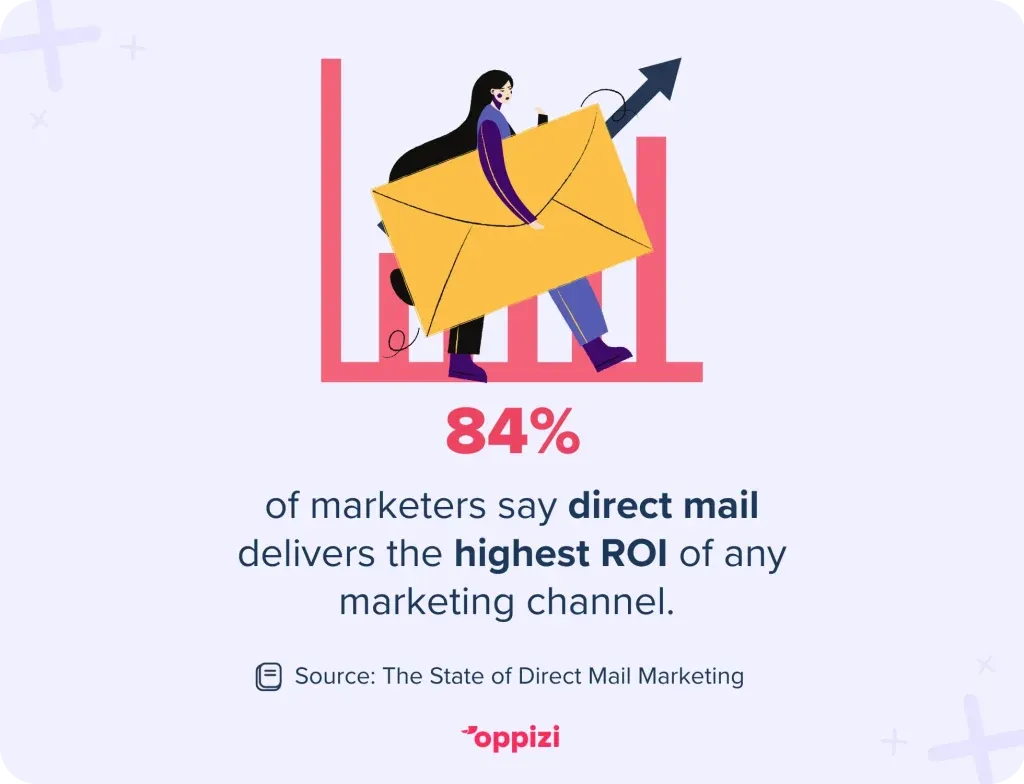
Most marketing gets ignored. Emails go unopened. Ads get skipped. But a well-crafted piece of direct mail? That stops people in their tracks. It’s personal. It’s tangible. And it works. In fact, 84% of marketers say direct mail delivers the best ROI of any channel.
But success isn’t luck. There’s a science to direct mail—a right way and a wrong way to do it. The difference? Mastering the details. The right offer, the right list, the right timing. Get them wrong, and you’re throwing money away. Get them right, and your campaign pays for itself.
So, how do you do it? Let’s break it down.
Here’s how to make your direct mail campaign stand out and bring in the best return on your investment.
1. Know who you’re talking to
The best direct mail campaigns start with a clear understanding of your audience. If you don’t know who they are or what they care about, your message won’t land.
Why it matters
- Personalization: A message that speaks directly to someone’s needs feels more relevant.
- Higher response rates: People are more likely to act when they see something that matters to them.
- Better use of budget: Reaching the right people means less wasted money.
How to find the right audience
- Demographics: Age, gender, income, job title—basic but important.
- Interests & values: What they care about, how they live, what influences their choices.
- Buying behavior: Past purchases, interactions with your brand, or engagement patterns.
- Location: Where they live and whether regional offers or messages make sense.
When you know your audience, you can create messages that feel like they were made just for them.

2. Keep your mailing list clean and organized
A messy mailing list can lead to wasted time, money, and effort. Bad addresses mean undelivered mail, and duplicates can make you look unprofessional.
How to keep it clean
- Remove duplicates: Nobody wants to get the same mail twice.
- Update addresses: People move, so check for changes.
- Honor opt-outs: If someone doesn’t want mail, respect their choice.
Why segmentation works
Not everyone on your list is the same. Sorting your audience into smaller groups helps you send the right message to the right people.
Ways to segment
- By demographics: Age, gender, income level, etc.
- By location: City, state, or neighborhood.
- By behavior: What they’ve bought before, how they interact with your brand.
- By interests: Hobbies, values, or lifestyle choices.
Segmented campaigns can boost response rates by up to 50%. It’s a simple step that makes a big difference.
3. Pick the right direct mail format
The type of mail you send matters. It affects whether people notice it, read it, and take action. The best format depends on your goal, audience, and budget.
Popular formats
- Letters: Simple, affordable, and effective. Great for most businesses.
- Oversized envelopes: Hard to ignore and gives you more space to be creative.
- Postcards: Short, bold, and straight to the point. Perfect for quick messages and clear calls to action.
- Catalogs or brochures: Ideal for showcasing multiple products or services.
What to include
- Strong design: Use bold headlines, clear visuals, and branding that stands out.
- Personalization: Address people by name and make the message feel made for them.
- Interactive features: Add QR codes, scratch-off deals, or tear-out coupons to get people involved.
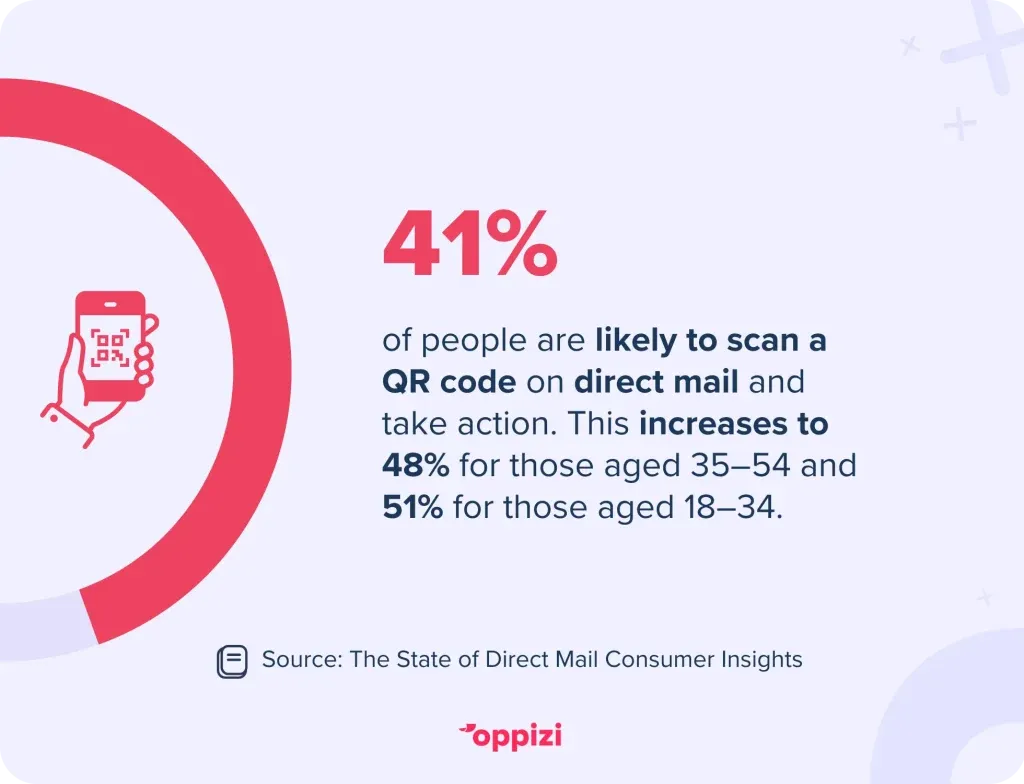
41% of people are likely to scan a QR code on direct mail and take action. This jumps to 48% for those aged 35–54 and 51% for those aged 18–34. Adding one to your mailer is one of the simplest and most effective ways to boost engagement.
4. Make it personal
People respond better when something feels made just for them. Personalized direct mail can boost response rates by 135%.
Simple ways to personalize
- Use their name: A small detail that makes a big difference.
- Tailor your message: Speak to their interests, needs, or past interactions.
- Leverage data: Mention location, past purchases, or where they are in the buying journey.
- Add custom visuals: Use images or designs that connect with your audience.
Take it a step further
- Dynamic content: Print different messages for different people using variable data printing.
- Interactive elements: Add surveys, polls, or small games to increase engagement.
- Storytelling: Share real stories or testimonials that feel relatable.
Personalized mail makes people feel valued, which leads to better results.
5. Give people a reason to care
Your mail should do more than promote your business. It should offer something useful or interesting. If people see value, they’re more likely to pay attention.
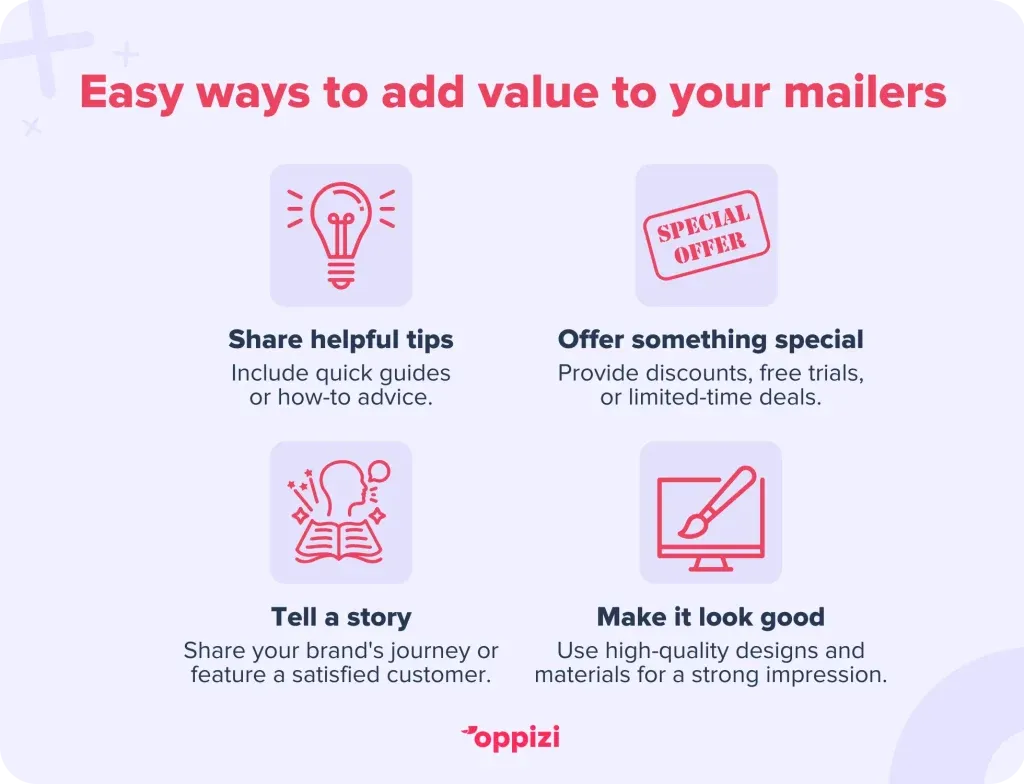
Ways to add value
- Share helpful tips: Quick guides, how-to advice, or industry insights.
- Offer something special: Discounts, free trials, or limited-time deals.
- Tell a story: Talk about your brand’s journey or highlight a happy customer.
- Make It look good: High-quality design and materials make a strong impression.
When your mail is useful, people remember you—and are more likely to respond.
6. Make an instant impact
People decide in seconds whether to keep or toss your mail. You need to grab attention fast.
How to stand out
- Bold headlines: Get straight to the point with a clear benefit.
- Eye-catching design: Bright colors, great images, and a clean layout.
- Clear call to action: Tell them exactly what to do next.
- A sense of urgency: Limited-time deals push people to act.
If your mail looks dull or confusing, it won’t get read. Make it easy and exciting to engage with.
7. Send it at the right time
Timing can make or break a campaign. The right moment gets better results.
Best times to send mail
- Midweek wins: Tuesday through Thursday works best—less competition for attention.
- Seasonal tie-ins: Holidays, special events, or seasonal needs boost engagement.
- Customer milestones: Birthdays, anniversaries, or past purchase follow-ups feel personal.
A great message sent at the wrong time won’t work. Plan wisely for the best results.
8. Track results and keep improving
If you want better results, you need to measure what’s working and tweak what’s not.
What to track
- Response rate: How many people take action.
- Cost per customer: How much it costs to get a new customer.
- Return on investment (ROI): How much money your campaign brings in.
- Customer feedback: Ask people what they liked (or didn’t).
Test and improve
Try different versions of your mail to see what works best. Change things like:
- Headlines
- Design
- Offers
- Call-to-action (CTA)
Small changes can make a big difference.
9. Make the next step clear
Your mail should tell people exactly what to do next. A strong CTA makes that easy.
How to write a great CTA
- Be direct: Say “Shop Now,” “Call Today,” or “Get Your Discount.”
- Create urgency: “Limited Time Offer” or “Only a Few Left” push people to act.
- Make it easy: Use QR codes, short links, or phone numbers.
- Show the benefit: Tell them what they’ll get.
If your CTA is weak or confusing, people will move on.
10. Connect mail with digital
Direct mail works even better when you mix it with online marketing.
Easy ways to combine mail and digital
- QR codes: Link to a website, video, or special offer.
- Personalized URLs (PURLs): Send people to a custom webpage just for them.
- Social media: Invite them to follow your pages for more deals.
- Email follow-ups: Send a quick reminder after they get your mail.
Using both print and digital makes your brand harder to ignore.
11. Test your message and make it better
The right words can make people pay attention. The wrong ones get ignored. Try different versions to see what works best.
How to write strong copy
- Focus on benefits: Tell people how your product helps them.
- Use emotion: Make them feel something—excitement, curiosity, or even a little fear of missing out.
- Keep it short: No one wants to read a wall of text. Use bullet points and simple sentences.
- Show proof: Use reviews, testimonials, or success stories to build trust.
Test different approaches and see what gets the best response.
12. Track what’s working
If you don’t measure results, you won’t know what to fix. Keep an eye on key numbers to see what’s working and what’s not.
Important numbers to watch
- Conversion rate: How many people take action.
- Customer value: How much a customer is worth over time.
- Engagement: Who’s scanning QR codes, visiting your site, or calling.
- A/B test results: Compare different versions of your mail to see what gets the best response.
Tracking helps you spend less on things that don’t work and more on things that do.

FAQ: How to get the best results from direct mail
Direct mail works when done right. Here are answers to common questions to help you get the most out of your campaigns.
1. How to create effective direct mail?
Make it personal, eye-catching, and easy to act on. Here’s how:
- Know your audience. Who are they? What do they need? Speak directly to them.
- Personalize it. Use their name, location, or past purchases to make it feel made for them.
- Make it stand out. Use bold headlines, great visuals, and a clean layout.
- Tell them what to do next. Whether it’s visiting a website or using a discount, your call to action should be clear.
- Offer something valuable. Give helpful tips, exclusive deals, or something they’ll want to keep.
- Test and improve. Try different headlines, designs, and offers to see what works best.
2. Does direct mail still work?
Yes! In fact, it often works better than digital ads. Here’s why:
- It’s physical. People remember something they can hold.
- Higher response rates. Direct mail gets 5 to 9 percent on house lists, against an email click rate of 2.3%.
- Less competition. With everyone online, mail stands out.
- It’s personal. With the right data, you can send highly targeted messages.
- People trust it. Many consumers see mail as more reliable than digital ads.
Used right, direct mail brings a strong return on investment.
3. What’s the best day to send direct mail?
Timing matters. Here’s what research says:
- Best days: Tuesday, Wednesday, and Thursday—less mail, more attention.
- Worst days: Monday (too much catch-up) and Friday (weekend distractions).
- Seasonal timing: Align mail with holidays, back-to-school, or big shopping periods.
Mailing at the right time makes it more likely to get opened.
4. Is it better to send emails in the morning or Evening?
Emails and direct mail work well together. If you’re using email, timing helps:
- Mornings (8 AM – 10 AM): People check email when they start work.
- Evenings (6 PM – 8 PM): They check personal emails after work.
Check your data to see when your audience is most active.
5. How often should I do direct mail marketing?
It depends on your goals, budget, and audience. Some general rules:
- New customers: Send mail 2-4 times a year to stay on their radar.
- Existing customers: Quarterly or bi-monthly keeps them engaged.
- Seasonal campaigns: Tie mailers to holidays, big sales, or industry events.
- Test and adjust: Start with a schedule and tweak it based on response rates.
Too much mail can annoy people. Too little, and they forget you. Find the right balance.

Final thoughts
Direct mail works when done right. Know your audience, make it personal, and keep improving. That’s how you get real results.
Ready to cut through the noise and reach your audience in a way they won’t ignore? Launch an Oppizi campaign today. Our user-friendly platform is simple, effective, and delivers results you can measure. See for yourself and watch the results roll in.