Last updated July 28, 2026
When you think of a great restaurant, what comes to mind first? Delicious food? Probably.
But what about things like the restaurant decor, the ambiance, the menu design, and the way staff interact with you? These are all parts of the restaurant’s branding, which extend well beyond their culinary offerings.
A strong restaurant brand does more than look good - it tells a story and builds trust. Whether it's your logo, tone of voice, menu design, or social media, every detail should reflect a unique identity that makes people feel connected to you.
Whether you're running a cosy café or a fine-dining restaurant, branding can make or break your business. A strong brand doesn’t just attract diners - it turns them into loyal fans. In fact, research shows that 81% of consumers need to trust a brand before buying from it.
In this guide, we’ll walk you through everything you need to know about restaurant branding - from defining your brand personality to creating a customer experience that keeps people coming back for more.

What is restaurant branding?
Restaurant branding involves creating a distinct and recognizable identity for a restaurant. Your restaurant’s identity goes beyond the name, logo, colors, menu design, interior design, staff uniforms, and other visual elements. It also encompasses your restaurant’s brand story, values, the words you use, ambiance, customer experience, and what sets you apart from the competition.
Where marketing says, “Here’s what we offer,” branding says, “Here’s who we are.”
Why is restaurant branding important?
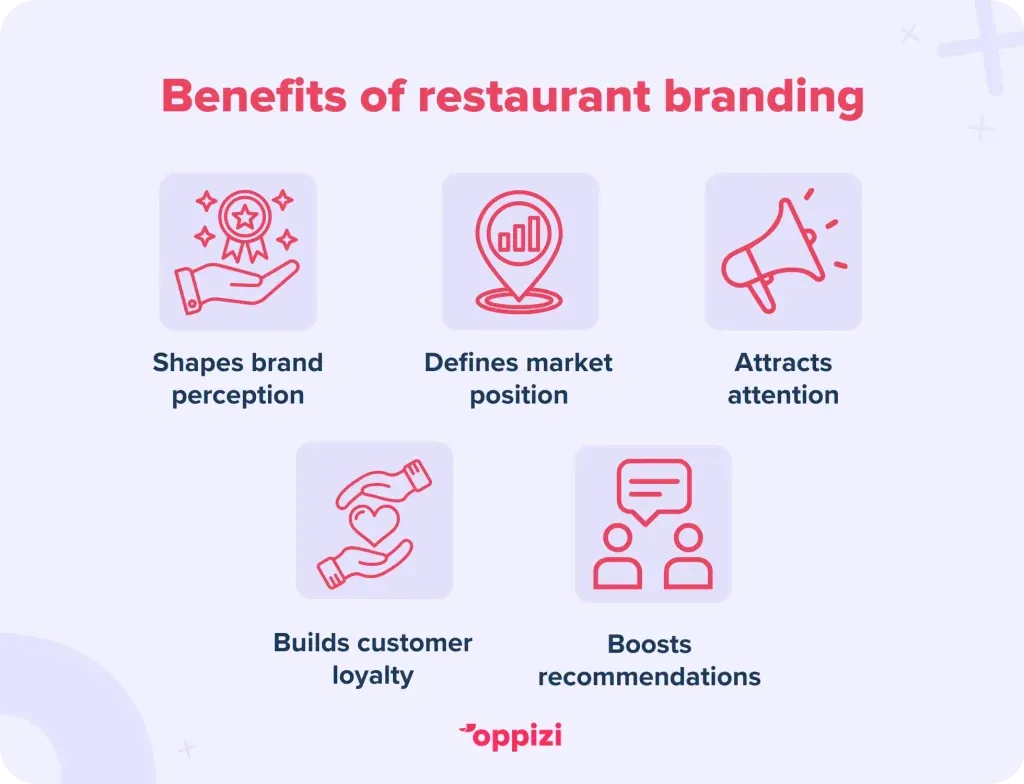
Restaurant branding does a lot more than just make your logo look good; it influences how people feel about your business from the very first interaction. Here’s why it really matters:
- Shapes customer perception: Your brand sets the tone for how people see and experience your restaurant, even before trying your food.
- Defines your market position: Strong branding helps you carve out a unique space in a competitive industry, making it easier for people to remember and choose you.
- Attracts new customers: A clear and appealing brand identity captures attention and draws in curious first-timers.
- Builds customer loyalty: Consistent, authentic branding creates emotional connections that keep customers returning.
- Drives word-of-mouth marketing: Happy, loyal customers are more likely to recommend your restaurant to friends, family, and followers.
The core elements of a restaurant brand
Here we’ll break down the elements that are included in your restaurant brand:
1. Visual identity
Your logo, colors, font, and signage all make a first impression on how your brand is perceived. Are they modern? Traditional? Bold? Cozy? Whichever font you choose should mimic the vibe you want to portray.
2. Brand story & mission
Why do you exist? What inspired the concept? People connect with purpose. Share your brand story, mission, and values on your social media and in your menus to have your customers feel more connected to your brand.
3. Tone of voice
Is your brand elegant, warm, or quirky? Your tone of voice should encapsulate this, and should be consistent across menus, website, and social media.
4. Menu & naming
The way you name and describe your dishes should echo your brand’s tone. A quirky brand might serve “Avocado Smash,” while a minimalist one keeps it simple with “Avocado Toast.” Your menu is a branding tool, so you should use it to express your personality.
5. Interior design & ambience
Sensory branding plays a large role in the hospitality sector. Your décor, lighting, music, and scent can all influence your diner’s experience. For example, a minimalist vegan café would feel very different from a vintage Italian trattoria. While the vegan café might focus on simplicity and sustainability, the Italian trattoria would focus on traditional and homely elements.
6. Team & service style
One often overlooked element of your branding is how your staff dress, speak, and serve guests. The experience they provide should align seamlessly with your branding.
7. Packaging & takeaway
Don’t forget about the customers who prefer to eat at home. Branded bags, stickers, or napkins reinforce brand recognition. Small touches can make big impressions.
How to build your restaurant brand
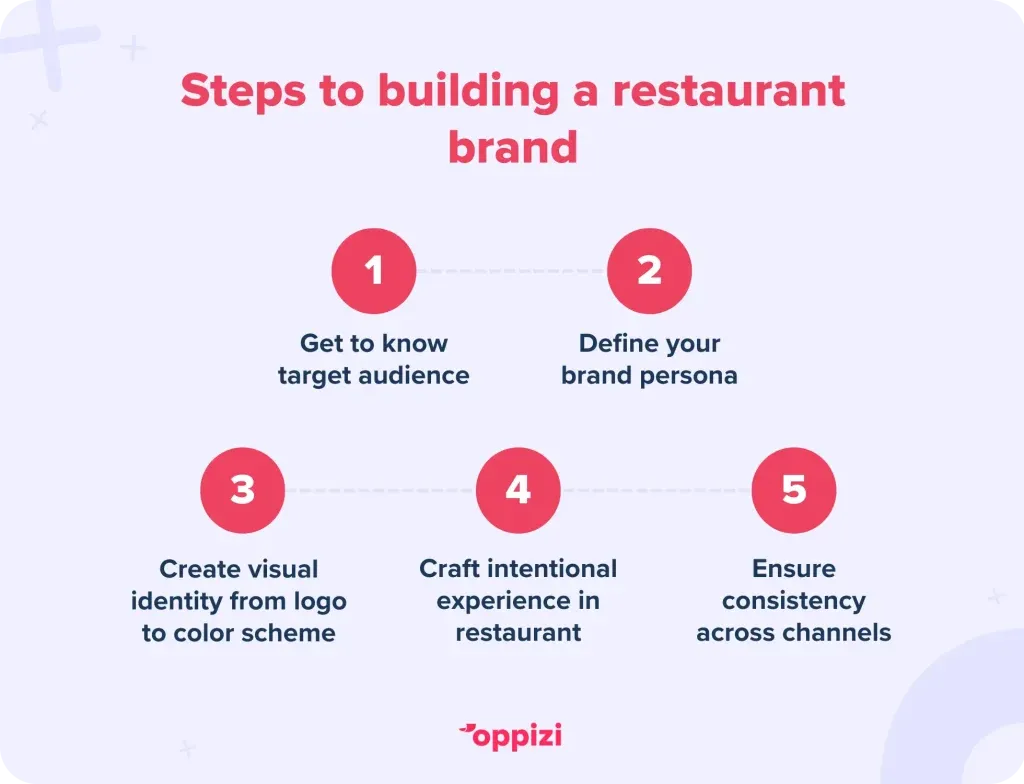
Get to know your target audience
Who are you trying to attract to your restaurant - families, millennials, fine-diners, or late-night foodies? Dive into their demographics, dining habits, values, and even their aesthetic preferences.
Having a strong brand means aligned with your target audience means you’re more likely to attract those you want to dine with you.
Define your brand persona
If your restaurant were a person, how would it speak and act? Fun and casual? Elegant and refined? Define this clearly to guide your tone and messaging across platforms.
Design a cohesive visual identity
Your visual identity is often your customer’s first impression, so it needs to be memorable and consistent.
Start by creating a brand kit that includes:
- Logo: This should be simple, scalable, and adaptable for different uses (e.g. signage, menus, social media icons).
- Color palette: Choose 2-4 brand colors that reflect your concept. For example, earthy tones for a restaurant that specializes in locally-sourced produce, or bold primaries for a fun fast food spot.
- Typography: Stick to 1-2 fonts that suit your brand personality. Elegant fonts may suit fine dining, while playful fonts could work for the likes of a food truck. In any case, make sure your font is legible.
- Imagery style: Define your photo aesthetic - natural lighting, high contrast, flat-lay food shots, or candid team moments? Visual consistency builds brand recognition.
- Graphic elements: Patterns, icons, or illustrations can add something extra to your designs and unify them across materials.
If you don’t have a designer in-house, you could hire a graphic designer for a full brand identity package.
Once your brand kit is ready, apply it everywhere - your website, menus, social posts, staff uniforms, signage, and takeaway packaging. Repetition builds trust and makes your brand memorable.
Craft the experience
Think beyond just the visual elements of your brand. What’s the atmosphere like when someone walks in? How do your staff interact with them? What’s the music like? Studies have shown that 67% of customers recall brands better when multisensory elements are incorporated.
Be consistent across channels
Everything related to your brand, from your social media posts to your takeaway packaging, should feel like it’s from the same place. Consistency builds trust and recognition, and according to Lucidpress, a consistent brand presentation can increase revenue by up to 23%.

Online branding: Your digital first impression
When choosing a restaurant, people often start by visiting its website to view the menu and read reviews. They might also browse its social media to get a sense of the atmosphere.
Make sure your:
- Website is mobile-friendly and on-brand
- Google Business Profile is up-to-date with the correct information
- Social media visuals follow your overall branding strategy
- Bio clearly states your USP that will make you stand out from competitors
Offline branding: For making your brand memorable
Digital branding is important, but your offline presence is where you can stand out.
- Use branded napkins, uniforms, menu holders, and signage
- Train staff to deliver your brand promise consistently
- Think about the entire sensory experience, such as music, lighting, scent
Offline branding also includes how you market in your community. Offline marketing strategies, like direct mail or flyer distribution, is a great way for restaurants to reach local audiences and to make a lasting impression. Make sure your offline marketing pieces contain your brand elements to increase brand recognition.

How to monitor and evolve your brand
Branding isn’t a one-and-done task - it’s ongoing. As your restaurant grows, your brand should evolve to reflect who you are and who you want to attract.
A brand that felt fresh two years ago might now feel outdated, or simply out of sync with how your business has shifted. That’s why regularly monitoring and refining your brand is essential to staying relevant, consistent, and competitive.
Here’s how to keep your brand sharp and aligned:
- Track KPIs: Take a deep dive into the likes of return visits, average spend per visit, and social media engagement.
- Collect customer feedback: Customers can give you insights into brand perception via feedback forms or even Instagram polls.
- Audit touchpoints: Regularly review your branding to ensure it’s consistent across channels and that it works.
- Refresh your brand: If your audience changes, your location evolves, or your offer pivots, make sure you update your branding to reflect this.
Common restaurant branding mistakes to avoid
Even with the best intentions, it’s easy to fall into branding traps that confuse your audience or dilute your message. A strong brand isn’t just about looking good - it’s about delivering a cohesive, memorable experience at every touchpoint.
Here are some of the most common branding mistakes restaurant owners make (and how to overcome them):
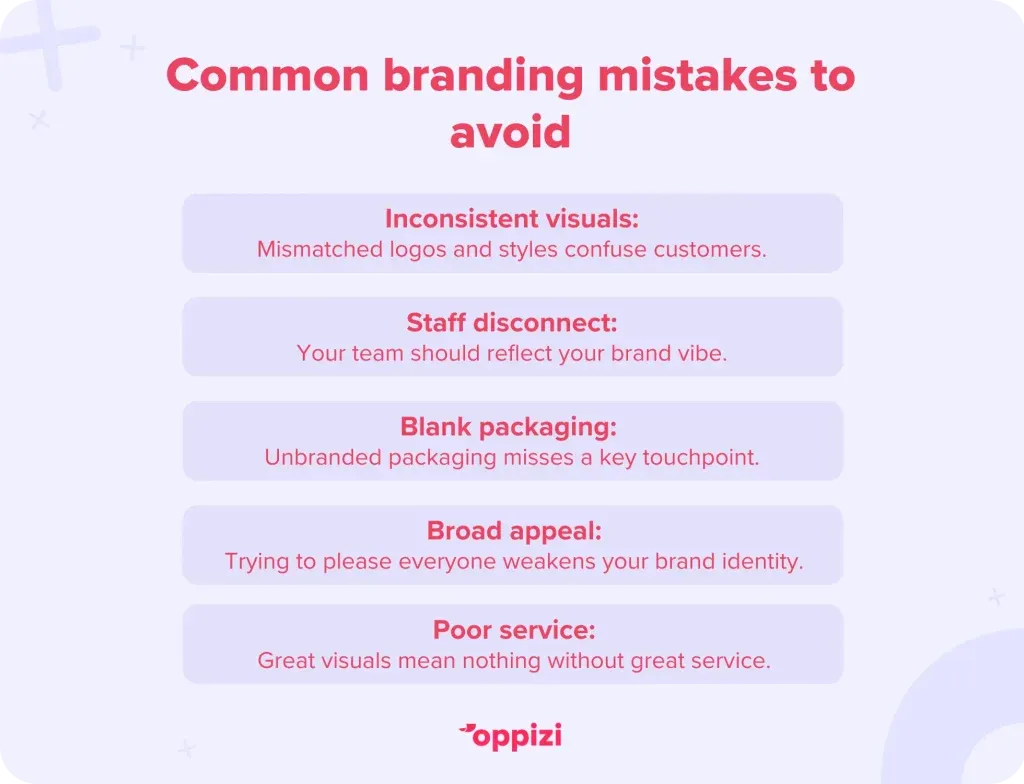
Inconsistent visuals across platforms
Using different logos, colors, or styles on your website, social media, and menus creates confusion and weakens brand recognition.
Ignoring your staff’s role in the brand
Your team is an integral part of your brand experience. If your service doesn’t match your brand tone, whether that’s friendly, polished, or quirky, it can send mixed signals.
Forgetting to brand your packaging
Takeaway bags, coffee cups, napkins - they’re all part of your brand experience. Unbranded packaging is a missed opportunity for building brand recognition.
Trying to appeal to everyone
A generic brand doesn’t inspire customer loyalty. Clearly define your mission and center your target audience in all aspects of your restaurant. This focus should inform everything from your interior design to your social media strategy.
Focusing too much on your brand and not on service
A great website and excellent visuals can get people in the door, but it’s great service that keeps them coming back. If one is strong and the other is sloppy, your brand promise falls flat.
Avoiding these common mistakes helps your brand not only look great, but feel true to what your restaurant stands for.
Frequently asked questions about restaurant branding
1. What's the difference between branding and marketing?
Branding is your identity, while marketing is how you promote that identity.
2. Do small restaurants need branding?
Yes! All restaurants benefit from good branding. In fact, branding can help small restaurants stand out in their local market, especially with limited budgets.
3. How much should I invest in branding?
It is said that businesses should allocate between 10%-25% of their marketing budget to their brand strategy. Businesses on a budget could source a brand kit or hire a freelancer to help them set up their branding.
4. How can I tell if my branding is effective?
To understand if your branding is effective, keep track of repeat customers, online reviews, and social media engagement. You can also actively seek out customer feedback on your branding elements to understand what works well and what doesn’t. Having customers involved in your branding strategy is also a way of deepening your connection with them.
Final thoughts
Branding isn’t just about aesthetics. It’s about the way people feel when they see your storefront, scroll through your Instagram, or unbox a takeaway order. It’s the tone of voice on your menu, the vibe of your interiors, and the way your staff interact with your diners.
A strong, consistent brand builds trust and sets you apart in a crowded market. Whether you're launching a new concept or refreshing your restaurant, investing in your brand is investing in your long-term growth.
And if you want to get your brand out there in a way that connects with local customers, Oppizi can help.
Oppizi’s offline marketing solutions, like targeted direct mail or flyer distribution, gets your brand directly into the hands of your ideal customers.
Ready to make your brand unforgettable? Start an offline marketing campaign with Oppizi today and start turning curious locals into loyal customers.