Last updated July 23, 2026
In the ever-evolving marketplace, it’s easy to get left behind. Rebranding your brand isn't simply a way of achieving a new look - it's a strategic move to realign your business with its core values, audience expectations, and market dynamics. Whether you're pivoting to new markets, updating your mission, or revitalizing your image, a successful rebrand can breathe new life into your business.
In this blog article, we’ll discuss what rebranding is, why it matters, and the steps you should take to rebrand your business.
What is rebranding, and why consider it?
Rebranding is all about staying ahead of the curve. It's the process of evolving your brand to better align with your current values, mission, and target audience. Whether you're looking to attract new customers, stand out from the competition, or just refresh your brand, rebranding can be a powerful tool.
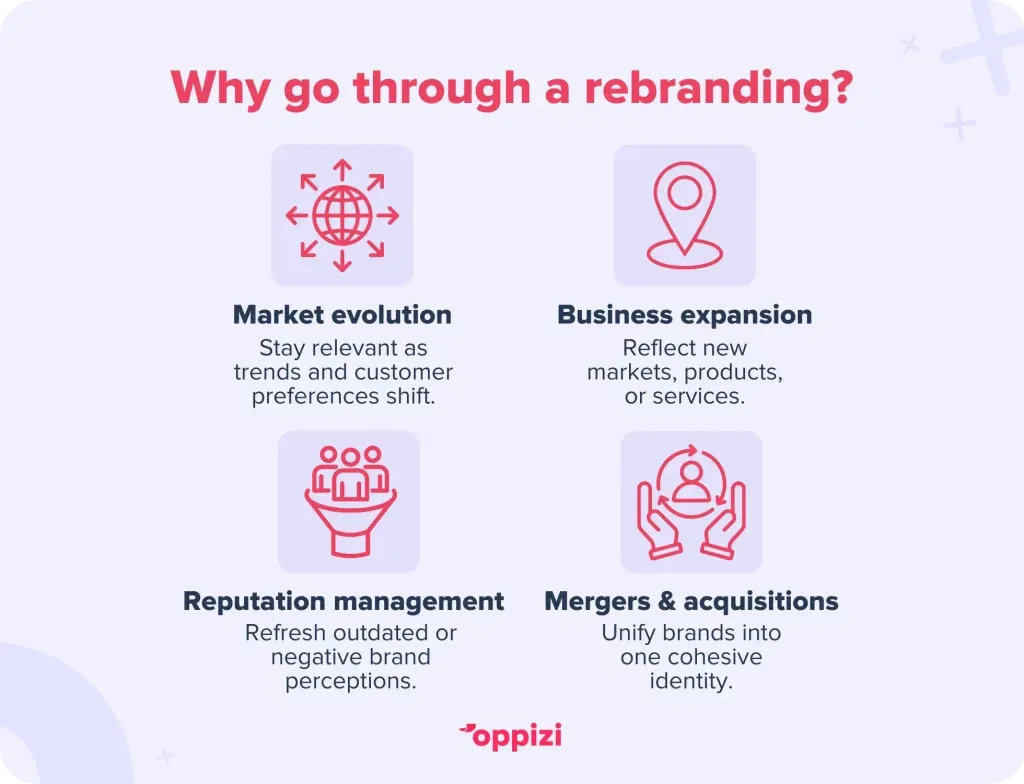
But why go through a rebrand? Here are some compelling reasons:
- Market evolution: Consumer preferences and market trends change. Staying current can ensure your brand stays relevant.
- Business expansion: Entering new markets or launching new products may require a brand that reflects your expanded offerings.
- Reputation management: Overcoming negative perceptions or outdated images can be achieved through rebranding.
- Mergers and acquisitions: Merging businesses often requires a unified brand identity.
Whatever your reason, rebranding can be a game-changer when done right.
How to rebrand your business
Rebranding isn’t just a logo refresh - it’s a full-blown identity transformation. Done right, it aligns your business with your goals, resonates deeper with your audience, and helps you stand out in a crowded market. But to get there, you need a clear strategy.
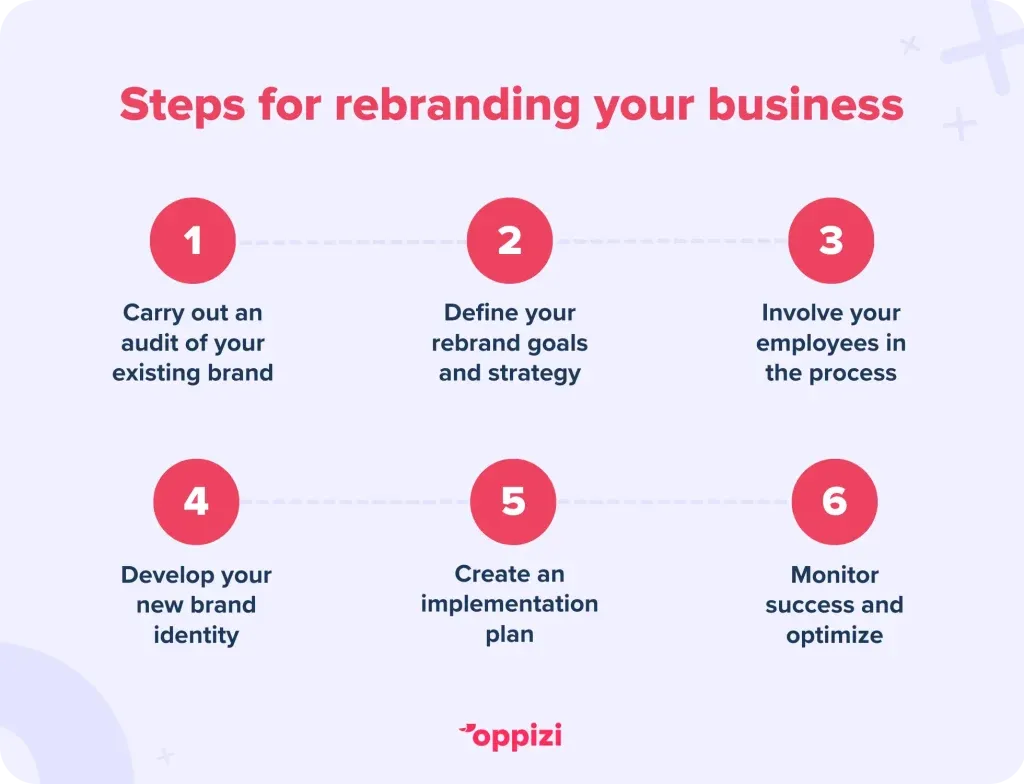
Step 1: Conduct a brand audit
To start the rebranding process, it is essential to conduct a complete audit of your existing brand. This involves assessing your current brand positioning, strengths, weaknesses, and your brand's performance against competitors.
Key questions that you can ask during this stage include:
- What is our current brand identity, and how is it perceived by our target audience?
- What are our brand's core values and mission statement?
- What differentiates our brand from our competitors?
- What are the strengths and weaknesses of our current brand strategy?
Tools such as customer surveys, focus groups, and market research can give you valuable insights into your brand's current perception and potential areas for improvement.
Step 2: Define your rebranding goals and strategy
Once you have a clear understanding of your current brand identity, it's time to define your rebranding goals and develop a strategy to achieve them.
Start by defining SMART goals (Specific, Measurable, Achievable, Relevant, Time-bound) that align with your business objectives. Think of your rebrand not just as a design change but as a performance upgrade.
Here are some common rebranding goals and the KPIs you can use to measure success:
Goal 1
Reposition your brand to reach a new target audience.
KPIs to track: Engagement metrics from the new audience segment (e.g., demographics on social media followers, website traffic by user type) or email sign-ups from targeted campaigns.
Goal 2
Update your brand identity to reflect new products or services.
KPIs to track: Product-specific conversion rates or click-through rates on landing pages featuring the new offering.
Goal 3
Differentiate your brand in a saturated market.
KPIs to track: Brand recall scores from surveys, share of voice on social platforms, or competitive sentiment analysis.
Goal 4
Revitalize a tired or outdated brand image.
KPIs to track: Social sentiment analysis, brand awareness uplift (via tools like Google Trends or brand surveys), or increases in customer retention.

Step 3: Align internally
A successful rebrand involves your people. If your employees aren’t aligned with the why, what, and how of your rebrand, your new identity can fall flat.
Here’s how to make sure your employees are on board with your rebrand:
- Host a brand alignment workshop. Bring together your teams to discuss the new brand direction. Get feedback and address potential concerns before the creative work begins.
- Clarify your brand story. Everyone on your team should be able to explain the new brand purpose, positioning, and tone of voice in their own words. If they can’t, your audience definitely won’t.
- Create internal brand documentation. Think of this as your rebranding guide. Include updated mission, values, personality traits, messaging principles, colour and logo guidelines, and examples of do’s and don’ts.
- Build brand pride. Share the reasons behind the rebrand and the goals it’s meant to serve. Make your team part of the transformation, not just passive observers.
Step 4: Develop your new brand identity
With your rebranding goals and strategy in place, it’s time to bring your new brand to life. This is where you shape a visual and verbal identity that truly reflects who you are and speaks directly to your target audience.
Key elements of your new brand identity might include:
- A refreshed logo that reflects your evolved positioning
- A color palette that evokes the right emotions
- Typography that enhances readability
- Brand messaging and a tone of voice that align with your audience
- A visual style guide to keep everything consistent and cohesive
It's important to approach this phase with a strategic mindset, ensuring that every element of your new brand identity aligns with your overall rebranding goals and strategy.
Step 5: Create a rebranding implementation plan
Now that your new brand identity is ready, it’s time to put it into action. A well-executed rebrand doesn’t just happen overnight - it needs a clear roadmap to ensure consistency, coordination, and impact across every customer touchpoint. In fact, a study by Marq found that consistent branding can boost revenue by 10–20%.
Your implementation plan should cover both the logistics and the launch strategy. Here's what to include:
Rollout timeline
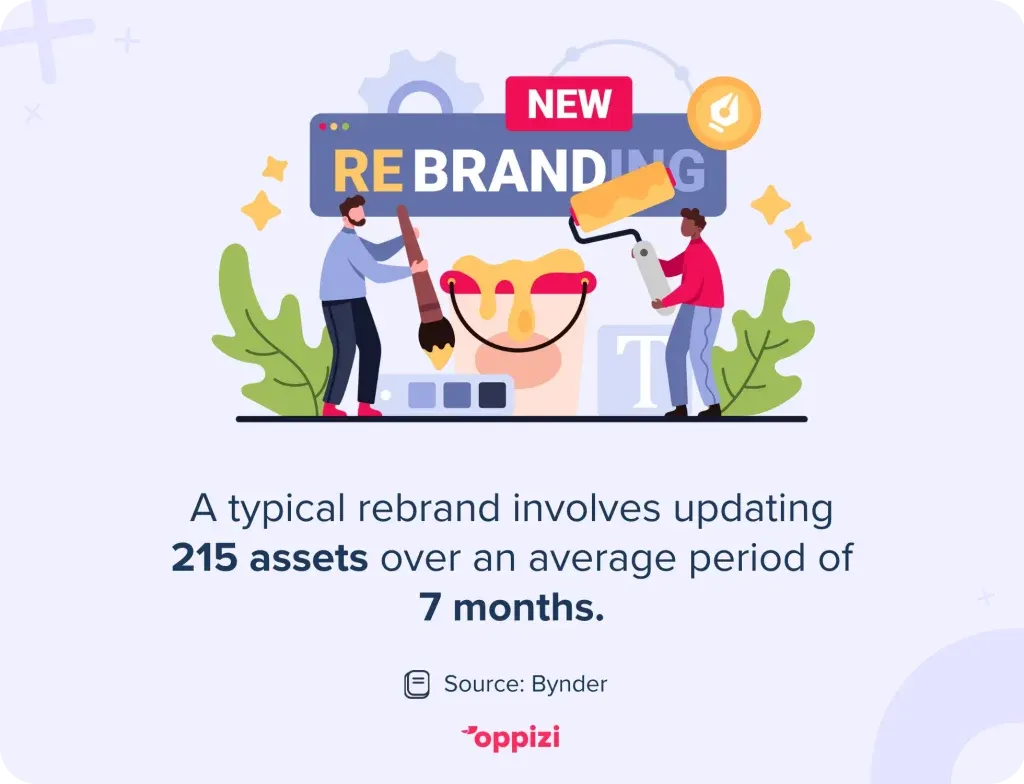
A typical rebrand involves updating 215 assets. Map out when and how each brand element will go live. Think of this stage like a phased launch. Prioritize high-visibility platforms like your website, product packaging, social media, and paid ads. Then, update other materials like business cards, uniforms, and signage.
Rebrand budget
Establish a budget that covers all expected expenses. This might include:
- Logo and graphic design
- Website updates or a full redesign
- Package or leaflet printing
- Offline marketing (flyer distribution, door hangers)
- PR and promotional costs
Internal rollout
Ensure you keep your team up-to-date with your brand’s identity and strategy. Ensure to implement the following:
- Training sessions or brand handbooks to present the new messaging and visuals
- Internal launch events to build excitement
- FAQs or internal documents to answer questions
External rollout
Ensure that your launch creates a significant impact when you are ready to unveil it to the public. Your external rollout might include:
- A rebrand announcement via social media, email newsletters, and press releases
- Targeted offline marketing like flyer distribution and direct mail in key neighborhoods where your target audience is most likely to be
- Limited-time promotions or events to drive engagement and brand awareness
Step 6: Monitor, measure, and optimize
The launch of your rebrand is just the beginning. It's essential to track key metrics like brand awareness, customer engagement, and sales performance to measure success and identify areas for improvement.
Set checkpoints at 30, 90, and 180 days post-launch to evaluate the impact, address any challenges, and acknowledge successes. Utilize the data gathered to optimize your rebranding efforts.
Rebranding isn’t a one-and-done deal - it’s a consistent evolution. Stay adaptable and keep refining. The brands that thrive are the ones that keep listening and keep leveling up.
Bonus step: Involve your audience
42% of marketers state that one of the most challenging aspects of a rebrand is communicating the rebrand to their audience. To make your rebrand feel like more of a movement, get your audience involved. People love to be involved in the process - especially when it’s about something they care about (like a brand that they’re loyal to).
Here’s how to turn passive customers into engaged collaborators:
- Share sneak peeks of your proposed rebrand on social media. This can include mood boards, early logo sketches, and color palette explorations. Build curiosity and invite commentary from your customers.
- Run interactive polls. Let your followers weigh in on taglines, packaging mockups, or designs. Even if you don’t go with their pick, the act of asking them boosts engagement and builds trust in your brand.
- Create a countdown to launch. Use email and social media to tease what’s coming and build momentum.
- Reward your loyal customers. Offer early access, limited-edition merch, or discounts for fans who supported you before your rebrand.
A rebrand can feel risky, but when you make your audience part of the story, they’re more likely to celebrate your change.
The benefits of rebranding
When done right, a rebrand can be a total game-changer. Here’s how it can benefit your business:
- Break into new markets: Rebranding lets you reposition your products or services, especially if your old identity feels outdated or limiting.
- Refresh your brand story: A rebrand is a chance to tell a more compelling narrative that actually resonates with your ideal customers and reflects where your brand is headed.
- Boost customer connection: A strong rebrand breathes new life into your messaging, helping you engage your audience on a deeper, more emotional level.
- Align perception with reality: Rebranding can help align public perception of your business with the reality of what your business represents and how you want it to be perceived.
Frequently asked questions about rebranding
1. How often should a business consider rebranding?
Businesses should reassess their branding every 5 to 10 years to ensure it aligns with their identity and market trends, but market changes may necessitate more frequent updates.
2. What are common mistakes to avoid during rebranding?
Avoid inconsistent messaging, neglecting customer feedback, and failing to align the rebrand with your company's core values.
3. How can I measure the success of a rebrand?
Monitor key performance indicators such as brand awareness, customer engagement, sales figures, and market share post-rebrand.

Final thoughts
Rebranding isn’t just a design project - it’s a full transformation that calls for vision, alignment, and a solid strategy. Keep your purpose front and center at every stage, and make sure your team understands the “why” behind every change.
Remember: your brand isn’t just what you say - it’s how you make people feel. A great rebrand doesn’t just refresh your image; it reconnects, reinvents, and reignites your relationship with your audience.
Want more tips? Follow Oppizi on LinkedIn for more branding insights, offline marketing tips, and bold ideas to fuel your next big move.