Last updated September 28, 2026
Many companies get it wrong. They confuse business development with sales, and it costs them. Lost time, missed deals, and stunted growth.
Business development finds the opportunities. Sales turns them into revenue. When these teams work in sync, they create unstoppable momentum. But mix them up, and you’re leaving money on the table.
In this guide, we’ll cover:
- The key differences between business development and sales
- How each one helps a business grow
- Ways to make both teams more effective
- How marketing (including offline strategies) fits in
- Tips for getting these teams to work together smoothly
Whether you’re building a growth team, supporting sales and business development as a marketer, or trying to collaborate better, you’ll find all you need to know here. Let’s get started.
What is business development?
Business development is all about finding new ways to grow a company. It’s not just about selling—it’s about spotting opportunities, building relationships, and creating long-term value. While sales focus on closing deals, business development takes a bigger-picture approach.
What business development teams focus on
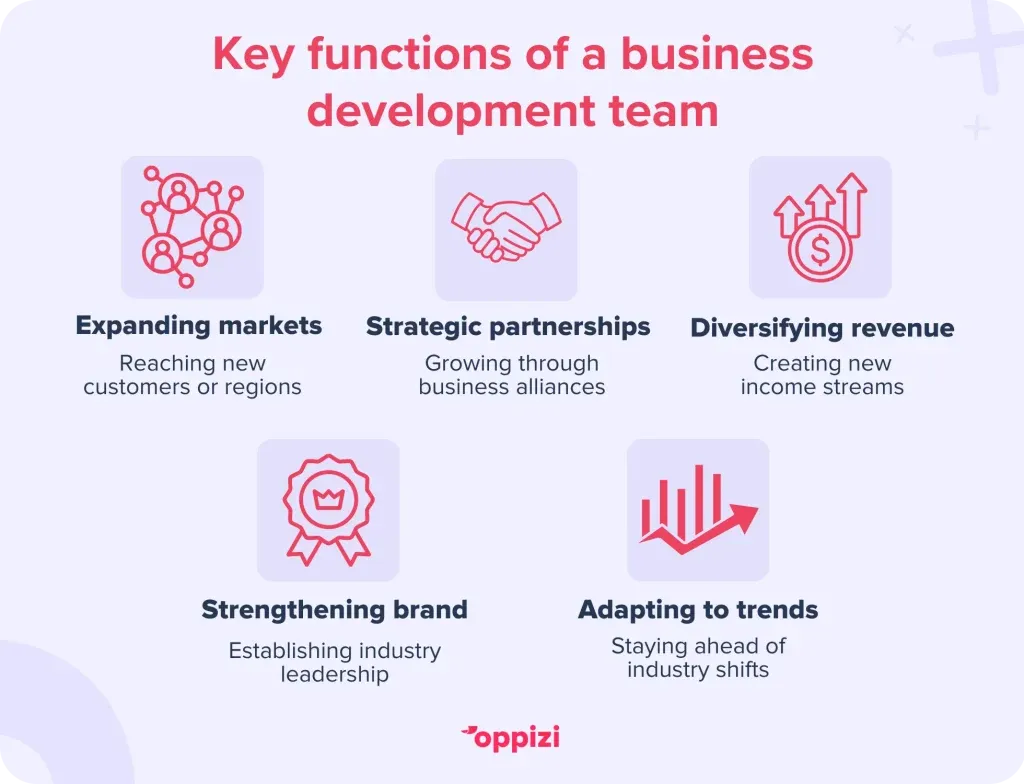
- Expanding into new markets – Reaching new customers or regions
- Forming strategic partnerships – Teaming up with other businesses to grow
- Diversifying revenue – Finding new ways to make money
- Strengthening the brand – Positioning the company as a leader
- Staying ahead of trends – Adapting to industry changes
What business development teams do
- Research markets and competitors
- Find and build partnerships
- Create strategies for launching new products or services
- Network at industry events
- Develop ways to bring in leads for the sales team
- Negotiate high-level deals
How business development works in the real world
Imagine a SaaS company wants to expand into healthcare. The business development team would:
- Research the industry’s needs and challenges
- Find potential partners, like medical software providers
- Create messaging that speaks to healthcare professionals
- Start conversations with decision-makers
- Set up opportunities for the sales team to close deals
This kind of work takes time, but the results last. Instead of chasing quick wins, business development builds a foundation for long-term growth.
What is sales?
Sales is all about turning potential customers into paying ones. Business development finds opportunities, and sales turns them into results through direct customer interaction.
What sales teams focus on
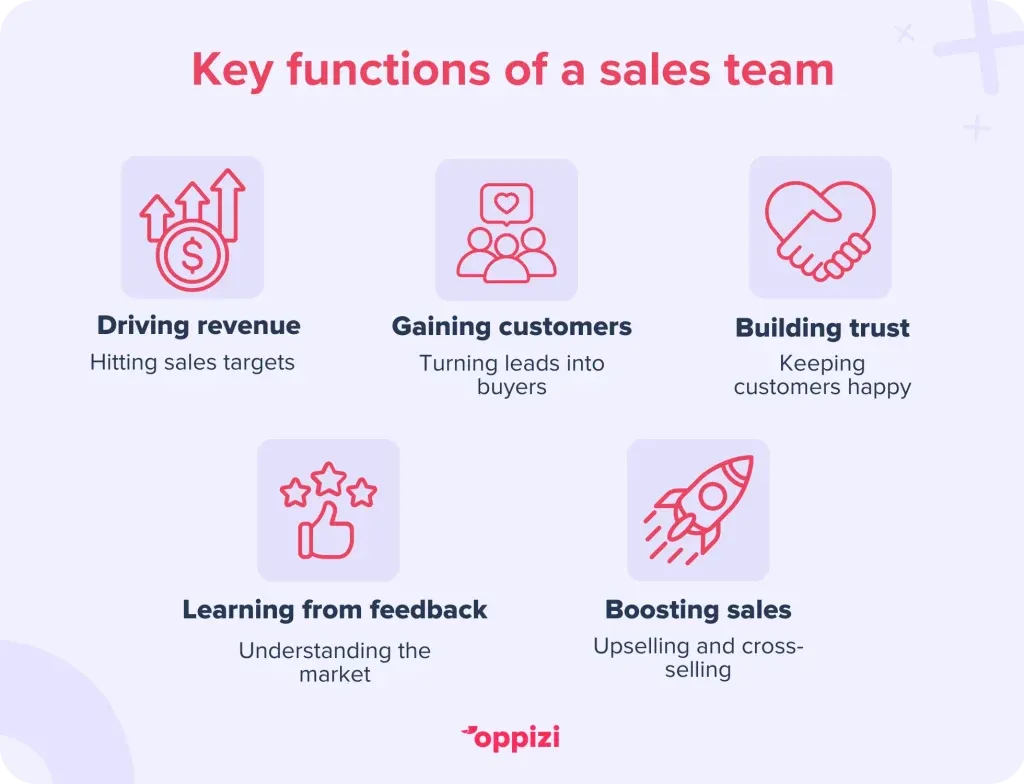
- Bringing in revenue – Hitting sales targets
- Winning new customers – Converting leads into buyers
- Building relationships – Earning trust and keeping customers happy
- Gathering market insights – Learning from customer feedback
- Increasing sales – Upselling and cross-selling to boost revenue
What sales teams do
- Find and qualify potential customers
- Show and explain products or services
- Handle objections and negotiate deals
- Close sales and finalize contracts
- Manage customer accounts and build loyalty
- Share feedback with product and marketing teams
How the sales process works
- Find potential customers – Use different channels to identify leads
- Qualify them – Make sure they’re a good fit and ready to buy
- Understand their needs – Learn their challenges and goals
- Present the solution – Show how your product helps
- Handle concerns – Answer questions and build trust
- Close the deal – Finalize the sale
- Follow up – Keep customers happy and look for upsell opportunities
How sales works in the real world
Let’s go back to the SaaS company example. The business development team has identified healthcare providers as a good market. Now, the sales team steps in to:
- Reach out to those leads
- Set up demos that fit healthcare needs
- Address security and compliance concerns
- Negotiate pricing and contracts
- Close deals and onboard new customers
Sales is where strategy meets action. It’s about understanding customers, solving their problems, and making sure they get value.
Business development vs. sales: What’s the difference?
Knowing the difference between business development and sales helps a business run smoothly. Here’s how they compare:
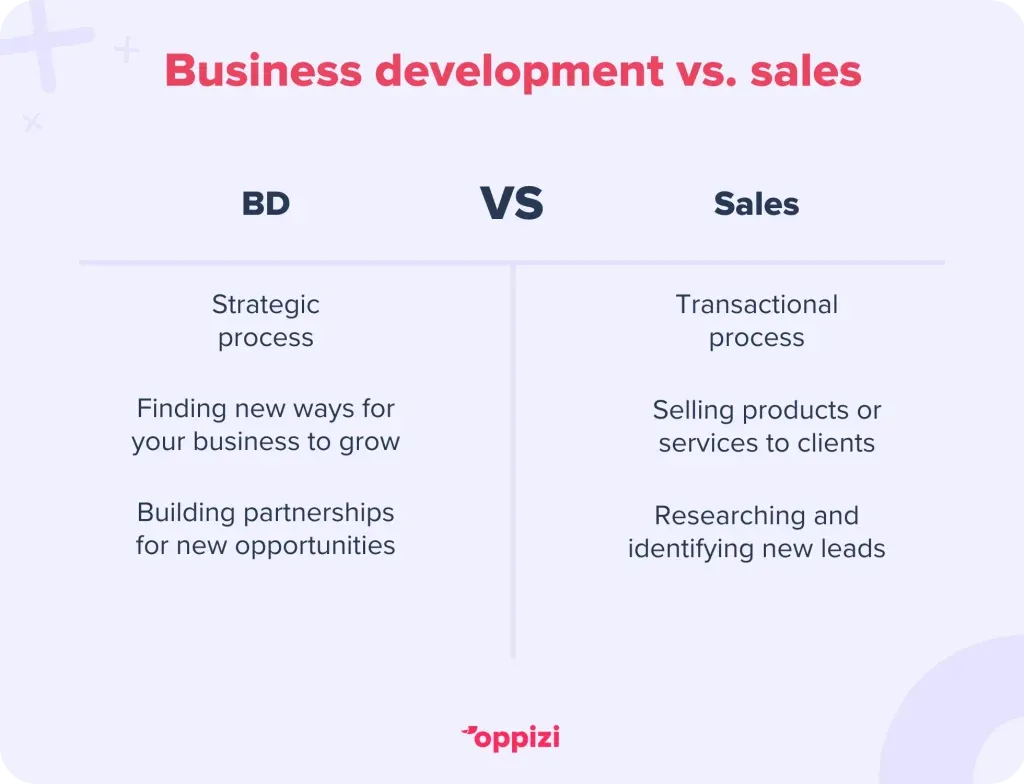
1. Timeframe
- Business development looks at the long term (months or years).
- Sales focuses on short-term results (days or weeks).
2. Goals
- Business development creates new opportunities and partnerships.
- Sales turns those opportunities into revenue.
3. Daily work
- Business development researches markets, builds partnerships, and plans strategies.
- Sales finds leads, makes pitches, negotiates, and closes deals.
4. Success metrics
- Business development measures growth through partnerships, market expansion, and lead pipeline.
- Sales tracks revenue, conversion rates, and deal size.
5. Relationships
- Business development builds broad, high-level connections across industries.
- Sales works directly with buyers to close deals.
How they work together
When these teams align, things run smoothly:
- Business development finds a new market → Sales tailors pitches for that market.
- Business development secures a partnership → Sales trains the partner’s team.
- Sales hears the same objections from customers → Business development tweaks messaging.
Both teams need each other. One finds the doors, the other walks through them.
Why you need both for growth
Focusing too much on one and not the other can hurt your business. Here’s why:
When there’s too much business development and not enough sales
- Lots of ideas, but no deals getting closed
- Missed chances to bring in revenue
- Frustration from seeing potential but not acting on it
When there’s too much sales and not enough business development
- Quick wins, but no long-term growth
- Struggles to expand into new markets
- Relying too much on the same customers and channels
Why they work better together
When business development and sales are aligned, companies see:
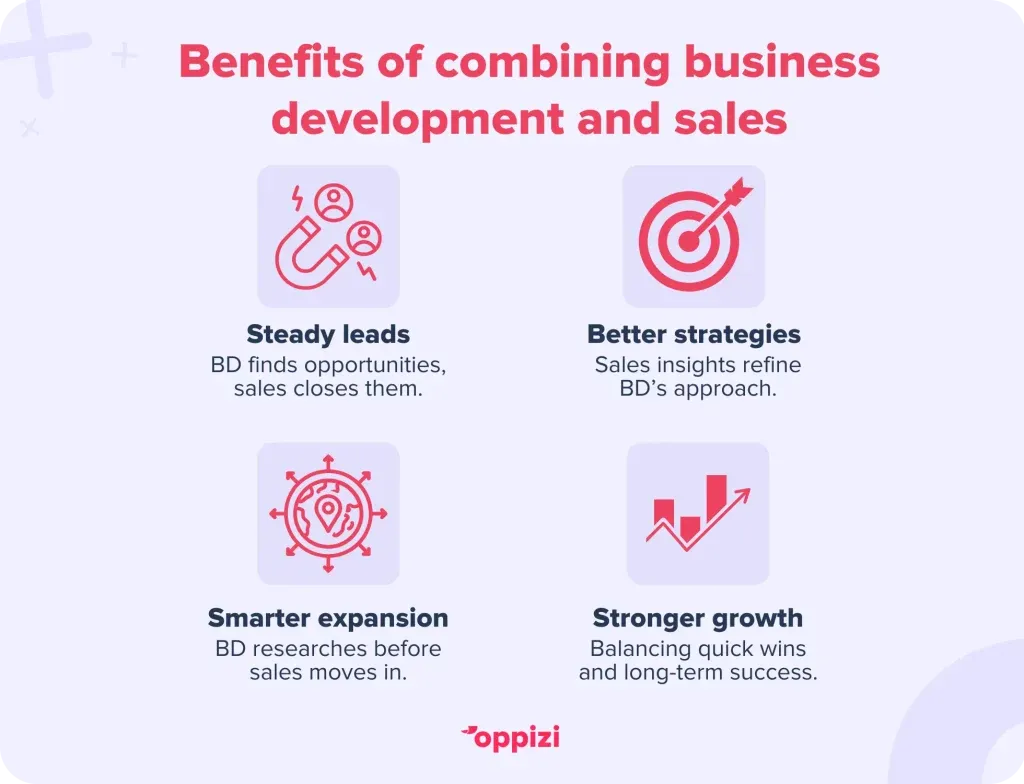
- A steady flow of leads – Business development finds opportunities, and sales closes them.
- Better strategies – Sales teams share customer insights, helping business development refine their approach.Smarter expansion – New markets are researched before sales teams step in.
- Stronger revenue growth – A balance of short-term wins and long-term success.
The best businesses don’t choose between business development and sales. They make sure both work together.
How to strengthen your business development strategy
Want to grow your business the right way? Focus on these key areas:
1. Know your market
- Study the competition and industry trends.
- Use tools like Google Trends and market reports.
- Find gaps where demand is high but competition is low.
2. Build the right partnerships
- Work with businesses that complement yours, not compete with you.
- Set up co-marketing deals that benefit both sides.
- Make sure every partnership has clear goals and expectations.
3. Generate leads from multiple sources
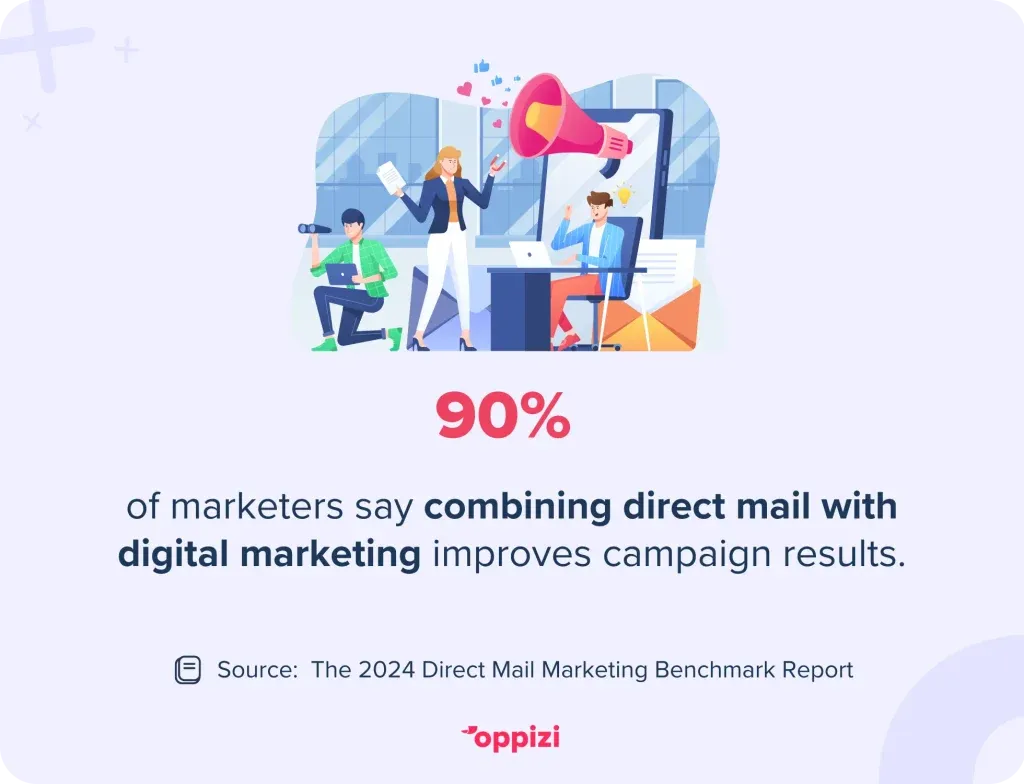
- Use both online (LinkedIn, email) and offline methods. 90% of marketers say this drives results.
- Try targeted direct mail campaigns, like Oppizi’s, to reach audiences who ignore digital ads.
- Attend industry events and sponsor key gatherings.
4. Make data-driven decisions
- Track which strategies bring in the best leads.
- Measure partnerships by long-term value, not just quick sales.
- Adjust your approach based on real numbers, not guesswork.
A smart business development strategy isn’t just about finding opportunities—it’s about making the right moves to turn them into lasting growth.
How to improve your sales process
Want to close more deals? Focus on these key areas:
1. Use a CRM to stay organized
- Keep all customer info in one place.
- Automate follow-ups so nothing slips through the cracks.
- Track sales data to spot weak points in your process.
2. Create a simple sales playbook
- Write down what works in different situations.
- Give your team clear responses for common objections.
- Keep an updated cheat sheet on competitors.
3. Sell by solving problems
- Train your team to ask the right questions.
- Focus on how your product helps, not just its features.
- Build trust so customers see you as an expert, not just a salesperson.
4. Give your team the right tools
- Use case studies, demo videos, and quick-reference guides.
- Try AI tools to analyze sales calls and find patterns.
- Use data to predict which leads are most likely to buy.
A great sales process isn’t about pushing products. It’s about helping customers make the right choice—yours.
Why offline marketing still works for business development & sales
Even in a digital world, offline marketing has big advantages:
Why it matters
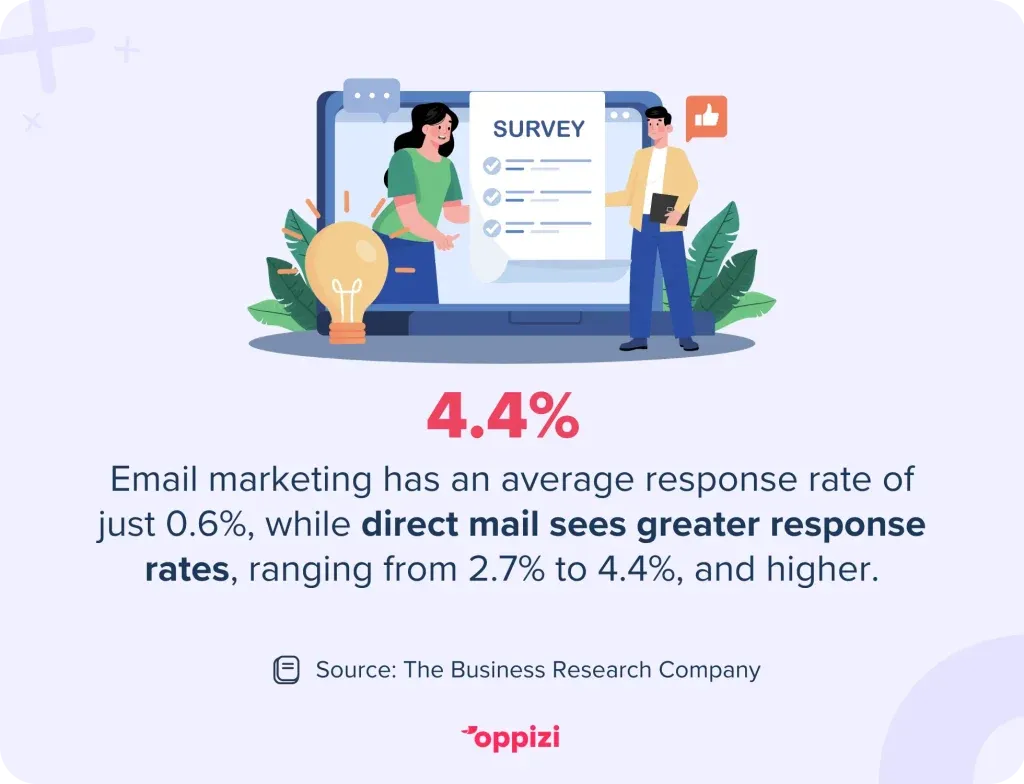
- More engagement – Email unique click rate was 2.3% in 2024, while direct mail sees much higher engagement, with response rates of 5 to 9 percent on house lists and 3 to 5 percent on prospect lists, per the ANA/DMA Response Rate Report 2018.
- Better targeting – Direct mail can reach specific areas or customer groups.
- Stronger brand recall – People remember something they can touch.
- Works with digital marketing – Reinforces online campaigns for better results.
How to use offline marketing
For business development:
- Send personalized mail to potential partners.
- Use thoughtful corporate gifts to build relationships.
- Hand out brochures at trade shows.
For sales:
- Follow up emails with physical mail to make a stronger connection.
- Send handwritten notes to important prospects.
- Use unique mailers to stand out from the competition.
Oppizi’s direct mail solutions help businesses combine online and offline marketing with measurable results.
The psychology of business development vs. sales
Understanding how different personality types fit into business development and sales can help you build better teams and improve success. Here’s what you need to know:
Key traits for business development
- Strategic thinkers – They focus on the big picture and long-term goals.
- Natural networkers – They love building connections with many people.
- Risk takers – They are comfortable with uncertainty when exploring new markets.
- Creative problem solvers – They think outside the box for partnerships.
- Patient – They know results can take time to show.
Key traits for sales
- Action-oriented – They want quick results and clear outcomes.
- Competitive – They are motivated by targets and achievements.
- Persuasive – They can influence others on the spot.
- Resilient – They handle rejection well and recover quickly.
- Detail-oriented – They focus on perfecting the sales process.
Understanding personality types
Psychological assessments show interesting patterns:
- Business development stars: Often ENTP (The Visionary) or ENTJ (The Commander).
- Sales aces: Frequently ESTP (The Persuader) or ESFJ (The Caregiver).
Why this matters for your business
- Hiring: Don’t push a natural salesperson into business development or vice versa.
- Team dynamics: Having different personalities can make teams stronger.
- Compensation: Business development may prefer long-term rewards, while sales often thrive on commissions.
- Training: Business development needs strategic exercises, while sales benefits from role-playing.
This understanding can explain why some people excel in one area but struggle in another. By knowing these differences, you can create teams that perform at their best.

FAQ: Business development vs. sales
1. Which is better, business development or sales?
Neither is better; they both play important roles. Business development focuses on long-term growth, while sales is all about generating revenue now. Successful companies invest in both to create balanced growth.
2. Is a Business Development Manager (BDM) higher than a Sales Manager?
Not really. BDMs often work on strategy, but both roles are usually at similar levels in a company. The main difference is their focus:
- BDM: Looks for new opportunities through partnerships and market expansion.
- Sales Manager: Guides the team to turn those opportunities into revenue.
In some companies, BDMs report to sales leaders; in others, they work alongside each other.
3. Is business development the same as sales development?
No, they are related but not the same:
- Business Development (BD): Focuses on new markets, partnerships, and revenue streams.
- Sales Development (SDR/BDR): Concentrates on finding and qualifying leads for sales teams.
Sales development is a part of business development that specializes in the early sales process.
4. Do business development professionals do sales?
They might engage in some sales activities, but not in the usual way. BD professionals:
- Negotiate partnerships
- Close high-level deals
They usually don’t handle routine customer transactions. Their focus is on bigger deals that create ongoing revenue, not just one-time sales.
5. What’s the difference between a sales rep and a BDM?
Sales Representatives aim to close deals quickly, typically within days or weeks. Their performance is based on revenue and conversion rates. They engage in cold calling, product demos, and finalizing sales while building relationships with buyers.
In contrast, Business Development Managers focus on long-term opportunities, often taking months or years. They measure success through partnerships and market share. Their role involves market research and networking to create strategic partnerships.
For example, a sales rep might sell your product to 100 businesses, while a BDM could establish a partnership that opens access to 1,000 potential customers.
Conclusion: Creating a strong growth engine
The best companies know that business development and sales go hand in hand. Here are some ways to make them work together:
- Align goals: Make sure both teams are aiming for the same targets.
- Facilitate communication: Have regular meetings between business development and sales.
- Measure together: Keep track of both leading (business development) and lagging (sales) indicators.
- Use all channels: Combine digital and offline marketing for better results.
Do you want more customers? Stop relying on digital alone. The smartest brands use offline marketing to reach the people online ads miss. Oppizi’s data-driven offline solutions get your message into the right hands—and deliver real results. Try it today.