Last updated July 28, 2026
Struggling to get enough quality leads into your pipeline?
This might mean that you might need to look into your top-of-funnel marketing tactics. This stage of the marketing funnel is where consumers get that crucial first impression of your company.
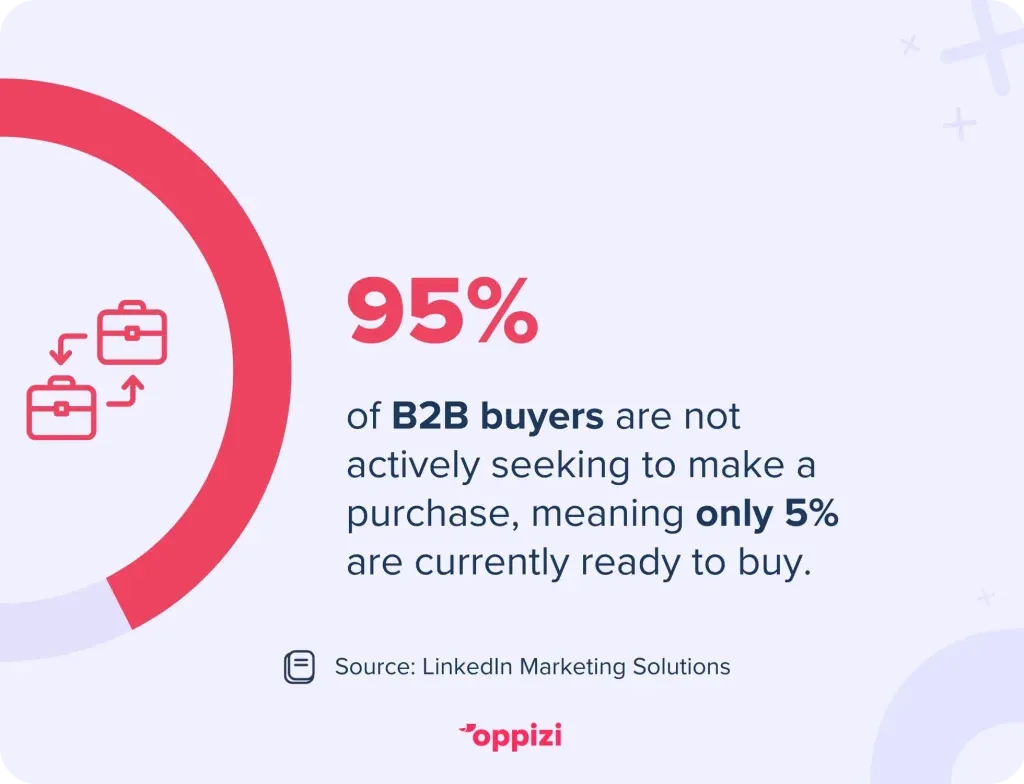
The reality is that 95% of B2B buyers are not in the market to buy right now. So if you’re only targeting those 5% who are ready to buy in the moment, you're missing out.
Top-of-funnel (TOFU) marketing is about casting a net to try and capture leads, but strategically. It’s how you build brand awareness, attract potential customers, and guide them into the next stage of the buyer journey.
In this comprehensive guide, we’ll break down why TOFU marketing matters and share proven tactics to fill your funnel with future customers.
What is top-of-funnel marketing?
Top-of-funnel marketing focuses on building awareness with an audience that doesn’t know your brand yet or has just discovered it. At this stage, they are not yet buyers but are actively researching, exploring, and seeking inspiration.
Therefore, your goal is to ensure your brand is discoverable, helpful, and leaves a lasting positive impression.
Why is top-of-funnel marketing important?
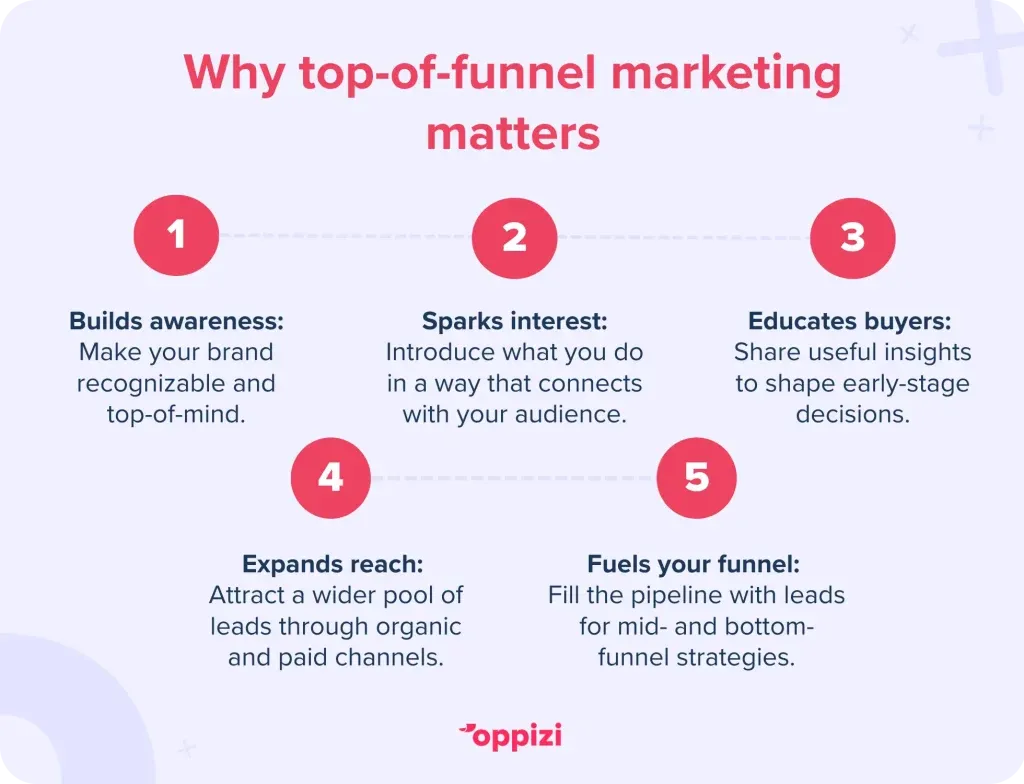
Here’s why TOFU marketing is an essential part of your strategy:
Builds brand awareness
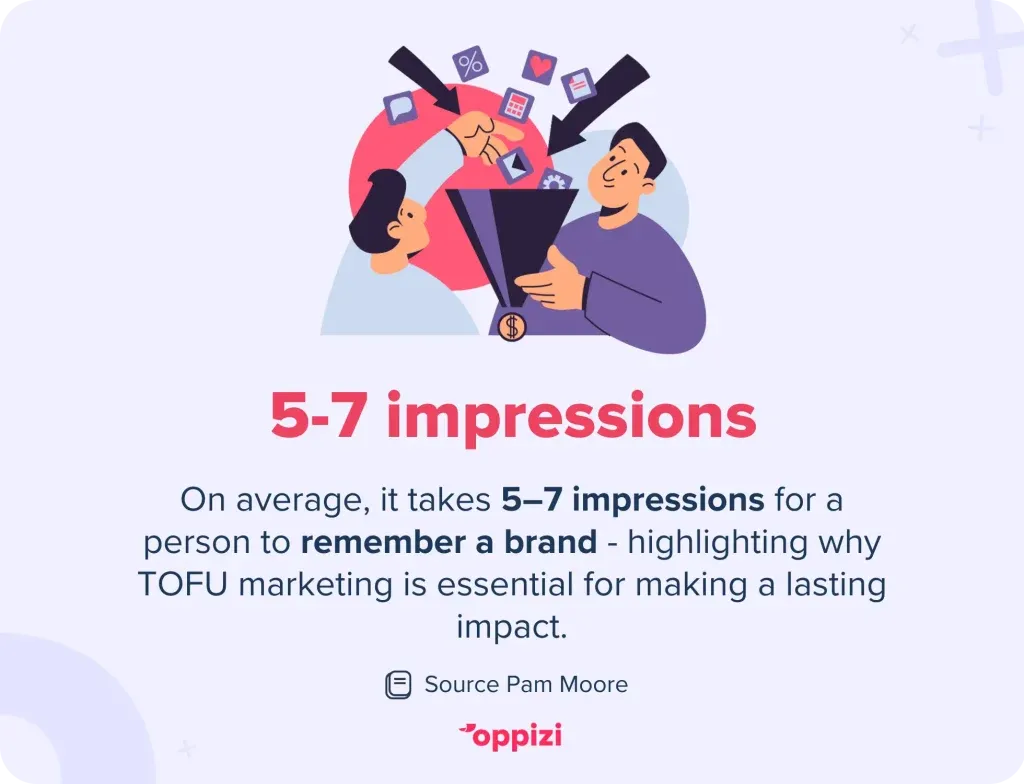
It can take 5 to 7 impressions for people to remember a brand. TOFU marketing efforts ensure your name shows up early.
Generates demand
TOFU strategies aren’t about making immediate sales. They’re about planting seeds, so people think of you when they’re ready to buy.
Educates and informs
70% of B2B buyers fully define their needs before reaching out to sales. Effective top-funnel content helps shape that journey from the start.
Drives long-term growth
The strongest brands win not just today’s sales, but tomorrow’s. Brand-building efforts have a compounding effect over time.
Warms up cold audiences
Top-of-funnel marketing focuses on turning cold traffic into warm leads by offering value. These tactics are designed to build initial trust with an audience unfamiliar with your brand.
8 top-of-funnel marketing tactics
TOFU marketing is about being helpful before being promotional. Here are some tactics you can use to do it well:
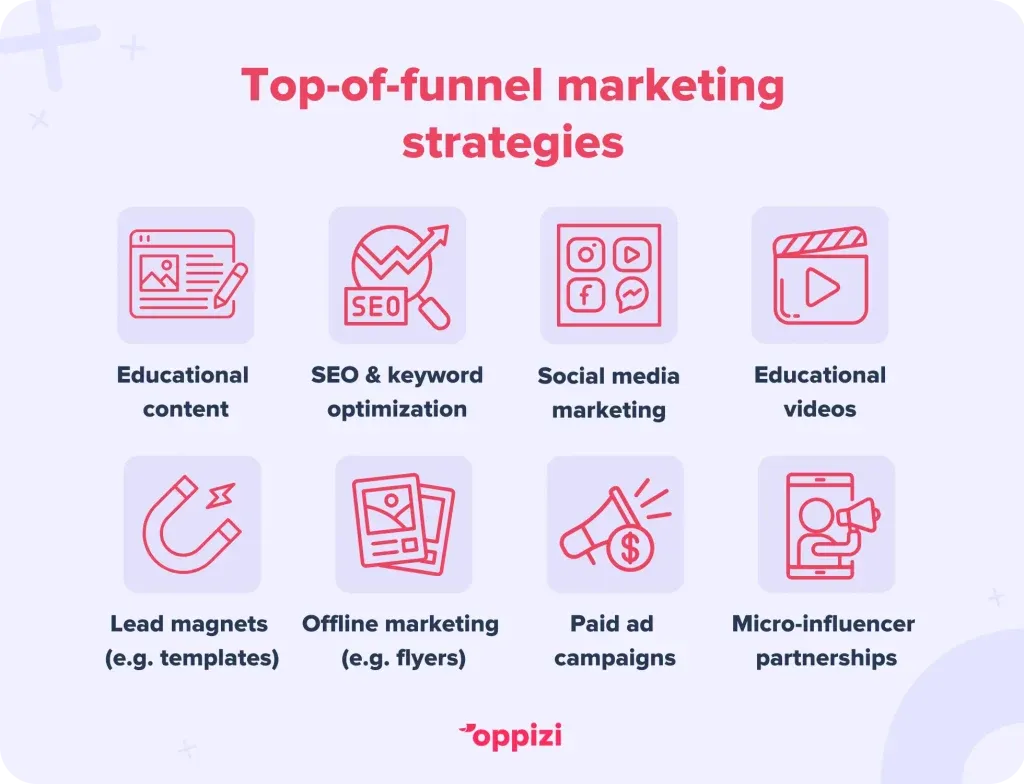
1. Educational content
Long-form content like blogs, guides, and how-tos helps you rank on search engines and answer early-stage questions. Studies show that B2B marketers who have blogs get 67% more leads than those who don’t.
Example:
If you offer cybersecurity software, a blog titled “Top 10 Cyber Threats Small Businesses Should Watch in 2025” can draw in decision-makers looking for advice, even before they’re ready to purchase protection.
2. SEO and keyword targeting
Strategic SEO helps you show up when potential customers search for answers. Focus on keywords like “how to,” “best tools for,” and “what is [topic].”
Example:
Optimizing your content for the keyword “how to reduce team burnout” can attract HR professionals - a great audience for a wellness SaaS tool.
3. Social media content (especially short-form)
Social media platforms like TikTok, Instagram, and LinkedIn are goldmines for TOFU content. Use them to share bite-sized tips, trends, or thought leadership. Prioritize short-form video content, as studies have shown that this has the highest ROI of any social media strategy.
Example:
A 30-second “3 things most startups get wrong about branding” post can spark shares and introduce you to thousands of new potential leads.

4. Educational video content (YouTube, webinars)
Video marketing is powerful at the TOFU stage, with 72% of consumers stating that they prefer to learn about a product or service through video. It accelerates trust-building and helps viewers understand complex topics.
Example:
A skincare retailer could implement a YouTube series indicating what skincare routines are best for certain skin types. This builds trust and sets them apart as experts within the industry.
5. Lead magnets
Free downloads like templates, checklists, or industry reports provide value and subtly introduce your brand.
Example:
Real estate agents could offer a “First-Time Buyer Guide” that explains the home-buying process and breaks down jargon into simple, easy-to-understand language. This builds trust and positions the agent as a helpful expert, making it more likely that first-time buyers will remember and choose them when they’re ready to act.
6. Offline brand activations (flyers, events, direct mail)
Offline marketing campaigns aren’t dead. In fact, physical touchpoints can be incredibly effective at the top of the funnel. 73% of American consumers say they prefer being contacted by brands through direct mail because they can read it at their own convenience.
Example:
A fitness studio opening in a new location could use flyer distribution as a top-of-funnel marketing strategy. To reach their ideal audience, they should focus on distributing flyers within a three-mile radius, particularly targeting areas like co-working spaces where potential customers are likely to be.
Jimmy Brings aimed to connect with new customers outside digital channels in major Australian cities. Working with Oppizi, they launched targeted door-to-door campaigns, distributing 875,000 flyers and magnets with real-time performance tracking. The campaign increased brand awareness by 66 percent and gained 1,600 new customers.
7. Paid ads for awareness (Google, Meta, YouTube)
Paid ads are a fast, scalable way to boost visibility at the top of the funnel. The goal at this stage isn't to push a sale but rather to introduce your brand to cold audiences with eye-catching content.
Example:
A B2B company could utilize a Meta advertising campaign to target specific audiences based on their job titles or interests. The campaign could promote valuable content such as a blog post or webinar.
Pro tip:
Evaluate top-of-funnel ad performance using metrics such as impressions, click-through rate (CTR), and video views, rather than focusing on conversions. Your focus at this stage should be building brand awareness, rather than making a sale straight away.
8. Influencer marketing (especially micro-influencers)
Influencer marketing isn’t just for B2C brands. It's a powerful tool for building credibility and reach in almost any industry, with 69% of consumers stating that they trust information fom influencers, family, and friends over a brand directly. Partnering with the right voices gives you access to engaged, relevant audiences that you may not reach on your own.
Example:
A sports clothing brand could partner with a fitness influencer on Instagram, showcasing the functionality and comfort of their apparel. Similarly, in the B2B sector, a SaaS Human Resources tool could collaborate with a LinkedIn creator specializing in HR to offer brief tutorials or niche-specific insights.
Pro tip:
When it comes to influencer partnerships, focus on alignment over follower count. Niche micro-influencers often have higher engagement rates and a more loyal following.
How to measure top-of-funnel marketing
Top-of-funnel success isn’t measured by sales. It’s measured by reach, visibility, and engagement. Key metrics you can track include:
- Website traffic: This tracks how many people are landing on your site from search, social, or content marketing initiatives.
- Content engagement: Monitor blog reads, video views, social shares, and time spent on page.
- Social reach and follower growth: See how many new people your posts are reaching and whether your audience is growing.
- Lead magnet downloads: A high number of downloads signals there is interest in your product or service, even before intent to buy.
- Brand mentions and backlinks: Monitor how often others are referencing your brand or linking to your content online.
Top-of-funnel marketing FAQs
1. What’s the difference between top-of-funnel and bottom-of-funnel marketing?
The top-of-funnel (TOFU) stage is about brand awareness and attracting new people to your business. Bottom-of-funnel (BOFU) is all about generating conversions.
2. Is top-of-funnel marketing only for B2C?
Not at all. Top-of-funnel marketing is also critical in B2B, especially since the buying cycle is longer and more complex. Educational content and thought leadership are essential in B2B TOFU strategies.
3. How long should someone stay at the top of the funnel?
It depends on your product, industry, and price point. Some leads convert quickly, while others require weeks or months of nurturing. Monitor lead behavior to identify interest and guide them through the marketing funnel accordingly.
4. Should I run ads at the top of the funnel?
Yes, but top-of-funnel marketing should prioritize engagement over immediate conversions. Instead of directing TOFU ads to product pages, focus on promoting valuable content such as blog posts, videos, or lead magnets.
Conclusion
Top-of-funnel marketing is where the buyer journey starts. It’s not about making the sale at this stage - it’s about showing up, offering value, and building trust from the very first interaction.
If you’re serious about filling your pipeline with high-quality leads, don’t overlook the top of the funnel. Create content that stands out, show up consistently, and make it easy for new audiences to discover your brand.
Want to make a first impression that lasts? Try incorporating an offline marketing campaign in your TOFU strategy. With Oppizi, you can launch highly targeted flyer or direct mail campaigns that drive awareness and spark interest where your audience lives and works.
Ready to start attracting quality leads into your funnel? Kick off an offline campaign with Oppizi today!