Last updated July 23, 2026
Performance marketing is a popular strategy that has transformed advertising by ensuring businesses pay only for tangible outcomes, such as clicks, leads, or sales. In 2021 in the United States, 9.1 billion dollars were spent on performance marketing. This results-driven approach enhances return on investment (ROI) and provides measurable insights into campaign effectiveness.
Read on to find out more about the benefits of performance marketing and how it works.
Understanding performance marketing
Performance marketing is a digital strategy where advertisers pay marketing partners based on specific actions taken by consumers. Unlike traditional advertising, which often involves upfront payments without guaranteed results, performance marketing ensures that payments are only made for measurable outcomes. Between 2020 and 2021, the investment in performance marketing in the US rose by about 47%.
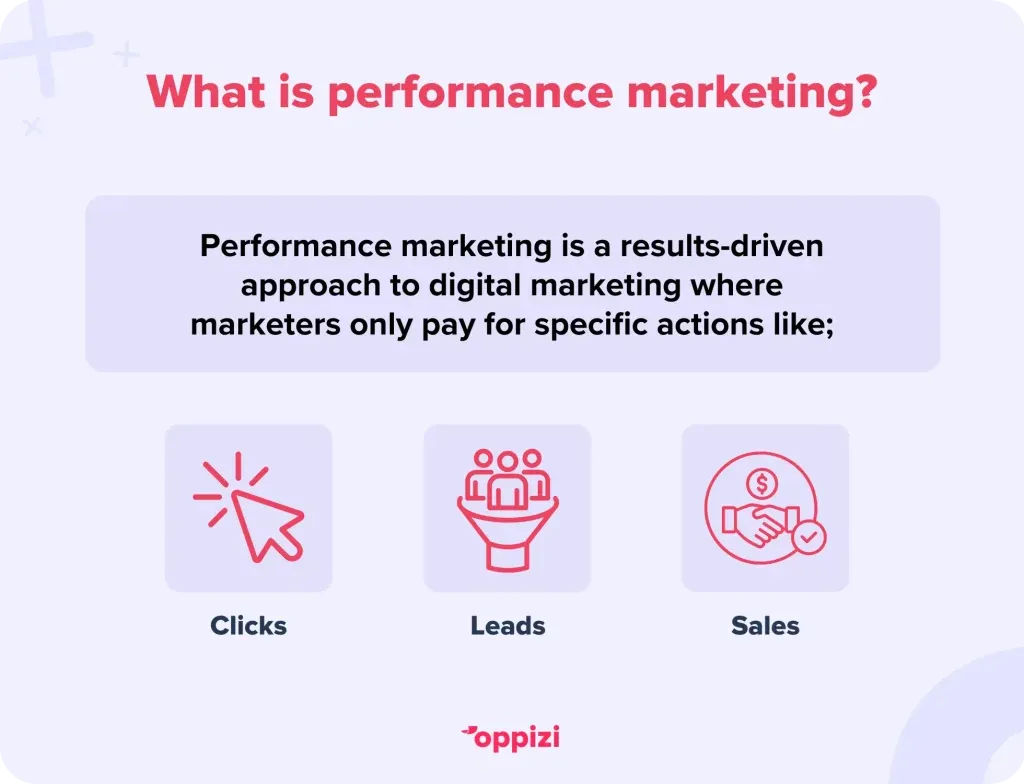
Common models include:
- Cost per click (CPC): Advertisers pay when users click on their ad, driving traffic to their website.
- Cost per lead (CPL): Payment occurs when a user provides contact information and becomes a potential customer.
- Cost per action (CPA): Advertisers pay when a user completes a specific action, such as making a purchase or signing up for a newsletter.
- Cost per sale (CPS): Payment is made only when a sale is completed, directly linking marketing spend to revenue.
Key benefits of performance marketing
Here are six key benefits of performance marketing and why it should be an important channel in your marketing mix.
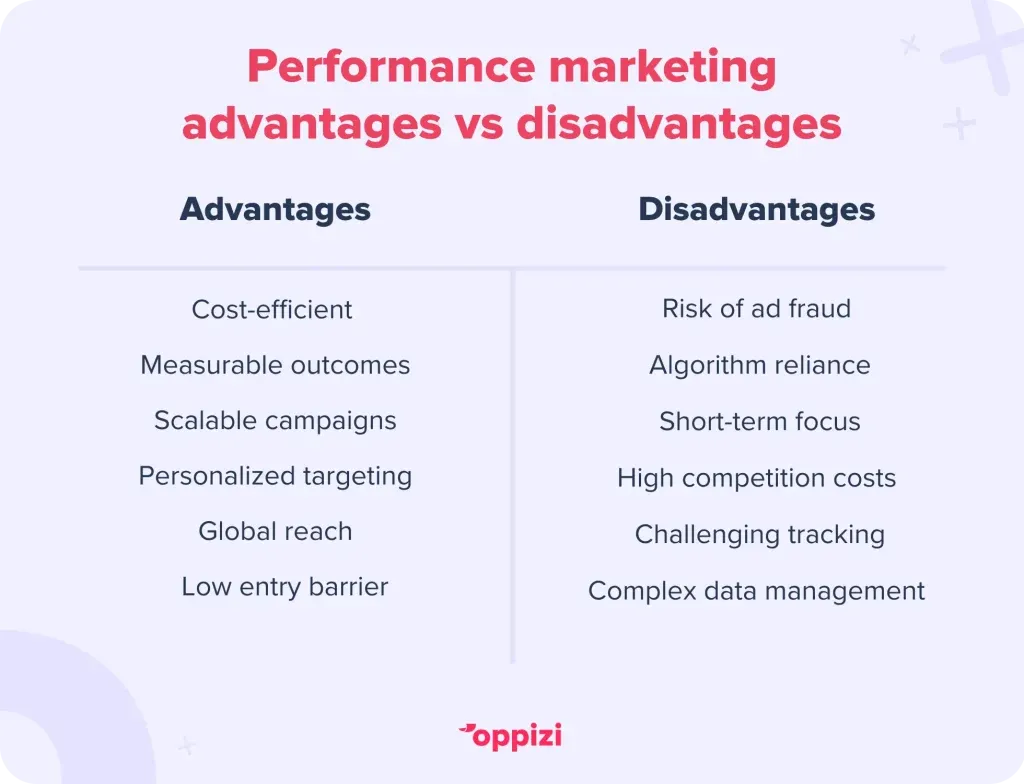
Cost efficiency and risk mitigation
By paying only for completed actions, businesses can maximize their budgets, minimize waste, and reduce financial risk since expenditures are tied to actual results rather than projections.

Measurable results and continuous learning
Detailed analytics provide insights into campaign performance, enabling data-driven decisions and ongoing improvements. This data-driven approach also helps businesses learn more about their customers and refine future campaigns.
Scalability and flexibility
Performance marketing campaigns can be scaled up or down based on results, while their adaptability allows for testing and optimizing messaging, targeting, and channels in real time.
Global reach with personalization
Digital platforms break geographical barriers, allowing businesses to target audiences worldwide. At the same time, performance marketing supports highly personalized campaigns tailored to specific demographics, behaviors, or interests.
Improved time-to-market and revenue predictability:
Campaigns can be launched quickly, enabling businesses to respond to trends or opportunities. Revenue predictability is enhanced with models like Cost-Per-Sale (CPS), directly tying spending to revenue generation.
Accessibility for all businesses
Even small businesses with limited budgets can leverage performance marketing effectively, making it an inclusive strategy for achieving targeted, results-driven goals.
Disadvantages of performance marketing
While performance marketing offers numerous advantages, it's essential to be aware of its potential drawbacks:
Data integrity and fraud risks
Performance marketing's digital nature can expose campaigns to fraudulent activities, such as domain spoofing and data manipulation. Ensuring data authenticity is crucial to maintaining campaign effectiveness and trustworthiness.
Over-reliance on specific channels
Focusing too heavily on a single marketing channel can make campaigns vulnerable to changes in platform algorithms, user behavior shifts, or increased competition. Marketers should diversify their efforts across multiple online and offline channels can mitigate this risk.
Cost considerations
Certain performance marketing strategies, like Pay-Per-Click (PPC) advertising, can become expensive, especially when targeting highly competitive keywords. Without careful budget management, costs can escalate quickly.
Limited organic audience growth
Performance marketing campaigns, particularly those focused on immediate conversions, may not contribute to building a dedicated, organic audience. This limitation can affect long-term brand awareness and engagement.
Technical challenges and continuous adaptation
Digital marketing's dynamic nature requires professionals to continually update their skills and adapt to new technologies and market trends, which can be demanding and resource-intensive.
Being mindful of these disadvantages allows marketers to develop more robust strategies that balance immediate performance goals with long-term brand development and sustainability.
Performance marketing channels
Several digital channels facilitate performance marketing strategies:
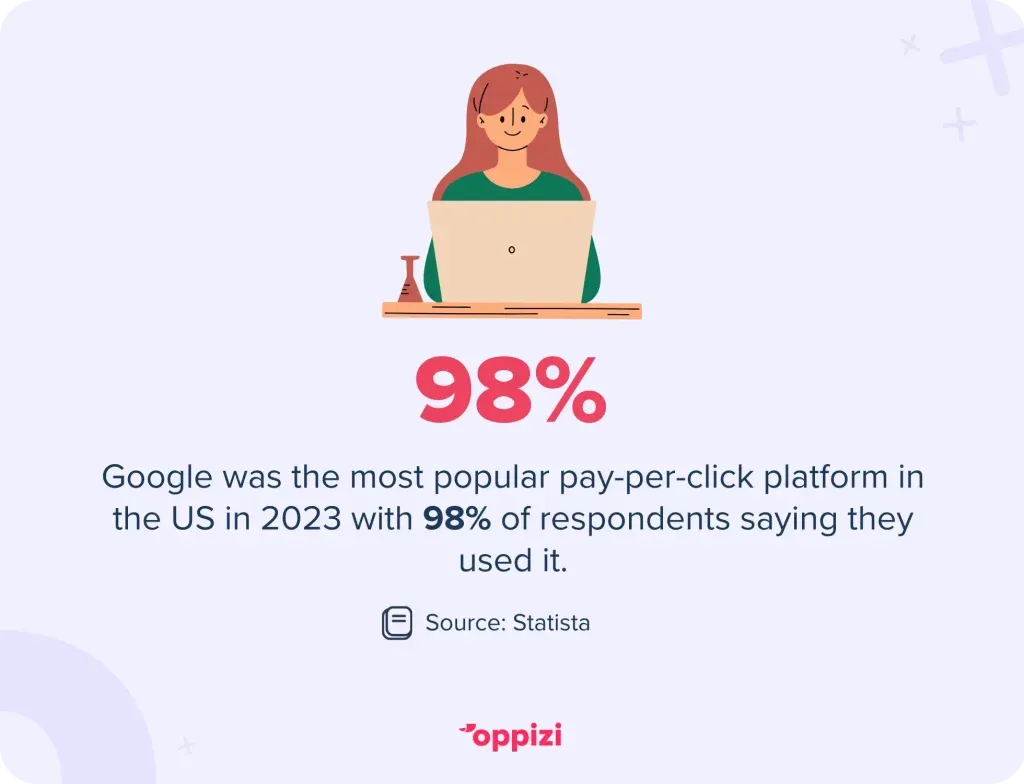
- Search engine marketing (SEM): SEM utilizes platforms like Google Ads to display ads in search results, targeting users actively seeking related products or services. According to a study by Statista, Google is the most popular pay-per-click platform in the US, with 98% of respondents reporting its use in 2023.
- Social media advertising: Leveraging social media platforms such as Facebook, Instagram, and LinkedIn to reach specific demographics based on user data.
- Affiliate marketing: Partnering with individuals or organizations that promote products or services in exchange for a commission on resulting sales or leads.
- Email marketing: Companies can send targeted email marketing campaigns to potential customers, encouraging specific actions like purchases or sign-ups.
Tips for implementing a performance marketing strategy
Here are some tips that can help you develop an effective performance marketing campaign:
- Define clear objectives: Establish SMART goals, such as increasing sales by 20% within three months.
- Identify target audience: Use data to understand your target audience’s demographics, interests, and behaviors. This will help you understand who is most likely to engage with your offerings.
- Select appropriate channels: Choose platforms that align with your audience's preferences and behaviors.
- Allocate your budget wisely: Invest more in high-performing campaigns and reduce spend on low-performing ones.
- Focus on quality content: Create engaging ads that resonate with your target audience and encourage the desired action.
- Implement tracking mechanisms: Use tools like Google Analytics to monitor performance and gather data on user interactions.
- Optimize campaigns: Regularly analyze performance data and use A/B testing to refine strategies, improve outcomes, and increase ROI.
Performance marketing FAQs
1. How does performance marketing differ from traditional marketing?
Traditional marketing often involves upfront costs without guaranteed outcomes, focusing on broad metrics like reach and impressions. In contrast, performance marketing ties payment to specific, measurable actions, providing greater accountability and ROI.
2 What are common performance marketing channels?
Key channels include search engine marketing (SEM), social media advertising, affiliate marketing, and email marketing, each offering unique advantages for reaching target audiences and driving desired actions.
3. How can I measure the success of a performance marketing campaign?
Success is measured through key performance indicators (KPIs) such as conversion rates, cost per acquisition (CPA), return on ad spend (ROAS), and overall ROI, all tracked using analytics tools.
4. What are the risks associated with performance marketing?
While performance marketing reduces financial risk by tying payment to results, challenges include potential fraud (e.g., fake clicks), the need for constant optimization, and dependence on third-party platforms' policies and algorithms.
Conclusion
Performance marketing offers a strategic, cost-effective approach to digital advertising, ensuring that every dollar spent contributes to measurable business objectives. By focusing on specific actions and utilizing data-driven insights, businesses can optimize their marketing efforts and achieve significant returns on investment.
While performance marketing is a powerful strategy, offline marketing can also bring a host of benefits, such as building trust through face-to-face interactions, reaching audiences in physical spaces, and enhancing brand visibility in local communities. If you’re looking to diversify your marketing efforts, Oppizi can help you integrate innovative offline strategies like flyer distribution with your existing campaigns. Start a campaign with Oppizi today and discover how we can help you achieve your marketing goals effectively!