Last updated July 23, 2026
Performance marketing is a key driver of modern digital advertising, enabling marketers to achieve measurable results and maximize the efficiency of their ad spend. By only paying for specific actions, such as clicks, leads, or sales, performance marketing offers a more efficient and accountable alternative to traditional digital marketing methods.
However, with the continuous advancements in technology and shifting consumer behaviors, navigating performance marketing channels has become more complicated. To succeed, businesses must develop a deep understanding of each channel's strengths and limitations. In this article, we’ll explore the top performance marketing channels and how to choose the best ones for your business.
What is performance marketing?
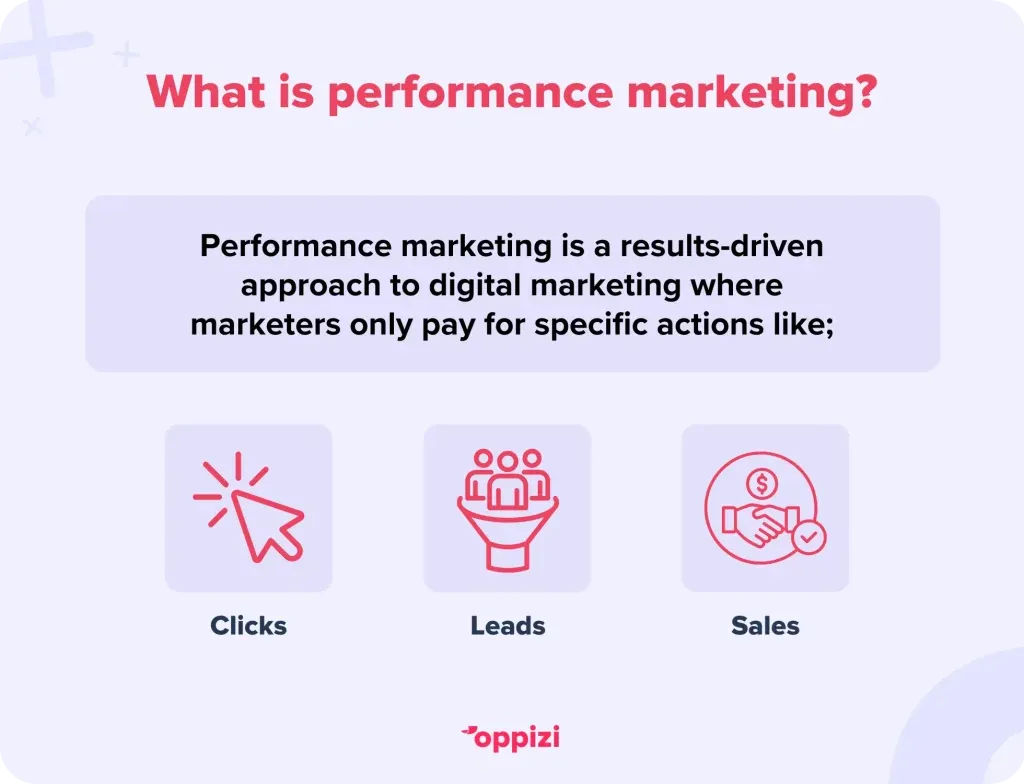
Performance marketing is a results-oriented approach where advertisers pay based on measurable actions, such as clicks, conversions, or sales. It focuses on optimizing campaign performance and ensuring that advertising budgets are spent efficiently. This strategy uses data-driven insights to drive better results and increase business growth by targeting the right audience at the right time.
By leveraging various digital channels, such as search engines, social media, and affiliate networks, businesses can precisely target potential customers and continuously optimize campaigns for a higher ROI.
Performance marketing vs. traditional marketing
While traditional marketing methods like TV ads, radio spots, or billboards often aim to build brand awareness, they are sometimes difficult to measure in terms of specific outcomes or ROI. On the other hand, performance marketing ties spending directly to measurable results, offering a more accountable approach.
Some key differences include:
- Measurability: Performance marketing tracks actions like clicks, conversions, and sales, whereas traditional marketing can sometimes rely on estimates and brand awareness.
- Flexibility: Performance marketing allows for real-time campaign adjustments for optimization, while traditional methods are less adaptable.
- ROI focus: With performance marketing, every dollar spent is tied to specific outcomes, offering a clearer connection between spending and results.
Benefits of performance marketing
Performance marketing offers a number of key advantages, including:
- Cost-effectiveness: Performance marketing allows businesses to pay only for actual results, making it a more efficient use of marketing budgets.
- Measurability and real-time tracking: Performance marketing provides real-time data on campaign performance, enabling quick adjustments and optimization for better results.
- Transparency: Marketers have full visibility into the performance of their campaigns, reducing the risks associated with ad spend.
- Scalability: Successful campaigns can be easily scaled, allowing businesses to expand their reach with minimal risk.

Key performance marketing channels
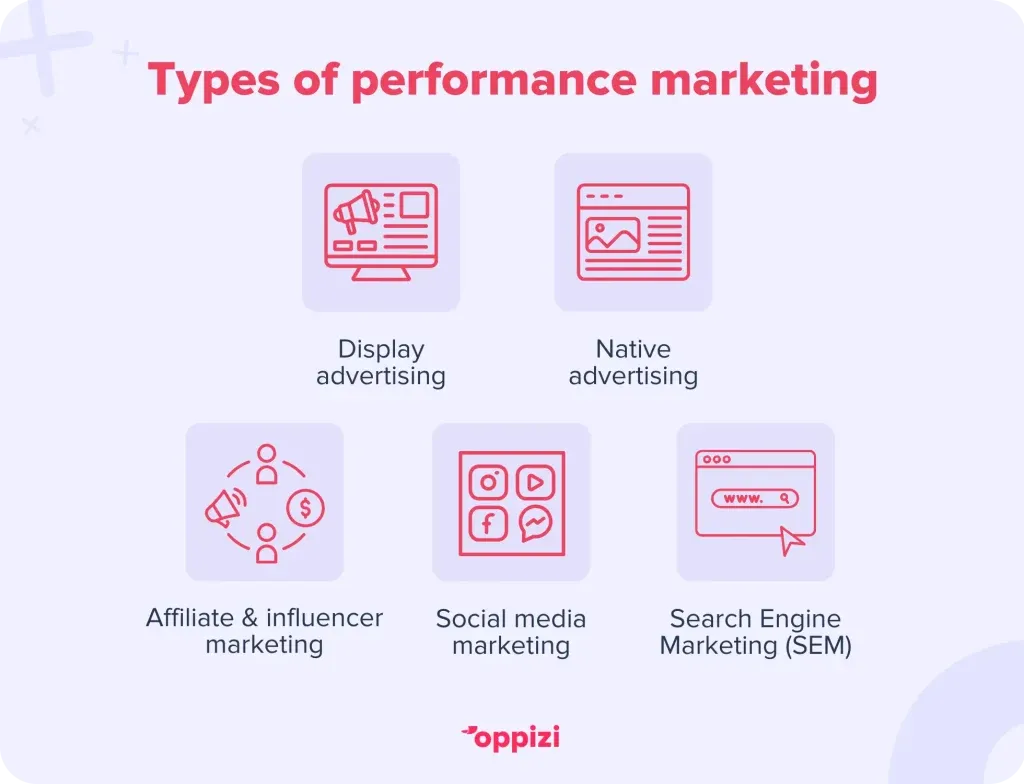
Several channels come under the umbrella of performance marketing, each offering unique possibilities to drive measurable business outcomes. The following are five key channels every business should know about to stay competitive in today’s market.
1. Search Engine Marketing (SEM)
Search Engine Marketing involves running paid ads on search engines like Google or Bing, targeting users based on their search intent. SEM operates on a cost-per-click (CPC) model, where advertisers only pay when a user clicks on their ad.
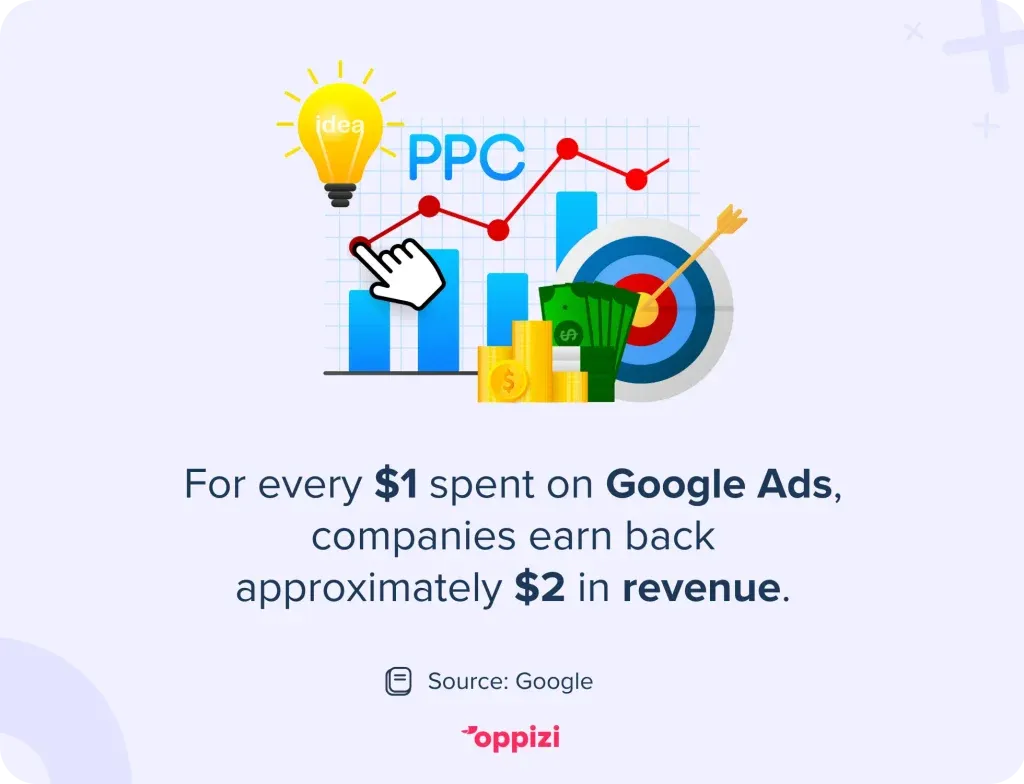
Google, as the dominant search engine, makes SEM an essential channel for any performance marketing strategy. In fact, studies have found that for every $1 spent on Google Ads, companies earn approximately $2 in revenue.
When implementing SEM, consider the following:
- Data-driven decisions: Use tools to track metrics like click-through rates (CTR), conversion rates, and CPC to fine-tune your campaigns.
- Quality keywords: Choose high-performing keywords that align with your business offerings and create compelling ad copy.
- Consistency: Ensure your campaigns maintain consistency across all elements, from keyword selection to landing page design.
2. Social media advertising
With over 5 billion social media users worldwide, platforms like Facebook, Instagram, TikTok, and X offer valuable opportunities for performance marketing. These platforms allow businesses to create highly targeted ads based on user demographics, interests, and behaviors.
To succeed in social media advertising, you should:
- Develop engaging content: To attract and engage users, create visually appealing images, videos, and blog posts.
- Ensure you understand your audience: Leverage insights about your audience to tailor campaigns that resonate with their preferences and behaviors.
Social media ads can be particularly effective in driving both awareness and conversions, making them a must-have in any performance marketing strategy.
3. Affiliate and influencer marketing
Affiliate marketing involves partnering with other websites or influencers to promote your products in exchange for a commission. Influencers, particularly micro-influencers, can help businesses reach niche markets and achieve higher engagement rates.
Micro-influencers, with their smaller but more engaged audience, often provide better ROI than larger influencers. The global affiliate marketing industry is worth $17 billion and is expected to grow to over $27 billion by 2027.
To maximize affiliate and influencer marketing success:
- Partner with influencers: Work with influencers whose audience aligns with your target market.
- Leverage networks: Use affiliate networks to reach broader audiences and scale your efforts.
4. Native advertising
Native ads are paid ads that seamlessly blend into the surrounding content of a website or platform. These ads aim to offer a more organic experience, creating a less intrusive interaction with potential customers.
Examples of native ads include:
- In-feed social media ads
- Sponsored articles or blog posts
- Promoted search results
While native advertising can foster better engagement, maintaining relevance and authenticity is crucial to ensure the message resonates with your audience.
5. Display advertising
Display ads are visually appealing ads placed on websites, apps, or social media platforms. These ads come in various formats, including banners, videos, and interactive content. It is predicted that global spending on display advertising will exceed 266 billion dollars by 2026.
Display ads are highly targeted, allowing businesses to reach the right audience based on demographics, behaviors, and interests. By leveraging display ads, businesses can enhance brand awareness and drive conversions.
How to choose the right performance marketing channels
With numerous performance marketing channels available, choosing the right ones for your business depends on two key factors:
- Marketing goals: What do you want to achieve? Are you looking to drive sales, generate leads, or increase brand awareness?
- Target audience: Who are you trying to reach? Understanding your target audience’s preferences and behaviors is essential for selecting the best channels.
To determine which channels to use, conduct extensive market research. Here are some of the key questions you should consider:
- Which platforms does your target audience use most frequently?
- How do they make purchasing decisions?
- What type of marketing resonates with them (e.g., social media posts, influencer recommendations)?
Performance marketing best practices
To maximize the effectiveness of your performance marketing campaigns, follow these best practices:
Set clear goals:
Define SMART campaign objectives and establish KPIs to track your success.
Use analytics:
Use analytics tools to monitor and optimize key metrics like CTR, conversion rates, and ROI.
Segment your audience:
Break down your audience into segments and create targeted campaigns for each group.
Optimize landing pages:
Ensure your landing pages are optimized for conversions with clear calls-to-action (CTAs) and compelling copy.
A/B testing:
Continuously test different ad variations and landing pages to identify which performs best.
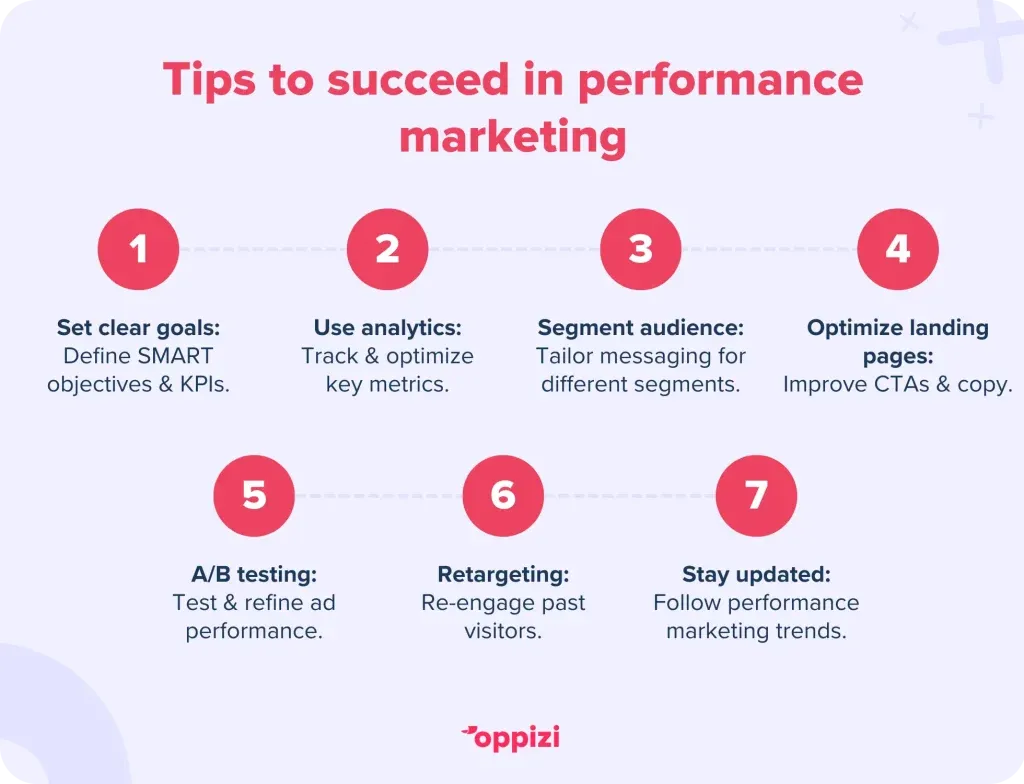
Retargeting:
Use retargeting strategies to show personalized ads to users who have previously interacted with your website or app.
Stay updated:
Keep up-to-date with the latest trends and technologies in performance marketing to stay ahead of the competition.
The future of performance marketing
The future of performance marketing will be shaped by emerging trends, including:
- Artificial intelligence (AI): AI can optimize bidding strategies, ad placements, and audience targeting by analyzing large datasets to predict and enhance campaign performance.
- Programmatic advertising: Automated ad buying will make it easier to target specific audiences and improve campaign efficiency.
- Personalization: By leveraging user data, marketers can automatically adjust their ads to deliver personalized experiences.

FAQs about performance marketing
1. How much should I budget for performance marketing?
Your budget will depend on your goals, the channels you choose, and the level of competition in your industry. Start small and test different approaches to find out what works best for you.
2. What are the key metrics to track in performance marketing?
Key performance marketing metrics include cost-per-click (CPC), click-through rate (CTR), conversion rate, cost per action (CPA), and return on ad spend (ROAS).
3. How do I know if my performance marketing strategy is working?
Monitor performance using analytics tools. Compare your KPIs to your goals to evaluate success and identify any areas where you can improve.
4. Can I combine multiple performance marketing channels?
Yes, combining multiple channels can enhance your reach and results. Ensure your campaigns are aligned, and use data to optimize and adjust your strategy.
Key takeaways
Performance marketing is a powerful way to drive measurable results and optimize your ad spend. However, when combined with offline strategies, businesses can unlock even greater ROI potential.
By integrating Oppizi’s expertise in offline marketing with your digital efforts, you can create a cohesive and comprehensive strategy that maximizes customer engagement across multiple touchpoints. Whether through targeted flyer distribution, direct mail, or other offline channels, Oppizi can help you reach the right audience in the real world while your digital campaigns drive conversions online.
Start an offline campaign with Oppizi today and enhance your overall marketing effectiveness.