Last updated August 28, 2026
Software-as-a-service (SaaS) companies face unique marketing challenges. Instead of selling physical products, SaaS businesses rely on subscription models, ongoing customer engagement, and digital distribution. With increasing competition in the SaaS space, companies must implement robust marketing strategies that attract, convert, and retain customers.
This article explores some essential marketing tactics for SaaS businesses and how blending digital and offline strategies can maximize growth.
Understanding the SaaS marketing landscape
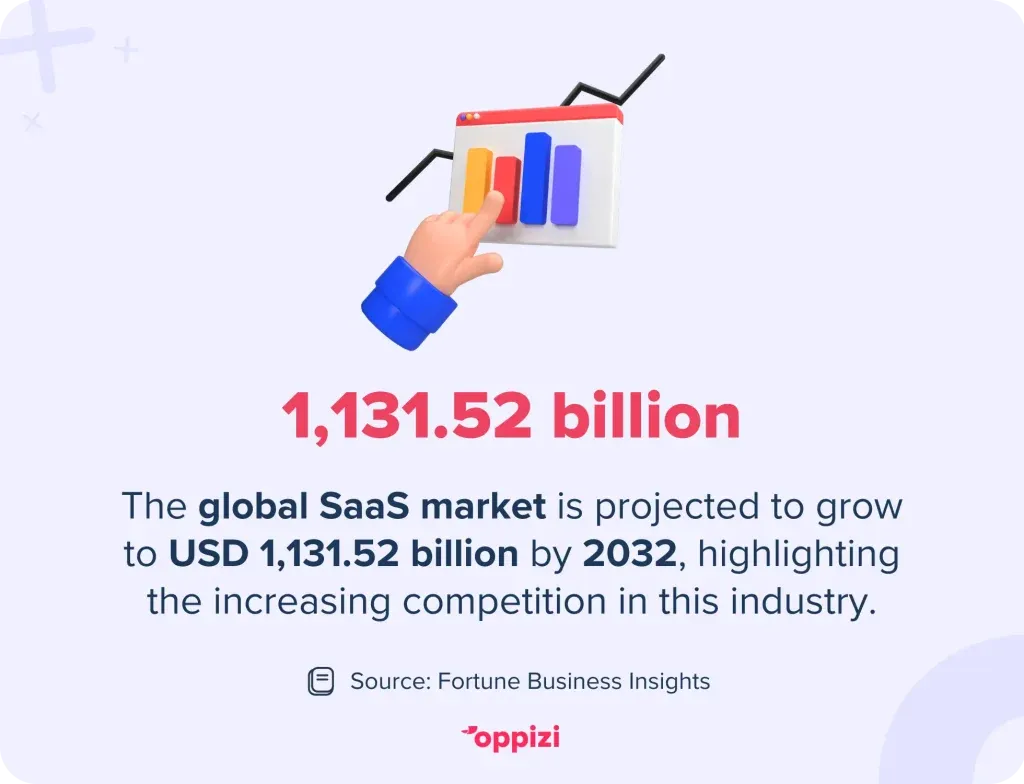
According to recent reports, the global SaaS market is expected to reach USD 1,131.52 billion by 2032, demonstrating the rising demand. However, with this increased growth comes higher competition. To thrive, companies must differentiate their offerings and establish strong customer relationships.
A well-rounded SaaS marketing strategy should include the following elements:
- Brand awareness
- Lead generation
- Customer acquisition
- Retention and upselling
SaaS businesses can take a multi-channel approach to marketing, leveraging both online and offline tactics to engage customers at different touchpoints.
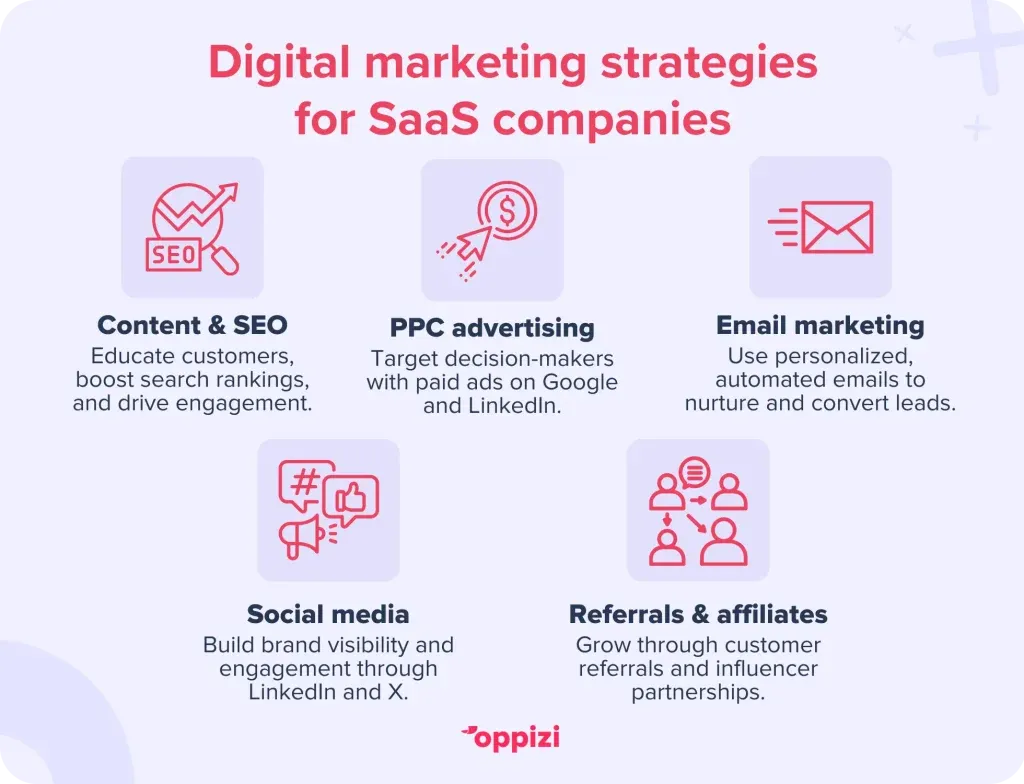
Digital marketing strategies for SaaS companies
Here we’ll explore the different online marketing channels that can benefit SaaS companies.
1. Content marketing & SEO
High-quality content is a cornerstone of SaaS marketing. 90% of SaaS companies stated that they utilize blogs in their online marketing strategy. Well-researched blog posts, whitepapers, and case studies help educate potential customers while improving search engine rankings.
Examples:
- Use keyword research tools to optimize your content for search engines.
- Provide valuable insights through detailed guides and tutorials.
- Incorporate video content into blog posts to boost engagement.
2. Pay-per-click (PPC) advertising
PPC campaigns allow SaaS companies to target specific customer segments with precision. Google Ads and LinkedIn Ads are particularly effective for reaching decision-makers in businesses.
Examples:
- Target keywords with high commercial intent.
- Use retargeting to engage visitors who didn’t convert on the first visit.
- Optimize landing pages for conversions.

3. Email marketing & automation
Email marketing remains one of the most effective marketing channels for SaaS. The software industry has an average open rate of 35.92% for email campaigns.
Examples:
- Personalize emails based on user behavior.
- Automate onboarding sequences to nurture leads.
- Use email segmentation to deliver relevant content to different groups.
4. Social media & community building
Social media platforms like LinkedIn, Facebook, and X, are valuable for building brand visibility and engagement for SaaS companies.
Examples:
- Share industry insights and success stories.
- Find ways to engage with audiences through interactive content (polls, Q&As, live streams).
- Build a community by participating in discussions.
5. Referral & affiliate programs
Encouraging satisfied customers to refer others can lead to exponential growth. In fact, 86% of B2B buyers state that word-of-mouth recommendations from peers influence their purchasing decisions.
Examples:
- Offer discounts or extended trials for successful referrals.
- Partner with influencers within your niche to promote your software.
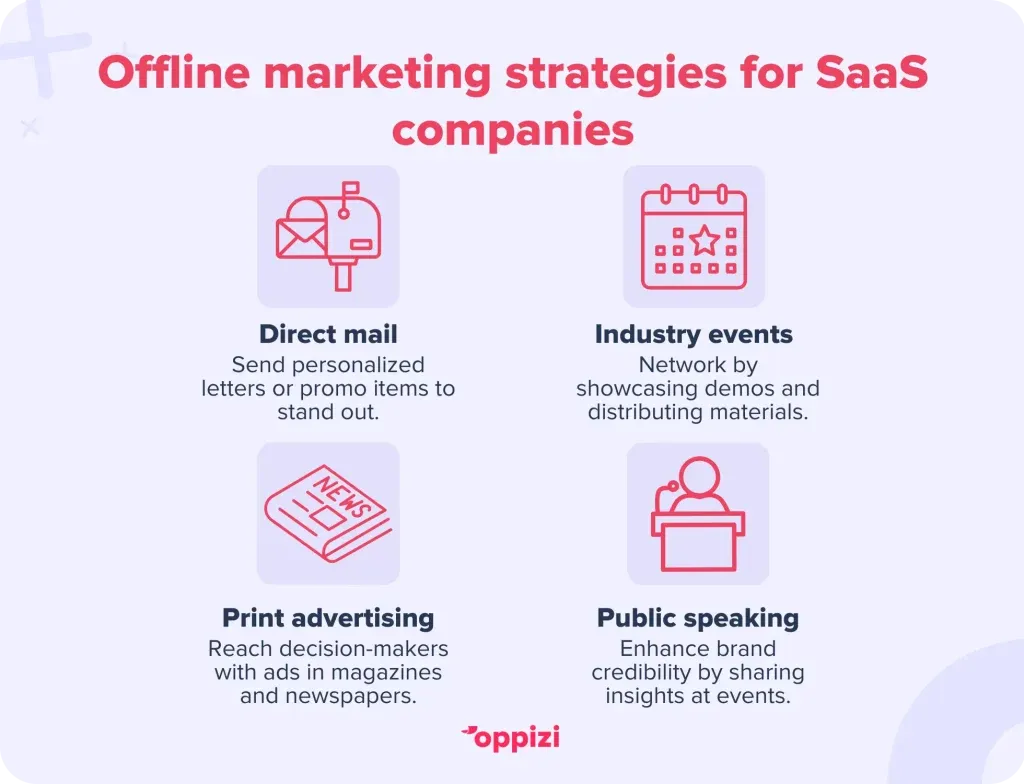
The role of offline marketing for SaaS
While digital marketing is essential, SaaS companies can gain an edge over their competitors by incorporating offline marketing strategies into the mix. Offline interactions build trust and credibility, helping businesses establish a more personal connection with potential customers.
1. Direct mail marketing
Predicted to reach a market volume of 62.08 billion US dollars by 2030, direct mail is making a comeback. Sending personalized letters, brochures, or promotional items can make your brand stand out in a crowded digital space, especially for high-value B2B SaaS sales.
Examples:
- Send handwritten notes to high-value leads to build trust.
- Offer exclusive deals to recipients.
- Use unique promo codes in mail pieces to track responses.
2. Industry events & trade shows
Attending and sponsoring industry conferences allows SaaS companies to network with potential customers, investors, and industry leaders.
Examples:
- Showcase demos to prospective customers or investors to build trust in your product.
- Distribute branded promotional materials to keep your brand top-of-mind.
- Host a workshop or speaking session with industry insights.
3. Print advertising
Implementing print advertising in industry magazines and newspapers can help SaaS brands reach decision-makers who may not be as active online.
Examples:
- Place ads in niche business publications.
- Use QR codes in print ads to streamline the connection between offline and digital.
4. Public speaking & workshops
Becoming a thought leader in the industry can enhance brand credibility. Hosting in-person workshops or speaking at events provides an opportunity to showcase expertise and connect with prospects.
Examples:
- Share actionable insights in presentations.
- Offer exclusive product discounts to attendees.
Integrating online and offline strategies
A successful SaaS marketing campaign should blend digital and offline efforts to reach potential customers across multiple touchpoints and boost brand awareness. Here are a few ways to integrate both:
- Promote offline events online through social media and email campaigns.
- Collect leads at offline events and nurture them through digital follow-ups.
- Use QR codes on printed materials to drive traffic to landing pages.
Measuring SaaS marketing success
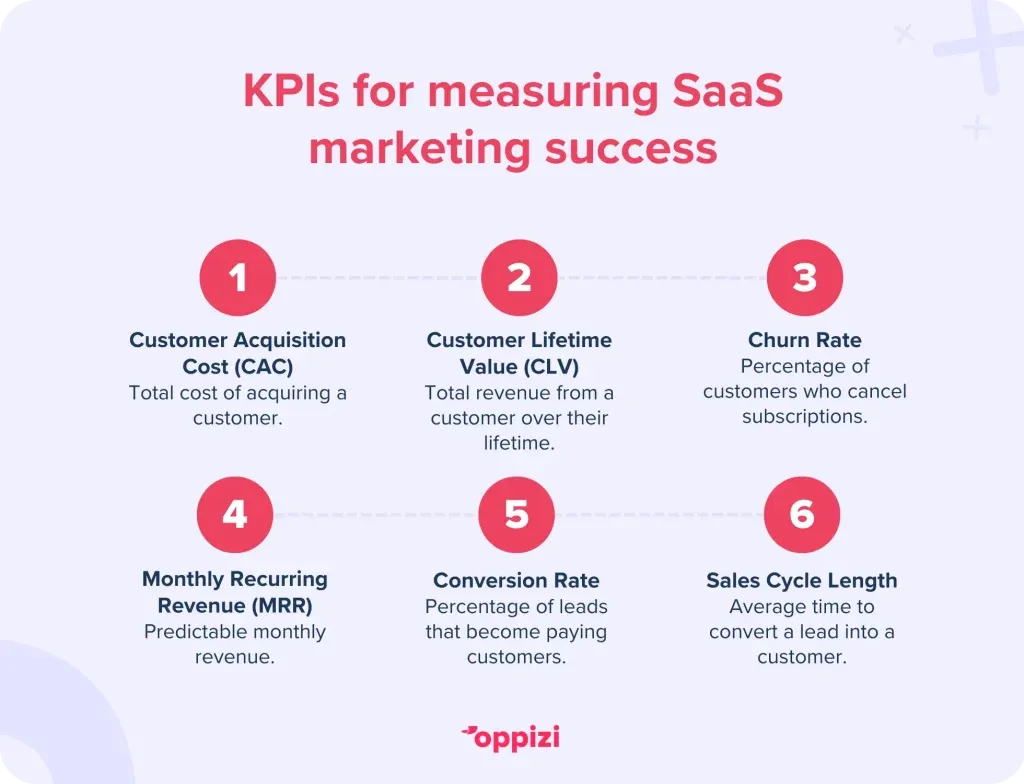
Tracking key performance indicators (KPIs) is essential for evaluating the success of SaaS marketing efforts. Here are the critical KPIs SaaS companies should monitor:
- Customer Acquisition Cost (CAC): The total cost of acquiring a new customer. Monitoring CAC helps assess the efficiency of marketing strategies and optimize budget allocation.
- Customer Lifetime Value (CLTV): The total revenue expected from a customer over their entire relationship with the company. A high CLTV indicates strong retention efforts and long-term customer satisfaction.
- Churn rate: The percentage of customers who terminate their subscriptions within a given period. Reducing churn is vital for maintaining sustainable growth and for predicting revenue growth.
- Monthly Recurring Revenue (MRR): The predictable revenue generated monthly. Tracking MRR helps in forecasting financial stability and strategic planning.
- Conversion rate: The percentage of leads that convert into paying customers. Improving conversion rates indicates effective marketing and sales processes.
- Sales cycle length: The average time taken to convert a lead into a customer. According to research by HubSpot, the average SaaS software sales cycle is 84 days, emphasizing the need for an optimized sales process.
By continuously measuring the KPIs mentioned above, SaaS companies can refine their marketing strategies and make data-driven decisions for continued growth.

Final thoughts
The SaaS industry is more competitive than ever, making it essential to implement a well-rounded marketing strategy that covers all bases. While digital marketing ensures scalability, offline marketing fosters deeper customer connections and builds trust.
If you’re looking to amplify your marketing efforts, Oppizi can help you execute targeted offline campaigns that engage your audience. Start an offline marketing campaign today and take your SaaS marketing to the next level!
Frequently asked questions
- What are the best marketing channels for SaaS companies?
The most effective channels include content marketing, PPC advertising, email marketing, social media, and referral programs. Offline strategies like direct mail and trade shows also enhance credibility.
- How can a SaaS company improve customer retention?
Focus on customer success by offering excellent onboarding experiences, providing educational content, and maintaining regular communication through personalized emails and support.
- What budget should be allocated for SaaS marketing?
The budget you allocate to marketing depends on your growth stage, target audience, and chosen marketing strategies. However, studies have shown that SaaS companies budget an average of 38% of their annual revenue to sales and marketing.
- Is offline marketing necessary for SaaS companies?
While digital marketing is essential, offline marketing strategies can help build trust, increase brand visibility, and reach prospects who may not engage with online ads or have ad blockers in place.