Last updated July 23, 2026
People don’t stick to one screen or one place anymore. They move between their phones, laptops, stores, and social media without thinking twice. If your marketing only shows up in one of those places, you're missing out. That’s where omnichannel marketing helps.
If the word sounds new to you, no problem. This guide breaks it down. You’ll learn what it means, how it works, why it matters, and how to start using it yourself. No jargon. Just the basics.
What is omnichannel marketing?
Omnichannel marketing means everything you do to reach customers is connected. Whether someone sees your flyer, visits your website, talks to your team, or walks into your store, it all feels like part of the same experience.
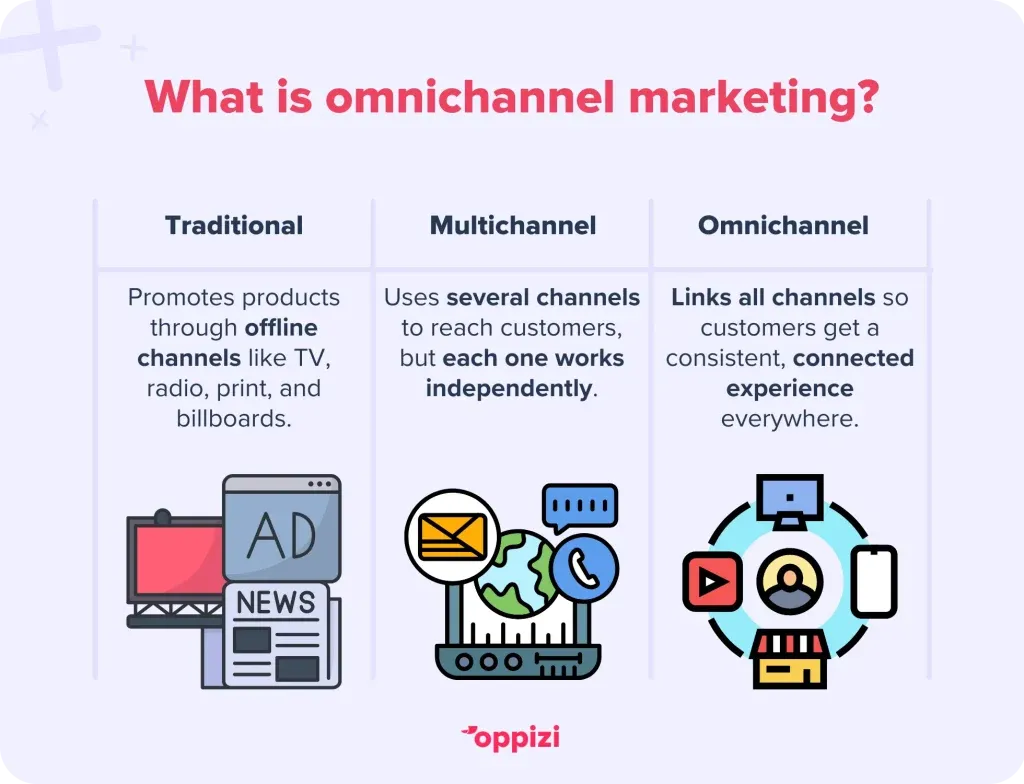
It’s smooth and consistent, no matter where they find you. This is different from multichannel marketing. With multichannel, you show up in different places, but each one works alone. With omnichannel, everything works together. Here’s a simple way to picture it:
- Multichannel: You invite someone to five different parties. But the parties don’t talk to each other.
- Omnichannel: You invite them to one big party with different rooms. Each room has the same music, the same food, and the same vibe. They can move around, and it still feels like one event.
Why omnichannel marketing matters
People don’t shop in one straight line. They might:
- See your ad on Instagram
- Click your website
- Get distracted
- See your flyer later
- Walk into your store a week after
With omnichannel marketing, all these moments connect. It feels natural. Like one conversation. That builds trust. And when people trust you, they’re more likely to buy from you.
What you get:
- A better customer experience
- More people engaging with your brand
- Consistent messaging across every channel
- Better results from your marketing
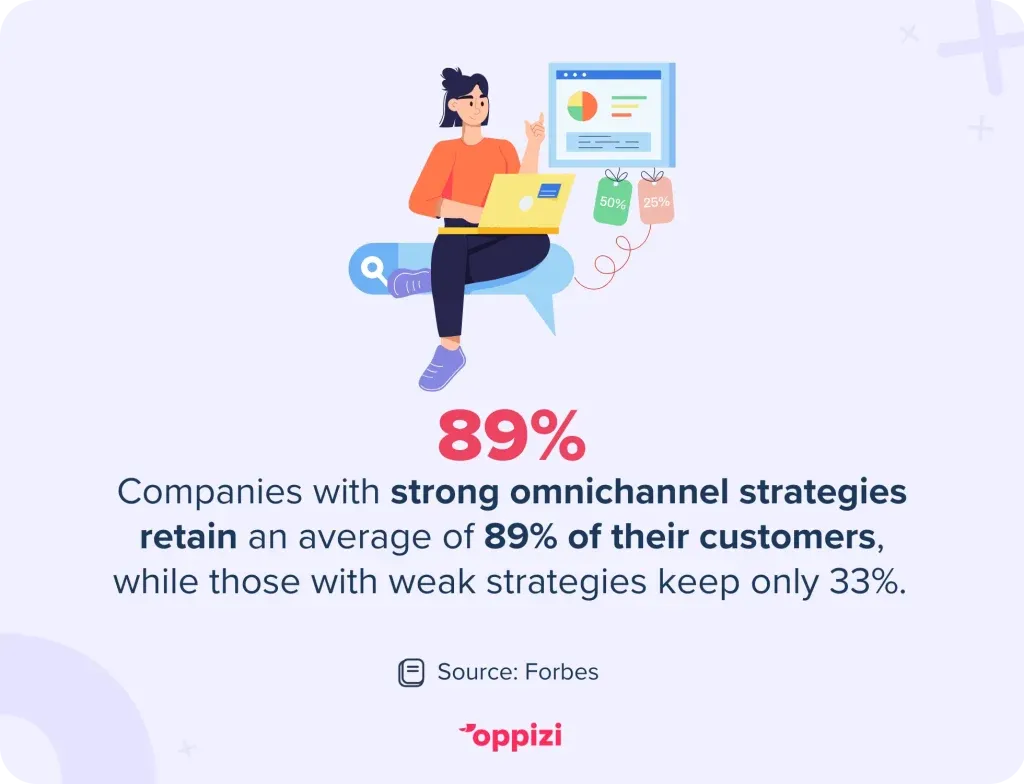
It also helps you track what’s working. Since all your channels are connected, you can see how people go from first click to final sale. Companies that use this well keep more customers. Around 89%, compared to just 33% for those that don’t.
Examples of omnichannel marketing
Let’s say you own a gym. Here’s how you could use omnichannel marketing:
- Flyers: Hand out or mail flyers with a QR code for a sign-up offer
- Website: Show that same offer, with the same look and message
- Email: If someone scans the code but doesn’t sign up, send a follow-up email
- In-person: When they come to the gym, your staff knows what offer they saw
- App: After signing up, they get a welcome message and class schedule
Everything feels connected. Nothing feels random. You can do the same if you own a bakery, a clothing shop, or a real estate business. Start with a flyer. Follow up with emails or ads. Make it all work together. That’s omnichannel marketing.
Want help making your offline campaigns part of your omnichannel strategy? Oppizi can help with flyer distribution that fits right into your bigger picture.
How to build an omnichannel marketing strategy
You don’t need a big team or a big budget to use omnichannel marketing. You just need to start with the right steps.
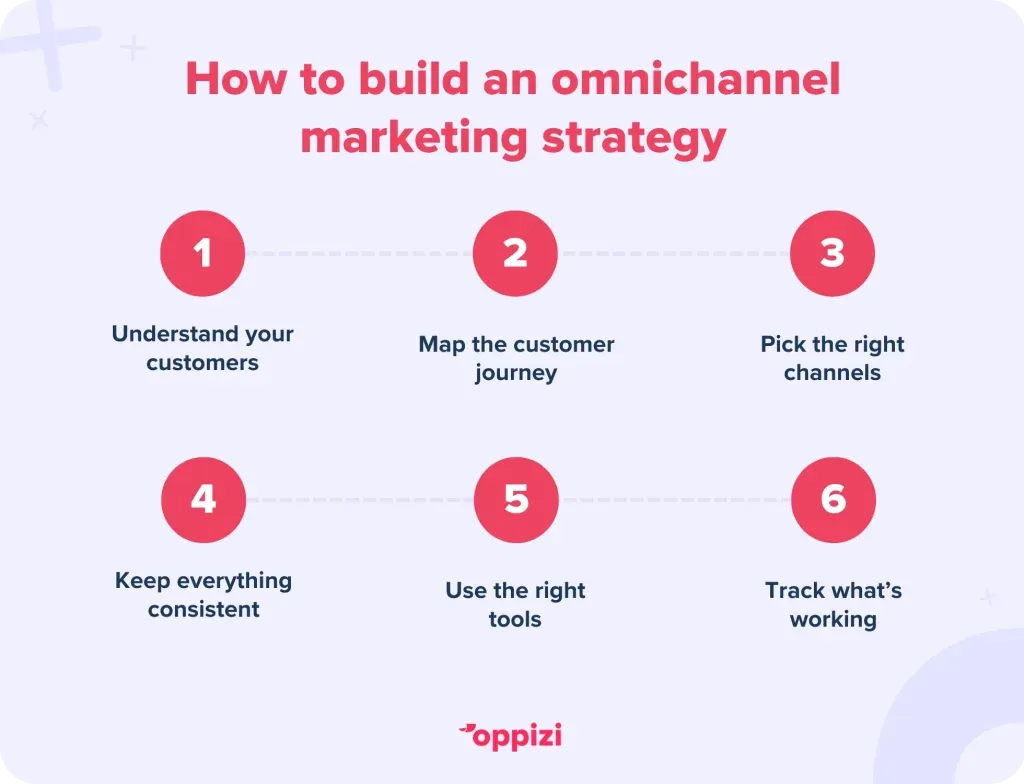
1. Understand your customers
Figure out how your customers shop and where they spend time. Do they scroll Instagram? Do they check their mail? Do they like to chat in person?
You can use tools like Google Analytics, quick surveys, or even ask them directly. Combine what you learn online with what you learn offline, like which flyer campaigns brought people in.
2. Map the customer journey
Think about the steps someone takes from first hearing about you to becoming a regular customer. Keep it simple:
- First touch: flyer, ad, or word-of-mouth
- Research: website, social media, reviews
- Purchase
- Follow-up: emails, loyalty perks, surveys
This is your customer journey. It helps you see where things are working—and where you might lose people. A quick reminder or a well-timed flyer could keep them moving.
3. Pick the right channels
You don’t need to be everywhere. Just show up where your customers are.
That might be:
- Social media
- Your website
- Your store
- Mailboxes (yes, flyers still work!)
Offline marketing stands out more now than ever. People notice it. That’s where Oppizi can help. We handle the printing, delivery, and tracking for you, so it fits right into your bigger plan.
4. Keep everything consistent
Use the same tone, look, and message everywhere. If someone gets your flyer and then visits your website, it should feel like the same brand.
Stick to the same colors, fonts, and language. Create simple templates or guides your team can follow. That way, no matter where someone sees you, it always feels familiar.
5. Use the right tools
There are tools that make omnichannel marketing easier. Some help you talk to your audience. Others help you stay organized or track results.
Here are a few you might use:
- For communication: Mailchimp (email and postcards), SMS, Oppizi (flyers and direct mail)
- For automation: Zapier, HubSpot workflows
- For tracking: Google Analytics, Oppizi dashboard
Use tools that fit your needs. They’ll help you save time and keep everything in one place.
6. Track what’s working
Don’t just launch and leave it. Keep an eye on what’s happening. Watch:
- Email open and click rates
- Where your website visitors come from
- How many people visit your store after a flyer drop
- Which channels lead to the most sales
Look for patterns. Maybe flyer drops lead to more visits. Maybe people who scan your QR code buy faster. Use that info to improve. With Oppizi, you can track offline results in real time. So if something’s not working, you can adjust right away.
How omnichannel marketing builds customer loyalty
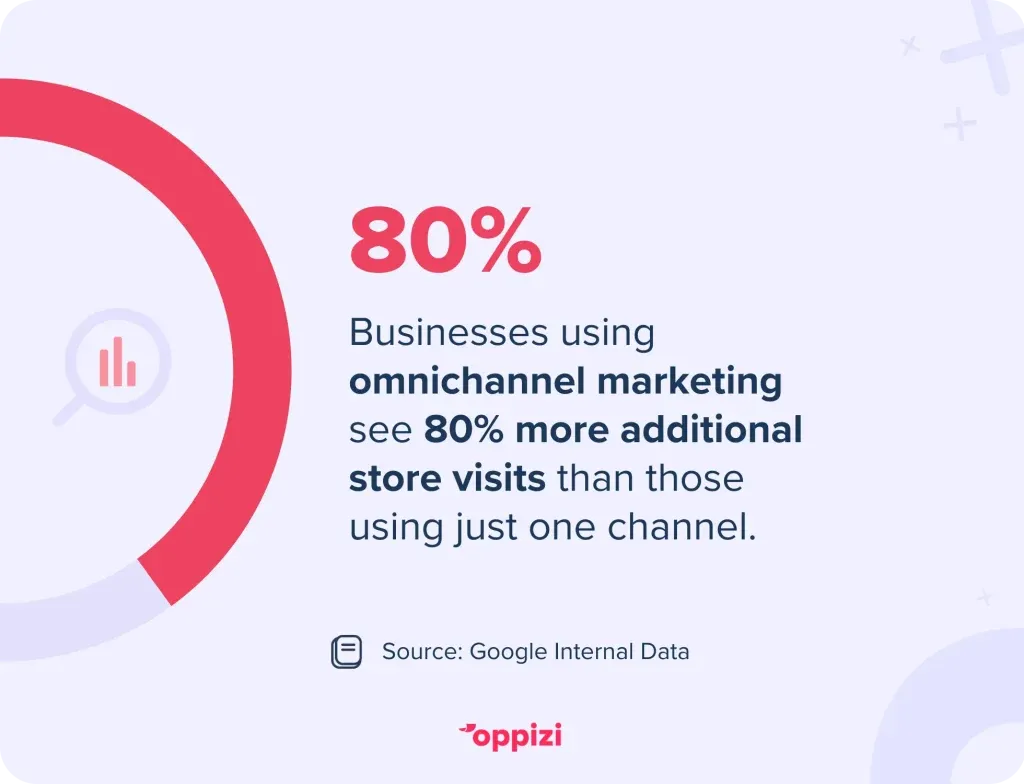
Loyal customers don’t show up by chance. You earn them with consistent, thoughtful experiences. That’s where omnichannel marketing helps. In fact, Omnichannel strategies lead to 80% more incremental store visits compared to single-channel approaches.
When every part of your brand feels connected—flyers, website, emails, in-store visits—people trust you more. And trust leads to loyalty. Picture this:
- Someone picks up your flyer at a café.
- Later, they visit your website and see the same offer.
- After they buy, they get a thank-you email or a postcard with a discount.
That follow-up matters. It shows you care. It’s not just about the sale—it’s about the relationship. And loyal customers pay off. They spend more, come back often, and tell their friends.
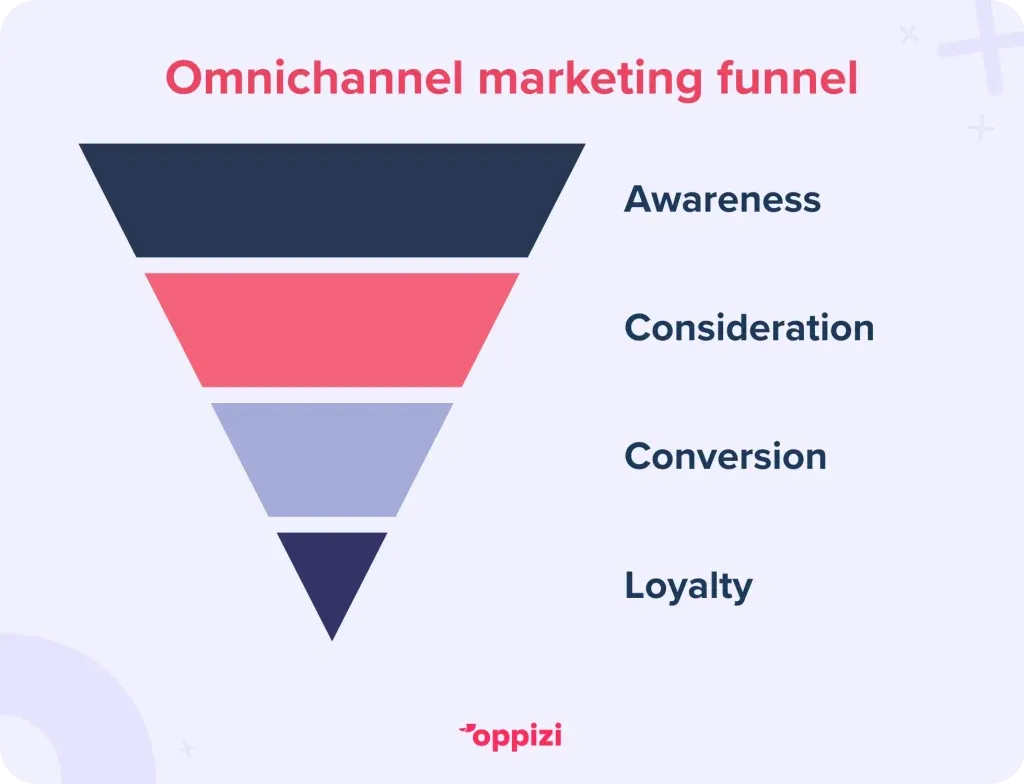
Offline tools that support your omnichannel marketing funnel
Offline marketing isn’t separate from your strategy—it makes it stronger. Flyers and direct mail can support every step of the customer journey.
Here’s how:
- Awareness: Drop flyers in busy spots or mail them to homes. Add a QR code or short link so you can track interest.
- Consideration: Follow up with emails or ads for people who scanned the code or visited your site.
- Conversion: Send a time-limited postcard offer to encourage action.
- Loyalty: After someone buys, send a thank-you note or invite them back with a mailer.
Flyers catch attention in a noisy digital world. And when you track them, they become a smart, measurable tool.
How to budget and grow your omnichannel strategy
Omnichannel doesn’t have to cost a lot. You can start small and build from there. Pick a few channels your customers use—like Instagram, email, and flyer drops. Here’s how to keep it simple:
- Test first: Start with one neighborhood before expanding.
- Watch ROI: Use tracking tools to see what works—and stop what doesn’t.
- Automate: Use tools like Oppizi, Mailchimp, or Zapier to save time.
Done right, omnichannel marketing isn’t just affordable. It helps you spend smarter, not more.
Common problems and how to avoid them
It’s easy to feel overwhelmed when starting out. But most problems are easy to fix:
- Trying to do too much: Start with a few key channels.
- Mixed messages: Use a simple brand guide to stay consistent.
- Disconnected teams: Make sure sales, marketing, and support are aligned.
- Ignoring offline: Flyers and postcards still work, especially when tracked.
Check in on your strategy every few months. See what’s working and what’s not. Then adjust.
Getting started: quick tips
Here’s how to make your first steps count:
- Pick 2–3 channels your audience actually uses.
- Keep your voice and visuals consistent.
- Choose one goal—like sign-ups, visits, or sales.
- Use tools that save you time.
- Don’t skip physical marketing—flyers still drive traffic.
Frequently asked questions about omnichannel marketing
What are the 4 pillars of omnichannel?
There are four things that make omnichannel work:
- Consistency – Your message, tone, and look should feel the same everywhere.
- Personalization – Use what you know about your customers to give them a better experience.
- Channel integration – Make sure your online and offline channels work together.
- Customer focus – Keep the journey smooth from start to finish.
What is an example of an omnichannel?
Let’s say you run a coffee shop. A customer:
- Sees your flyer with a QR code for 10% off
- Scans it and signs up for your emails
- Gets a welcome message with a coupon
- Uses the coupon in-store
- Gets a thank-you message later
That’s omnichannel. Every step is connected, and it all feels like one experience.
What is omnichannel marketing vs multichannel marketing?
Multichannel means using more than one platform—like email, social media, or flyers—but each one works on its own. Omnichannel connects them.
So a customer can move from one to another without hitting a wall. Think of multichannel as separate roads. Omnichannel is one smooth route.
Who uses omnichannel marketing?
Any business can use it—small or large. Some examples:
- Retail shops
- Local services
- Online stores
- Gyms, cafés, real estate agents—just about anyone
If your customers connect with you in different ways, omnichannel helps you bring everything together.
Want to give omnichannel marketing a try?
You don’t need a big team or a huge budget. Just start by connecting a few key channels. If you’re ready to add offline marketing to your mix, Oppizi can help. We handle the design, printing, tracking, and delivery. Let’s help your marketing work better together.