Last updated September 28, 2026
For B2C brands looking to stand out in an overcrowded, click-fatigued space, offline marketing can be the solution. It connects with consumers where algorithms can't - on the street, in their homes, or at local events. It builds emotional resonance. And it often comes with lower competition and higher staying power than digital ads.
Whether you're a brand manager, franchise owner, or retail marketer tired of chasing diminishing online ROI, this guide to B2C offline marketing will walk you through proven tactics, their benefits, and how to blend them with your existing campaigns.
What is B2C offline marketing?
B2C offline marketing refers to any marketing strategy that targets consumers through physical channels. Unlike digital marketing, which happens on screens, offline marketing reaches audiences in the real world through their mailbox, a flyer handed to them in person, a product demo at an event, or a striking billboard.
Offline strategies are especially valuable for industries such as:
- Retail brands with brick-and-mortar stores
- Food and beverage outlets
- Health, wellness, and beauty brands
- Entertainment venues or product launches needing buzz
Top B2C offline marketing strategies
Let’s break down some of the most effective offline marketing tactics for B2C brands, with examples and use cases.
1. Flyer distribution
Flyers are affordable, relatively fast to produce, and ideal for hyper-local targeting, especially for store openings, limited-time promotions, or local events.
Best for: Retail stores, restaurants, salons, fitness studios, and event venues.
Pro tip: Use QR codes to drive people to digital landing pages, booking platforms, or coupon redemptions.
A DMA study found that 73% of door drops are read or kept for later, and the average door drop is interacted with 3.1 times a month, showing that one flyer can make multiple impressions.
2. Direct mail campaigns
Direct mail cuts through digital noise by delivering a physical message straight to a consumer’s home. It’s trackable, highly customizable, and great for retargeting or building loyalty.
Best for: Subscription services, healthcare providers, dental practices, and financial services.
Formats to try: Postcards, catalogues, samples, discount codes, or personalized offers.
3. In-store experiences & events
Physical retail isn’t dead, but rather evolving. Hosting in-store demos, workshops, or community events can drive foot traffic, boost dwell time, and increase conversion.
Best for: Beauty, wellness, fashion, and lifestyle brands.
Example: A beauty brand might host a skincare event in-store, giving away mini samples and encouraging attendees to share images and videos of the event on social media.
4. Guerrilla marketing
This high-impact, low-budget approach uses creativity and surprise to grab attention in public spaces. This can include murals, pop-ups, or product placements in everyday environments.
Best for: Brands targeting Gen Z, creatives, or trend-focused markets.
Example: A cleaning brand can create art on city walls or streets using a pressure washer, revealing clean sections in the shape of their logo and a witty tagline. It’s eye-catching, low-cost, and perfect for social media buzz.
5. Sampling campaigns
Letting people try your product firsthand is one of the most powerful persuasion tools in marketing. In marketing for F&B, sampling food or beverages builds brand trust, encourages trial, and provides immediate feedback.
Best for: Food & beverage, cosmetics, supplements, household goods.
Distribution ideas: Pair sampling with flyering, mail drops, or event sponsorships.
6. Partnerships with local businesses
Team up with complementary businesses for joint offline activations. For example, a healthy drink company could collaborate with a yoga studio to place samples in welcome packs.
Why it works: Local partnerships expand your reach to warm audiences and help build community trust.
Why B2C brands are revisiting offline tactics
1. Digital fatigue is real
Consumers are exposed to an abundance of ads per day, mostly online. This constant exposure means people have started to tune out digital ads completely. Plus, ad blockers and iOS privacy updates make it much harder to reach users digitally.
According to Forrester Research, 90% of consumers state they see adverts on social media, but only 37% pay attention to their messaging.
2. Rising customer acquisition costs (CAC)
Increased competition in paid social and search has made digital advertising expensive, often even more so for smaller B2C brands. Offline tactics like flyering or event marketing offer more cost-effective and scalable ways to generate leads or foot traffic.
3. Offline builds emotional connections
Unlike digital touchpoints that are easily scrolled past, offline experiences can surprise and delight, making the brand even more memorable. A creative piece of direct mail or an in-store pop-up creates a tangible moment that sticks.
How to integrate offline into your existing marketing strategy
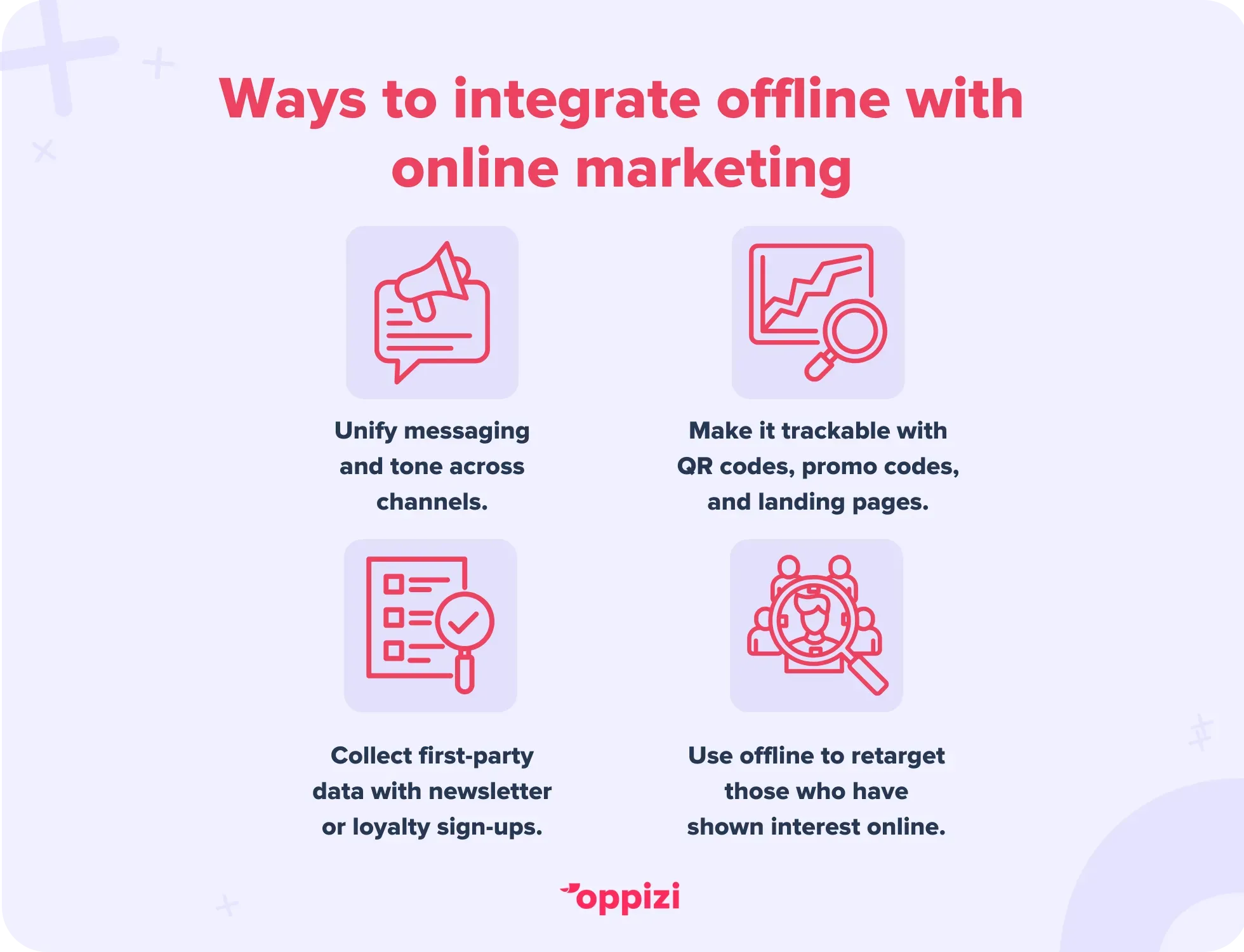
Offline marketing works best when it complements your digital efforts. Here’s how to integrate the two:
Unify messaging across channels
Ensure your offline materials (flyers, signage, events) reflect the same tone and branding as your digital channels.
Make it trackable
Use custom QR codes, unique discount codes, or dedicated landing pages for each offline campaign to track performance.
Collect first-party data
Encourage customers to sign up for your newsletter or loyalty program through offline touchpoints to boost your owned data.
Use retargeting
Send direct mail to people who’ve abandoned carts or shown interest in-store. Conversely, use digital ads to retarget people who received a flyer or attended your event.
How to measure success in offline campaigns
It’s a myth that offline marketing isn’t measurable. You just need the right tools:
- Response rates – via QR scans, voucher redemptions, or SMS opt-ins
- Footfall traffic – track with Wi-Fi beacons or POS data
- Sales attribution – use campaign-specific SKUs or codes
- Brand lift – run pre- and post-campaign surveys
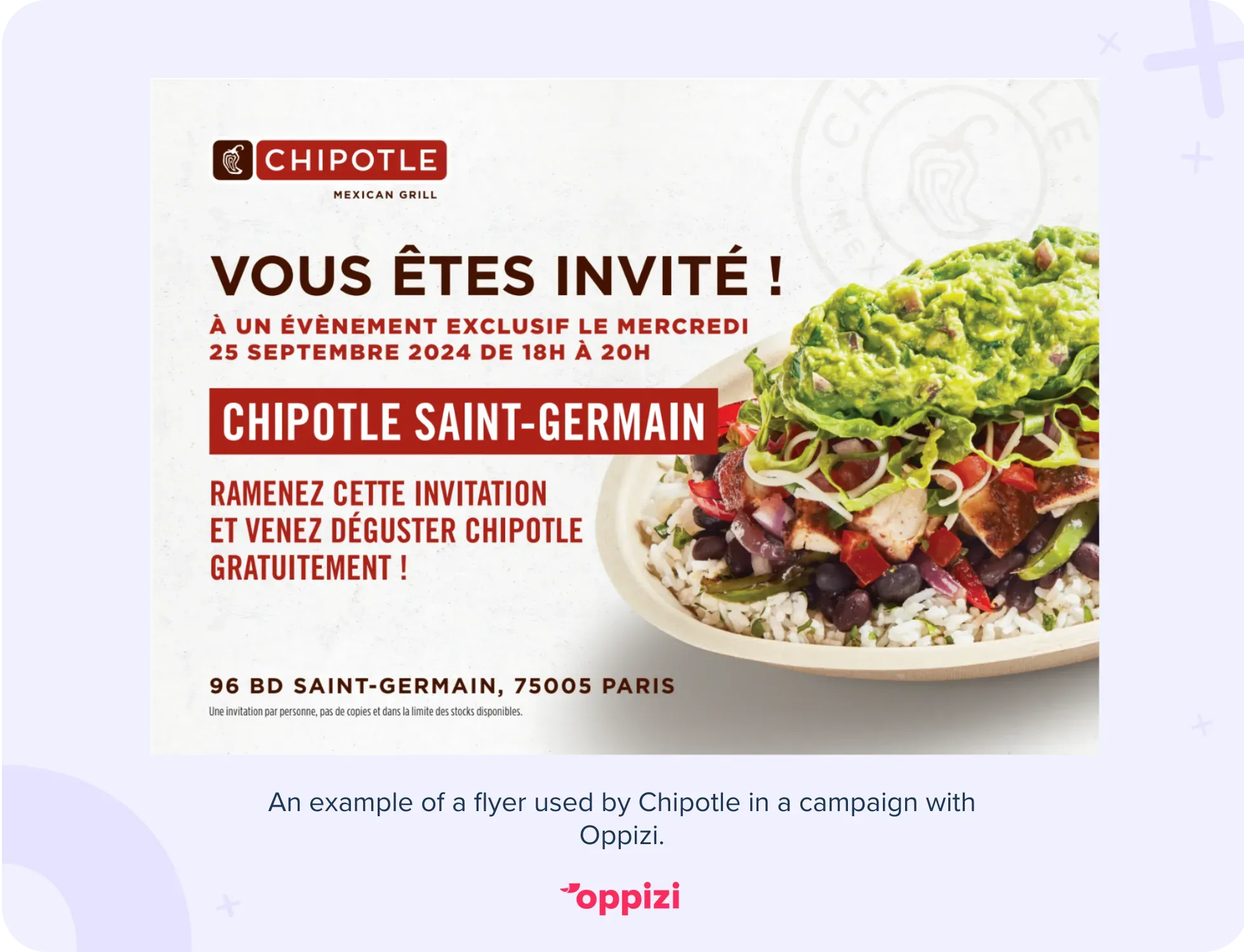
How Oppizi helped Chipotle acquire customers with flyering
To boost foot traffic and drive local awareness, Chipotle partnered with Oppizi to launch a targeted flyering campaign in Paris and Lyon. A total of 10,000 flyers were distributed hand-to-hand, and 19,000 delivered door-to-door, strategically covering high-footfall and residential areas. This resulted in 550 in-store purchases within just 4 weeks, a strong conversion rate for a restaurant operating in competitive urban markets.
This campaign highlights how B2C businesses, particularly those with physical locations, can benefit from hyper-local, tangible outreach. For brands like Chipotle, it’s not just about impressions; it’s about foot traffic, in-store conversions, and building brand familiarity in the community. Whether you're launching a new location, promoting an offer, or trying to stay top-of-mind in a crowded market, offline marketing can deliver measurable results that complement your online efforts.
Final thoughts
Offline marketing for B2C brands isn’t about replacing digital - it’s about creating a strategy that combines the two for deeper, more lasting consumer impact.
Whether you're launching a product, opening a new store location, or looking to strengthen brand loyalty, offline tactics like flyer distribution, direct mail, events, and sampling offer high-engagement, low-competition ways to connect with real people.
When integrated thoughtfully, these channels don’t just support your digital efforts, but supercharge them.
Ready to make offline work for your brand? Start a campaign with Oppizi today and create stronger, more meaningful connections with your ideal customers.
Frequently asked questions
- What’s the most cost-effective offline marketing channel for B2C?
Flyer distribution is often the most affordable and scalable offline solution, especially for local businesses. It allows for precise geographic targeting and can be combined with digital tools (like QR codes) to track ROI.
- Can offline marketing work for e-commerce or digital-first brands?
Absolutely. Many Direct-to-Consumer brands use direct mail, sampling, or experiential activations to boost awareness and engagement offline. These efforts can drive online traffic while building emotional connections that purely digital ads can't.
- How do I know if my offline campaign is working?
Track performance using custom promo codes, QR links, foot traffic, and CRM data. You can also run surveys or measure sales uplifts in targeted locations.