Last updated September 28, 2026
When you think of offline marketing, you might imagine tossing flyers into the wind and hoping someone notices. But in reality, every offline interaction, whether a flyer, an in-store display, or a direct mail piece, is a powerful touchpoint in your customer’s journey. Strategy and measurement matter just as much offline as online.
This guide will break down offline customer journey touchpoints, explain why they’re crucial, and show how to leverage them at each stage, from awareness to advocacy, as part of a strong offline marketing strategy. By the end, you’ll have actionable insights to create memorable, high-impact offline brand experiences that drive engagement, loyalty, and conversions.
What are offline customer journey touchpoints?
A customer journey touchpoint is any interaction a customer has with a brand, product, or service—essentially any moment that shapes their perception. While digital touchpoints are measurable through clicks, opens, and engagement rates, offline touchpoints happen in the physical world. These include:
- In-store experiences
- Direct mail campaigns
- Flyer distribution
- Events, workshops, or trade shows
- Packaging and unboxing experiences
- Customer service interactions in person or over the phone
Offline touchpoints are vital because they influence brand perception, build trust, and often trigger stronger emotional connections than digital channels. According to Harvard Business Review, customers who engage with brands both online and offline are 23% more likely to repeat purchases.
This blended approach strengthens customer retention by keeping your brand present in both their daily routines and their physical environment, making it easier for them to stay connected and come back again.
Why offline touchpoints matter
1. Complement digital experiences
Offline and online experiences are not mutually exclusive, but they reinforce each other. For instance, a customer may see an Instagram ad for a new product but decide to visit your store to experience it in person. Similarly, a well-designed in-store display can encourage social sharing online, creating a feedback loop between digital and offline channels.
2. Build tangible emotional connections
Physical interactions create a sensory experience. Touching a product, trying it on, or engaging in a live demo can evoke stronger emotional responses than viewing an image online. In fact, younger generations are choosing to shop in physical stores. 97% of Gen Z say they shop in brick and mortar stores, with 28% saying they do so as they prefer to see, touch, and try the products.
3. Drive conversion and loyalty
Offline touchpoints are often where the final purchase decision happens. A friendly staff member, an engaging in-store demo, or a personalized direct mail piece can tip the balance in favor of conversion. Beyond conversion, these interactions foster loyalty. Customers are more likely to return to brands that create consistent, memorable experiences offline.
Mapping offline customer journey touchpoints
To maximize the impact of offline touchpoints, you need customer journey mapping across the stages: Awareness, Consideration, Purchase, Retention, and Advocacy.
Stage 1: Awareness
This is where potential customers first encounter your brand. Offline touchpoints at this stage include:
- Flyers and leaflets: Strategically distributed flyers can introduce your brand to a local audience. According to the Data & Marketing Association, direct mail has a response rate of 4.9%, per the ANA/DMA Response Rate Report 2018, against an email unique click rate of 2.3% in 2024, per the DMA Email Benchmarking Report.
- Billboards and posters: Eye-catching outdoor advertising can create brand recognition in your target area.
- Events and pop-ups: Community events or pop-up shops provide an immersive first experience.
Tip: Use branding elements consistently across offline materials to reinforce your brand identity.
Stage 2: Consideration
Once potential customers know your brand, offline touchpoints can influence their decision-making process:
- In-store displays: Highlight product features, pricing, or promotions with well-placed signage.
- Sampling and demonstrations: Allowing customers to try products firsthand can shorten the decision-making cycle.
- Catalogues and flyers: These are tangible customer touchpoint examples that can be referenced in the customer’s own time.
Example: A cosmetics brand might send a printed flyer with product benefits and tips, coupled with free samples in-store, helping customers make informed choices.
Stage 3: Purchase
At the point of purchase, offline touchpoints ensure a smooth and positive buying experience:
- Retail staff interactions: Knowledgeable and friendly staff can answer questions and guide purchases.
- Packaging and unboxing: Attractive, functional packaging can enhance satisfaction and create a sense of premium value.
- Point-of-sale materials: Clear signage and promotions can increase add-on sales.
In fact, 73% of consumers say the overall experience is a key factor in their purchasing decisions, highlighting just how important it is to make this stage seamless.
Stage 4: Retention
Offline touchpoints continue to play a role after the initial purchase. In order to improve customer retention rates, here are a number of strategies that can be adopted:
- Thank-you notes or personalized messages: Handwritten or printed notes can reinforce appreciation. Additionally, 62% of consumers say they won’t stay loyal to a brand that delivers an un-personalized experience, so it’s an essential step.
- Loyalty cards and in-store incentives: Encourage repeat visits and reward loyal customers.
- Workshops and community events: Hosting post-purchase experiences fosters engagement and strengthens loyalty.
Stage 5: Advocacy
Finally, satisfied customers become brand advocates, and offline interactions can amplify this effect:
- Referral programs with offline incentives: Offer discounts or perks for bringing friends into your store.
- Events that encourage word-of-mouth: Exclusive events or VIP gatherings can motivate customers to share their experiences.
- Physical testimonials or feature walls: Showcase customer stories and photos in-store to inspire others.

Examples of offline touchpoints in action
Here are some customer touchpoint examples showing how offline marketing can drive engagement and conversions.
Retail store integration
A boutique clothing store uses in-store displays, personalized fittings, and seasonal events to create a cohesive offline journey. The experience encourages customers to share on social media, bridging the offline-online gap.
Direct mail campaigns
A local café sends beautifully designed postcards with a loyalty incentive. Recipients visit the café, try the featured items, and become repeat customers.
Event marketing
A tech startup hosts a hands-on demo at a local conference. Attendees experience the product firsthand, engage with staff, and leave with branded merchandise, cementing brand recall.
Best practices for offline customer touchpoints
- Consistency across channels: Ensure branding, messaging, and tone are consistent on both offline and online channels. Conflicting messages can confuse customers and reduce trust.
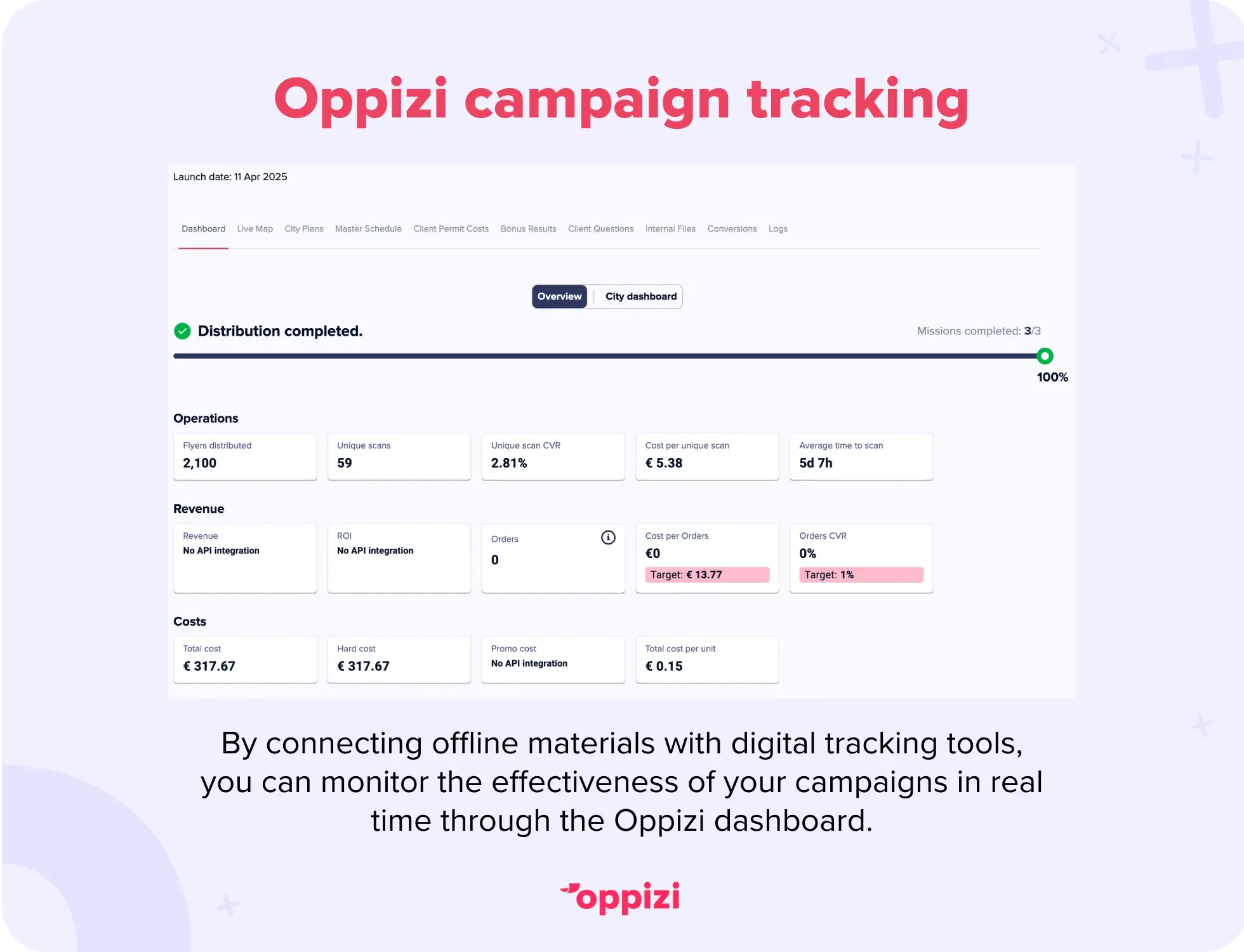
- Measure impact: While offline touchpoints are harder to track than digital, you can measure impact through unique codes, QR scans, redemption rates, and customer feedback.
- Personalize where possible: Use customer data to tailor offline experiences. Personalized offers, direct mail, or staff interactions significantly increase engagement.
- Integrate with digital: Combine offline touchpoints with online channels. QR codes on brochures, hashtags on in-store displays, or links on packaging can extend the experience digitally.
- Prioritize sensory experience: Offline interactions should engage multiple senses—sight, touch, smell, and sound. Multi-sensory experiences leave a lasting impression and enhance memorability.
Common challenges and how to overcome them
Challenge 1: Measuring ROISolution: Implement tracking methods like unique discount codes.
Challenge 2: Integrating with digital strategySolution: Use offline touchpoints to drive online engagement (QR codes, social media campaigns, email sign-ups).
Challenge 3: Identifying high-impact touchpointsSolution: Map the customer journey and test different offline interventions to see which drives the highest engagement and conversion.
How Oppizi bridges the gap between offline and online
One of the biggest challenges in offline marketing is tracking impact and understanding how offline touchpoints influence the broader customer journey. Oppizi helps businesses bridge that gap by linking offline interactions to measurable online outcomes.
Through tools like personalized URLs (PURLs), QR codes, and unique promo codes, every flyer, door hanger, or direct mail piece from Oppizi can be tracked. This allows marketers to see exactly which offline actions are driving website visits, sign-ups, or purchases.
For example, a retail store might include a QR code on a flyer that leads to an exclusive online offer. Customers who scan it are directly traceable, allowing teams to measure engagement, ROI, and even repeat behavior.
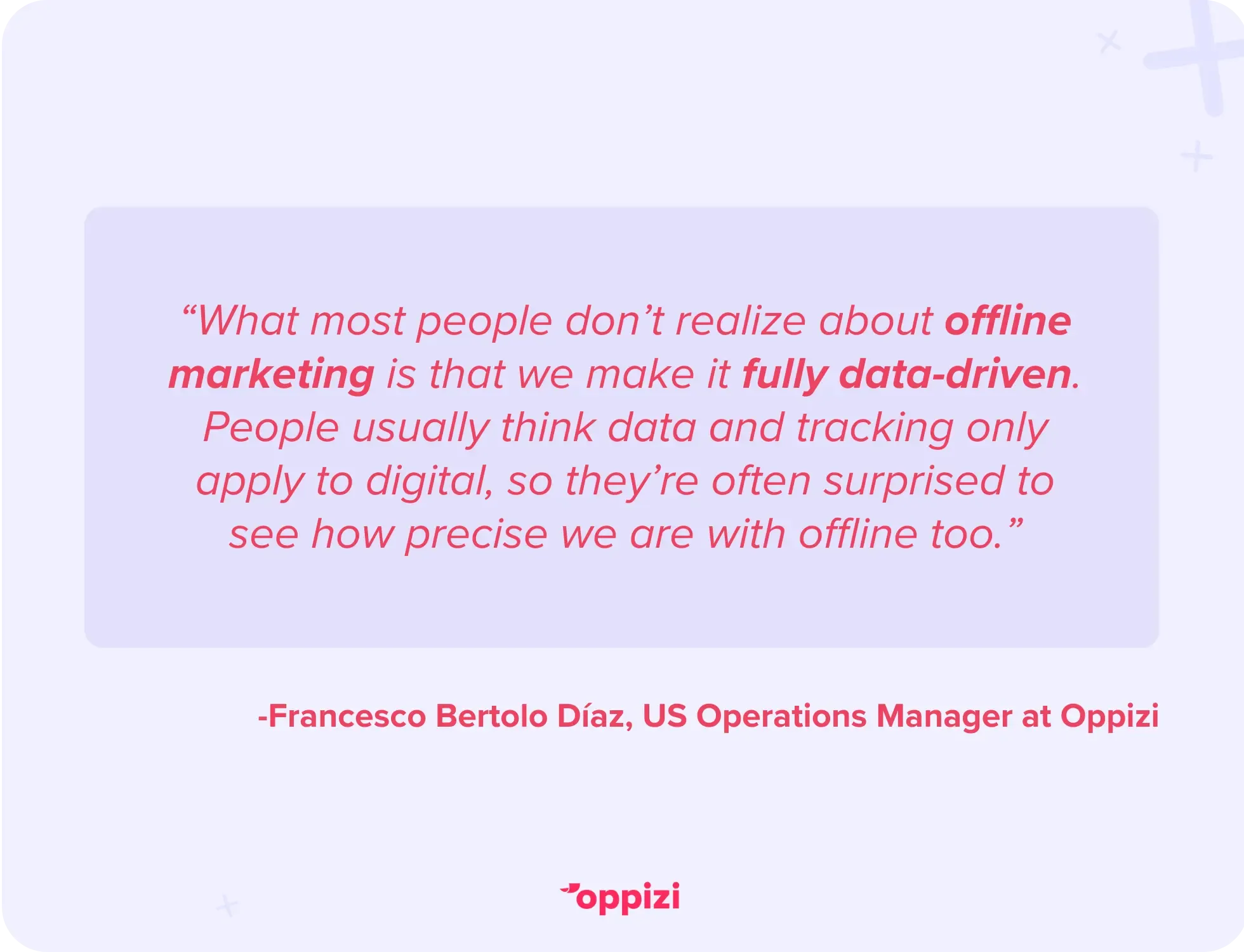
Here’s what Francesco Bertolo Díaz, US Operations Manager at Oppizi, had to say about offline campaigns at Oppizi:
By connecting offline marketing channels to online actions, Oppizi ensures that every offline touchpoint contributes to a seamless, measurable, and optimized customer journey.
Conclusion
Offline customer journey touchpoints are far more than traditional advertising. They’re vital opportunities to engage, inspire, and convert customers. From awareness to advocacy, these physical interactions complement digital channels, build trust, and create memorable brand experiences. Thoughtful customer journey mapping meansyou can boost customer loyalty, increase conversions, and differentiate your brand in a crowded marketplace.
Want to make offline marketing work for your business? Start an offline campaign with Oppizi today and transform every physical interaction into a lasting customer connection.