Last updated November 2, 2026
Summary
- Flyer distribution puts printed ads in people's hands through hand-to-hand, door drops, direct mail, or door hangers
- Flyers still work because they reach people offline in a specific place, where a physical message is hard to scroll past
- There is no single flyer response rate: offer, location, timing, distribution method, and tracking decide results
- Measure results with campaign-specific QR codes, promo codes, landing pages, and phone numbers
- Flyers work best alongside digital marketing, from shared targeting to retargeting website visitors
Last updated: November 2026
Flyers aren't old news. While many businesses focus only on online ads, smart ones still use flyers, and drive measurable conversions. Flyers reach people where they live, work, and walk every day. And with modern tools, you can track your campaign's progress and measure the ROI of your flyer distribution.
This guide covers what flyer distribution is, how to use it, and why it still works. You'll also see what drives flyer results, how to measure them, how to mix flyers with online tools, and how Uber Eats grew with flyers.
What is flyer distribution?
Flyer distribution means handing out printed ads to a group of people. You might do this in busy places like shopping streets, parks, college campuses, or train stations. Or you might deliver flyers straight to homes or offices in the mail.
Businesses of all sizes use flyers to stand out. Digital marketing keeps growing, but flyers offer something different: real-world reach and a personal touch. A flyer is something people hold, which makes it harder to scroll past than another ad on their phone.
Flyers work best for local campaigns, where you want to reach people in a certain area. With clear messages and smart targeting, flyers can increase visitors, brand awareness, and sales.
What are the main types of flyer distribution?
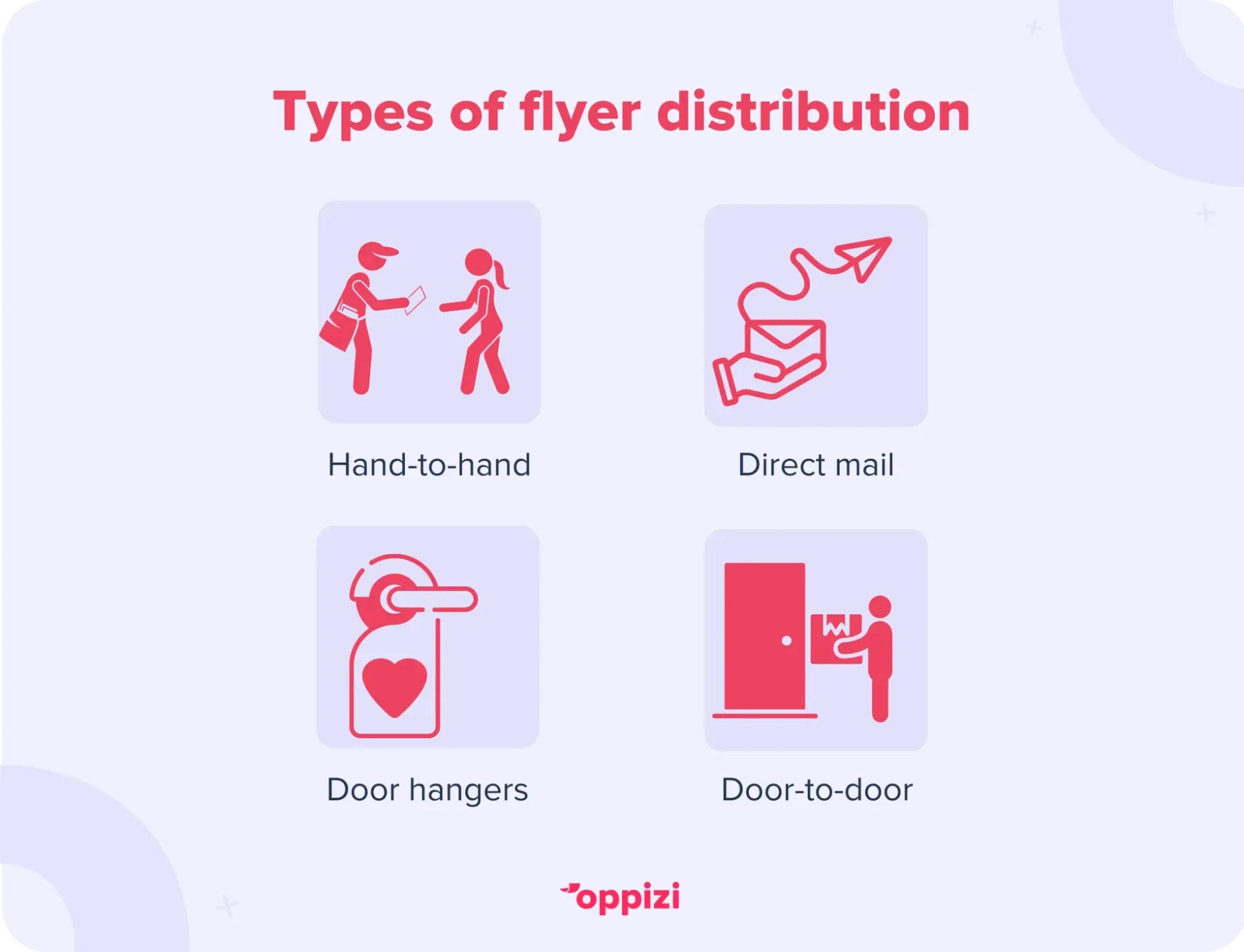
How you distribute flyers depends on your audience and goals. Pick the method that matches where your customers are and how they like to get information. Here are the main ways businesses use flyers:
Hand-to-hand distribution
This is when someone hands flyers directly to people in busy areas. It's personal and lets you talk to potential customers right away. It works well for events, local services, or new product launches.
For example, handing out flyers near concert venues or busy streets can catch the attention of people already interested. The chance to answer questions or explain more helps people remember your message and take action.
Door drops (door-to-door flyers)
Door drops mean leaving flyers in mailboxes or through doors in specific neighborhoods. This is ideal for local campaigns. Some people keep door flyers for later, on the fridge or a notice board.
If you do door drops, check local rules and respect privacy. Some areas have rules or lists where people say they don't want flyers.
Direct mail flyer distribution
Direct mail means sending flyers or postcards through the mail to a specific list of people. This method is more targeted and can be more expensive. But it drives responses because it feels personal and physical, something digital ads don't offer.
Direct mail works well for higher-value offers or services that need a detailed message or nicer design.
Door hanger distribution
Door hangers are flyers that hang on door handles. They are cheap and don't interrupt people like a knock on the door. This method suits very local campaigns like restaurant deals, real estate, or home services.
Door hangers are easy to make, inexpensive to print, and stand out because they hang right on the door. You can target small areas very well with this method.
Why does flyer distribution still work?
Flyers still work because they put a physical message in front of people in a specific place or community. Some people think offline marketing is old-fashioned, but flyers still drive measurable outcomes. Here's why:
1. Affordable advertising
Flyers don't cost much. Compared to TV, radio, or online ads, printing and handing out flyers is cheap. This makes it a good option for small businesses or startups. When you target the right people, flyers deliver measurable ROI.
2. Reach local customers
Flyers can be handed out in specific spots, like neighborhoods, shopping centers, or events. This lets you reach the exact people you want more easily than many online ads.
3. Increase brand visibility
When people see your flyers often, they start recognizing your brand. Good designs, logos, and clear messages help people remember you over time.
4. Physical and memorable
Digital ads disappear fast. Flyers stick around. A flyer left at home can stay in view on a fridge or a notice board long after a digital ad has scrolled past, giving your message extended visibility.
5. Encourage quick action
Flyers work well for offers or events. Clear calls to action, discount codes, or QR codes can push people to act right away.
6. Ideal for local businesses
Flyers suit stores, restaurants, gyms, and services in a neighborhood. They help build a local customer base by reaching people nearby.
7. Freedom to get creative
With flyers, you decide what to show. Maps, menus, coupons, or schedules can all be included. This makes it easier to share detailed information than with some online ads.
8. Fast and wide reach
You can hand out hundreds or thousands of flyers quickly. Busy places like train stations or events help you get noticed fast.
9. Easy to track results
Use QR codes, special links, or phone numbers on your flyers. This helps you see how well your campaign works and where your customers come from.
10. Works with digital marketing
Flyers and online ads can work together. Using both makes your message stronger and reaches more people in different ways.
11. Builds personal connections
Giving flyers in person or delivering them creates a real connection. This can build trust and make your business feel friendlier.
Flyer distribution is still a smart, flexible, and affordable way to get noticed locally, bring people in, and connect with your audience.
What results can flyers actually drive?
The honest answer: it depends. Response rates for flyer campaigns vary based on your offer, your audience, the distribution method you choose, and how well your flyer is designed. A compelling discount for a local restaurant handed out near lunchtime is going to land differently than a generic flyer dropped in an unrelated neighborhood.
The variables that move the needle most are:
- Offer strength. The clearer and more relevant the deal, the higher the response. Vague messaging kills campaigns faster than anything else.
- Location and timing. Distributing in the right place at the right moment, say, near a gym on a Monday morning, makes a real difference.
- Distribution method. Hand-to-hand in high-traffic areas typically drives faster response. Door drops tend to have a longer tail, with flyers kept and acted on days later.
- Tracking setup. Campaigns with unique codes, QR codes, or dedicated landing pages reveal response data that untracked drops can't.
The campaigns that perform best share one thing: they're built to be measured from the start, not guessed at after the fact.
How do you measure flyer distribution results?
You measure flyer results by giving every campaign its own response path, so each scan, code, or call traces back to the flyer. Flyers used to be a leap of faith: hand them out, hope for the best, see if sales tick up. Now you can measure every step, and that's one of our favorite things about running campaigns through Oppizi.
Here's how to build measurement in from day one:
- QR codes. Each campaign or distribution zone gets its own QR code. Scans tell you which flyer, location, and time window drove traffic to your site or landing page.
- Unique promo codes. A discount code tied to a specific campaign makes attribution simple. When someone redeems it, you know the flyer worked.
- Dedicated landing pages. Send flyer recipients to a URL that only exists for that campaign. Traffic to that page came from your flyer.
- Dedicated phone numbers. For service businesses, a campaign-specific number tells you how many calls your flyers generated.
- Real-time dashboards. Oppizi's platform tracks distribution in real time, so you can see where your Brand Ambassadors are, what's been delivered, and how your campaign is pacing, before it's even finished.
The goal is to close the loop between physical delivery and measurable action. When you do that, flyer distribution behaves like any other performance channel. For a deeper walkthrough, see our guide to measuring offline marketing campaign success.
How did Uber Eats reach more customers with flyer distribution?
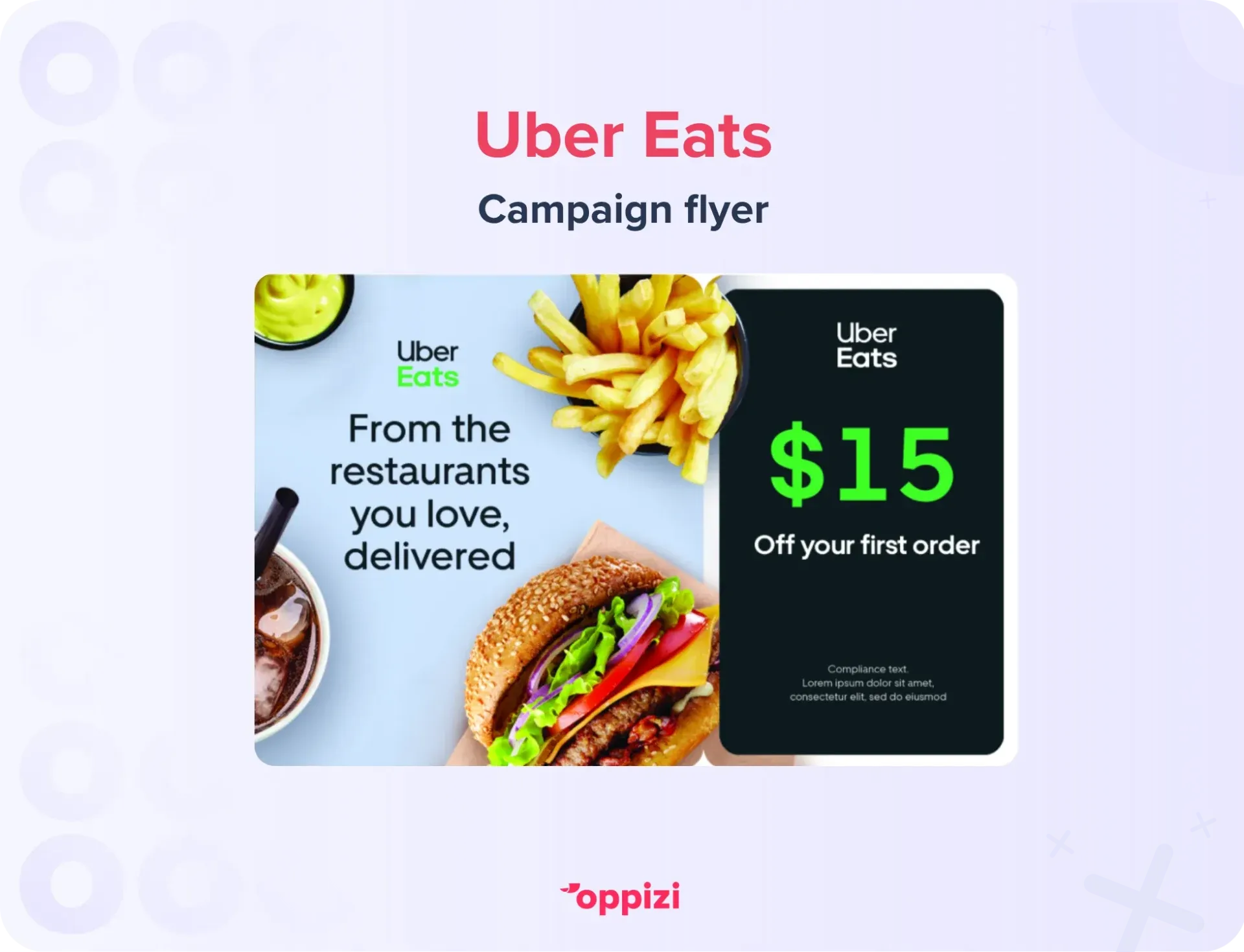
Uber Eats wanted to grow in competitive markets, including Australia, New Zealand, the UK, and France. They teamed up with Oppizi to reach more customers offline. Here's what we did:
- Acquired more than 2 million customers through Oppizi campaigns
- Ran campaigns in more than 10 countries, at a 2% conversion rate
- Provided real-time updates with our tracking dashboard
- Used trained Brand Ambassadors for personal delivery
By combining location-based flyer distribution with digital tools, Oppizi helped Uber Eats reach more people, build local awareness, and hit their growth goals.
"People don't realize how intense the logistics can be," explains Alberto Granzo, Head of Operations at Oppizi. "An offline campaign is alive; it's happening in real time on the street. From printing to brand ambassador pick-ups, shift management, and live monitoring, everything moves like a fast-changing spider web. Every part has to work together."
Can flyer distribution work with digital marketing?
Yes. Using flyers along with digital marketing makes your whole plan stronger. It helps you reach more people and keeps them interested across different channels, including people who tune out or block online ads.
Here's how flyers and digital marketing can team up:
1. Add QR codes and short links
Put QR codes or easy-to-type web links on your flyers. This lets people jump from the flyer to your website or social media quickly. You can also track who's checking out your campaign.
2. Run local campaigns
Hand out flyers in certain areas and run digital ads targeted at the same spots. This makes your message hit home and helps more people notice your brand nearby.
3. Boost your social media
Use flyers to grow your followers. Ask people to follow you, use hashtags, or join contests. This gets more people involved online.
4. Gather customer info
Send flyer readers to a page where they can sign up for emails, get a deal, or answer a survey. This helps you collect information for future marketing.
5. Use flyers for retargeting
If someone visits your website but doesn't buy, send them a follow-up flyer or postcard. You can remind them about the product and offer a discount.
Combining flyers with digital marketing helps your brand stay in people's minds and get better results.
What are the tips for successful flyer distribution?
The most successful flyer campaigns start with a clear audience, solid research, and tracking from day one.
1. Know your audience
Think about who your ideal customers are. Make your message, design, and offers fit what they like. When you speak directly to them, more people will respond.
2. Do your research
Check out your competitors, trends, and who your audience is. Knowing this helps you make smarter choices for your flyer campaign.
3. Track how you're doing
Use tools to see how many people engage with your flyers and if they turn into customers. Oppizi gives you real-time information to help improve your results. This makes it easier to spot and fix common flyering problems before they waste time or budget.
How is Oppizi transforming flyer distribution?
Oppizi makes flyer marketing work with today's technology. We mix offline reach with smart tools so your campaigns are measurable. Here's what we offer:
- Real-time tracking. See when and where your flyers get delivered using our dashboard.
- Engagement tools. Add QR codes and unique links to track who interacts and turn that into online visits or sales.
- Trained Brand Ambassadors. Our local teams deliver your flyers with care and professionalism.
- Smart location targeting. Use our map tool to pick the best spots in your city or region for flyer distribution.
- Global reach. We run campaigns in over 12 countries, helping all kinds of businesses grow.
With Oppizi, flyer campaigns become measurable, targeted, and easy to scale, just like digital marketing.
Is flyer distribution worth it in 2026?
Yes, when it's targeted and tracked. Flyers are far from old-fashioned. When done right, they are one of the most direct ways to reach local customers and build your brand.
Whether you deliver them door-to-door, hand them out in person, or mail them, flyers are a low-cost way to connect offline. Add digital tools like QR codes and geo-targeting, and they become even stronger.
Ready to start a flyer campaign you can measure? Get started with Oppizi.
Frequently asked questions
- Is flyer distribution an effective marketing strategy?
Yes, especially for local businesses. Flyers put a physical message in people's hands in a specific place, which is hard to scroll past. They work best when the offer is clear, the location matches your audience, and every flyer carries a QR code, promo code, or unique link so you can measure response.
- Do flyers still work in 2026?
Yes. Many people tune out or block online ads, and a flyer reaches them offline instead. Flyers are most effective when you target the right neighborhoods or high-traffic spots and pair them with digital marketing, so a scan or a promo code connects the flyer to your website, app, or store.
- What response rate do flyers get?
There is no single flyer response rate. Results depend on your offer, audience, distribution method, location, timing, and design. Hand-to-hand distribution in busy areas tends to drive faster response, while door drops often have a longer tail. The only reliable number is the one you measure with tracking built into your own campaign.
- How do you measure flyer distribution results?
Give every campaign its own response path. Use campaign-specific QR codes, unique promo codes, dedicated landing pages, or campaign phone numbers, so each scan, redemption, or call traces back to the flyer. Platforms like Oppizi add real-time distribution tracking, so you can see where flyers were delivered and how the campaign is pacing.
- How can I mix flyers with digital marketing for better results?
Add QR codes, short links, or social media handles to your flyers, so people can move from the flyer to your website, event sign-up, or special offer. You can also run digital ads in the same areas where you hand out flyers, and use follow-up flyers or postcards to retarget website visitors who didn't buy.