Last updated September 28, 2026
Summary
- Ten strategies for automotive brands and dealers facing supply-chain disruption and shifting buyer demand.
- Visibility is the first job — strategic online and offline campaigns keep you top-of-mind when someone starts shopping.
- Engagement beats transactions: interactive experiences and personalized outreach build relationships past the single sale.
- Buyers research extensively before visiting, so your digital presence does most of the selling before contact.
- Offline channels still matter for local dealers, reaching a catchment area digital targeting handles poorly.
Having faced significant challenges in recent years, from supply chain disruptions to shifts in consumer demand, staying ahead of the competition in the automotive marketing industry has never been more important. Car manufacturers and dealers must adapt quickly to these industry changes, and this involves using innovative marketing techniques to stay ahead of the game.
Developing a comprehensive automotive marketing strategy that blends both online and offline techniques can significantly boost your brand's visibility, attract potential customers, and build lasting loyalty - whether you’re a dealership, an aftermarket product retailer, or a car manufacturer.
In this article, we’ll explore some of the best strategies for automotive marketing and provide some tips on creating a comprehensive marketing strategy.
Why automotive marketing is important
In a competitive landscape shaped by evolving consumer behavior, tech disruption, and industry changes, automotive marketing isn't just important - it's imperative. Whether you're launching the latest electric vehicle or promoting post-purchase services, how you market matters just as much as what you offer.
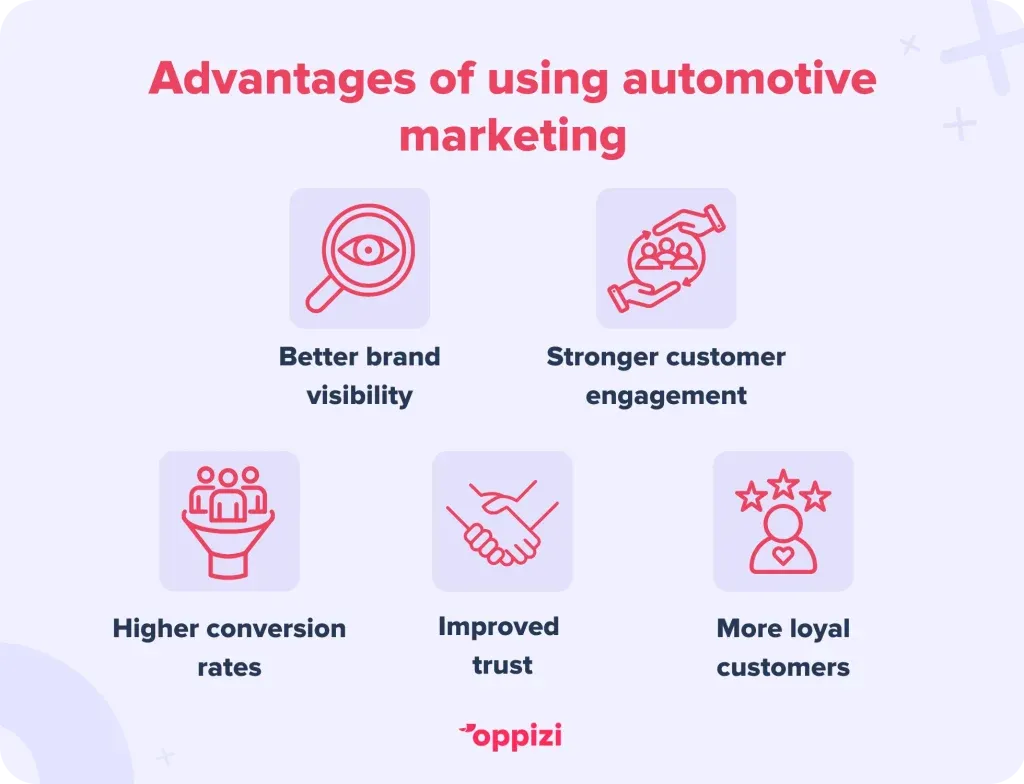
Here’s why investing in a strong automotive marketing strategy pays off:
Increased brand visibility
Effective marketing helps your brand break through the noise. Strategic campaigns, both online and offline, ensure that your name is top-of-mind when consumers are ready to buy or upgrade.
Stronger customer engagement
Engaging content, interactive experiences, and personalized outreach foster meaningful connections with your customers that go beyond a single transaction. This builds trust in your brand and increases the likelihood of happy customers who refer your brand to others.
Higher conversion rates
Prompting action from customers requires delivering the right message to the right audience at the right time. This method boosts customer engagement, speeds up sales, and turns potential customers into loyal, long-term customers.
Builds trust
With high-value purchases like vehicles, customers need to feel confident in who they’re buying from. Authentic marketing, whether it’s showcasing real customer testimonials, offering transparent pricing, or providing value-driven content, helps build credibility and positions your brand as trustworthy and reliable.
When customers trust you, they don’t just buy once - they become brand advocates, referring their friends and family and returning when it's time for an upgrade.
Improved customer loyalty
Don't let your marketing strategy end as soon as you make the sale. Build a brand experience that encourages customers to come back and refer others by using follow-up emails, loyalty programs, educational content, and community events.
10 strategies for automotive marketing
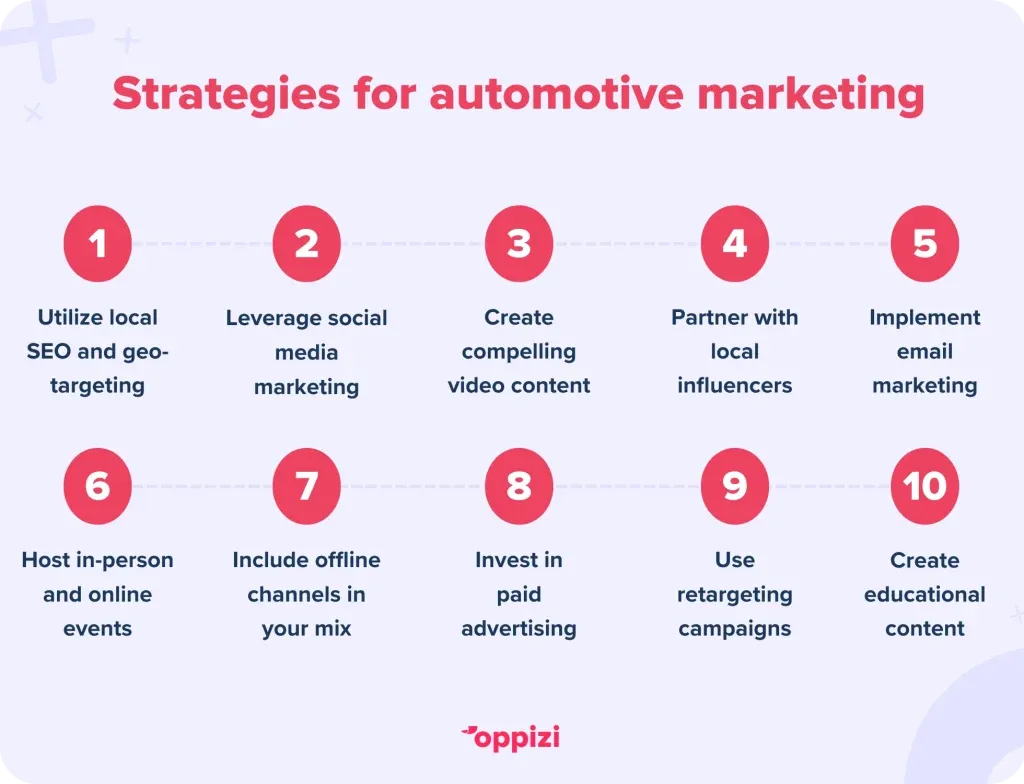
1. Utilize local SEO and geo-targeting
Optimizing your online presence for local search is a must. Whether someone’s searching “car dealership near me” or “best oil change in [city],” you want your business to be front and center. That’s where local SEO comes in.
By optimizing your Google Business Profile, using localized keywords, and running geo-targeted ads, you make sure your brand shows up at the exact moment nearby customers are ready to take action. Google reports that 46% of all searches have local intent, meaning that nearly half of searchers are actively looking for services in their area.
2. Leverage social media marketing
Social media platforms like Instagram, Facebook, and TikTok are essential tools for automotive businesses. To attract attention and build trust, utilize visual content such as high-quality photos and engaging videos to showcase cars, special offers, or testimonials. Interactive features like polls, contests, and quizzes can also boost audience engagement.
Additionally, features like Instagram's "Shop Now" or Facebook Marketplace can drive direct sales through social media.
3. Create compelling video content
When it comes to showcasing cars, few tools are as powerful as video. Whether you’re capturing a sleek test drive, diving into a model’s key features, or giving a behind-the-scenes look at your service team in action, video brings the automotive experience to life in a way static images just can’t match.
82% of consumers say they’ve been convinced to buy a product or service after watching a video. In the automotive world, that kind of influence drives real results - more clicks, more showroom visits, and more test drives. Video content doesn’t just inform consumers - it builds trust, stirs excitement, and nudges viewers closer to conversion with every frame.
4. Harness the power of influencer marketing
Partnering with influencers, especially in the automotive space, can help build brand credibility and expand your reach. Whether you work with automotive vloggers or car enthusiasts on platforms like YouTube or Instagram, influencer marketing is an excellent way to showcase your products to a wider audience.
5. Implement email marketing campaigns
Email marketing remains one of the most effective ways to nurture leads, retain customers, and keep your audience in the loop on new launches, limited-time offers, and events.
Email marketing generated $9.7 billion in global revenue in 2024, proving it’s far from outdated. With strategic segmentation and personalization, you can send tailored messages that truly resonate with your customers, like exclusive discounts or vehicle recommendations based on past interactions.
Well-crafted emails don’t just keep your brand top-of-mind - they drive traffic, build loyalty, and bring customers back again and again.
6. Host test-drive events and webinars
Physical and virtual events can serve as fantastic marketing tools for connecting with potential customers. Test-drive events provide hands-on experience with the cars, while webinars can be used to educate consumers about new models, technology, and maintenance. Hosting these events can promote a sense of community and increase customer loyalty.
7. Leverage offline marketing channels
While online marketing is essential, offline marketing is a powerful way to reach potential customers - especially those who aren't online often. In fact, studies show that over 32% of internet users worldwide use ad-blockers, making it easy for online efforts to be overlooked. Flyers, postcards, and direct mail campaigns offer a personal, tangible experience that digital ads simply cannot match.
One major advantage of offline marketing is that it’s highly targeted and trackable when done right. With Oppizi, automotive businesses can launch offline campaigns that are not only personalized but also trackable, allowing you to measure response rates and ROI with precision.
For example, a car dealership could start a flyer campaign in their local area featuring a limited-time promotion for test drives, paired with a QR code or unique URL that tracks customer responses. Using Oppizi’s solutions, the dealership can track the success of their efforts and optimize future campaigns for better results.
8. Invest in paid advertising
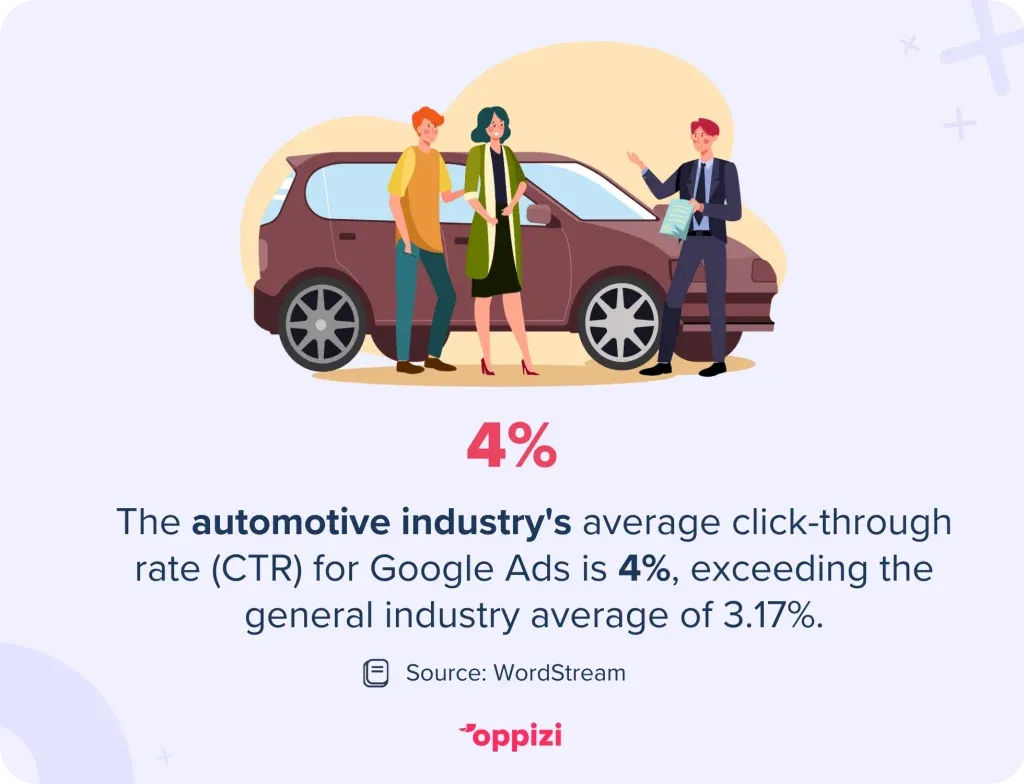
When it comes to reaching high-intent buyers quickly, paid advertising is a proven winner, with an average ROI of 200%. In the automotive industry, the average click-through rate (CTR) for Google Ads is 4%, which is higher than the general industry average of 3.17%. Whether through PPC campaigns, display ads, or retargeting, paid media ensures your message reaches those most likely to convert.
Targeting specific keywords like “buy a car near me” or “affordable auto repairs” places your brand in front of customers exactly when they’re ready to take action, driving both visibility and results.
9. Use retargeting and remarketing
Not every visitor to your website or social media page will convert immediately, but that doesn’t mean they’re lost forever. Retargeting presents an opportunity to re-engage potential customers who have previously shown interest in your products or services but haven't yet made a purchase.
By displaying personalized ads that feature your cars, promotions, or current deals, you can effectively remind them of your brand and encourage them to revisit your website and ultimately convert.
10. Create engaging content and educational resources
Content marketing is not just about selling; it’s also about educating. Offering valuable content, such as car maintenance tips, industry insights, or buying guides, positions your brand as a thought leader in the automotive industry. Content like blog posts, infographics, and eBooks can also drive organic traffic to your website.
Tips on setting up a successful automotive marketing strategy
Setting up an automotive marketing strategy involves several steps. Here are a few tips to guide you through the process:
- Know your audience: Understanding your target audience is critical. Analyze demographic data, behavior, and preferences to craft a message that resonates with them.
- Set clear goals: Whether it’s increasing sales, driving more traffic to your website, or boosting brand awareness, make sure your objectives are SMART (specific, measurable, achievable, relevant, and time-based).
- Integrate multiple channels: Don’t rely on just one marketing channel. A multichannel approach that blends digital, offline, and event-based marketing is the best way to cast a wider net and reach more potential customers.
- Monitor and adapt: Regularly track your campaign results and adjust as needed. Digital tools like Google Analytics, social media insights, and customer feedback can help you refine your strategy.
Frequently asked questions about automotive marketing
How much should I spend on automotive marketing?
Marketing budgets vary depending on your business size and goals. However, it's essential to allocate enough resources to cover a mix of online and offline marketing efforts to achieve comprehensive reach.
How do I measure the effectiveness of my automotive marketing campaigns?
To measure the effectiveness of your automotive marketing campaigns, use key performance indicators (KPIs) like website traffic, lead generation, conversion rates, and return on investment (ROI).
Is offline marketing still relevant in the automotive industry?
Absolutely! Offline marketing methods, such as direct mail and outdoor advertising, are highly effective in driving local awareness and building a tangible connection with your community.
What does an automotive marketer do?
An automotive marketer promotes vehicles and related products to potential customers. They carry out market research, create marketing campaigns, manage social media, and collaborate with dealerships. Their goal is to boost brand awareness, engage customers, and increase sales through both digital and offline channels.
What is the best marketing strategy for a car dealership?
The best marketing strategy for a car dealership uses a combination of both digital and offline tactics. Focus on local SEO to attract nearby customers, leverage social media with engaging content, and invest in PPC ads to target high-intent buyers. Hosting test-drive events and using offline tactics like direct mail can also drive foot traffic and create personal connections. Consistently track and adjust these campaigns to maximize ROI and customer engagement.
Conclusion
The automotive industry is constantly evolving, and businesses need to adapt to new marketing strategies to stay competitive. Including a mix of digital tools like online video content and traditional methods like direct mail can boost your brand’s presence and generate sales.
If you're ready to kick-start an offline marketing campaign and drive local traffic to your dealership, consider working with Oppizi. Our expertise in offline marketing strategies, including flyer distribution and direct mail, can help you drive local traffic and increase your ROI.
Start your journey towards automotive marketing success and launch an offline campaign with Oppizi today!