Last updated July 28, 2026
Fintech has rewritten the rules of money. Mobile banking, AI-driven investing, and blockchain have made financial services faster, cheaper, and easier than ever. But here’s the problem—banks are catching up, and new fintech startups launch every day.
A great product isn’t enough. If you want to win, you need a marketing strategy that builds trust, educates, and turns curious visitors into loyal customers. Let’s get into the fintech marketing strategies, packed with industry insights, that will set you apart in 2025.
Why fintech marketing matters more than ever
Fintech isn’t like other industries. People need to trust you before they use your product. That’s why strong marketing isn’t optional—it’s essential.
1. The market is crowded
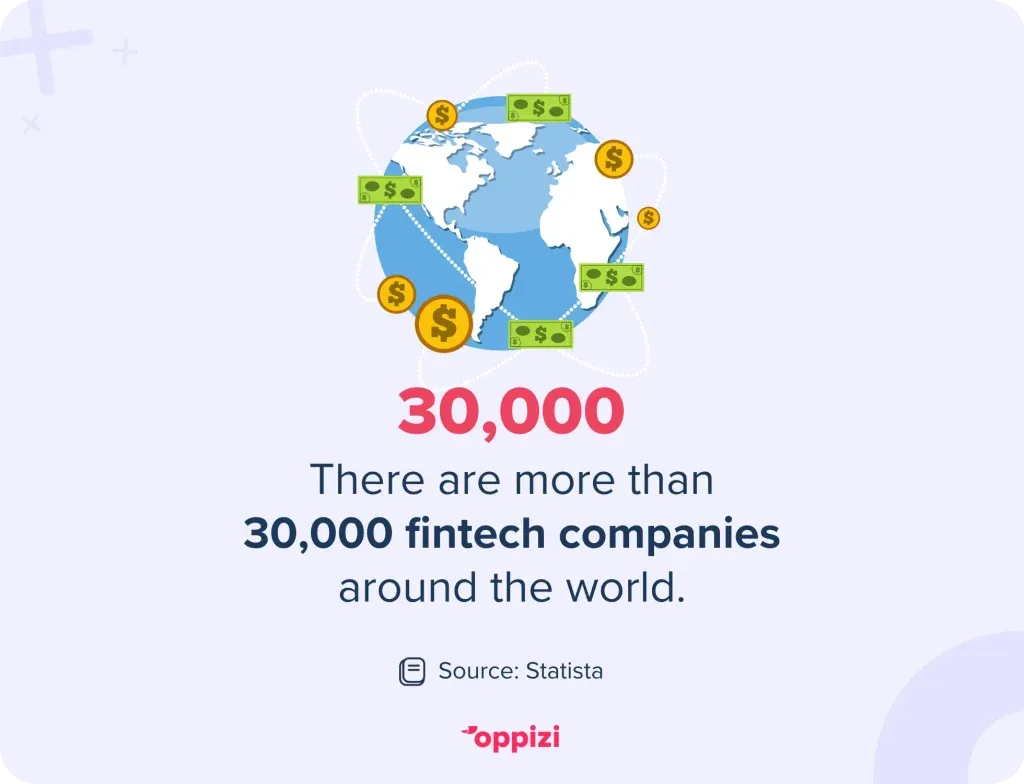
There are over 30,000 fintech companies worldwide. Without clear messaging and a strong brand, even the best product gets lost in the mix.
2. People need education
Many still don’t fully understand digital wallets, AI-driven investing, or decentralized finance. Good marketing makes complex ideas simple and shows people how your product helps them.
3. Trust is everything
Money is personal. If people don’t trust your brand, they won’t use your product. Marketing builds credibility through transparency, customer reviews, and expert insights.
4. Growth depends on new users
No matter how innovative your product is, you need a steady flow of new customers. Smart marketing turns visitors into paying users and keeps your business growing.

Fintech marketing strategies
If you want people to notice your fintech product, you need smart marketing. Here’s what works best in 2025.
1. Know your audience
Before running ads or writing content, figure out who you’re talking to.
How to break down your audience:
- Demographics – Age, income, location, job
- Financial behavior – Spending habits, investing style, biggest money struggles
- Tech comfort – Are they used to digital banking, or do they prefer old-school finance?
- Motivation – What drives their financial decisions?
Tip: Use tools like Google Analytics, Hotjar, and surveys to learn more about your users.
2. Build a brand people trust
Fintech moves fast, but trust takes time. A strong brand makes people feel safe using your product.
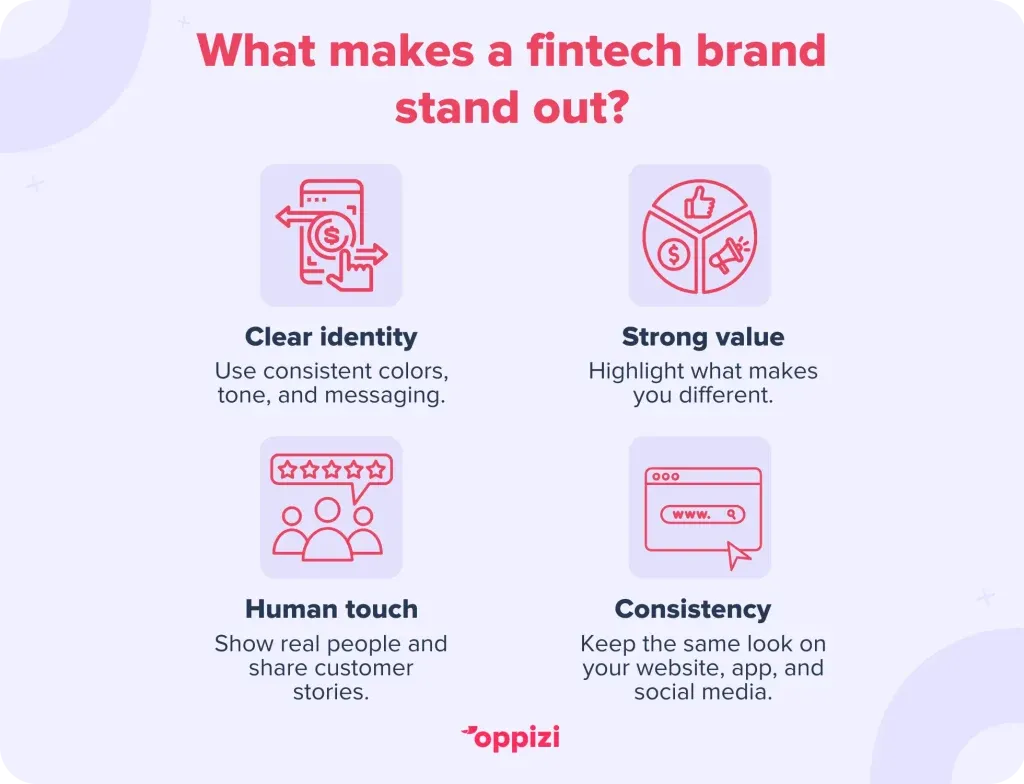
What makes a fintech brand stand out?
- Clear identity – Consistent colors, tone, and messaging
- Strong value – What makes you different? (e.g., "No hidden fees" or "AI-powered savings")
- A human touch – Show real people behind the brand and share customer stories
- Consistency everywhere – Same look and feel on your website, app, and social media
Example: Revolut keeps it simple with a clean design and a clear message: “One app for all things money.”
3. SEO & content marketing
People search before they buy. Help them find answers before they turn to your competitors.
Fintech content marketing that works:
- Blogs & guides – “How to invest in crypto safely"”
- Short videos – “What is DeFi?”
- Case studies – Proof that your product delivers results
- Interactive tools – Budget calculators, savings trackers
SEO tips:
- Target long-tail keywords like “best budgeting app for freelancers”
- Optimize for voice search (people ask Siri and Alexa for financial advice)
- Get backlinks from trusted finance sites
4. Paid ads that bring fast results
SEO is a long game, but ads bring instant traffic.
Best places to advertise:
- Google Ads – Bid on searches like “best neobank 2025”
- Social media ads – LinkedIn (B2B), Instagram/Facebook (B2C), TikTok (younger users)
- Retargeting – Bring back visitors who didn’t sign up the first time
Example: Chime runs Facebook ads showing how users get paid early—a huge selling point.
5. Email marketing that works
Email isn’t dead. It’s still one of the best ways to connect with users.
What to send:
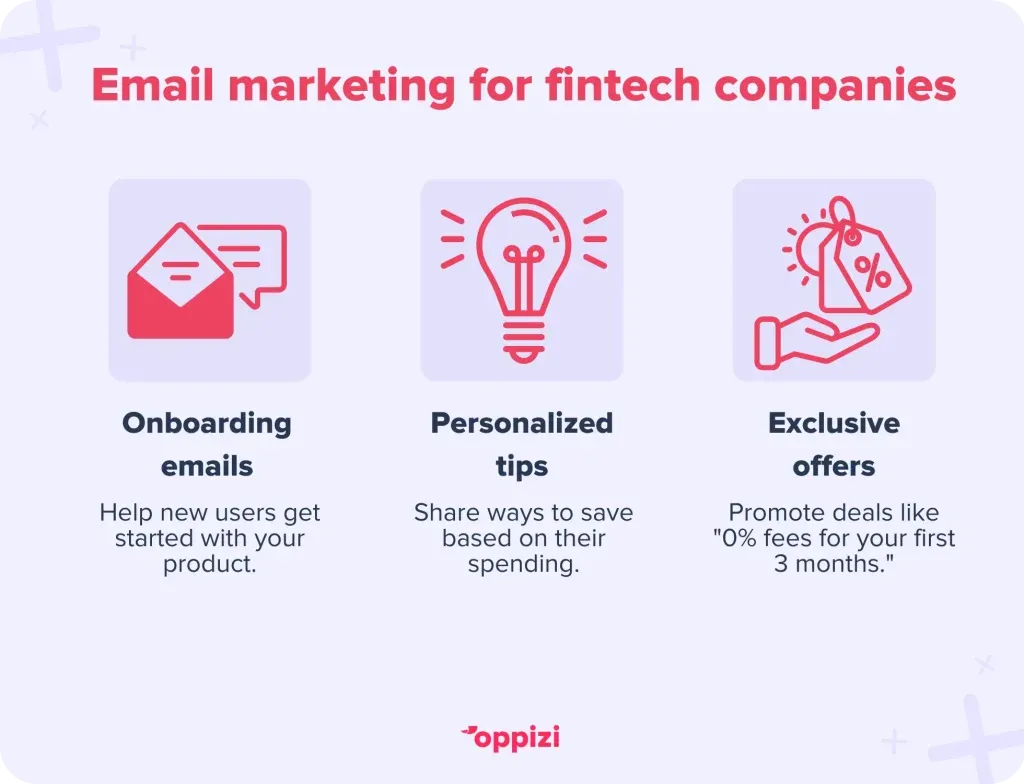
- Onboarding emails – Teach new users how to get the most out of your product
- Personalized tips – “Here’s how you can save more based on your spending”
- Exclusive offers – “0% fees for your first 3 months”
Tip: AI-driven segmentation helps send the right emails to the right people.
6. Influencer & affiliate marketing
People trust real people more than ads. That’s why influencers and affiliates work.
How to use influencers:
- Micro-influencers (10K–100K followers) often have higher engagement
- Finance YouTubers & podcasters can give in-depth product reviews
- Affiliate programs pay bloggers for referrals (e.g., "Sign up and get $10")
Example: Cash App partners with TikTok influencers to promote peer-to-peer payments.
7. Get featured in the media
A good PR strategy builds credibility fast.
What works:
Press releases – Announce big updates or funding roundsGuest posts – Contribute to sites like Forbes, TechCrunch, and BloombergExpert quotes – Use HARO (Help a Reporter Out) to get featured in finance articles

8. Build a community
People love to feel part of something. Make them stick around with engagement.
How to do it:
- Facebook groups – A space where users can swap tips
- Gamification – Reward users for hitting savings goals
- Live Q&As – Webinars with your CEO or finance experts
Example: Robinhood adds fun animations (like confetti after a trade) to make investing exciting.
Fintech marketing trends
The fintech world moves fast, and so do its marketing trends. To keep up, you need to use the latest ideas that connect with today’s digital consumers. Here are the biggest fintech marketing trends for 2025:
Hyper-personalization with AI
People don’t want generic advice anymore. They expect personalized experiences, and AI helps make that happen.
How fintechs are using AI:
- Dynamic content – Websites and emails change based on user behavior.
- Predictive analytics – Anticipate customer needs (like suggesting a loan).
- Chatbots and virtual assistants – Offer 24/7 support (like Cleo’s AI money coach).
Example: N26 uses AI to give real-time spending insights, helping users feel understood.
The rise of video and short content
With shorter attention spans, video is the best way to explain complex fintech ideas.
Winning video strategies:
- Explainer clips on TikTok/Reels – “How to use Bitcoin in 60 seconds.”
- Customer testimonial videos – Real users sharing their success.
- Live Q&A sessions – Experts answering finance questions in real time.
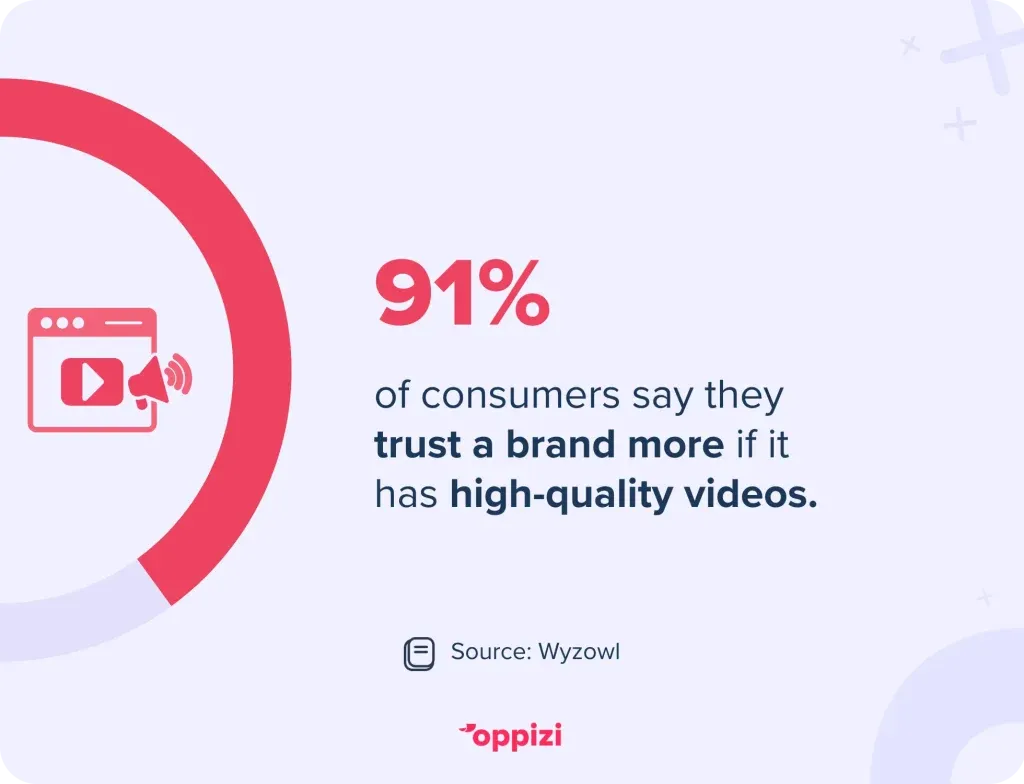
Trust is everything in fintech. 91% of consumers say video quality impacts their trust in a brand, up from 87% last year. A polished, high-quality video can make the difference between gaining a customer or losing them to a competitor.
Embedded finance and partnerships
Fintech isn’t just about standalone apps anymore; it’s becoming part of everyday platforms.
How it works:
- Co-branded deals – Like Shopify + Affirm for buy now, pay later.
- Banking-as-a-Service (BaaS) – Non-financial brands offering fintech tools (like Uber Wallet).
- API partnerships – Easy connections (like linking PayPal to your app).
Why it matters: It expands reach without high customer acquisition costs.

Voice search and conversational AI
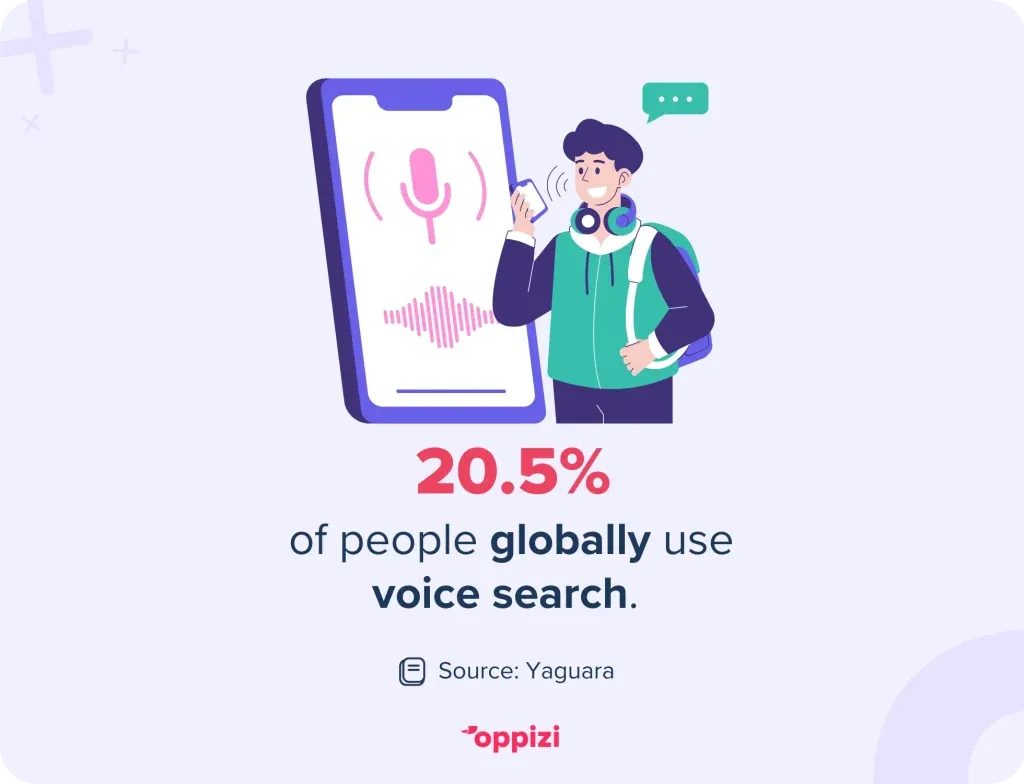
Around 1 in 5 people worldwide use voice search globally, and the number is only expected to rise. Fintech marketers need to adapt.
Optimizing for voice search:
- FAQ-based content – Answer questions like, “Hey Siri, what’s the best budgeting app?”
- Voice-activated banking – For example, “Alexa, send $50 to Mom via Venmo.”
- Long-tail keywords – Focus on natural-language queries.
Focus on sustainability and ethics
Younger generations care about where their money goes. Fintechs are responding to this need.
How to tap into this trend:
- Green banking features – Like carbon footprint trackers (e.g., Aspiration).
- Transparent ESG policies – Show how your company supports ethical investing.
- Cause marketing – “We donate 1% of fees to financial literacy programs.”
Community-driven growth
People trust recommendations from peers more than ads. Smart fintechs are building strong communities.
Tactics to try:
- Private Discord or Facebook groups – Share exclusive financial tips.
- User-generated content (UGC) – Encourage customers to share their stories.
- Collaborations with finfluencers – Partner with finance TikTokers or YouTubers.
Example: Public.com grew through community discussions about stocks, making investing social.
Regulatory tech in marketing
With tighter financial regulations, compliance can give you an edge.
Key focus areas:
- Transparent data policies – Explain your security measures clearly (like GDPR and CCPA).
- Ethical advertising – Avoid misleading claims like “get rich quick.”
- Automated compliance tools – Use AI to review ads and stay within the rules.
AR, VR, and the metaverse
Though still emerging, some fintechs are exploring immersive experiences.
Early use cases:
- Virtual financial advisors – Meet an AI advisor in virtual reality.
- Metaverse banking hubs – Virtual branches for crypto and NFT services.
- Gamified learning – AR apps that teach investing basics.
How offline marketing helps fintech grow
Fintech lives online, but your customers don’t. If you’re only using digital ads, you’re missing real-world opportunities.
Offline marketing helps you reach people where they work, commute, and spend time. It builds trust and makes your brand stand out. Here’s how:
- Flyer distribution: Hand out flyers in busy areas—universities, office districts, train stations.
- Direct mail: A physical letter gets more attention than another email in a crowded inbox.
- Events: Meet customers in person at finance expos, workshops, and pop-up booths.
- Guerrilla marketing: Creative, unexpected campaigns grab attention and spark conversations.
At Oppizi, we make offline marketing easy. We put your message in the right hands, so you can focus on growing your business.
Fintech marketing best practices
- Build trust and transparency – Clearly explain fees and how you use data.
- Use data and AI – Personalize experiences based on user behavior.
- Stay compliant – Follow regulations like GDPR and CCPA in your marketing.
- Test and optimize – Run A/B tests on ads, emails, and landing pages.
The psychology of fintech marketing: Influencing financial decisions
Fintech is more than just technology; it’s about how people think and act. By understanding the psychological triggers that influence financial choices, you can improve your marketing strategy. Here’s how to use behavioral science in fintech marketing:
1. Pain vs. gain
People are more motivated to avoid losses than to seek gains.
How to use it:
- Messaging: Instead of saying, “Save $500 a year in hidden bank fees,” try, “Stop losing $500 a year in hidden bank fees.”
- User experience: Show potential losses in your app. For example, “You’ll lose your 5% cashback if you don’t act today.”
2. The power of defaults
Most users stick with what’s already chosen for them.
Tactics:
- Set defaults that users can opt out of, like auto-rounding up purchases for savings.
- Pre-check options for "recurring investments" when they sign up for a robo-advisor.
Example: Acorns grew by making micro-investing the default choice.
3. Social proof
When making financial decisions, people look for validation from others.
Ways to use it:
- Show real-time counters, like “Join 2M+ investors.”
- Feature user-generated content, such as testimonials on TikTok.
- Highlight trust from institutions, like being “backed by Goldman Sachs.”
4. Scarcity and urgency
Fear of missing out (FOMO) can drive action.
Fintech applications:
- Offer limited-time APY boosts, such as “4% interest for 3 months only.”
- Create waitlists for exclusive features, like early access to crypto trading.
Tip: Use countdown timers in ads for credit card bonuses to create urgency.
5. The endowment effect
People value things they already feel they “own,” even if they’re digital.
Growth hack:
- Give users “starter portfolios,” like $10 in free stock, to create a sense of ownership.
- Use pre-filled account balances in demos, like “Your $1,000 crypto wallet.”
6. Chunking
Users can feel overwhelmed and won’t convert if things are too complicated.
How to simplify:
- Break long forms into smaller steps, like “Step 1 of 3.”
- Use interactive calculators to help users see potential earnings.
Example: Mint grew by breaking budgets into easy-to-understand categories.
7. Color psychology
Colors can affect how much people trust a brand.
- Blue = Security (used by PayPal, Chase)
- Green = Growth (Robinhood, Cash App)
- Black/Gold = Luxury (Amex, Goldman Sachs)
Tip: A/B test different colors for calls to action. Some users might respond better to “urgent red” for alerts.
Key takeaway
Fintech isn’t just competing on features; it’s also competing for attention and trust. By tapping into these psychological triggers, you can:
- Make signups easier
- Build trust quickly
- Increase conversions
Fintech marketing FAQ: Your questions answered
What is fintech marketing?
Fintech marketing is all about promoting financial technology products, like digital banking apps and investing tools. The goal is to attract and keep users. Unlike traditional finance marketing, fintech focuses on online strategies, such as:
- SEO and content marketing
- Social media and influencer campaigns
- AI-driven personalization
- Performance ads (like Google ads)
- Community-driven growth
The main goals are to build trust, educate users, and boost conversions in a competitive market.
What are the top 7 types of digital marketing for fintech?
These are the key digital marketing strategies that work well for fintech:
- Search Engine Optimization (SEO): Rank for terms like “best crypto wallet.”
- Pay-Per-Click (PPC) Ads: Use ads on Google and Facebook to target serious buyers.
- Content Marketing: Create blogs, videos, and guides to explain complex topics (like "What is DeFi?").
- Social Media Marketing: Use LinkedIn for B2B, TikTok and Instagram for B2C, and Twitter for crypto trends.
- Email Marketing: Send personalized onboarding emails and financial tips.
- Influencer and Affiliate Marketing: Partner with finance YouTubers or bloggers.
- Community Marketing: Build loyal users through platforms like Discord, Reddit, or in-app forums.
What are the 5 D’s of fintech?
Chris Skinner coined this framework for fintech innovation:
- Digital: Fully online services with no physical branches.
- Disruptive: Challenging traditional banks (like Robinhood vs. brokerages).
- Decentralized: Blockchain-based finance (DeFi and crypto).
- Democratized: Making finance accessible, like micro-investing and remittances.
- Data-Driven: Using AI for personalization, like credit scoring based on spending habits.
Who is the target market for fintech?
The target market varies by product but generally includes:
- Millennials and Gen Z: Digital natives using neobanks (like Revolut and Chime).
- Freelancers and Gig Workers: They need flexible banking options (like Wise and PayPal).
- Small Businesses: Using tools like Square or QuickBooks.
- Investors: Crypto traders (like Coinbase) and stock investors (like eToro).
- Underbanked Populations: Using remittance apps (like WorldRemit) and microloans (like Tala).
Who is leading fintech in 2025?
Here are the top fintech companies around the world:
- Payments: Stripe, PayPal, Square
- Neobanks: Revolut, Chime, N26
- Investing: Robinhood, eToro, Coinbase
- Lending: SoFi, Affirm, Klarna
- InsurTech: Lemonade, Root Insurance
Regional Leaders:
- Asia: Ant Group (Alipay), Grab Financial
- Africa: Flutterwave, M-Pesa
- Latin America: Nubank, Mercado Pago
Final thoughts
The fintech space is changing quickly. To stay ahead, your marketing should be:
- Educational: Make complex topics simple.
- Trust-Driven: Build credibility at every step.
- Omnichannel: Be where your users are (social media, search, email).
- Data-Powered: Use AI to personalize user experiences.
Great marketing isn’t about shouting the loudest. It’s about being heard by the right people.Use these strategies, and your fintech brand won’t just survive 2025, it will thrive. But strategy alone won’t get you there. Execution is everything.
With Oppizi, you can reach customers in the real world, not just online. We put your message directly into their hands with offline marketing that works. No guesswork. No wasted budget. Just real results while you focus on growing your business. Get started today.