Last updated July 23, 2026
You’ve got a product or service ready to go. Now what? You need a way to get it in front of the right people. That’s where a go-to-market strategy (also called a GTM strategy) comes in.
Whether you're launching something new, entering a different market, or reaching a new group of customers, this plan helps you stay focused. It covers the basics: what you say, who you say it to, and how you reach them, so you don’t waste time or money.
This guide will show you what a GTM strategy is, how to build one, and how it works in real life. Even if you’ve never made one before, don’t worry. We’ll keep it simple.
What is a go-to-market strategy?
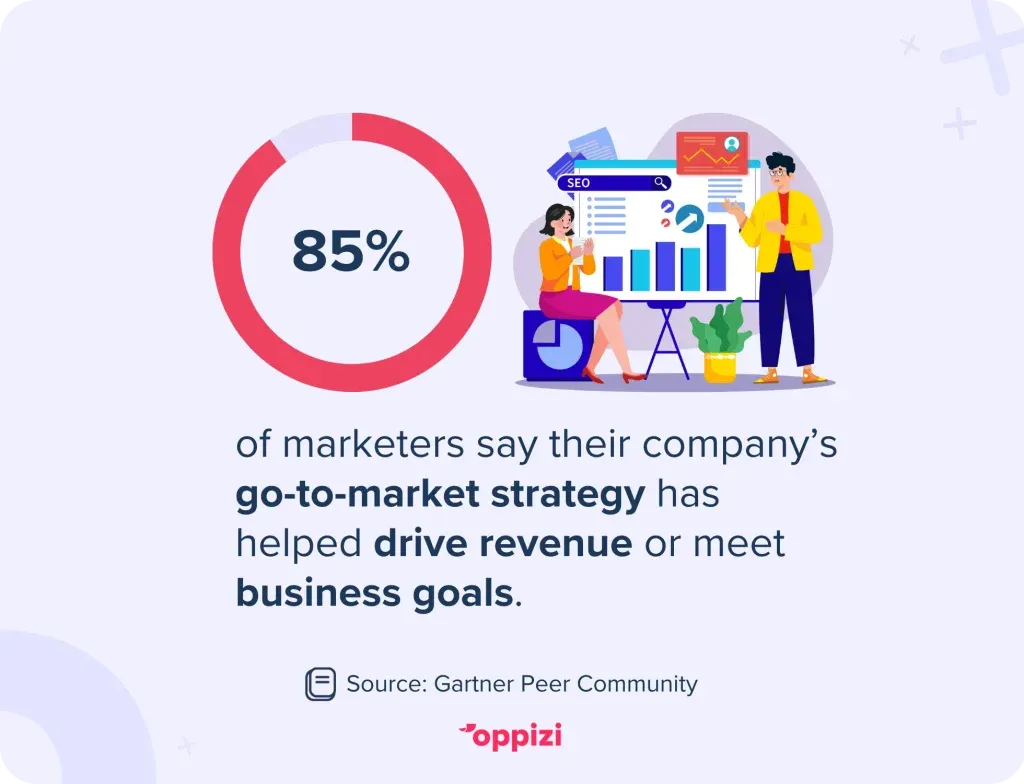
85% of marketers say their go-to-market strategy helps drive revenue or hit business goals: 30% say it’s very effective, 55% say somewhat. So what is it? It’s a simple plan for launching your product and reaching the right customers. It answers three big questions:
- Who are you trying to reach?
- What problem are you solving?
- How will you reach them and get them to take action?
Having this plan helps you stay on track, avoid wasted budget, and gives your team a clear direction. Think of it like a map. Without it, you’re guessing where to go. With it, you can head straight for your ideal customers.
Why a go-to-market strategy matters
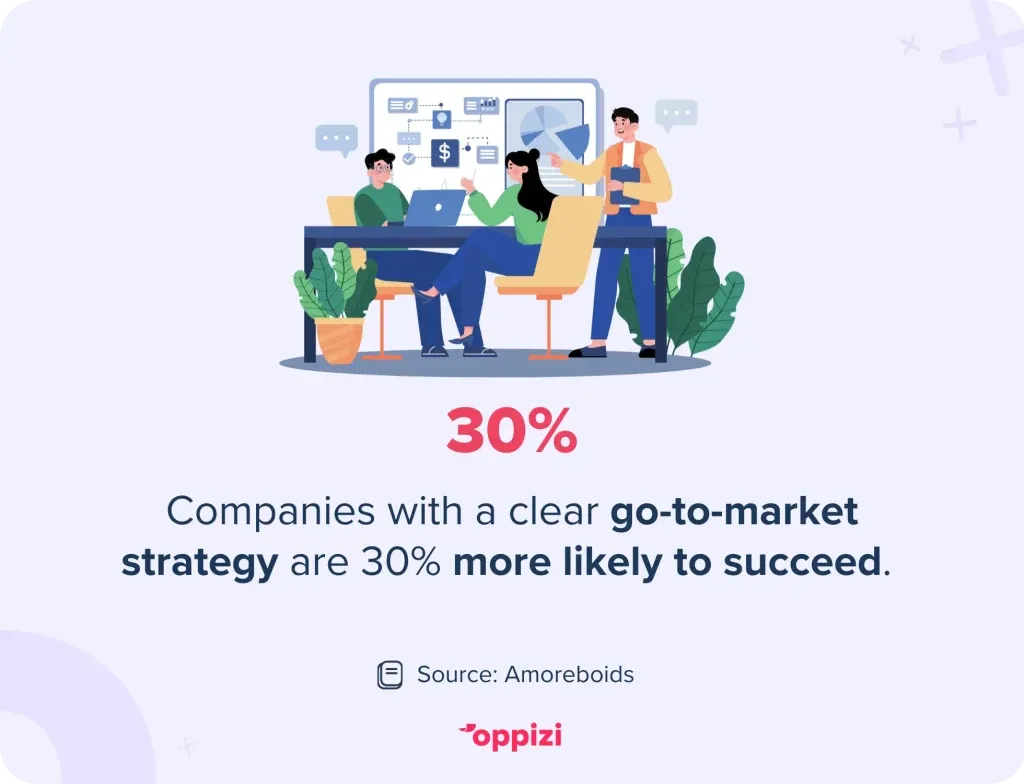
Even great products can fail if they’re launched without a plan. However, companies with a clear go-to-market (GTM) strategy are 30% more likely to succeed, according to studies. Here’s why a GTM strategy helps:
- Saves money: You won’t waste budget on ads or efforts that don’t work.
- Keeps your message clear: You know what to say and who to say it to.
- Aligns your team: Everyone works toward the same goal.
- Spots problems early: You can fix issues before they get bigger.
A good strategy doesn’t need to be long or complicated. It just needs to be clear, realistic, and built around your customers.
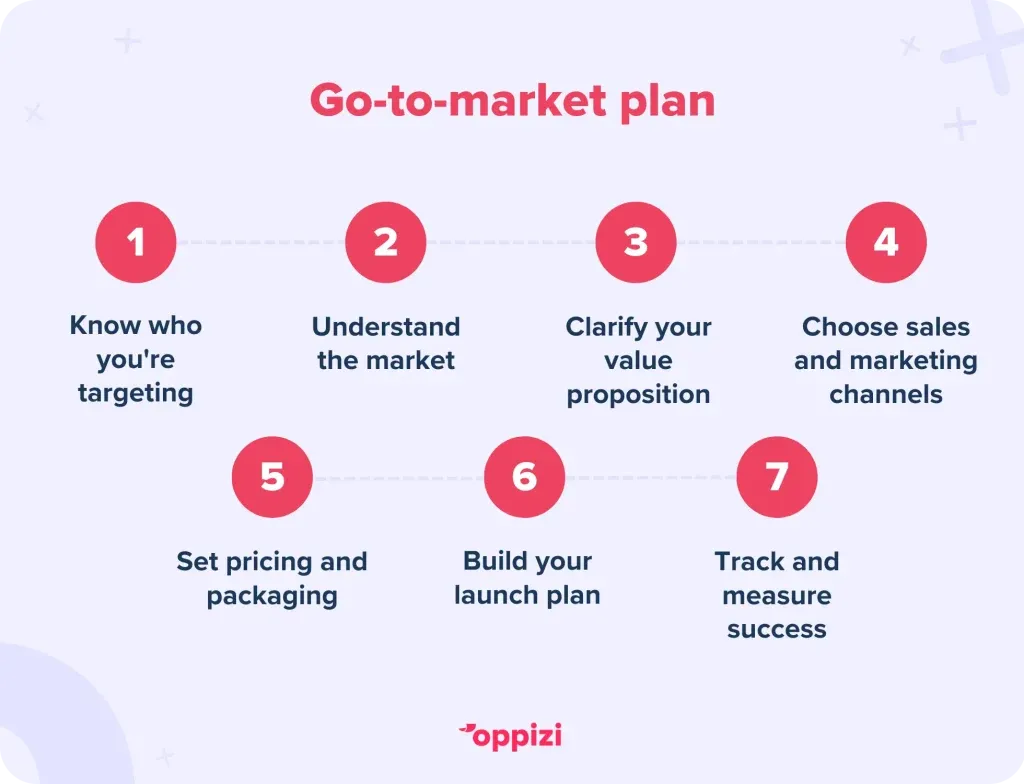
7 things every go-to-market plan needs
Here’s how to build a solid GTM strategy, step by step.
1. Know who you're targeting
Start by getting clear on who you want to reach. Be specific.
- What industry are they in?
- What problems do they face?
- What would make them want your product?
You can create customer profiles to help with this. These are simple descriptions of your ideal customers.
Example: A fitness app might focus on busy professionals in their 20s and 30s who want to work out at home.
2. Understand the market
Before you launch, take a moment to understand the market you're stepping into. This means looking at competitors, customers, and trends that might impact your strategy.
Here’s how to get started:
- Research your competitors: Find 3–5 businesses that offer similar products. Check their websites, pricing, reviews, and social media. What do they do well? Where do they fall short? What sets your product apart?
- Look for market trends: Use tools like Google Trends, AnswerThePublic, or Statista to see what people are searching for and how their needs are changing.
- Study customer behavior: Understand how your target customers currently solve the problem your product addresses. Are they using a competitor? Handling it themselves? Or don’t they even know there’s a solution?
- Consider entry barriers: Think about what could make launching harder. Are there legal requirements? High costs? A strong competitor presence?
By understanding the market, you’ll find new opportunities and avoid entering a crowded or unprepared space.
3. Clarify your value proposition
Your value proposition tells people why they should care about your product. It’s one of the most important parts of your plan.
A strong value proposition answers three things:
- Who you’re helping
- What problem you’re solving
- How your solution is better than the alternatives
Here’s a simple formula to use: “We help [target audience] solve [problem] with [unique solution].”
Examples: “We sell accounting software.” (Too vague)
“We help freelancers save time on taxes with easy-to-use, automated accounting software.”
Tips for a strong value prop:
- Focus on benefits, not just features.
- Skip the jargon and use simple language.
- Test your message with real people. If they don’t get it in 5 seconds, change it.
Your value proposition should be at the heart of everything you do: ads, landing pages, emails, and more.
4. Choose your sales and marketing channels
Where will you reach your audience?
Some options include:
- Online ads (Google, Facebook, TikTok)
- SEO and content marketing
- Email marketing
- Offline marketing (flyer distribution, direct mail)
- Events and partnerships
Tip: Start with 2–3 core channels. Focus on the ones your audience uses most.
When to use offline channels like flyers:
- You’re launching in a specific city or neighborhood.
- You want to build brand trust in physical locations (e.g., gyms, cafes, events).
- Your audience isn’t always online or easy to reach through ads.
At Oppizi, we specialize in flyer campaigns that are backed by data and targeting tools. For many businesses, combining online ads with flyers leads to better engagement and more conversions.
5. Set your pricing and packaging
Pricing is part of your strategy, not just a finance decision.
Think about:
- Will you offer a one-time price, a subscription, or different tiers?
- How does your pricing compare to competitors?
- Is it easy for customers to understand?
If you’re not sure, try testing different prices or offering early discounts to get feedback.
6. Build your launch plan
Now, plan the details of your launch.
Here’s what to think about:
- Timeline: When will each part of your campaign launch?
- Messaging: What will you say and how will it look across different channels?
- Team roles: Who’s handling what?
This is your chance to get people excited, so feel free to be creative.
Tip: A well-timed flyer campaign in key neighborhoods can build local awareness fast, especially when combined with digital ads.
7. Track and measure success
One of the best things about having a go-to-market strategy is that you can track how things are going and adjust as needed.
Start by setting clear, measurable goals:
- Website traffic
- App downloads
- Sales or sign-ups
- QR code scans or flyer redemptions
- Cost per lead or cost per acquisition (CPA)
Beginner-friendly tools to help track:
- Google Analytics: Tracks website traffic and how people behave on your site.
- UTM codes: Custom links that tell you where your traffic is coming from (perfect for online and flyer campaigns).
- QR codes: Easy to add to flyers. Link them to specific pages to track offline results.
- Oppizi Analytics Dashboard: Tracks flyer campaign results by location and time.
After your launch, set aside time to review your results. What worked? Which channels gave the best return on investment? Use those insights to make your future campaigns even better.
Go-to-market strategy example: launching a meal delivery startup
Let’s look at an example of a GTM strategy in action.
Business: A new plant-based meal delivery serviceGoal: Get 500 paid subscriptions in the first 3 monthsTarget audience: Health-conscious millennials in urban areasChannels: Instagram ads, influencer partnerships, and flyers in gyms and co-working spacesValue proposition: Affordable, healthy meals delivered to your door, no cooking requiredPricing: Weekly subscription with 3 tier optionsMessaging: “Healthy food, no hassle. Fresh, plant-based meals for busy people.”Tracking: UTM links on ads, promo codes on flyers, website analytics
Launch timeline:
- Week 1: Tease launch on Instagram; offer early sign-up deal to waitlist
- Week 2: Launch paid social ads; start flyer distribution in high-traffic areas
- Week 3: Partner with micro-influencers for review posts
- Week 4: Launch referral program and email campaign for early subscribers
By mixing digital and offline tactics, you create multiple touchpoints that reinforce your brand. This helps boost visibility and trust.
Tips for building a go-to-market plan that actually works
You don’t need a huge budget to create a great GTM strategy. Here’s what helps:
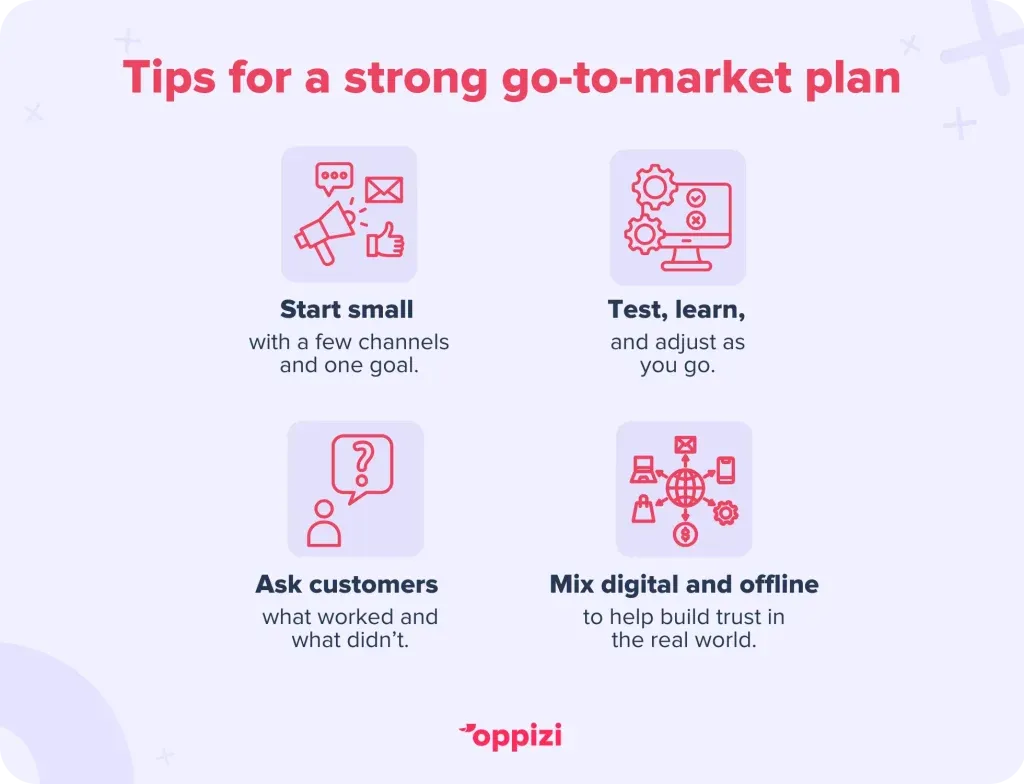
- Start simple: Pick a few channels and one clear goal.
- Test and learn: Treat your first launch as a learning experience.
- Get customer feedback: Ask what worked, what didn’t, and what they need next.
- Use both offline and online: Don’t rely just on digital. Offline tactics, like flyers, can build trust and expand your reach.
At Oppizi, we help brands launch smarter with scalable flyer campaigns. Whether you’re testing a new market or scaling up, offline strategies can give you an edge.
FAQ: Go-to-market strategy
What is a go-to-market strategy example?
A GTM strategy example could be a meal delivery startup launching in a city. They might promote through Instagram ads, distribute flyers near gyms and co-working spaces, and partner with local influencers. The goal is to attract early subscribers and test their messaging before expanding.
What is the GTM strategy?
A GTM strategy is a step-by-step plan to launch a product or service, reach your customers, and drive sales. It covers identifying your audience, choosing marketing channels, setting pricing, and tracking performance. It helps you launch smarter and with fewer surprises.
What are the 6 components of a go-to-market strategy?
While the exact details can vary, most GTM strategies include these six parts:
- Target audience: Who you want to reach
- Market research: Insights on competitors and demand
- Value proposition: Why customers should choose you
- Sales and marketing channels: How you’ll reach people
- Pricing strategy: How you’ll price and position your offer
- Success metrics: How you’ll measure results
What are the 6 C's of strategy?
The 6 C’s help you analyze your business landscape and build a solid foundation. They are:
- Company: What your business does well
- Customers: Who you're serving and what they need
- Competitors: Who else is in the market
- Collaborators: Partners, suppliers, or distributors
- Context: Industry trends and external factors (like the economy or technology)
- Channels: The platforms you’ll use to reach your audience

Final thoughts: Keep it simple, customer-focused, and measurable
A go-to-market strategy doesn’t need to be complicated. It just needs to be clear, actionable, and focused on your customer.
Whether you’re launching a new app, service, or product, having a solid GTM plan will save you time, money, and stress. Start by understanding your audience, defining your value, choosing the right channels, and testing along the way.
If you want a scalable, data-driven way to reach people in person, Oppizi’s user-friendly platform can help you create offline campaigns with precision. Join today for free and start growing your business the easy way.