Last updated September 28, 2026
Getting new customers online is getting expensive. Ads on Google, Meta, and LinkedIn can cost over $100 per customer. That’s a lot, especially for small businesses, startups, and B2B companies trying to grow.
That’s why smart marketers are turning offline. Far from being outdated, offline strategies are a powerful, underused way to cut CAC. Tactics like direct mail, local partnerships, and in-person events aren’t just cost-effective. They’re targeted, trackable, and scalable.
If you’re a founder, marketer, or strategist tired of rising ad prices, this might be what you’re looking for.
What is offline marketing, and why does it work?
Offline marketing refers to any kind of promotional activity that takes place in the real world rather than online. This includes flyering, direct mail, print advertisements, in-person events, billboards, and even referral cards you hand out to potential customers.
If you rely on paid digital ads, you’ve probably seen your costs rise quarter after quarter. Offline marketing gives you a different way to get good customers, often for less money.
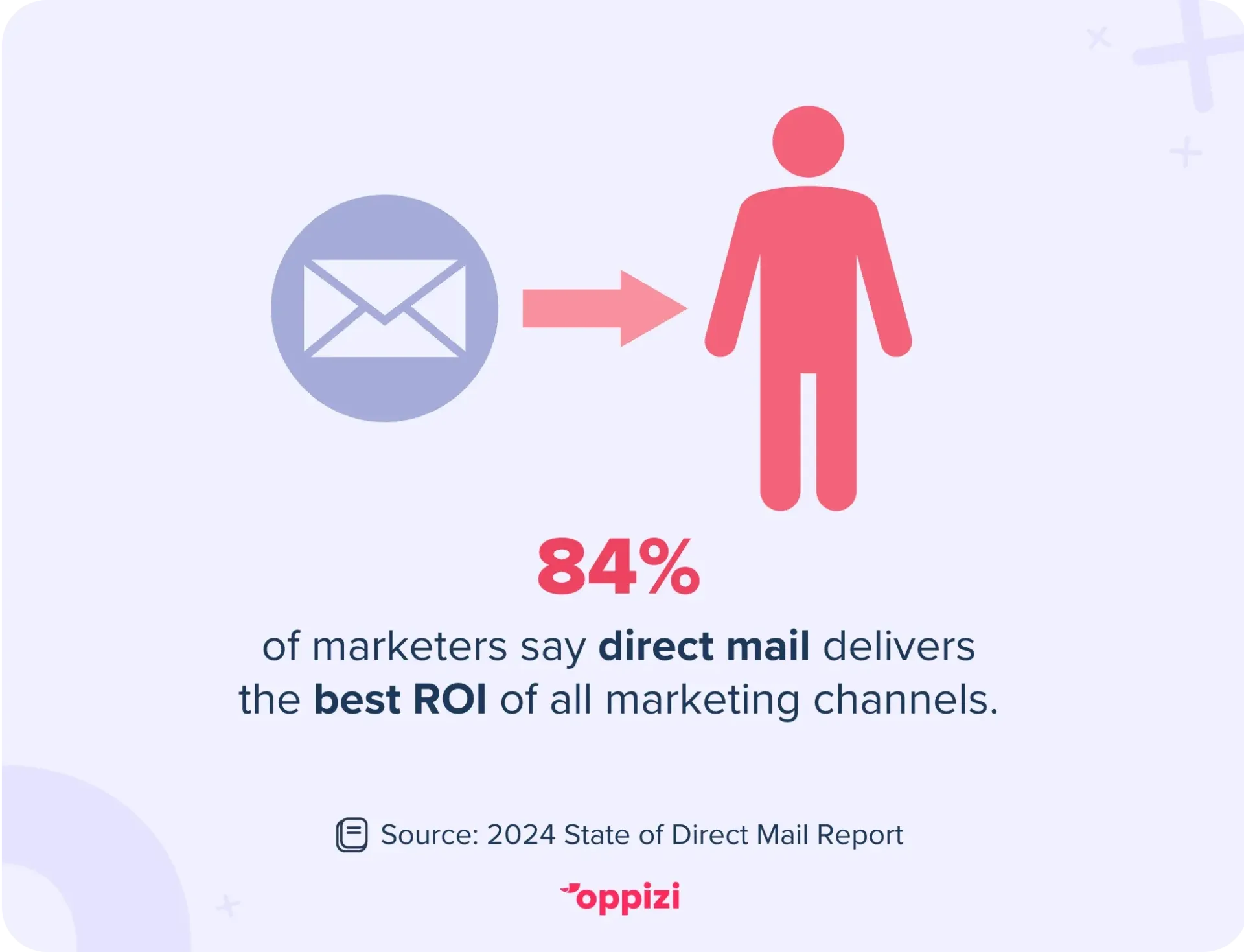
In fact, 84% of marketers say direct mail gives them the best return on investment. And that’s just one example. There are many offline tactics that make financial sense.
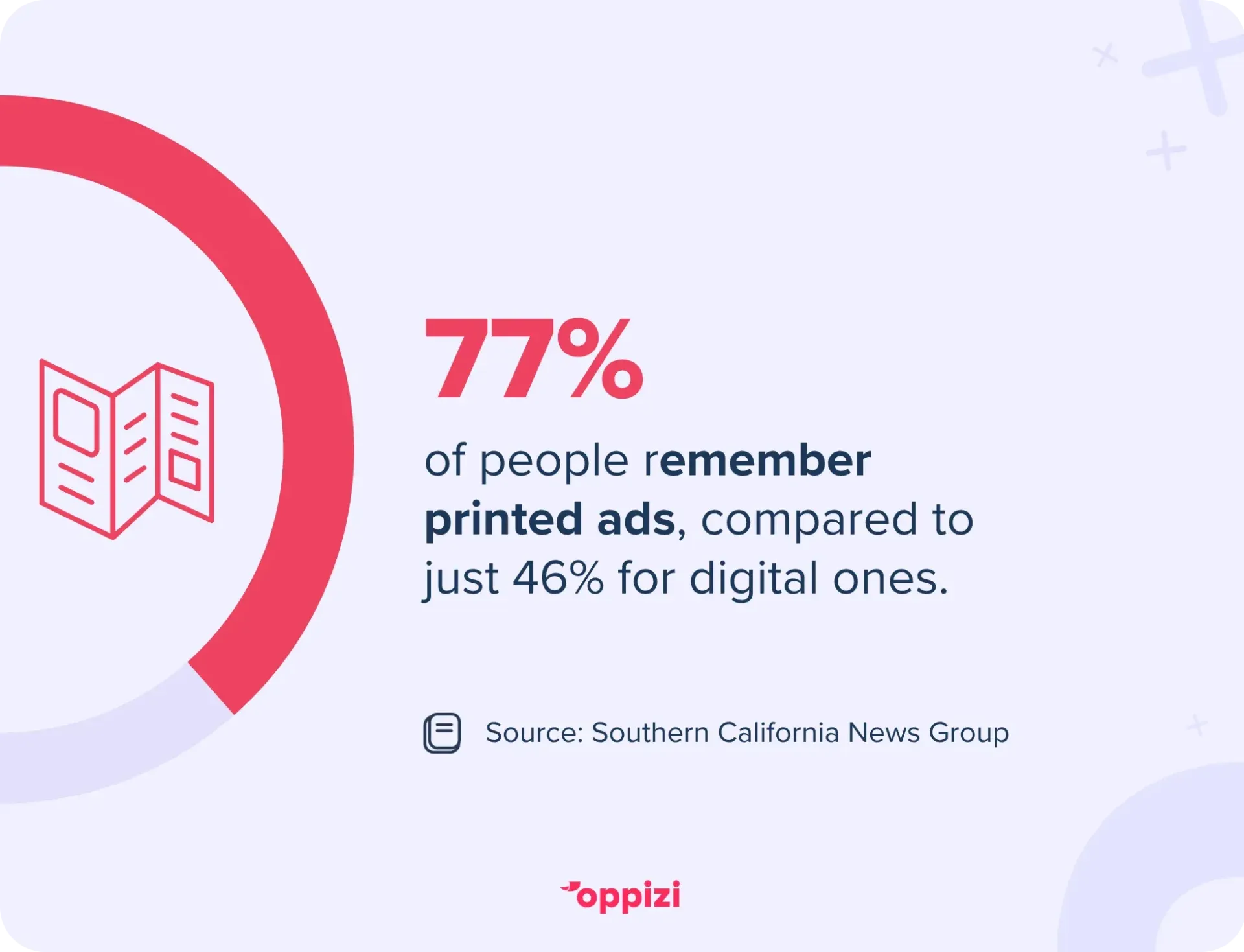
People tend to trust and remember physical experiences. One study found that 77% of people could remember a printed ad they saw. Only 46% remembered a digital one. When someone holds a postcard or flyer, they’re more likely to notice and act on it than if they just see an online ad.
With that foundation in mind, let’s look at the specific offline tactics that can actually lower your customer acquisition cost.
6 offline tactics that help lower customer acquisition cost (CAC)
Here’s where you put the ideas into action. These offline tactics are proven to lower CAC when done right. They’re easy to scale and track.
1. Direct mail and personalized mailers
Why it works
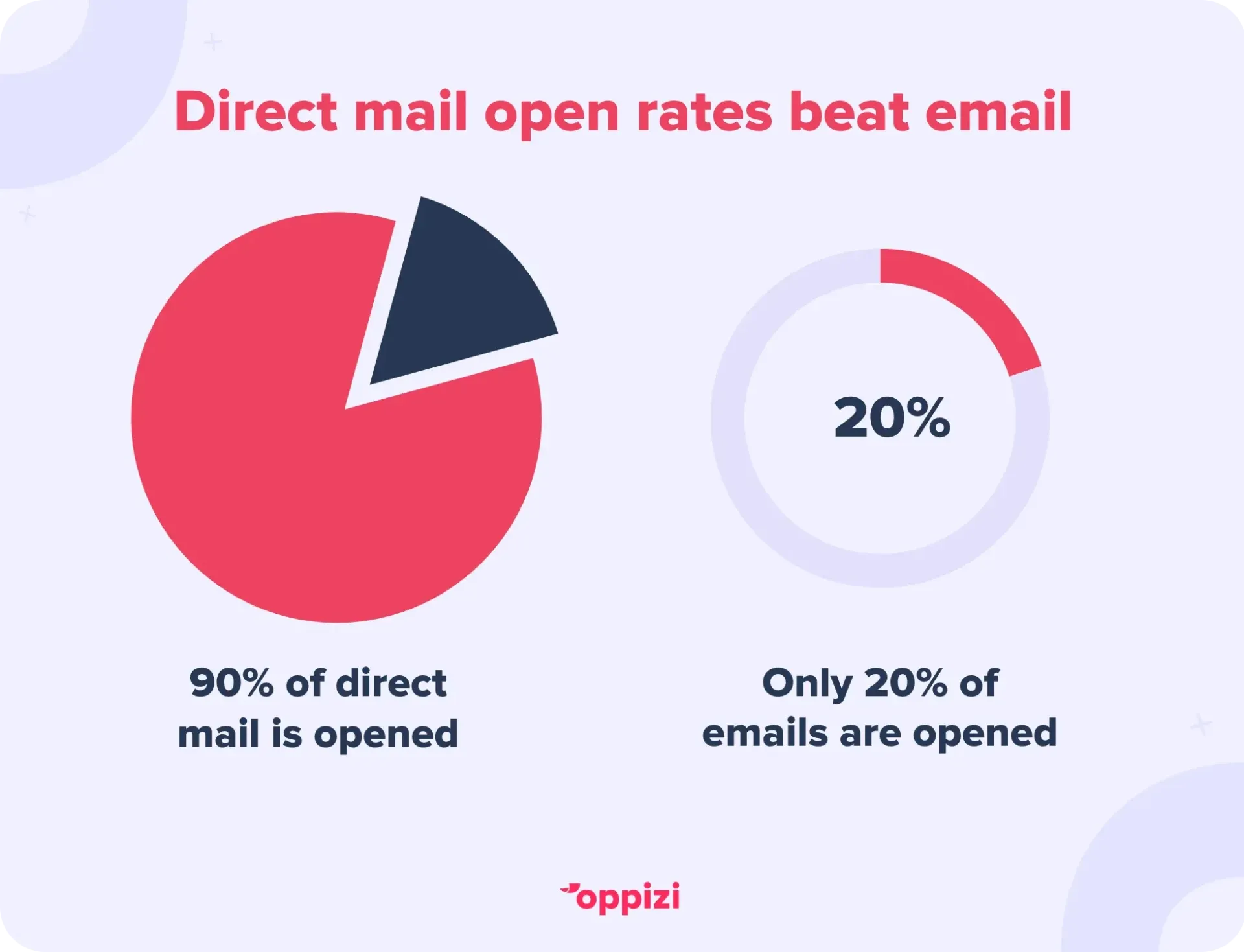
People notice physical mail. It stands out in a world full of digital noise. A personalized letter or postcard feels important. According to the research, 90% of direct mail gets opened. That’s much higher than email, which gets about 20–30%.
How to lower CAC with direct mail
- Segment and personalize. Use customer data to include names, custom offers, or product suggestions.
- Retarget smartly. Send mail to people who clicked your ads or abandoned their carts.
- Test different formats. Try postcards for quick offers, booklets for stories, or 3D mailers for high-value leads.
- Track everything. Use QR codes, personal URLs, or promo codes to measure what works.
2. Local events, pop-ups, and workshops
Why it works
Meeting people in person builds trust. It helps them feel connected to your brand. Events also lead to user photos, social posts, and word-of-mouth, which can grow your reach.
Experiential marketing works well. In fact, 75% of companies with big event budgets expect at least a 5:1 return on investment. Almost half expect between 3:1 and 5:1 returns.
How to lower CAC with events
- Host relevant events. SaaS brands can run how-to workshops. DTC brands can offer free samples at pop-ups.
- Capture leads. Use QR codes, raffles, or simple sign-up forms to collect email addresses.
- Follow up fast. Send an offer to attendees within 24 hours while interest is still high.
- Team up. Co-host events with other brands to split costs and reach more people.
3. Print advertising
Why it works
People trust print. About 82% say they trust print ads more than other media when deciding what to buy. That trust helps drive real results.
How to lower CAC with print ads
- Check the audience. Use magazines or newspapers with verified, audited readership.
- Track performance. Use special promo codes or offers so you can see what works.
- Be consistent. One ad won’t do much. Plan for at least three placements to see results.
4. Out-of-Home (OOH): Billboards, transit ads, and guerrilla stunts
Why it works
Out-of-home ads help people find your brand in the real world. According to Cuebiq, OOH campaigns led to 80–120% more store visits compared to people who didn’t see them. Visual marketing tactics, such as placing ads near stores or busy streets helps drive actual sales.
How to lower CAC with OOH
- Pick the right spots. Place transit ads near offices, gyms, or even your competitor’s locations.
- Try low-cost ideas. Use sidewalk chalk, clever posters, or flyer drops in busy areas. These often cost less than billboards.
- Make it trackable. Add QR codes, short links, or “text to claim” offers so you can see what’s working.
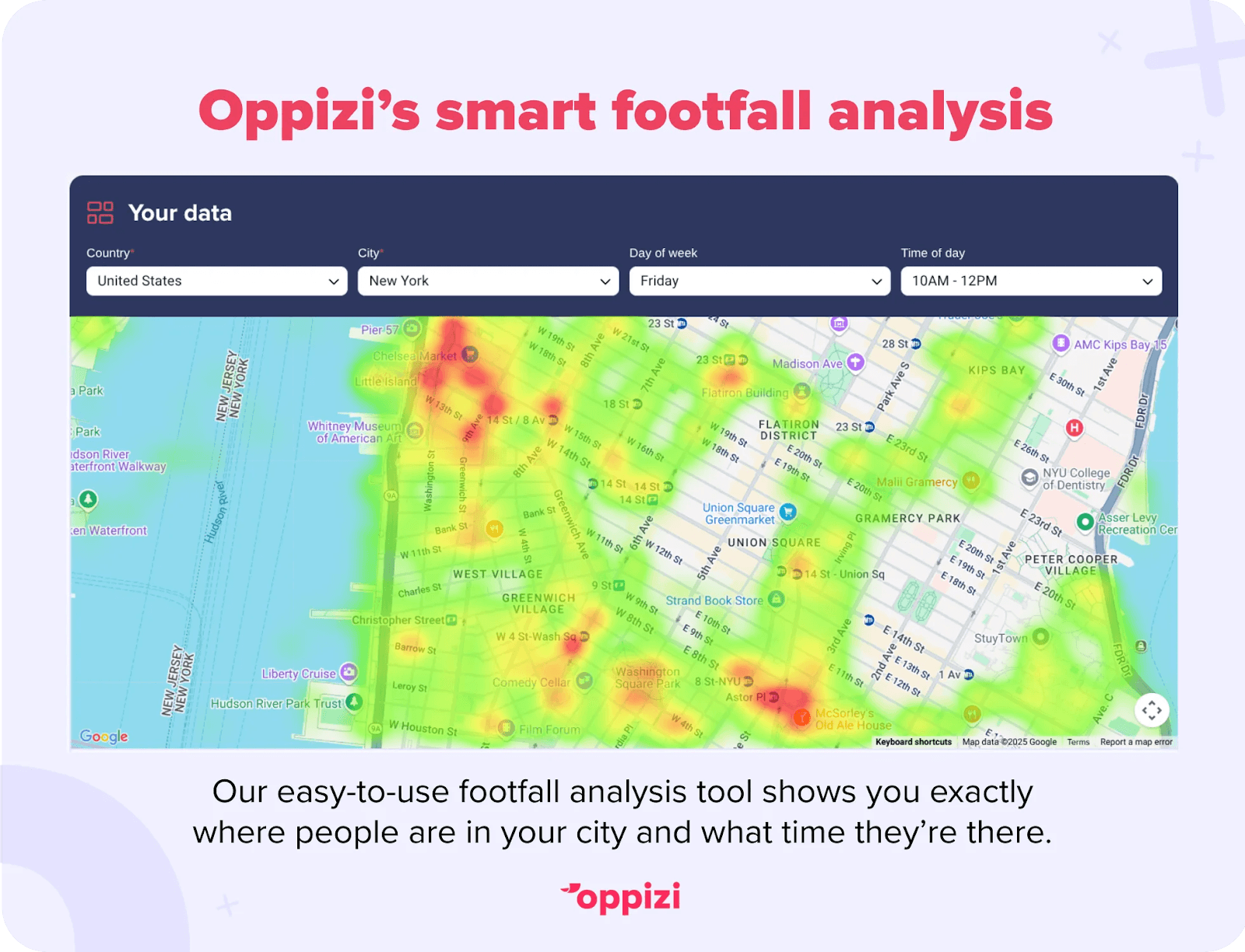
Need help finding busy areas in your city? Our free footfall tool does that for you. Choose your city, day, and time. We’ll show you a map with the best high-traffic spots. No guessing needed.
5. Flyer distribution
Why it works
Flyers are simple and cost-effective. A good flyer works like a mini billboard. People can hold it, keep it, or act on it right away. That makes it memorable. In fact, 88% of companies say flyer distribution helped increase their sales.
How to lower CAC with flyers
- Go where your audience is. Hand out flyers near gyms, cafés, co-working spaces, or outside competitor stores.
- Be specific. Focus on neighborhoods where your ideal customers live or work.
- Add a clear offer. Give people a reason to act now, like “20% off this week only.”
- Make it trackable. Use QR codes, promo codes, or special links to measure results.
- Stay consistent. Distribute in the same places over several weeks to build brand recall.
How Getaround cut CPA by 70% with flyer distribution
Getaround, a car-sharing service, wanted to get more customers while keeping costs low. Oppizi helped by launching an 8-week flyer and door hanger campaign across 200+ spots in London. They focused on parked cars, not random locations, so they reached people likely to use the service.
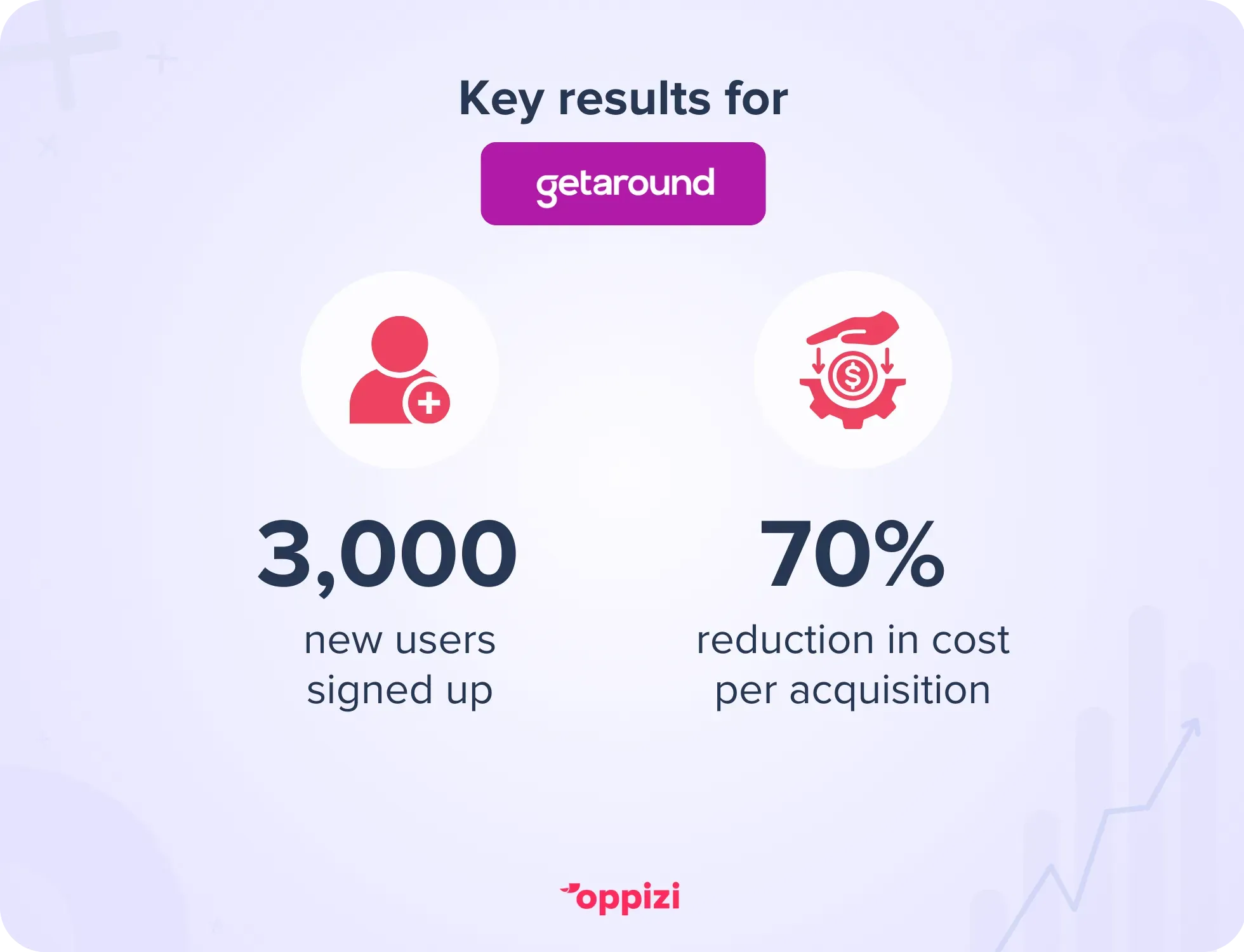
The campaign worked. Over 3,000 new users signed up, and the cost per acquisition dropped by 70%, as confirmed by Mathilde Robelin, Getaround’s Head of Marketing. The campaign later expanded to Paris and Brussels.
“People don’t realize how intense the logistics can be,” explains Alberto Granzo, Head of Operations at Oppizi. “An offline campaign is alive; it’s happening in real time on the street. From printing to brand ambassador pick-ups, shift management, and live monitoring, everything moves like a fast-changing spider web. Every part has to work together.”
6. Referrals and partnerships
Why it works
Word of mouth is one of the cheapest ways to get new customers. Simple referral cards or co-branded offers can turn your current customers into promoters.
How to lower CAC with referrals
- In-store or in-delivery cards. Add a referral card to every purchase or order.
- Partner with others. Team up with a business that shares your audience. For example, a meal-kit brand could partner with a fitness studio.
Why offline ads can give you more budget control
Digital ads run on auctions. That means the more your competitors spend, the more you have to pay. Offline costs are often fixed, or at least negotiable. That gives you more control over your budget. Here are a few examples:
- A direct mail campaign might cost just $0.50 to $1.00 per piece. That can bring in new customers at a cost that’s 20–30% lower than a Facebook retargeting ad.
- Local billboards and posters can get thousands of views each day. Their cost per impression is often much lower than ads on LinkedIn or Google.
How to choose the right offline channel
Not every strategy works for every brand. The right fit depends on your business, goals, and where your audience spends time offline:
- Know your audience by considering where they live, shop, commute, or spend free time. A B2B SaaS might target offices or events, while a food brand could show up at gyms or grocery stores.
- Match your budget to your reach: direct mail and print work well for smaller audiences, while out-of-home ads (like billboards or transit ads) become more affordable at scale.
- Start small, focusing on 1–2 trackable channels like mailers or local events. Once you’ve validated performance, you can expand to other tactics.

Conclusion
Offline marketing is a smart way to lower CAC and reach more people. Whether it’s direct mail, events, or print ads, these channels can be tested, measured, and scaled just like digital ones.
With Oppizi, you can manage everything in one place. Plan your campaign, launch it, and track results in real time. Ready to cut CAC without relying on digital ads? Try Oppizi’s platform today and start your first offline campaign with full control and clear data.
Frequently asked questions
- How can I reduce customer acquisition cost (CAC)?
Start by improving your targeting and making your website or sign-up process more effective. Try different channels. Many businesses rely only on digital ads, which get more expensive over time. Offline tactics like direct mail, local events, or referral programs often cost less and reach people in new ways. Track every campaign, compare CAC across channels, and invest more in what works best.
- How do I track offline marketing?
Measuring offline marketing is easier than you might think. Add a unique QR code, promo code, or custom URL to each campaign. Tag leads in your CRM with a clear source name (like “DirectMail_July2025”). You can also ask customers how they heard about you in a post-purchase survey.
Oppizi helps you track everything in one place, so offline results are as clear as your digital ones.
- Which offline tactic gives the best return?
There’s no single answer. It depends on your audience. But direct mail and local events often give strong results. You can send a targeted mailer for under $1 per piece, and pop-ups or workshops often convert better than online ads. The best plan is to test a small campaign, measure the CAC, and grow the tactics that work.