Last updated July 23, 2026
If you’re not using QR codes in your marketing, you’re missing out on a powerful tool. These little squares turn print into action—driving sales, tracking results, and keeping customers engaged.
Never scanned one? No problem. This list gives you the facts—what QR codes do, how they work, and why they’re changing the game.
QR code basics
1. QR stands for Quick Response
QR codes are all about speed. Unlike barcodes, which need special scanners, QR codes work instantly with a smartphone camera. Just scan and go—no extra steps. Businesses use them to send people to websites, promotions, and digital content in seconds.
2. They were invented in 1994
A Japanese company called Denso Wave created QR codes to track car parts. Unlike barcodes, they could hold more information and be scanned from any angle. They started in factories but quickly became useful for marketing, payments, and customer engagement.
3. They store more data than barcodes
A barcode holds about 20–25 characters, usually just an item number. A QR code can store up to 7,000 characters. That means it can hold website links, product details, full sentences, or even multimedia content. This makes it a powerful tool for businesses.
4. They can store different types of data
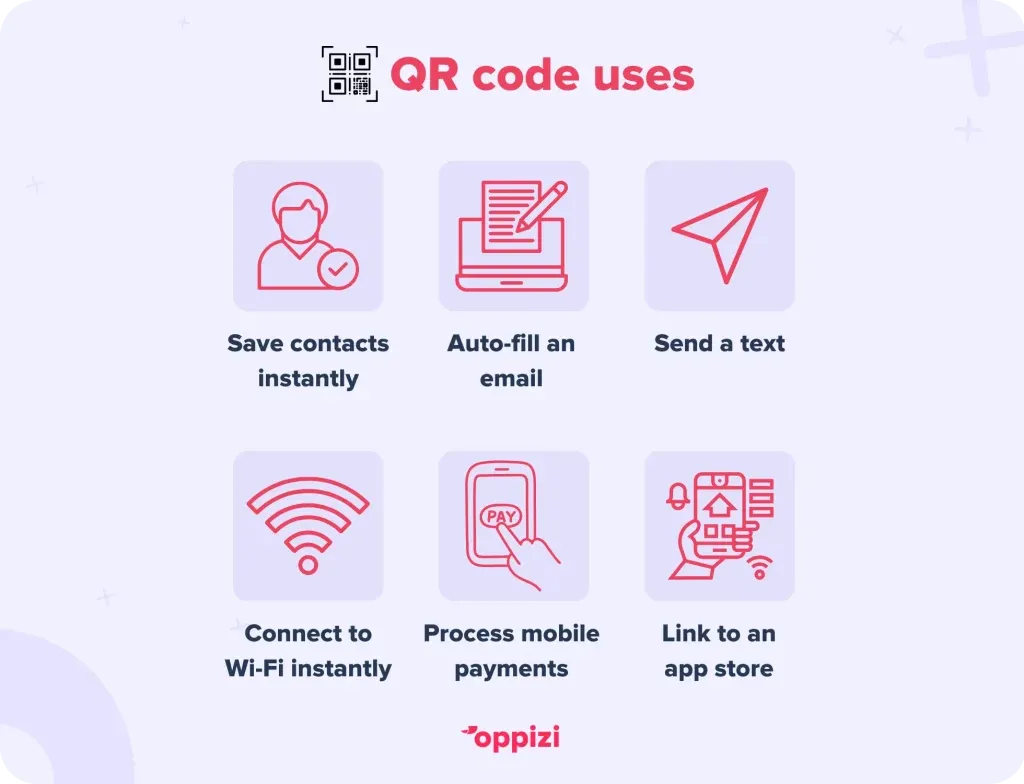
They don’t just link to websites. You can use QR codes to:
- Save contact details instantly
- Pre-fill an email
- Send a text message
- Connect to Wi-Fi without a password
- Process mobile payments
- Link directly to an app store page
Because they’re so flexible, QR codes are useful in marketing, retail, healthcare, and more.
5. QR codes scan from any angle
Unlike barcodes, which need to be scanned in a straight line, QR codes work from any direction. They have special position markers in three corners, so scanners can read them even if they’re tilted, upside down, or partially covered.
6. There are two types of QR codes
- Static QR codes can’t be changed once created. If the link inside needs updating, you’ll have to make a new one.
- Dynamic QR codes let you edit the link or content later. They also track how many times they’ve been scanned, making them great for marketing and analytics.
For businesses, dynamic QR codes offer more flexibility and better insights.
7. They work everywhere
They follow a universal standard (ISO 18004), so they can be scanned worldwide, no matter which QR generator was used. That means businesses can use them confidently, knowing customers everywhere can access the content. Increasingly, people are finding creative uses of QR codes for a wide range of purposes.
QR codes in marketing
8. QR code use exploded in 2020
The pandemic made QR codes a must-have for businesses. Restaurants used them for digital menus, stores for self-check-in, and retailers for touch-free payments. People got used to scanning them, and businesses saw the potential for marketing, payments, and customer engagement.
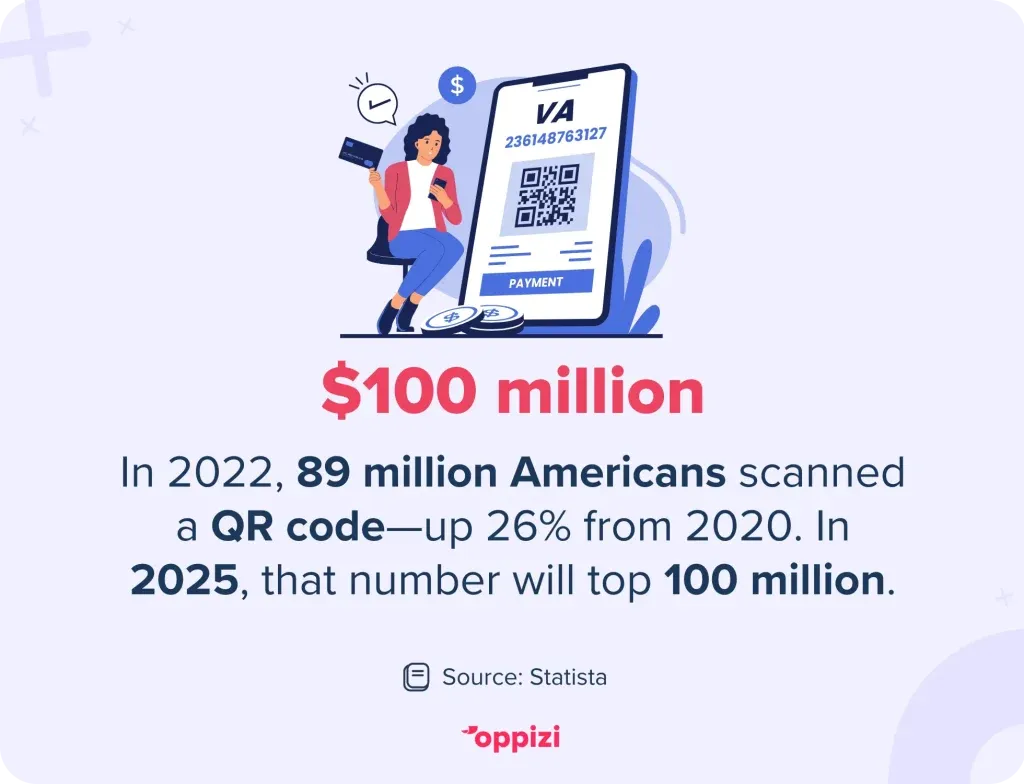
By 2022, about 89 million people in the U.S. had scanned a QR code—26% more than in 2020. That number is expected to pass 100 million in 2025.
9. People trust QR codes more than before
The more people see QR codes, the more comfortable they are using them. Businesses can now rely on them for marketing, payments, and interactive content.
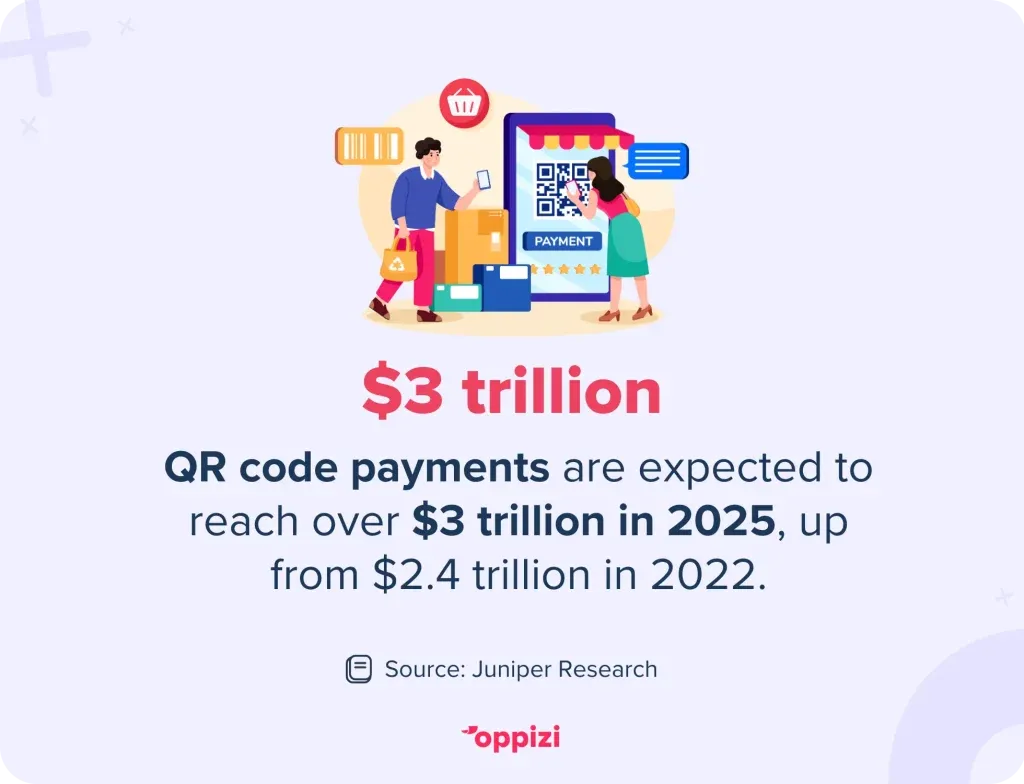
A study by Juniper Research estimates that QR code payments will top $3 trillion in 2025, up from $2.4 trillion in 2022. Growth is driven by easier access to digital payments in developing regions and new options for cashless transactions in developed markets.
10. Retailers and online stores use QR codes all the time
Brands add QR codes to product packaging to:
- Share product details
- Offer how-to videos
- Give exclusive discounts
- Link to customer reviews
This helps customers get more from their purchase while building brand loyalty. QR codes also help shoppers check if a product is authentic and access special deals.
11. They make customer engagement easy
A QR code is an instant call to action. No need to type a URL or search for a product. Just scan and go—to a landing page, sign-up form, or special offer. The easier it is, the more people engage.
12. They connect print and digital marketing
They bridge the gap between offline and online. A flyer, billboard, or direct mail piece with a QR code can send people straight to a website, social media page, or promotion. This helps businesses track engagement and bring more people from print ads to digital content.
13. They make events run smoother
Event organizers use QR codes for:
- Digital tickets and fast check-ins
- Event schedules and speaker info
- Access to exclusive content and networking
They cut down on paper waste, speed up entry, and improve the experience for both attendees and organizers.
14. They are replacing loyalty cards
Instead of carrying a physical card, customers can scan a QR code to track rewards digitally. No more lost or forgotten cards. Businesses also get better customer data, making it easier to personalize offers and keep customers coming back.
15. They improve the customer experience
Businesses use them to create interactive experiences like:
- Augmented reality (AR) that brings products to life
- Product demos to help customers choose
- Chatbots for instant customer support
These features make shopping easier and more engaging, making QR codes a key tool in modern marketing.
How QR codes work
16. Most smartphones scan QR codes automatically
iPhones and Android phones have built-in QR scanners in their camera apps. No need to download anything extra. Just open the camera, point, and scan. This makes QR codes easier to use, so more people engage with them.
17. You don’t need the internet to scan a QR code
If a QR code stores text, contact details, or Wi-Fi info, it works offline. But if it links to a website, video, or app, you’ll need an internet connection. This makes QR codes useful for both online and offline marketing.

18. You can customize QR codes to match your brand
QR codes don’t have to be black and white. Businesses can change colors, add logos, and adjust shapes to make them look better and fit their brand. Custom QR codes stand out more and tend to get more scans.
19. QR codes track valuable data
With dynamic QR codes, businesses can see how many people scanned them, when, where, and on what device. This helps companies measure success and adjust their marketing to get better results.
20. They work with marketing analytics
Businesses can add UTM tracking codes to QR-linked URLs. This shows them which QR codes bring in the most traffic and sales. It also helps track marketing campaigns in Google Analytics.
21. They still work even if they’re damaged
If a QR code gets scratched, dirty, or partly covered, it can still be scanned. Built-in error correction fills in the missing pieces. That’s why QR codes work well on outdoor signs, packaging, and printed materials.
22. They can store multiple languages
QR codes can hold text in different languages. Some dynamic QR codes even detect the user’s language and adjust automatically. This makes them great for international businesses.
QR codes are changing the way we do things
23. More people are using QR codes to pay
QR code payments are projected to surpass $8 trillion by 2029, driven by the global shift to digital and cashless transactions. In places like China and India, they’re already a normal part of daily life. Businesses love them because they’re fast, secure, and easy. That’s why you see more QR codes in stores and online shopping.
24. They are replacing passwords
Some websites and apps let you log in by scanning a QR code instead of typing a password. It’s safer and faster. No more worrying about stolen passwords or forgetting them. Apps like WhatsApp Web and banking platforms already use this. Businesses can use QR codes for secure logins to loyalty programs or special content.

25. AI is making QR codes smarter
AI-powered QR codes can change their content based on who scans them, where they are, or what time it is. A restaurant menu QR code, for example, can show different meals for lunch and dinner. Businesses can update offers without printing new materials. This makes QR codes even more useful for marketing.
26. QR codes are replacing business cards
More professionals are using digital business cards with QR codes. Just scan, and you get contact details, a LinkedIn profile, or a scheduling link. No more lost cards or printing costs. Tools like Oppizi’s free custom QR code generator make it easy to create and share digital business cards.
27. They aren’t going anywhere
They’re used for payments, marketing, security, and even digital IDs. Governments use them for vaccine records. Brands put them on ads, packaging, and event tickets. As more people get comfortable using QR codes, businesses will find even more ways to use them.
Start using QR codes in your marketing
If you’re not using QR codes, you’re missing a simple, powerful way to connect with customers. Send them to your website. Promote special offers. Drive sales. All with a quick scan.
Oppizi’s free QR code generator lets you create custom codes in seconds. Need printing and distribution? We handle it all—so you get results without the hassle.
Sign up for free and put offline marketing to work for your business today.