Last updated July 23, 2026
Getting someone to buy from you once is great - but turning that customer into a repeat buyer and brand advocate? That’s where the real magic happens.
This is the heart of lifecycle marketing: guiding people from first click to loyal fans. It's not just about making a sale - it's about building relationships that last and drive long-term growth for your brand.
Unlike traditional marketing, which often emphasizes quick wins and new customer acquisition, lifecycle marketing is about playing the long game. It ensures that at every stage of a customer’s journey, your brand delivers the right message, experience, and value.
Keep reading to learn more about lifecycle marketing strategies and how to engage customers at each step of their buying journey, ensuring they not only stay loyal to your brand but also recommend it to others.
What is lifecycle marketing?
Lifecycle marketing is a strategic approach that focuses on building and maintaining customer relationships throughout their journey with a brand. This customer lifecycle can be visualized as a path where potential customers enter at the awareness stage and ideally progress towards becoming loyal brand advocates. By implementing lifecycle marketing, businesses can ensure they're delivering the right message and support to customers at every stage of this journey.
The goal of lifecycle marketing extends beyond simply acquiring new customers. It emphasizes retaining existing customers by providing positive experiences and timely, engaging messages. Whether it’s boosting revenue or building long-term loyalty, this approach helps marketers better understand how each stage contributes to the bigger picture of their strategy.
Why lifecycle marketing matters
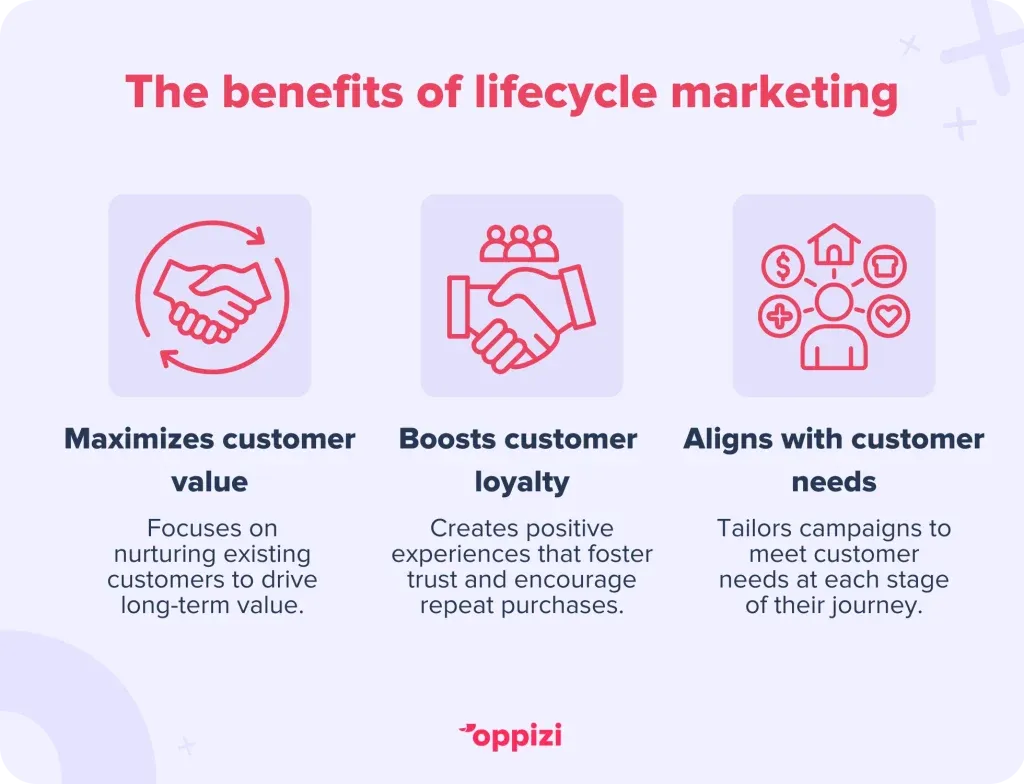
1. It maximizes customer value
According to a report by Bain & Company, increasing customer retention by just 5% can increase profits by 25% to 95%. Lifecycle marketing focuses not only on acquiring new customers but also on nurturing them to deliver long-term value.
2. It boosts customer loyalty
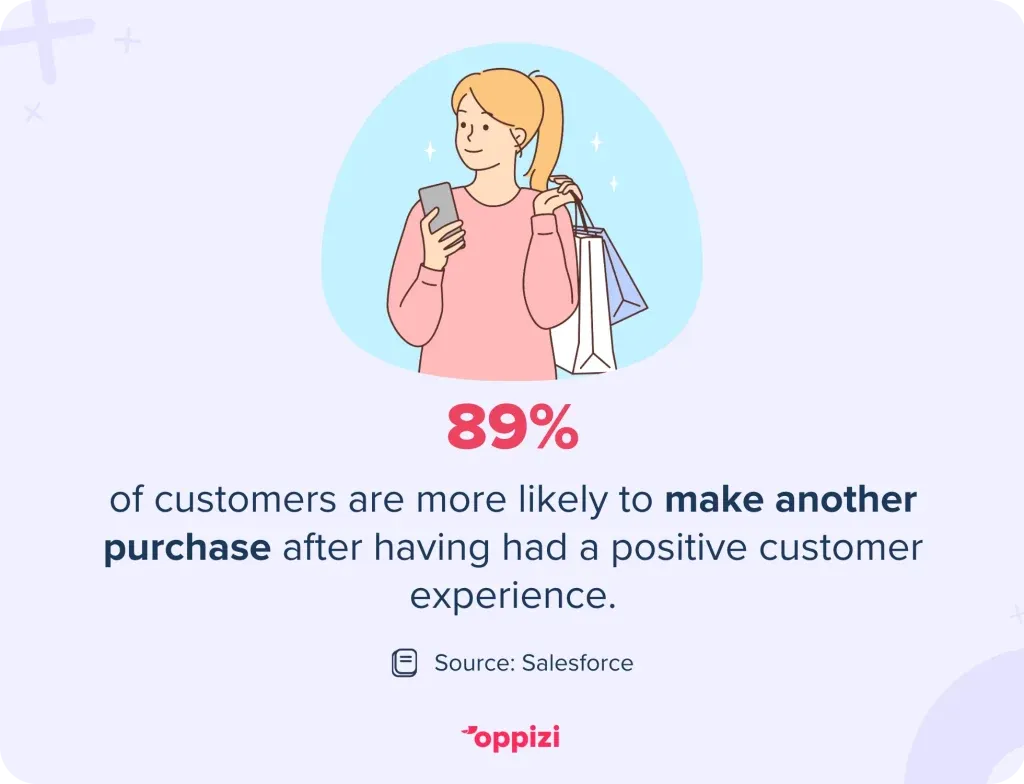
A loyal customer is your best brand ambassador. Salesforce found that 89% of consumers are more likely to make another purchase after having a positive customer experience. Lifecycle marketing is designed to deliver those moments that build trust.
3. It aligns marketing with customer needs
Each customer has different needs at different times. Lifecycle marketing helps your brand stay relevant by tailoring content and campaigns to each stage of the journey.
The 5 key stages of the customer journey
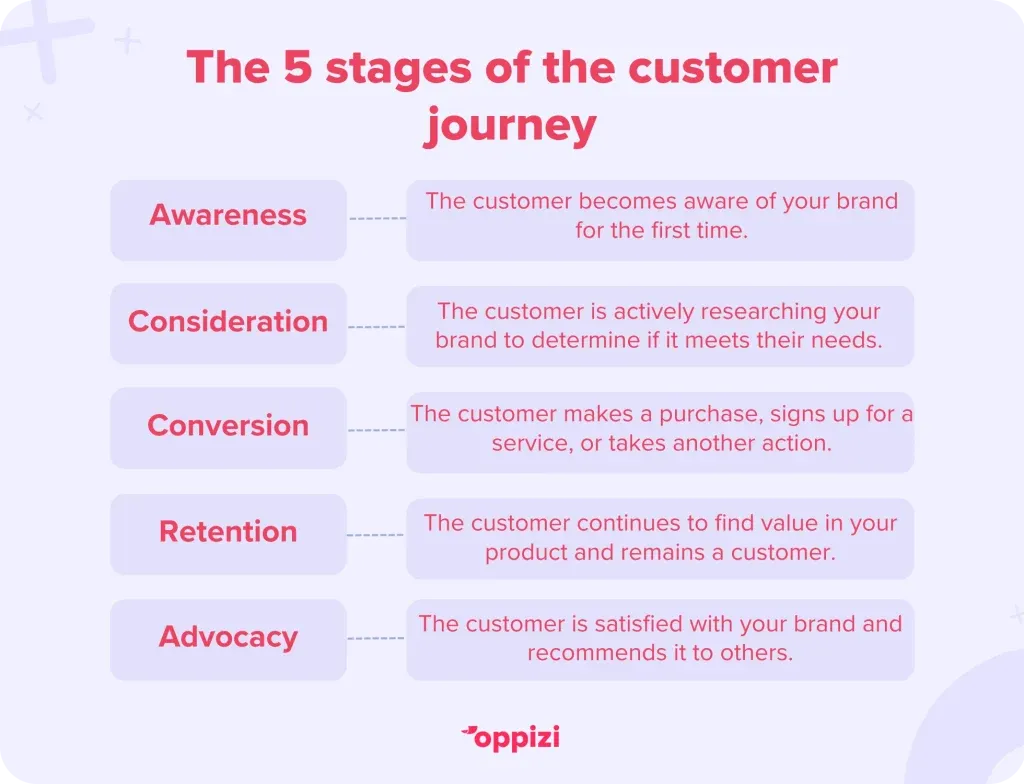
The customer journey is what customers follow as they interact with your brand. While the specifics may vary by industry and business model, the core stages typically include:
- Awareness: Customers first encounter and become aware of your brand.
- Consideration: Customers research your brand, learn about your offerings, and consider if they meet their needs.
- Conversion: Customers either make a purchase, sign up for your service, or take some type of action.
- Retention: Customers find value in continuing to use your products or services.
- Advocacy: Happy customers become loyal brand advocates, recommending your brand to others who may be interested.
By strategically tailoring your approach to each stage of the lifecycle journey, you can effectively connect with potential customers, build trust, and ultimately cultivate a loyal brand following. Let’s dive deeper into effective marketing strategies for each stage of the customer lifecycle journey.
1. Awareness
During the awareness stage, your primary goal is to capture attention and introduce potential customers to your brand, which can be accomplished in a variety of ways.
Strategies for the awareness stage:
- Content marketing: Publish informative blog posts, articles, or infographics that address common industry pain points and showcase your expertise.
- Social media marketing: Create engaging content like videos and images on relevant social media platforms to reach new audiences and build brand awareness.
- Search engine optimization (SEO): Optimize website content with relevant keywords to improve organic search ranking and attract potential customers actively searching for solutions.
2. Consideration
Once potential customers become aware of your brand, it's time to nurture their interest and build trust.
Strategies for the consideration stage:
- Valuable content: Provide downloadable resources like e-books, webinars, and product demos that offer in-depth solutions, establishing your brand as an industry leader.
- Target leads: Segment your leads based on interests and behavior, then deliver personalized email campaigns that educate them about your products/services and address specific pain points.
- Social proof: Leverage customer testimonials, case studies, and positive reviews to build trust and credibility with potential customers.
3. Conversion
At this stage, your customers are ready to buy, so your focus should shift toward driving action and landing conversions.
Strategies for the conversion stage:
- Targeted email marketing: Create email campaigns with personalized offers and promotions tailored to specific customer segments.
- Compelling calls to action (CTAs): Craft clear, concise CTAs that guide users toward desired actions (e.g., "Buy Now," "Start Your Free Trial").
- Streamlined checkout processes: To encourage conversions, make sure your checkout process is optimized for the user. It should be simple, with as few steps as possible, and offer a variety of secure payment methods. Test the checkout flow regularly to ensure it's working correctly.
4. Retention
You got the sale. Now it’s time to ensure your customer stays loyal to your brand. The retention stage is a vital component for long-term business success.
Strategies for the retention stage:
- Loyalty programs: Implement reward programs that incentivize repeat purchases and engagement with your brand.
- Personalized recommendations: Recommend relevant products, services, or content based on past purchases or browsing behavior.
- Customer service: Provide prompt, helpful customer service to build trust and address any concerns quickly, fostering positive customer relationships.
5. Advocacy
The advocacy stage centers on developing brand loyalty to turn satisfied customers into devoted supporters.
Strategies for the advocacy stage:
- Customer review programs: Encourage customers to leave positive reviews on your website, on review platforms like Google My Business or TrustPilot, and on social media.
- Highlight testimonials: Utilize customer testimonials in your marketing strategy to establish credibility and trust.
- Referral programs: Reward existing customers for referring new customers, using their positive word-of-mouth experiences to drive further brand advocacy.
- Social media engagement: Use captivating content and social media contests to promote interaction and transform happy customers into enthusiastic online supporters of your brand.
How to create a lifecycle marketing strategy
Now that you understand the customer lifecycle journey and the key stages involved, it’s time to build a strategy that aligns with your business goals and speaks to your target audience. By creating a solid foundation that powers your marketing strategy across all touchpoints, you can begin to nurture leads, drive conversions, and foster long-term customer loyalty.
Listed below are some essential components that help build the foundation of a successful lifecycle marketing strategy.
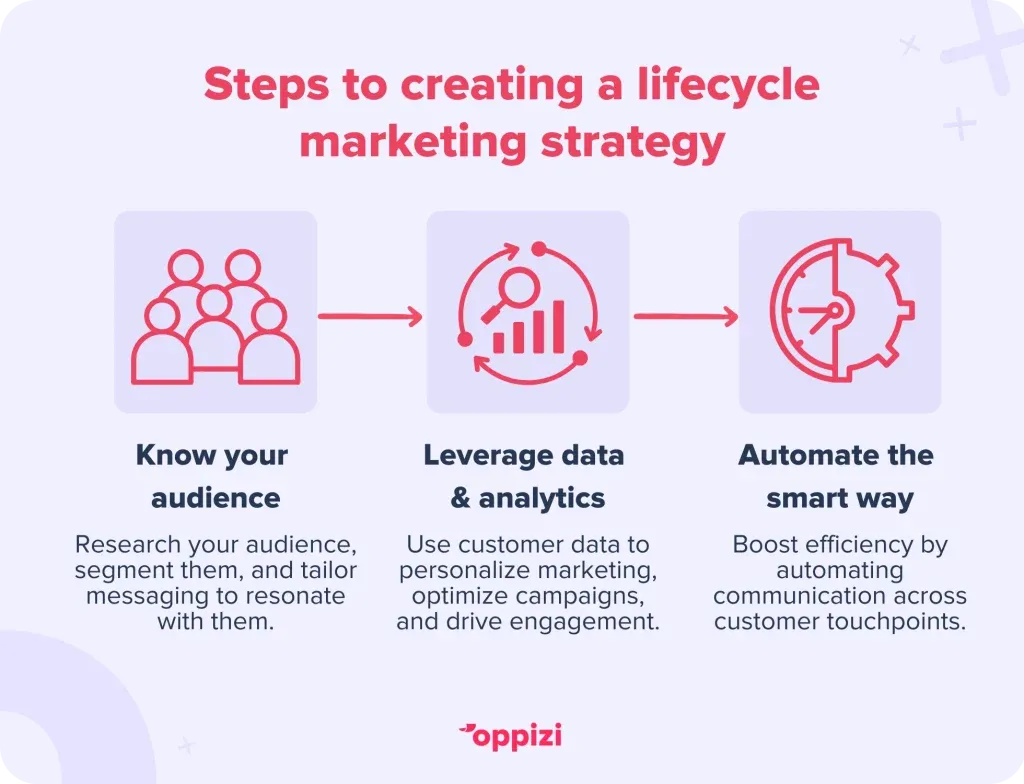
1. Know your audience
A successful lifecycle marketing strategy starts with a deep understanding of your audience. Use market research to define your ideal customers: their age, habits, interests, challenges, and buying behavior. Then, segment them into groups and directly tailor your messaging and offers to address their main challenges and motivations.
Additionally, use customer segmentation by dividing your audience into distinct groups based on shared characteristics. This enables you to personalize your marketing efforts for each segment, ensuring your message resonates with the right individuals.
2. Leverage data and analytics
Customer data is a goldmine that can help power your lifecycle marketing strategy. By leveraging customer data, like purchase history, website behavior, and preferences, you gain valuable insights to personalize your marketing efforts. Not only does this help you deliver tailored messages and offers, but it also reveals audience-wide trends. With these insights, you can fine-tune your strategy, improve campaign performance, and drive deeper engagement and conversions.
3. Automate the smart way
Marketing automation tools not only save time but are also highly efficient when crafting personalized communication. You can boost efficiency by automating repetitive tasks like email campaigns, triggered messages, or even personalized content delivery, freeing up valuable time to focus on other marketing initiatives.
These tools and platforms allow you to leverage customer data to deliver highly targeted content that resonates with each customer’s unique needs and lifecycle stage. On top of this, you can automate workflows to ensure timely customer interactions across all touchpoints.
Not only does this mean more efficiency for your team, but it also means a smoother, more timely experience for your customers.
FAQs about lifecycle marketing
How do I know which stage a customer is in?
Track customer progress throughout their journey by monitoring data such as CRM, email engagement, and purchasing behavior. This will allow you to determine which stage of the customer lifecycle they are currently in.
Can offline marketing be part of lifecycle marketing?
Yes, definitely. Offline experiences can leave a lasting impression and build stronger emotional connections with your audience. With platforms like Oppizi, you can run trackable offline campaigns that complement every stage of the customer lifecycle - from raising brand awareness with flyer distribution to re-engaging loyal customers through direct mail.
Is lifecycle marketing the same as CRM?
No. CRM (Customer Relationship Management) refers to the tools and systems used to manage customer interactions and data. Lifecycle marketing, on the other hand, is the strategy that guides you on how to engage with customers throughout their entire journey - often using a CRM as one of the tools to do it. So, CRM supports lifecycle marketing, but they’re not the same thing.
What is the difference between growth marketing and lifecycle marketing?
Growth marketing prioritizes rapid experimentation for user acquisition and conversion, whereas lifecycle marketing encompasses the entire customer journey. Growth marketing centers on top-of-funnel metrics, while lifecycle marketing sustains customer engagement beyond the initial interaction.
What does a lifecycle marketer do?
A lifecycle marketer designs and executes strategies to engage customers at every stage of their journey. They analyze behavior, segment audiences, create personalized campaigns, and work across different channels to drive loyalty. The ultimate goal is to ensure customers feel supported and valued at every touchpoint.
Conclusion
Lifecycle marketing is a powerful strategy for nurturing relationships and building a loyal customer base. By understanding the customer journey and tailoring your efforts at each stage, you can convert leads, retain customers, and turn them into brand advocates who drive organic growth.
However, it’s important to remember that customer behavior is constantly evolving. What worked yesterday might not resonate as strongly tomorrow. That’s why embracing a data-driven approach and continuously adapting your strategy to meet shifting expectations is crucial.
While lifecycle marketing thrives online, a truly successful strategy incorporates offline tactics to reach customers where they are. Oppizi’s offline marketing services like flyering and direct mail, ensure your message lands directly in the hands of your ideal customers, building brand awareness and driving conversions alongside your online efforts.
Ready to bring lifecycle marketing to life? Start your offline campaign with Oppizi and turn every touchpoint into an opportunity for growth.