Last updated August 28, 2026
Marketing for financial institutions has changed. Old methods like newspaper ads and posters in bank branches still work, but they’re not enough anymore. People want more. They want clear information, a personal touch, and a reason to trust you.
Whether you're helping a local credit union, growing a fintech app, or managing marketing for a big bank, the goal is the same: to reach the right people and build trust. If you're new to this space, it can feel like a lot to figure out.
This guide breaks it down step by step. You’ll learn how to understand your audience, pick the right channels, and create marketing that works.
Why marketing for financial institutions is different
Marketing financial services isn’t like selling a t-shirt or a phone. It’s about money, and that means people take it seriously. They want to feel safe and informed before making a decision.
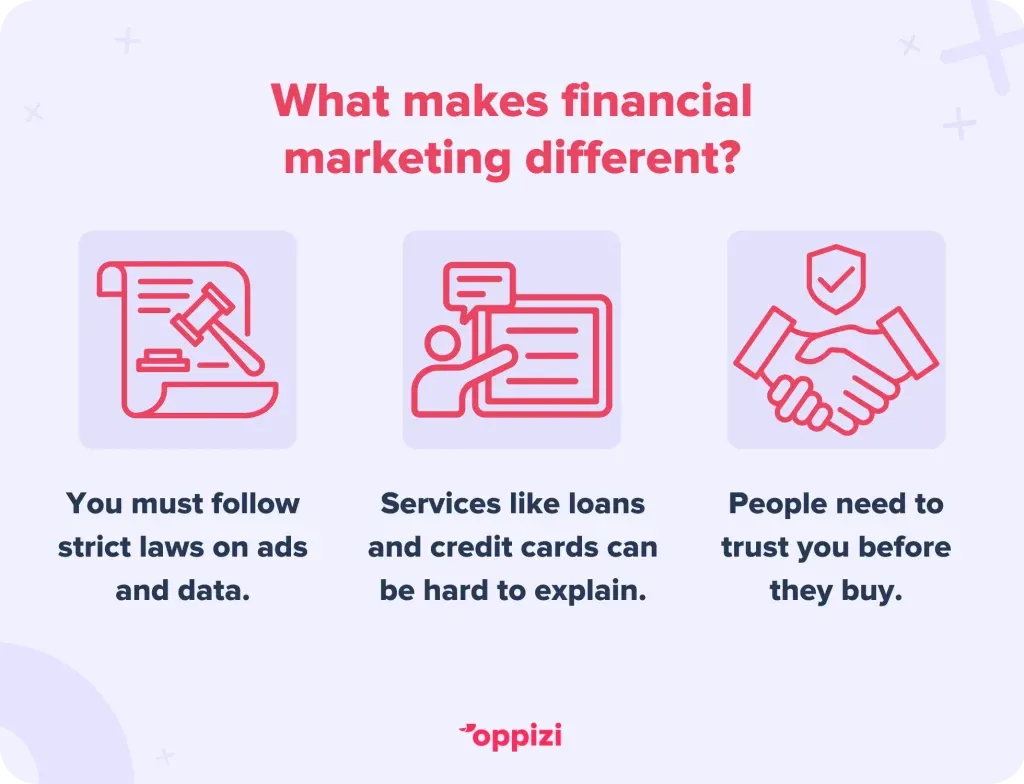
Here’s what makes financial marketing unique:
- Strict rules – You have to follow laws about how you advertise and use customer data.
- Complicated services – Loans, credit cards, and savings accounts aren’t always easy to understand.
- Cautious customers – People are careful with their money. If they don’t trust you, they’ll walk away.
That’s why your message needs to be simple, clear, and honest. And your brand needs to feel reliable from the start.
Know who you’re talking to
Before you start any campaign, ask yourself this: Who is it for? Financial services aren’t one-size-fits-all. If you try to speak to everyone, you end up connecting with no one. Start with simple customer profiles. No need for fancy charts. Just write down:
- Age, income, and job
- What they want -maybe it’s a first credit card or a lower mortgage rate
- What’s frustrating them - ike fees, confusing terms, or slow approval times
- Where they spend time - email, Instagram, or their mailbox
Here are two examples:
- Emily is 22, just graduated, and wants her first credit card. She loves apps, likes rewards, and compares everything online.David is 55, runs a small business, and needs a loan. He prefers face-to-face conversations and pays attention to what comes in the mail.
You can gather this kind of info with a quick survey using Google Forms. Or just ask your customer service team what questions come up most. Even a peek at website traffic or your CRM can show you patterns.
Once you understand who you’re speaking to, it’s easier to create messages that feel personal, even if you’re reaching thousands.
The Financial Services Content Report found that 57% of people trust financial content. That’s not a bad number, but there’s still room to grow. The more you personalize your content and focus your message, the more you can build trust.
Use more than one channel
Most people won’t sign up after seeing one ad. They’ll visit your site, maybe glance at a flyer, follow you on social media, or talk to a friend. That’s why it helps to show up in more than one place. Say you’re promoting a new savings account. You could:
- Run Google ads for people searching “best savings account”
- Share tips on Instagram about how to save for a big purchase
- Email your existing customers with a special rate
- Hand out flyers near university campuses or office parks
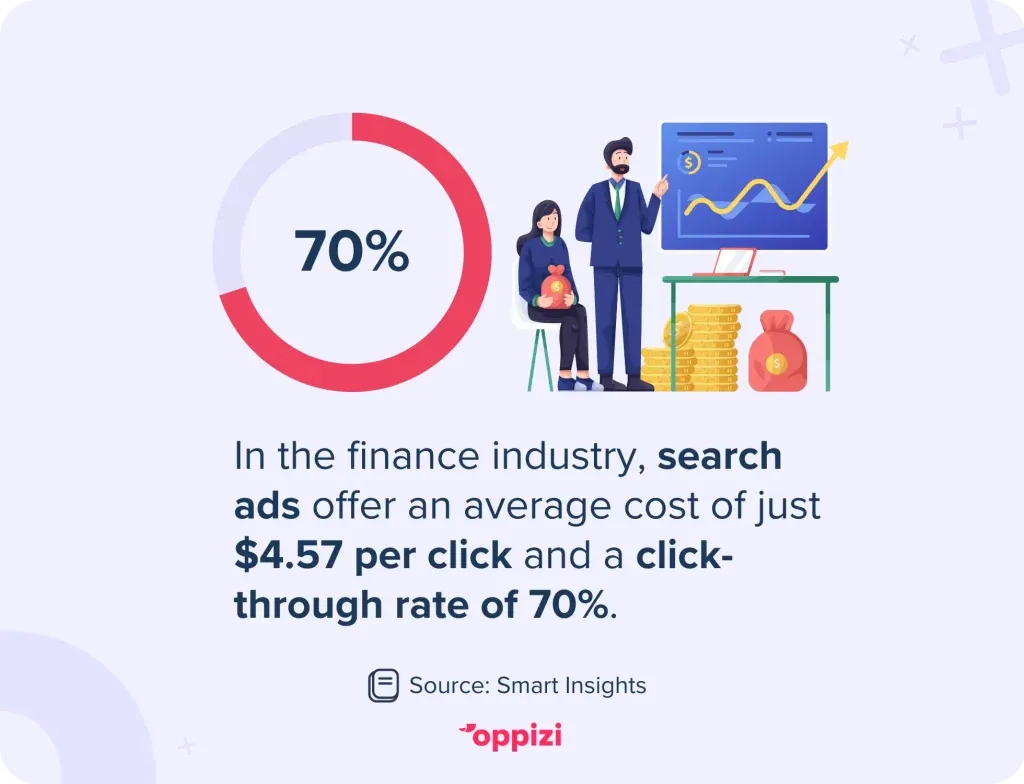
In the finance industry, search ads cost about $4.57 per click on average. They also get a high click-through rate, around 70%. That’s why it makes sense to include these ads in your marketing toolkit.
Online ads find people who are already looking. Social media builds trust. Email keeps your current audience in the loop. And flyers? They’re great for reaching people in specific neighborhoods or places where they live and work.
That’s where Oppizi comes in. We help financial companies run offline campaigns without the headache. You choose who you want to reach and where. We take care of printing, distribution, and tracking. Plus, you’ll see real-time results so you know what’s working.
Build a brand people trust
Money is personal. If your brand doesn’t feel trustworthy, people will move on fast. Whether you’re just starting out or you’ve been around for years, your brand needs to feel safe and clear. Here’s how to build that trust:
- Use the same look, tone, and message everywhere
- Keep things simple - explain services in plain language
- Share real customer stories and reviews
- Be upfront about how you protect data and privacy
Even small things matter. If your flyer looks old-fashioned or your website is hard to use, people will wonder if your services are, too.
Examples of bank marketing that work
Looking for ideas? Here are a few ways banks could run smart campaigns.
A credit union wants to reach more families. Instead of just running online ads, they sponsor a local street fair. At the event, they hand out flyers with a special offer for new checking accounts. That in-person approach could bring more people into their branches and lead to more signups.
A digital bank wants to connect with Gen Z. They work with TikTok influencers to explain money terms like “APR” and “compound interest.” They also offer referral bonuses on Instagram. This kind of campaign could boost app downloads and get more people talking.
A big bank uses both online and offline tools. They send flyers with QR codes that lead to mortgage offers. The message is clear and easy to follow. People scan the code, check their offer, and take the next step.

When banks use simple language and choose the right channels, their marketing feels more personal, and it works.
Tips to make your campaign stand out
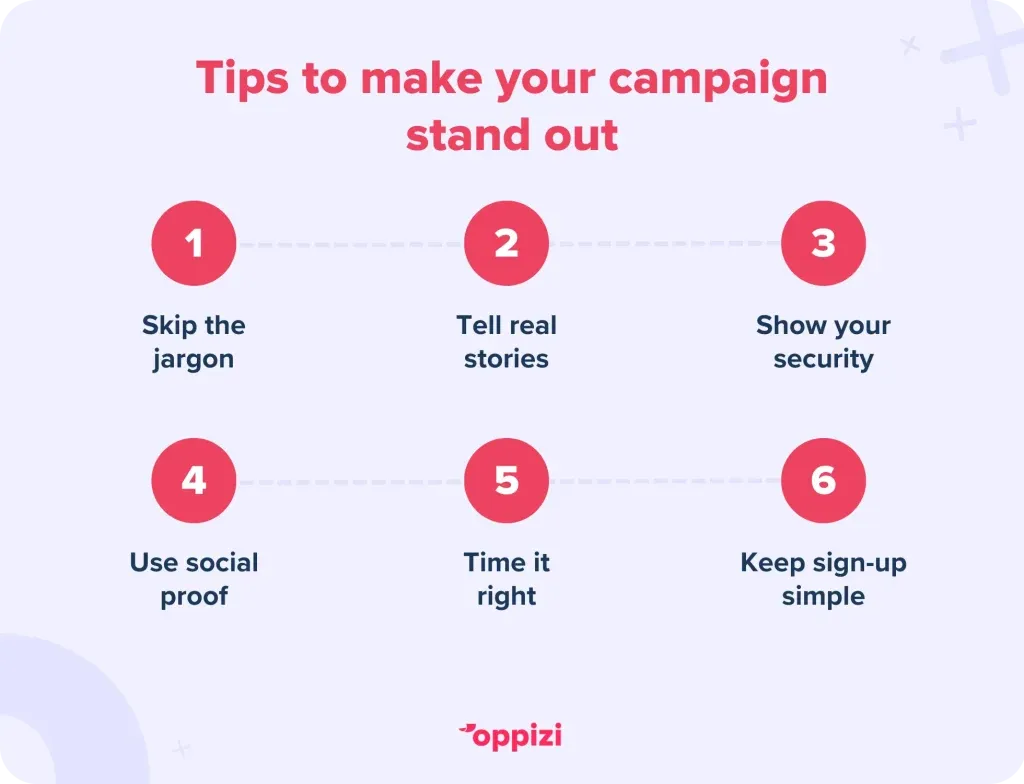
The best campaigns don’t just reach people, they connect. Here’s how to do that:
Skip the jargon
Words like “escrow” or “index fund” confuse most people. Use clear terms. For example, say “grow your savings” instead of “optimize capital.”
Use real stories
A happy customer’s story says more than any slogan. Share how someone used your service and what changed for them.
Show that you’re secure
People want to know that their money and data are safe. Tell them about your fraud protection or security measures in simple terms.
Let others speak for you
If you’ve won awards, have good reviews, or impressive numbers, show them. People trust other customers more than ads.
Time your message
Reach people when they’re already thinking about money, like during tax season, before school starts, or when they’re buying a home.
Make it easy to start
If signing up takes too long, people will leave. Keep it quick and simple. Say things like, “Open an account in 5 minutes. No paperwork.”
If you’re new to marketing for financial companies, start here. These tips are simple, but they work. When you keep things clear and focused on real people, your campaign has a much better chance of success.
Don’t forget about offline marketing
Most people talk about digital marketing. But print still works. Flyers, mail, and local outreach can make a big difference. Especially when you combine them with digital tools.
Offline campaigns have some clear strengths:
- You can hold them in your hand. They’re harder to ignore.
- You can send them to specific neighborhoods or groups.
- People tend to trust them more than online ads.
At Oppizi, we help financial brands run smarter offline campaigns. We take care of printing, delivery, and tracking. You just pick your audience. We handle the rest. It’s easy, and you’ll see clear results.

How to market financial services to different age groups
People of different ages care about different things. So if you try to talk to everyone the same way, your message might miss.
Gen Z and Millennials (18–35)
What they care about: speed, honesty, and easy-to-use appsWhere they hang out: TikTok, Instagram, YouTube, online communitiesWhat to say: teach money basics, show rewards, make sign-up fastTip: Highlight features like no hidden fees, budgeting tools, or mobile banking
Gen X and Boomers (36–65+)
What they care about: safety, support, long-term goalsWhere they spend time: Facebook, email, mail, community eventsWhat to say: talk about retirement, security, and good serviceTip: Use real stories from customers to build trust
If you match your message to the right group, you’ll get better results.
Staying compliant and building trust
If you’re new to marketing in finance, the rules can feel confusing. But following them is key. Here’s what to remember:
- Be clear. Always explain the terms of any offer, like interest rates or cashback deals.
- Be honest. Don’t hide fees in fine print.
- Check with legal. Before a campaign goes live, get a review from your compliance team.
- Avoid tricky words. If you say something is “free” or “guaranteed,” it has to be true.
When you’re upfront, people trust you more. And that trust keeps them coming back.
How to know if your campaign is working
Launching a campaign is just the start. You need to track how it performs. These are the key numbers to watch:
- Customer acquisition cost (CAC): How much it costs to get one new customer
- Conversion rate: How many people take action after seeing your ad
- Engagement: Clicks, QR code scans, visits to your site, or calls from flyers
- Retention: How long people stay with you—and why they leave
- Return on investment (ROI): Whether the campaign made more money than it cost
If you’re using flyers, Oppizi makes tracking simple. You’ll see how many flyers went out, where they were delivered, and how people responded. No guesswork. Just real data you can use.


What are the marketing strategies for banks
Banks use a mix of strategies to reach people. For example:
- Online ads that promote services like home loans or savings
- Community events or free workshops on money topics
- Direct mail with special offers
- Customer reviews and referral programs
- Partnering with schools, real estate agents, or local stores
They also segment their audience, so messages feel more personal.
What are the 4 main marketing strategies?
These four big-picture strategies help businesses grow:
- Market penetration: Sell more of what you already offer to your current customers.
- Market development: Find new customers for your current services—maybe in a new location.
- Product development: Create new services for the people you already serve.
- Diversification: Try something completely new for a different group of customers.
Final thoughts
Marketing in finance isn’t just about getting attention. It’s about trust. People need to feel safe before they sign up. To build strong campaigns, remember to:
- Know who you're talking to
- Keep the message simple
- Use more than one channel
- Mix digital with offline
- Focus on trust and clarity
Need help reaching the right people offline? Oppizi can help. Start your first campaign today. We’ll take care of the details.
Frequently asked questions
- What is financial institution marketing?
It’s how banks, lenders, insurance companies, and other financial businesses promote their services. The goal is to attract new customers, explain what they offer, and build trust. Since money is personal, the message needs to be clear, honest, and easy to understand. Most financial marketers use both online and offline tools, and always follow strict rules.
- What is the role of marketing in financial institutions?
Marketing helps financial companies grow. It spreads the word, shows people how products work, and makes it easy to sign up or get help. It also builds trust, something that matters a lot when people are choosing where to keep their money. Marketing isn’t just about ads. It’s about helping people feel safe and informed.
- What are the 4 P’s of marketing in financial services?
The 4 P’s help guide any marketing plan:
- Product: What you’re offering—like accounts, loans, or advice.
- Price: The interest rates, fees, or costs.
- Place: Where customers access your services, like in a branch, online, or through an app.
- Promotion: How you reach people, through flyers, social media, emails, or ads.
- What are the marketing strategies for banks
Banks use a mix of strategies to reach people. For example:
- Online ads that promote services like home loans or savings
- Community events or free workshops on money topics
- Direct mail with special offers
- Customer reviews and referral programs
- Partnering with schools, real estate agents, or local stores
They also segment their audience, so messages feel more personal.
- What are the 4 main marketing strategies?
These four big-picture strategies help businesses grow:
- Market penetration: Sell more of what you already offer to your current customers.
- Market development: Find new customers for your current services—maybe in a new location.
- Product development: Create new services for the people you already serve.
- Diversification: Try something completely new for a different group of customers.