Last updated September 28, 2026
Want your ads to go beyond just phones and computers? Offline media can help you reach people in real life. It’s a powerful way to grab attention and build trust. This guide walks you through how to plan, buy, run, and improve your offline campaigns.
What is offline media buying?
Offline media buying means placing ads in places like TV, radio, newspapers, magazines, and billboards. These channels are good for reaching lots of people and making your brand more visible. To do it well, you need to:
- Understand who you're talking to
- Create a clear message
- Make sure your offline and online ads work together
Why it still matters
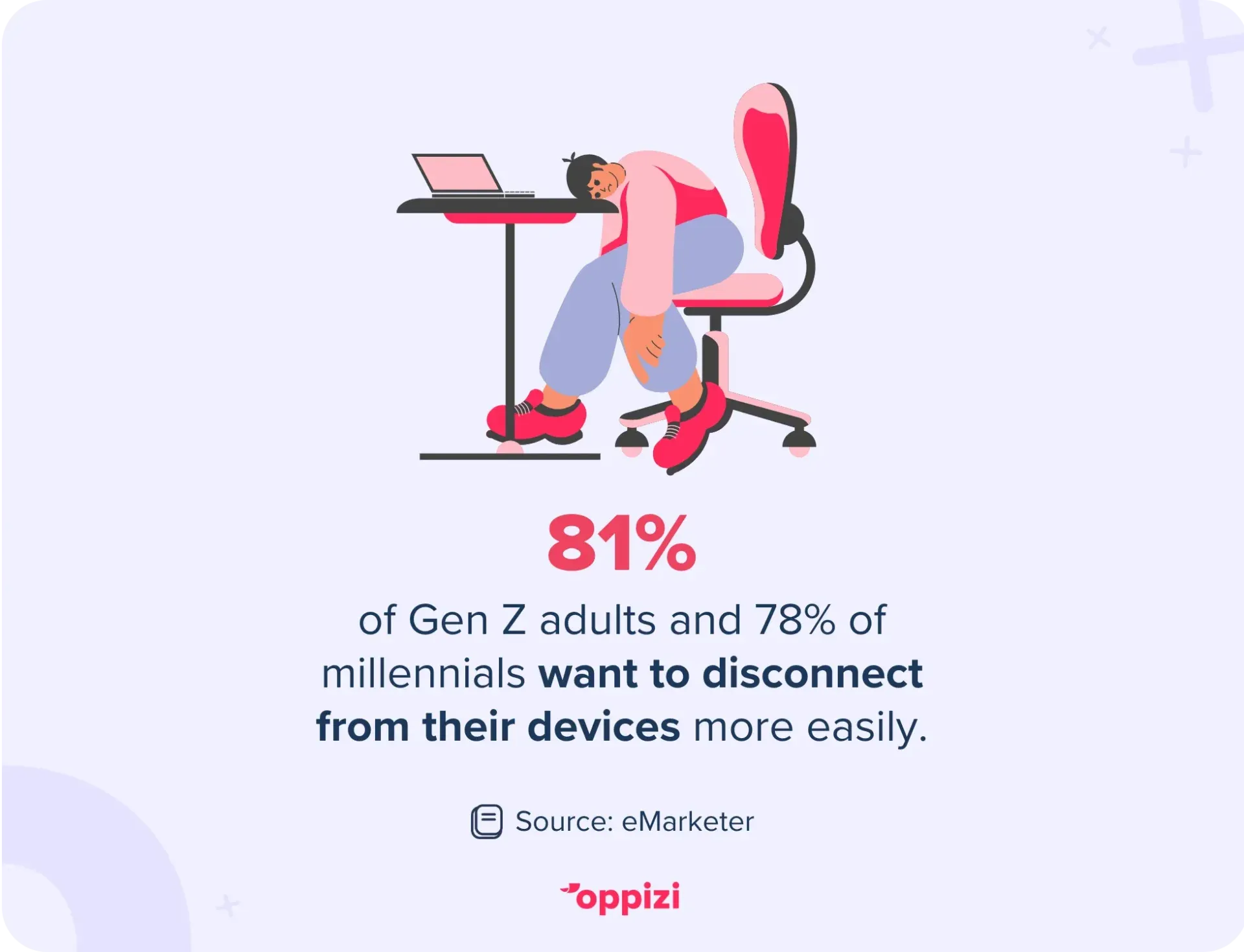
More and more people are tuning out digital ads. A recent poll found that 81% of Gen Z adults and 78% of millennials wish they could disconnect from their devices more easily. Pinterest searches for “digital detox ideas” and “digital detox vision boards” are also surging, up 72% and 273% this year.
Globally, 46% of Gen Zers are limiting screen time, with 17% doing so daily. If people are stepping away from screens, your marketing should meet them elsewhere. Offline media is the alternative to being ignored.
Although it’s often overlooked, traditional media still works, and it works well. TV, radio, print, and outdoor ads get a lot of attention. Here’s why offline media buying is worth your time:
- It helps you reach different types of people
- It builds trust in your brand
- It spreads your ad budget across more channels
- Some industries still get great results from it, like real estate, healthcare, and local stores
Offline ads often feel more personal. They also show up in less crowded spaces, which helps your message stand out.
When you combine online and offline ads, you get the best of both. Online gives you detailed targeting. Offline gives you scale and real-world impact. Together, they make your campaigns stronger.
People pay attention to offline ads
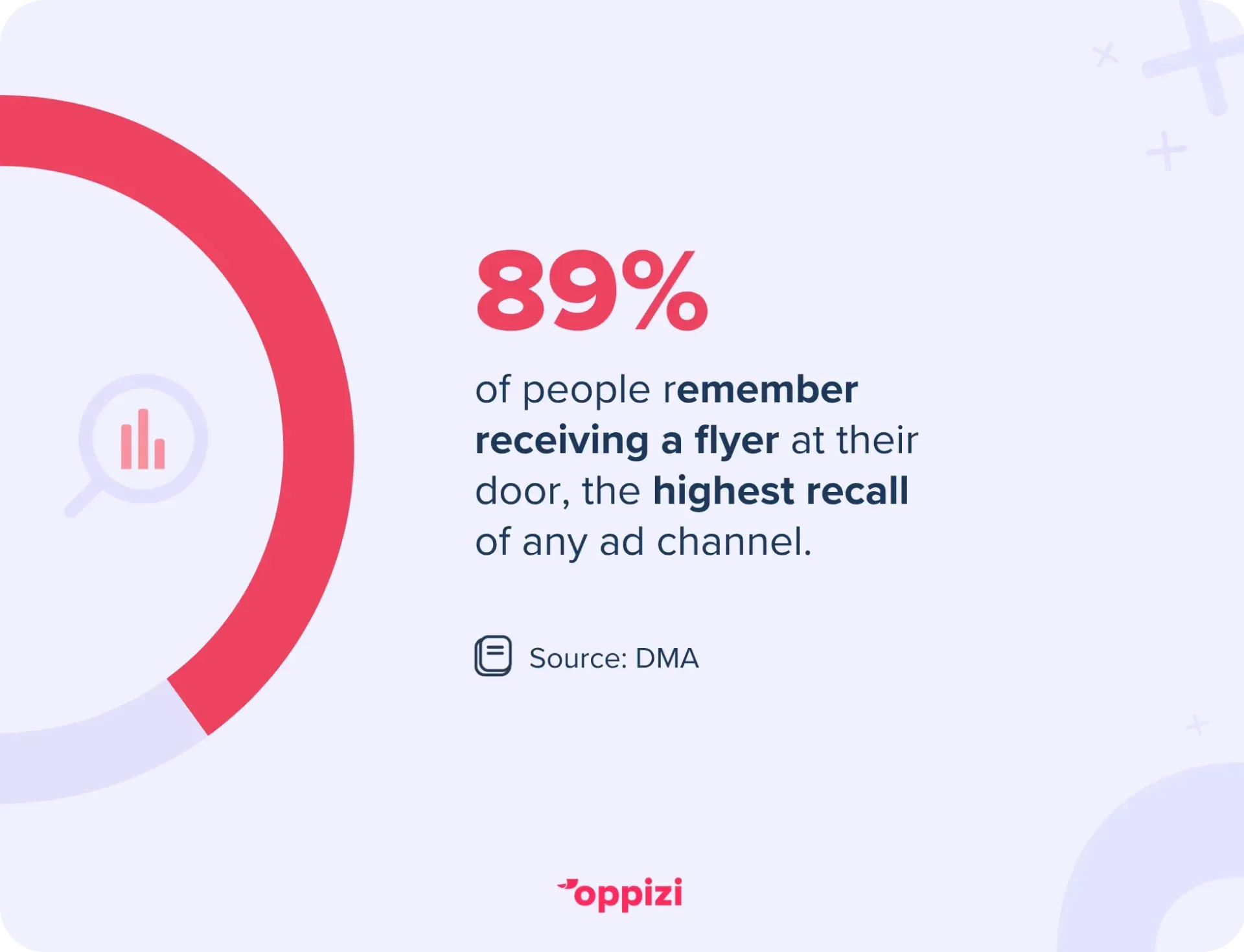
A study by the DMA found that 89% of people remember getting a flyer at their door. That’s the highest recall of any channel. Plus, 73% of those flyers are opened, read, or saved. That’s a sign people are paying attention.
Offline ads still matter. And when used right, they can make a big difference in your marketing.
How to buy offline media: A step-by-step guide
Step 1. Set your goals
Start with clear goals. Are you trying to raise brand awareness? Bring more people into a store? Get attendance at an event? Make sure you know how offline media supports your overall marketing targets. Think about how it works with your digital campaigns too.
Step 2. Know your audience and pick the right channels
Find out where your audience spends time, what they watch, listen to, read, or where they travel. Choose channels based on that. For example, a car dealer might use local radio and billboards in the suburbs. A health clinic in the city might choose print ads and transit posters.
Step 3. Build your media plan
Plan out the details, including:
- How many people you expect to reach
- GRPs for TV and radio
- Impressions for print and outdoor ads
- How long the campaign will run
- Budget for each channel
Step 4. Negotiate and book
Talk to media sellers early. Ask about discounts for larger buys. See if they’ll add extras, like bonus ads or better ad placements. Negotiate things like ad schedules and creative rotation. Get a contract that lists run dates, specs, and where your ad will appear.
Step 5. Create strong ads
Your ad should be easy to read, visually clear, and fit your brand. Keep the message short. Use strong calls to action, like asking people to visit a store, call a number, or scan a QR code.
Step 6. Plan how you’ll measure results
Tracking offline campaigns can be hard, but there are good tools:
- Use unique promo codes for each channel
- Print custom URLs or landing pages in each ad
- Add call tracking numbers
- Run surveys before and after to see changes in brand awareness
- Measure store traffic using in-store data or location tracking
- Test if online ads work better when paired with offline exposure
Compare results from online and offline to see what gives you the best cost per lead or sale. Use the same time frame to track both.
Step 7. Launch, monitor, adjust
Once your campaign starts, watch key metrics: website visits, calls, coupon use, or store traffic. If something isn’t working, adjust. Spend more on channels that perform better. Try short test campaigns first to learn what works.
Step 8. Review and report
After it ends, compare your results to your goals. Look at cost per impression, cost per conversion, and overall return. Use what you learn to improve your next campaign.
Each has its strengths. Offline helps build trust and reach a wide audience. Online helps you target and track in detail. The best results often come from using both together.
Offline media buying in key industries
Retail
Retailers still get strong results from billboards near stores, newspaper inserts, and radio ads during busy shopping hours.
These formats help build awareness and bring people into stores fast. For local offers or short-term sales, flyers and door-to-door drops can work even better. They reach nearby shoppers directly.
Oppizi’s targeting tools help retailers send flyers to the right streets for store openings or seasonal promotions.
Industry data shows that 9 out of 10 people are happy to receive retail flyers at their door. This makes flyer drops a great way to reach customers who are already looking for deals.
Automotive
Car brands and dealers often use TV spots during local news, billboards near highways, and radio ads. These build awareness and keep the brand top of mind. But when it comes to actual leads or test drives, direct mail often performs better.
Mail lets you send offers like financing deals or test drive invites to people who are more likely to respond. In 2024, auto-related mail had a 45.6% open rate and a 3.84% response rate. These were among the highest in the industry. The average for all direct mail was around 3.6%.
Real estate
For real estate, local magazines, outdoor signs near properties, and local radio work well to attract interest. But door hangers, flyer drops, and direct mail often bring in higher-quality leads. These formats let you target specific streets or postal codes.
With Oppizi, agents can focus their efforts on people actively buying or selling nearby. Tools like EDDM also allow agents to send ads to every home in a chosen area.
Industry reports show mailings to house lists (people you already know) can get up to a 9% response rate. Mail sent to new contacts usually gets about 5%.
Healthcare and local services
Clinics, gyms, and other health service providers often use local papers, transit ads, and sponsorships to build their brand. These work for awareness. But if you want bookings or quick replies, flyers and door-to-door ads tend to perform better.
Putting offers directly into nearby homes works well for things like health check events, gym signups, or new clinic openings.
In the 2024 Focus Digital study, healthcare providers had a 40.24% open rate and a 3.38% response rate on their mail campaigns. These were among the best results across industries.
Entertainment and events
For concerts, movies, and festivals, posters, magazines, and radio ads help get attention. But if you want to sell more tickets, flyers and door hangers often do more. With tools that show foot traffic by street and time of day, you can plan exactly where and when to promote your event.
Key offline advertising channels
Television
TV is still one of the best ways to reach a wide audience and build your brand. Local and regional stations are especially useful if you’re targeting specific cities or communities. To plan a TV campaign:
- Know who you're trying to reach and what they watch
- Decide if you want to advertise on national networks, local stations, or cable
- Choose the right time slots, like prime time or weekends
- Understand what each slot is worth. Live sports or top shows may cost more but get more viewers
- Create ads that tell a clear story about your brand
- Think about adding digital video ads to support your message
Radio
Radio reaches people during everyday moments, like commuting or shopping. Local stations offer flexible ad options, sponsorships, and even live mentions. To use radio well:
- Pick stations and formats that fit your audience, like news, music, or sports
- Run your ads regularly over a couple of weeks for better recall
- Use well-known voices or local personalities to help people remember your ad
- Add a promotion or a call-to-action, like a landing page or hashtag
- Track results with promo codes, special URLs, or call tracking
Print (Newspapers and magazines)
Print ads still carry trust, especially in industries like real estate, healthcare, and local retail. Magazines help you target specific interests. Newspapers help you cover local areas. For print campaigns:
- Choose publications your audience already reads
- Pick a format, like full-page ads, inserts, or flyers
- Ask for discounts if you’re placing multiple ads or working with several publications
- Make sure your ad is easy to read with a strong layout and headline
- Use QR codes or special links so you can track responses
- You can also try direct mail or neighborhood newsletters for local reach
Outdoor advertising (billboards, transit, placards)
Outdoor ads help your brand stay visible in the real world. They work well in busy areas and help people remember your message just by seeing it often. To plan outdoor ads:
- Focus on high-traffic areas like highways, city streets, and near your stores
- Choose your format, like billboards, digital screens, or ads on buses and trains
- Book placements for longer periods to get better rates
- Design ads that are easy to read and make an impression fast
- Pair with digital ads targeted to people nearby to reinforce the message
Print and direct distribution
When people think of offline ads, they often picture TV, radio, or billboards. But print and hand-delivered ads are still some of the most affordable and effective ways to reach local customers and drive action. Here's how these channels fit into an offline strategy:
Flyers
Flyers are flexible, low-cost, and easy to produce. They work well for local deals, product launches, and event promotions. You can hand them out in busy areas, leave them in stores, or pass them out at events. Flyers help you reach people right where they are.
Direct mail
Direct mail lets you target specific neighborhoods or customer groups. You can send coupons, offers, or catalogues straight to people’s homes. It's personal and often gets quick responses. Adding QR codes or promo codes makes it easy to track how well the campaign works.
Affiliate insert marketing
This puts your printed ads or samples inside someone else’s delivery. For example, a home services brand might place a coupon inside a home improvement catalogue. Affiliate insert marketing is a smart way to reach people who are already interested in related products.
Door-to-door distribution
This includes door drops (flyers in mailboxes) and door hangers (ads hung on doorknobs). It’s a good way to reach people in a specific area. Home service providers or local businesses often use this to get seen by every household nearby.
Why these channels work
These formats put your message right into someone’s hands. That makes it harder to ignore. It’s also easier to add a clear offer or call to action. With a promo code or special link, you can track results.
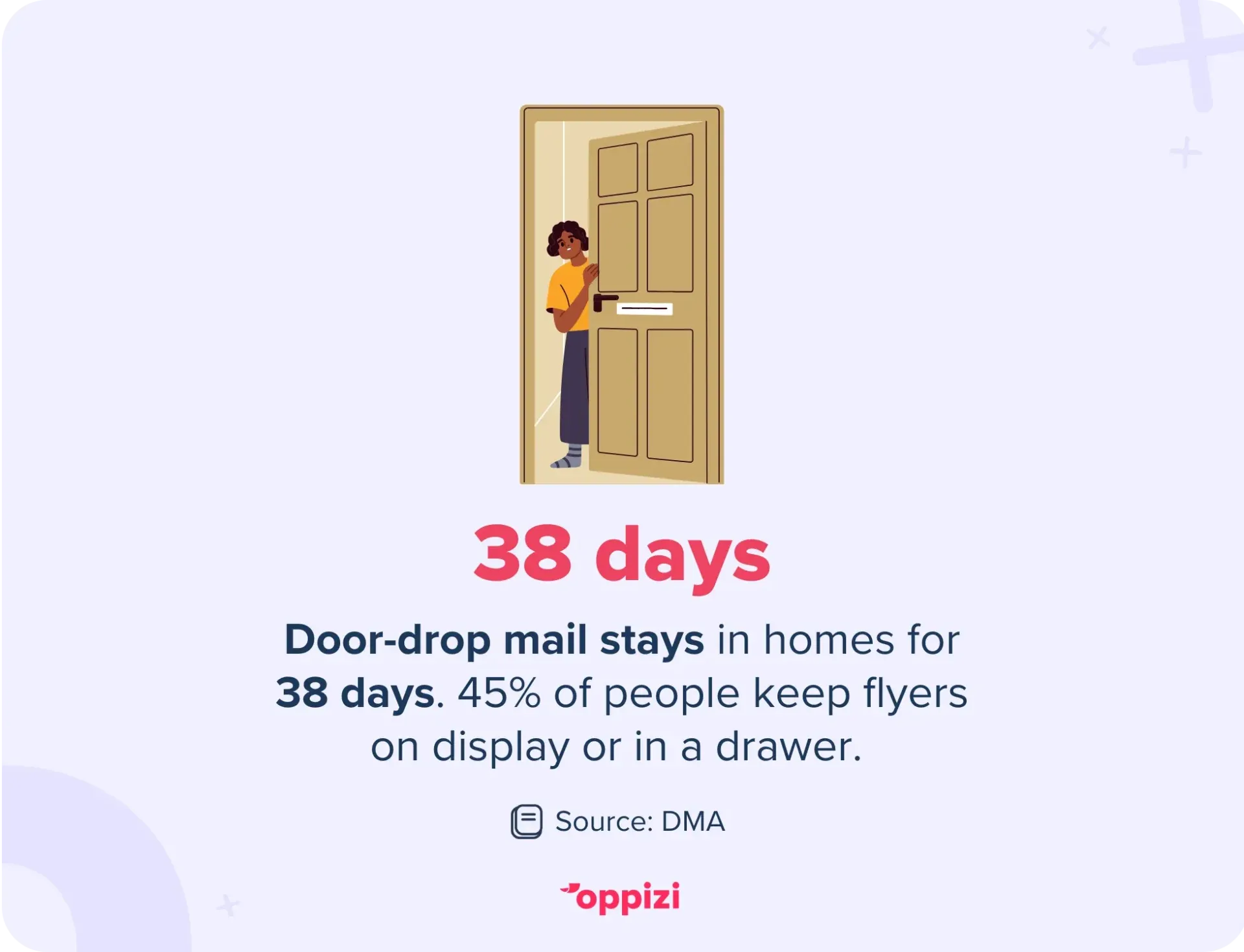
People also keep print materials longer. The DMA found that door-drop mail stays in the home for about 38 days, up from 17 days before the pandemic. In fact, 45% of people keep flyers on a board or in a drawer. That means your ad gets seen more than once.
What Oppizi can do
Oppizi runs offline marketing campaigns. We offer accurate targeting, wide distribution, and real-time tracking. That makes offline media more data-driven and measurable, just like digital.
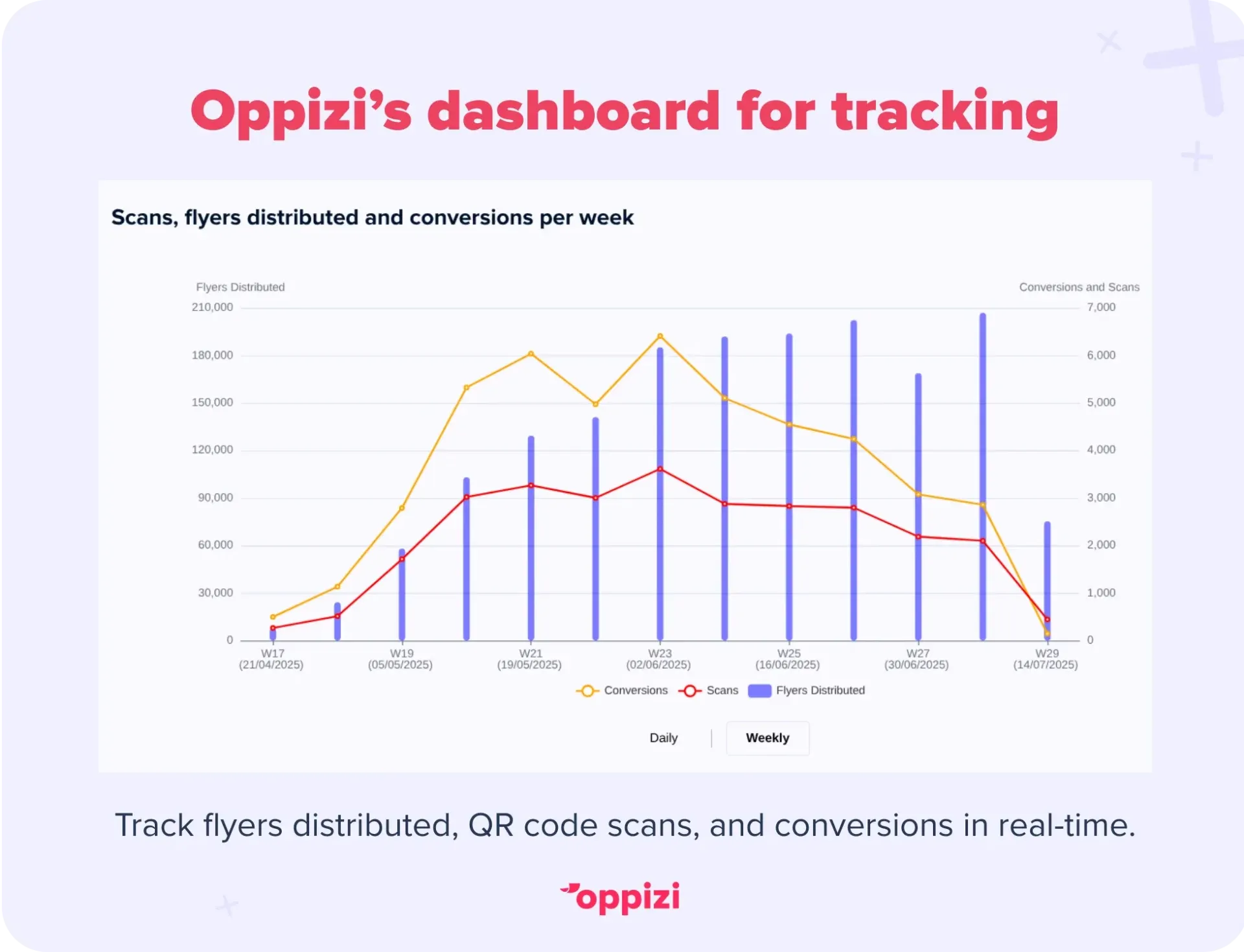
“What most people don’t realize about offline marketing is that we make it fully data-driven,” says Francesco Bertolo Díaz, US Operations Manager at Oppizi. “In our campaigns, we track everything in real time, from the number of flyers handed out to QR code scans and conversions. People usually think data and tracking only apply to digital, so they’re often surprised to see how precise we are with offline too.”
How Oppizi helped Uber grow
When Uber launched in Australia and New Zealand, it needed a cost-effective way to gain users fast. Uber worked with Oppizi to run targeted flyer campaigns.
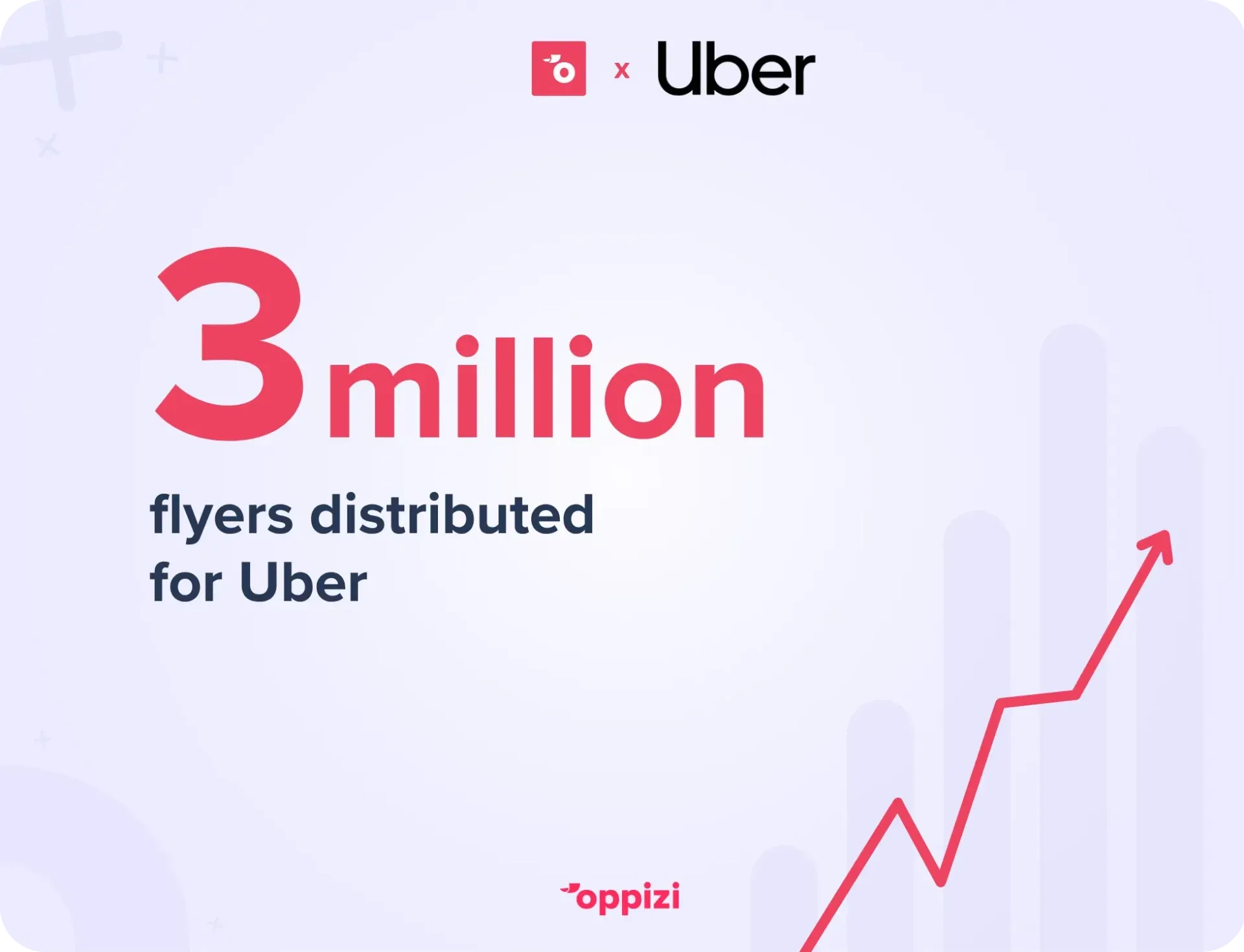
Oppizi delivered over three million flyers using real-time tracking to measure results. In 2016 and 2017, the flyers performed better than Uber’s online ads. In those markets, flyering became Uber’s most effective way to get new customers.
FAQ: Common questions about offline media buying
Q: How do I compare offline and online campaign performance?
A: Use the same tracking tools for both. Try unique promo codes, dedicated landing pages, or call tracking numbers. Compare cost per conversion and conversion rates. A tool like Oppizi can help bring everything together in one report.
Q: Is offline media buying too expensive for small local businesses?
A: It depends on the market, but many local options are affordable. You can start with things like local radio ads, newspaper inserts, transit posters, or flyer drops. Most vendors offer small packages that fit fixed budgets.
Q: Can I use data from digital campaigns to plan offline ones?
A: Yes. Digital data shows you who your audience is and where they are. Use that to pick offline channels. For example, place billboards in areas with high online traffic or run radio ads that match your audience’s age group.
Q: How long should an offline campaign run?
A: Run it for at least two weeks to build frequency. For longer campaigns, refresh your creative every four to six weeks to keep the message strong.
Q: How do I measure brand lift?
A: Run surveys before and after the campaign. Track direct website traffic, search activity for your brand, or use location-based analytics to see impact near ad placements.
Conclusion
Offline media still matters. It puts your message in front of people in the real world, in ways they can see, hold, and remember. Flyers, billboards, radio, and direct mail build trust and grab attention. They work even better when combined with digital ads.
Make sure you set clear goals, pick the channels your audience uses, create simple ads that are easy to understand, and track how they perform. That’s the best way to get results from offline media, whether you’re in retail, real estate, healthcare, or events.
What now?
If you’re ready to take your marketing beyond the screen, Oppizi makes it easy. Our platform gives you the tools to launch a data-driven offline campaign in minutes. Plan smarter. Track everything. See results.
Start your campaign with Oppizi and bring your brand into the real world.